
Indigenous cultures teach us the value of sustainable land management through practices like rotational grazing, agroforestry, and respecting sacred sites. They have deep spiritual and cultural ties to nature, which guide their conservation efforts and protect biodiversity. Their knowledge emphasizes harmony with the environment, combining traditional methods with community-led initiatives. By integrating these timeless lessons, you’ll discover ways to strengthen modern conservation and work more responsibly with nature, uncovering even more strategies along the way.

Prime made for students and young adults
- Fast, free delivery for dorm and study essentials
- Prime Video and Amazon Music included
- Member-only deals
Key Takeaways
- Indigenous cultures have sustainably managed ecosystems for thousands of years through practices like rotational grazing and agroforestry.
- Traditional ecological knowledge offers environment-specific insights that promote biodiversity conservation and ecosystem resilience.
- Spiritual beliefs and cultural taboos protect sacred sites and species, fostering natural population stability.
- Community-led conservation, driven by cultural ownership, enhances resource protection and reduces conflicts.
- Integrating indigenous wisdom with modern policies creates resilient, sustainable ecosystems that benefit both nature and local communities.
As an affiliate, we earn on qualifying purchases.
The Role of Indigenous Land Stewardship in Biodiversity Preservation
Indigenous land stewardship plays a crucial role in preserving biodiversity because these communities have managed their environments sustainably for thousands of years. You benefit from their deep-rooted connection to the land, which guides careful resource use and conservation. Indigenous peoples have maintained vast, biodiverse areas by implementing practices that prevent overexploitation, like rotational grazing and sustainable hunting. Their knowledge of local ecosystems helps preserve species and habitats that might otherwise face destruction. Protected areas often coincide with indigenous territories, showing their effectiveness in conservation. This stewardship isn’t just about resource management; it’s about fostering a balance between humans and nature. By respecting and supporting indigenous land management, you help maintain ecological resilience and ensure the survival of diverse ecosystems for future generations. Incorporating sustainable practices can also enhance the safety and accessibility of protected natural spaces within communities. Additionally, recognizing the importance of indigenous knowledge can lead to more effective and culturally respectful conservation strategies.
Traditional Ecological Knowledge and Sustainable Practices
Traditional Ecological Knowledge (TEK) encompasses time-tested methods that communities have developed to sustainably manage their local environments. You benefit from practices like rotational grazing, agroforestry, and sustainable hunting, which maintain ecological balance. For instance, the Maasai rotate their cattle to prevent overgrazing, preserving soil health. The Chagga in Tanzania use agroforestry to boost soil fertility and control erosion. The San people practice sustainable hunting, ensuring wildlife populations stay stable. TEK is specific to each environment, offering valuable insights into resource management. These practices promote resilience, conserve biodiversity, and support livelihoods. By recognizing and applying TEK, you help protect ecosystems naturally, ensuring their health for future generations. Additionally, incorporating indigenous practices can enhance modern conservation strategies by blending traditional wisdom with scientific approaches. Recognizing the importance of cultural knowledge helps foster respect and collaboration with indigenous communities, strengthening conservation efforts worldwide. Furthermore, integrating local ecological knowledge can lead to more effective and culturally sensitive resource management policies. Understanding and valuing traditional ecological knowledge can also inspire innovative sustainable solutions rooted in long-standing community experiences. Incorporating mindfulness techniques, such as observation and reflection, can deepen your understanding of local ecosystems and foster a respectful connection with the environment.
Spiritual Beliefs and Cultural Taboos Protecting Nature
Spiritual beliefs and cultural taboos play a powerful role in safeguarding nature by shaping community behaviors and customs. You might find that sacred sites, such as mountains, rivers, or forests, are protected because they hold spiritual significance, preventing deforestation and pollution. Taboos often restrict hunting or harvesting certain species, ensuring animal populations stay stable. For example, some communities believe certain animals or plants are sacred to their ancestors, making them off-limits to exploitation. Rituals and ceremonies reinforce these beliefs, fostering a deep sense of respect and responsibility for the environment. These cultural practices create natural boundaries, encouraging conservation without the need for formal laws. Your community’s spiritual connection to nature becomes a crucial force in maintaining ecological balance and protecting biodiversity. Additionally, research supports that cultural traits can significantly influence environmental stewardship and sustainable practices within communities. Moreover, these traditions often serve as a form of indigenous knowledge, passing down vital ecological information across generations to ensure long-term sustainability. Recognizing and respecting these spiritual practices can further enhance conservation efforts and foster a harmonious relationship with the environment, especially when they incorporate recognition of patterns that help communities interpret environmental signs. Understanding the growth mindset behind these traditions can inspire communities to adapt and strengthen their conservation efforts over time.
Community-Led Conservation and Its Impact
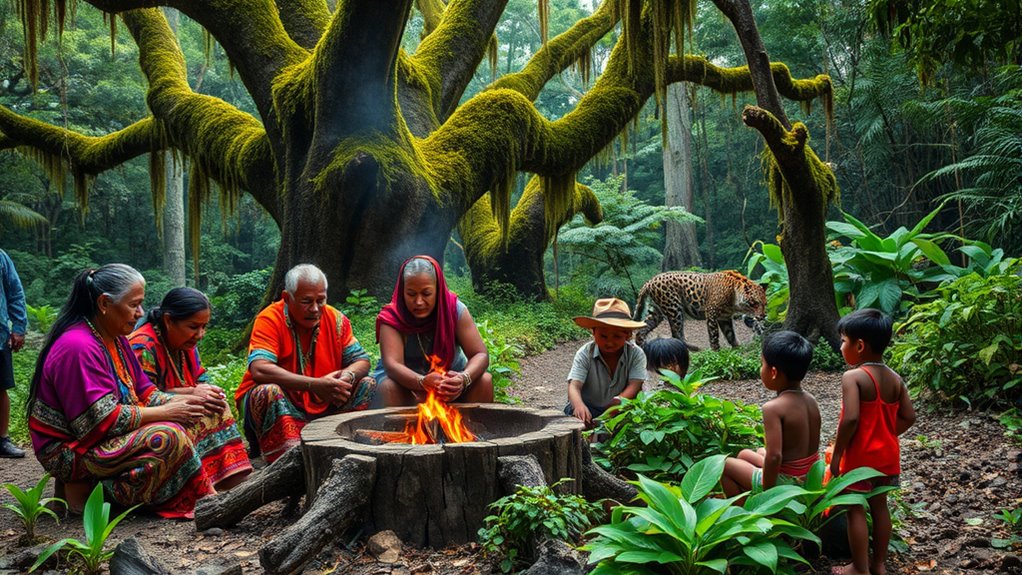
You can see how local ownership empowers communities to protect their land and resources effectively. By involving residents in decision-making, conflict with outsiders decreases, fostering cooperation. When cultural knowledge is integrated into conservation efforts, it leads to more sustainable and culturally respectful outcomes. Additionally, fostering community engagement through community collaboration can further strengthen conservation success. Recognizing the importance of cultural intelligence in these initiatives helps ensure that diverse perspectives are valued and incorporated. Incorporating traditional ecological knowledge can reveal valuable insights that modern science may overlook, enriching conservation strategies. Utilizing local ecological understanding enhances adaptive management and supports long-term resource sustainability. Furthermore, studies indicate that community-based conservation approaches often achieve higher success rates by aligning goals with local values and practices.
Local Ownership Benefits
Community-led conservation often proves more effective than top-down approaches because local ownership fosters a sense of responsibility and commitment. When you, as part of a community, hold land or resources, you’re more likely to protect and sustainably manage them. This sense of ownership motivates you to enforce traditional practices that preserve biodiversity, like rotational grazing or sacred site protection. Local control also encourages culturally relevant solutions, making conservation efforts more resilient and adaptable. Additionally, community involvement reduces conflicts over resource use, as everyone understands and respects shared boundaries and customs. By owning and managing conservation areas, you help ensure long-term sustainability, strengthen cultural ties to the land, and empower your community to safeguard natural resources for future generations. Incorporating traditional management practices can further enhance conservation success by blending cultural knowledge with sustainable resource use. Recognizing the importance of local control helps foster a deeper connection to the land, which is essential for the resilience of conservation efforts.
Conflict Reduction Strategies
When local communities take charge of conservation efforts, conflicts over resource use often decrease markedly. You become more invested in protecting the land and wildlife because it directly benefits your community. Traditional governance, such as taboos and cultural practices, enforces rules that limit overexploitation and poaching. These cultural norms foster respect for sacred sites and species, reducing illegal activities. Community-led initiatives also promote coexistence by balancing human needs with ecological health. When people see tangible benefits, like improved livelihoods from sustainable practices, tensions diminish. Collaboration between communities and authorities builds trust and mutual understanding. This local ownership creates a shared sense of responsibility, leading to fewer disputes and more effective conservation outcomes. Ultimately, empowering communities helps resolve conflicts naturally and sustainably.
Cultural Knowledge Integration
Integrating cultural knowledge into conservation efforts considerably enhances their effectiveness by harnessing traditional practices and local insights. When you involve Indigenous communities in managing natural resources, you tap into centuries of experience that align with ecological health. Their practices, like rotational grazing or agroforestry, help maintain biodiversity and soil fertility naturally. Community-led initiatives foster stewardship, reducing conflicts and ensuring sustainable use. Community engagement is vital for building trust and ensuring that conservation strategies are culturally appropriate and locally supported. By respecting spiritual connections and cultural taboos, you reinforce conservation goals and protect sacred sites. Collaborations that incorporate TEK create more resilient ecosystems and culturally appropriate solutions. Recognizing and integrating Indigenous knowledge doesn’t just boost biodiversity; it empowers communities and sustains their cultural heritage, making conservation efforts more inclusive, effective, and enduring. Additionally, understanding signs of spoilage in local foods can help communities preserve traditional food sources and reduce waste. Incorporating traditional ecological knowledge into modern conservation strategies further enriches these efforts by blending age-old wisdom with contemporary science. Embracing learning from failure and continuous adaptation can lead to more innovative and sustainable conservation practices in diverse environments, especially when combined with cultural values and practices that promote environmental stewardship.
Agricultural Systems Rooted in Sustainability
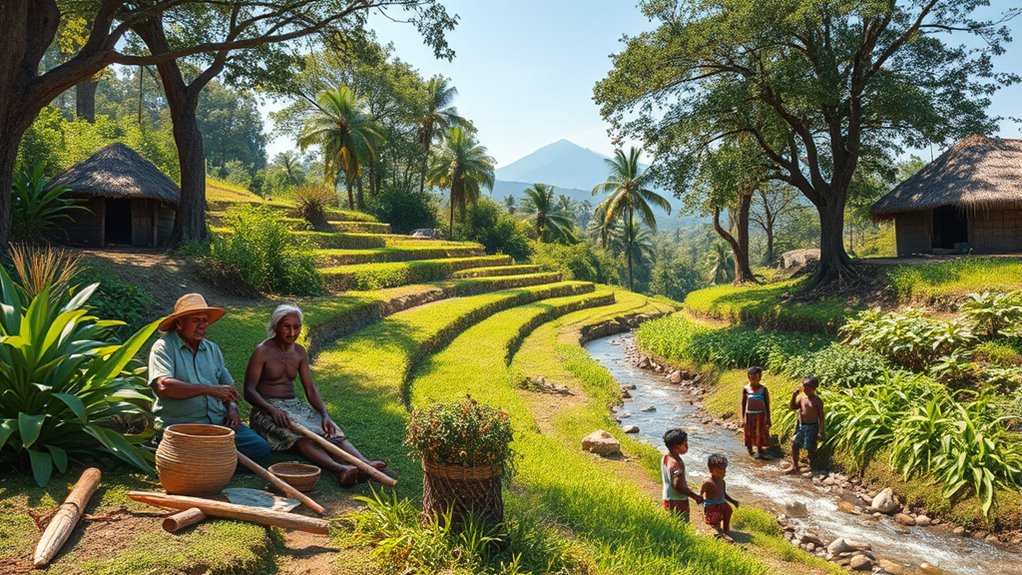
Sustainable agricultural systems draw on centuries-old traditions that prioritize environmental health and resource renewal. You can see this in practices like crop rotation and polyculture, which prevent soil exhaustion and promote biodiversity. The milpa system used by the Maya involves rotating crops within forested areas, maintaining soil fertility and supporting diverse plant life. Agroforestry in West Africa integrates trees with crops, reducing erosion and improving soil health. These methods often require minimal external inputs and adapt to local climates, making them resilient to droughts and extreme weather. By focusing on natural cycles and diversity, these traditional systems sustain yields over generations. They demonstrate that agriculture can harmonize with ecosystems, ensuring food security while preserving the environment for future generations.
Merging Ancient Wisdom With Modern Conservation Strategies

You can see how integrating traditional ecological knowledge with modern policies creates more effective conservation efforts. When communities collaborate and share their wisdom, ecosystems become more resilient and sustainable. This approach not only safeguards biodiversity but also respects cultural practices, ensuring long-term success.
Integrating TEK With Policy
How can modern conservation policies effectively incorporate Indigenous Traditional Ecological Knowledge (TEK) to create more resilient and culturally respectful strategies? You can start by recognizing Indigenous land rights and involving communities in decision-making. Policies should integrate TEK alongside scientific data to shape adaptive management plans. Building trust is essential—respect Indigenous customs and ensure their voices influence legislation. Collaboration helps embed practices like sustainable hunting and agroforestry into broader frameworks. Here’s a simple comparison:
| Approach | Benefits |
|---|---|
| Formal legislation inclusion | Ensures legal protection and respect |
| Community-led decision-making | Promotes cultural relevance and ownership |
| Co-management agreements | Balances modern science with TEK |
| Capacity-building programs | Empowers Indigenous stewardship |
| Monitoring and evaluation | Measures effectiveness and adapts |
Collaborative Management Approaches
Collaborative management approaches effectively merge ancient Indigenous wisdom with modern conservation strategies to create more resilient ecosystems. By involving local communities in decision-making, you harness traditional knowledge alongside scientific methods, resulting in more effective conservation efforts. Indigenous groups bring insights into sustainable resource use, cultural practices, and ecological cues that enhance ecosystem health. These partnerships foster mutual respect and shared responsibility, reducing conflicts and promoting stewardship. For example, co-managed parks and marine protected areas integrate Indigenous practices like sacred site preservation and traditional hunting rules. When you collaborate with Indigenous communities, you ensure that conservation strategies are culturally appropriate and locally supported. This synergy not only boosts biodiversity but also strengthens community resilience, reinforcing the essential link between cultural heritage and ecological sustainability.
Enhancing Biodiversity Resilience
By combining traditional Indigenous knowledge with modern conservation strategies, efforts to enhance biodiversity resilience become more effective and sustainable. Indigenous practices like rotational grazing, agroforestry, and sustainable hunting help maintain ecosystem balance and prevent degradation. These methods foster natural regeneration, protect soil health, and support diverse species populations. Spiritual connections and cultural taboos reinforce conservation by fostering a strong sense of stewardship. Community-led initiatives ensure local knowledge guides management, reducing conflicts and promoting coexistence. When modern frameworks incorporate TEK, they create resilient landscapes capable of withstanding climate change and human pressures. This fusion of ancient wisdom and contemporary science results in adaptable, thriving ecosystems that sustain biodiversity for future generations. Your engagement with these integrated approaches can substantially strengthen global conservation efforts.
Lessons Learned From Indigenous Approaches to Ecosystem Management
What can modern conservation efforts learn from indigenous approaches to ecosystem management? Indigenous communities have centuries of experience maintaining biodiversity and ecosystem health through practices like rotational grazing, agroforestry, and sustainable hunting. These methods are tailored to local environments, promoting soil fertility, preventing erosion, and ensuring animal populations stay stable. Their spiritual and cultural ties to nature foster a deep sense of stewardship, often leading to the protection of sacred areas and species. Community-led initiatives demonstrate that local ownership and traditional knowledge can effectively reduce human-wildlife conflicts. By integrating TEK into modern strategies, conservation becomes more resilient and culturally appropriate. Embracing indigenous practices helps create sustainable solutions that respect both nature and the communities who depend on it.
Frequently Asked Questions
How Do Indigenous Practices Adapt to Climate Change Impacts?
You can see how indigenous practices adapt to climate change by using traditional ecological knowledge, like shifting crop varieties or adjusting hunting seasons, to suit changing conditions. They often implement flexible land management techniques, such as rotational grazing or cultural burning, to prevent land degradation. By staying connected to their environment and passing down adaptive strategies, indigenous communities help ecosystems stay resilient amid climate shifts.
Are Indigenous Conservation Methods Applicable Globally or Region-Specific?
You might be surprised to learn that indigenous communities have managed over 80% of the world’s biodiversity-rich areas for millennia. Their conservation methods are often region-specific because they’re deeply tied to local ecosystems, cultures, and resources. While some practices like sustainable hunting or agroforestry can be adapted elsewhere, many require local knowledge and context. So, their methods are most effective when tailored but can inspire global conservation efforts.
What Challenges Do Indigenous Communities Face in Modern Conservation Efforts?
You’ll find that indigenous communities face challenges like land rights disputes, limited recognition of their traditional knowledge, and pressure from modernization. Often, governments or corporations overlook their practices, leading to conflicts and loss of cultural heritage. You may also encounter obstacles in accessing resources or funding for conservation projects. Despite these hurdles, their resilience and deep connection to land continue to play a crucial role in sustainable conservation efforts.
How Is Traditional Knowledge Integrated Into National Policies?
Think of national policies as a garden, and traditional knowledge as the essential water that nourishes it. You see, many governments now actively incorporate Indigenous practices like rotational grazing, agroforestry, and sacred site protection into their laws. They collaborate with communities, recognize TEK’s value, and develop co-management strategies. This integration helps create resilient ecosystems, preserves cultural heritage, and guarantees sustainable resource use for future generations.
Can Indigenous-Led Conservation Be Scaled for Larger Biodiversity Goals?
You can scale indigenous-led conservation by integrating traditional practices into national and global policies, supporting community ownership, and fostering collaboration. Encouraging partnerships with Indigenous groups helps expand successful local efforts to larger landscapes. You should also promote legal recognition of Indigenous lands and knowledge, providing resources for capacity building. By valuing Indigenous leadership and respecting their cultural ties, you’ll help achieve broader biodiversity goals effectively and sustainably.
Conclusion
By embracing indigenous wisdom, you can deepen your understanding of sustainable conservation. Their centuries-old practices often prove more resilient and adaptable than modern methods alone, especially when combined thoughtfully. Many theories suggest indigenous approaches foster biodiversity and ecosystem health, challenging the notion that technological fixes are always best. Incorporating these traditions not only honors cultural heritage but also offers practical solutions for today’s environmental challenges, proving that ancient knowledge still holds crucial lessons for our future.
Fall Picks
fall essentials
As an affiliate, we earn on qualifying purchases.