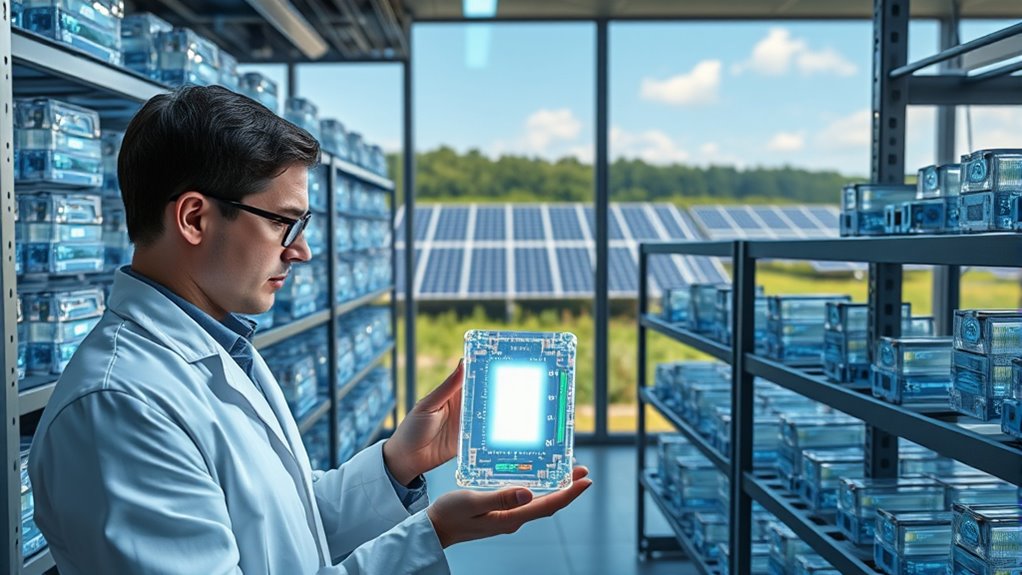

Breakthroughs in energy storage are addressing key challenges for renewables by advancing battery technologies like lithium-ion, flow batteries, and thermal storage, which improve efficiency and cost-effectiveness. Innovations in recycling and sustainable materials extend battery lifespans and support a circular economy. Hybrid systems combine fast-responding and long-duration storage, boosting grid reliability. New regulations and policies further accelerate deployment. Keep exploring to discover how these developments are shaping a greener, more resilient energy future.
Key Takeaways
- Advances in long-duration and hybrid storage systems enable better integration of intermittent renewables with reliable power supply.
- Emerging battery technologies like solid-state and flow batteries offer lower costs, improved safety, and longer lifespan.
- Recycling and circular economy practices reduce dependency on raw materials, addressing supply chain and environmental issues.
- AI-driven system optimization enhances battery performance, lifespan, and grid management for renewable energy stability.
- Development of scalable thermal and liquid electrolyte storage solutions extends storage duration and supports grid resilience.

Energizer Ultimate Lithium AA Batteries, 24 Pack, 1.5V Long-Lasting for High-Drain Devices, Cameras & Flashlights
- Longest lasting AA batteries: World's longest lasting AA batteries
- Ideal for high-drain devices: Powers critical devices effectively
- 25 years shelf life: Holds power for 25 years in storage
As an affiliate, we earn on qualifying purchases.
As an affiliate, we earn on qualifying purchases.
The Rapid Growth of the Global Energy Storage Market

The global energy storage market is experiencing rapid growth, driven by soaring demand for renewable energy integration and grid stability. You’ll notice the market is projected to reach $58.41 billion by 2025 and expand to $114.01 billion by 2030. In the US alone, operating storage capacity hit 37.4 GW by October 2025, a 32% increase this year. Battery storage costs have plummeted 93% since 2010, making deployments more affordable. Expect rapid expansion across residential, commercial, and utility-scale projects in 2025, with 19 GW under construction through 2026 and a pipeline of 187 GW by 2030. This growth reflects a global shift toward cleaner energy sources and smarter, more resilient power systems that rely heavily on advanced storage solutions. Proper storage conditions are essential to maintain the efficiency and safety of these systems over time. Additionally, advances in battery technology continue to improve energy density and longevity, further accelerating market adoption. Furthermore, ongoing research into AI Security plays a crucial role in safeguarding these increasingly complex energy infrastructure systems from cyber threats. Innovations in energy management systems also enable more efficient operation and integration of storage assets into existing grids.
Dominance of Lithium-Ion Batteries and Opportunities for Optimization
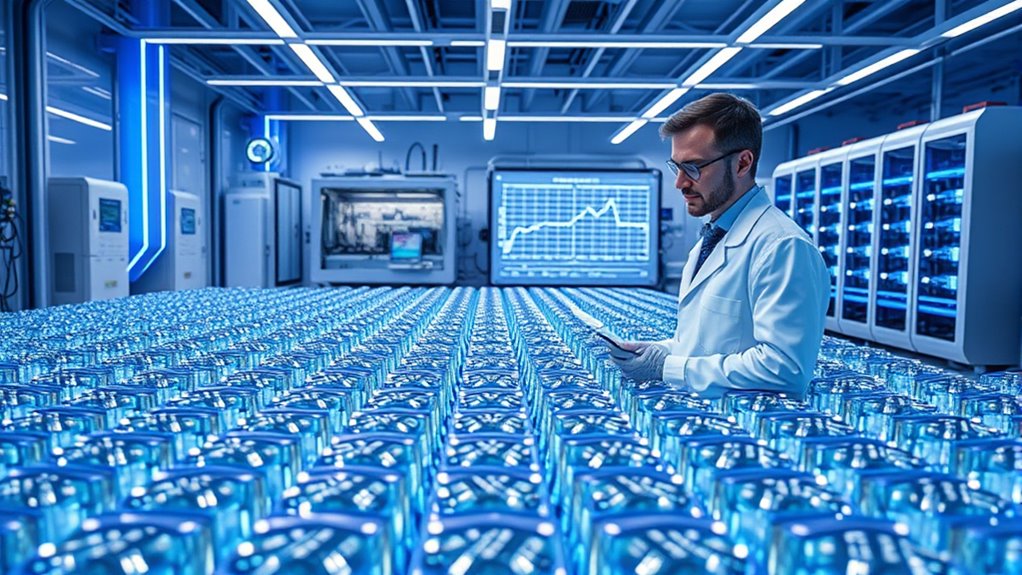
Lithium-ion batteries continue to dominate the global energy storage landscape, powering a significant share of utility-scale projects and renewable integrations. Their high energy density, fast response times, and declining costs make them the preferred choice for grid stability and renewable support. You can see their impact in states like California and Texas, where they help balance supply and demand during peak periods. Despite their dominance, sourcing lithium remains expensive and environmentally challenging, creating a push for optimization. Opportunities exist to improve battery lifespan, reduce degradation, and enhance recycling processes. By focusing on these areas, you can maximize efficiency, lower costs, and address sustainability concerns. This ongoing refinement ensures lithium-ion batteries remain central as the energy sector transitions toward cleaner, more reliable power systems.
Emerging Battery Technologies and Material Innovations
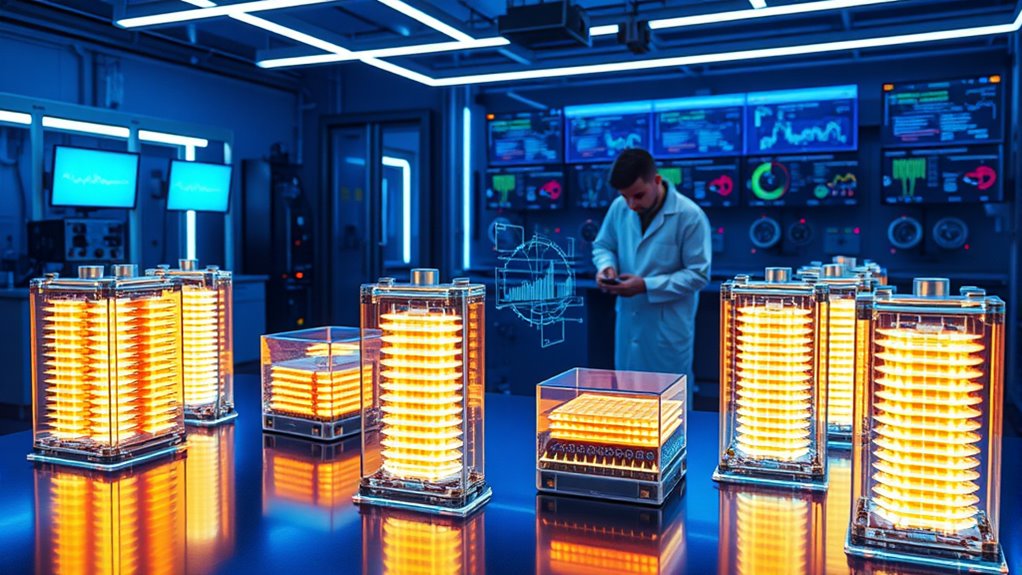
Emerging battery technologies like potassium-ion, solid-state, flow, and thermal storage are reshaping the energy landscape. These innovations promise lower costs, higher safety, and longer-lasting performance compared to traditional lithium-ion systems. Exploring these advancements reveals new opportunities for more sustainable and efficient energy storage solutions. Additionally, understanding the personality traits of those involved in the development and deployment of these technologies can enhance collaboration and innovation in the field. Moreover, the rapid progress in AI integration can optimize the design and management of these new energy storage systems, further advancing their effectiveness. For example, integrating gears and mechanical elements inspired by Steampunk and Victoriana designs can offer novel, durable, and aesthetically appealing components for energy devices. Implementing organic seed cultivation techniques can also inspire sustainable practices in energy storage development by emphasizing eco-friendly materials and methods. Furthermore, leveraging cybersecurity measures is essential to protecting these innovative systems from digital threats and ensuring reliable operation.
Potassium-Ion Battery Potential
Could potassium-ion batteries soon revolutionize large-scale energy storage with their promise of lower costs and greater sustainability? As an emerging technology, they leverage potassium’s abundance compared to lithium, which could considerably reduce material costs and supply chain concerns. These batteries offer longer cycle life and comparable energy density, making them attractive for grid storage needs. Their electrochemical properties allow for faster charging and discharging, enhancing grid responsiveness. Unlike lithium, potassium is widely available, decreasing price volatility and environmental impact. Researchers are optimizing electrode materials and electrolytes to improve performance and durability. The development of material innovations continues to be crucial for overcoming current limitations and unlocking the full potential of potassium-ion batteries. Advances in electrode technology could significantly boost their efficiency and lifespan. A cost-effective solution could be achieved if ongoing research continues to enhance their efficiency and lifespan. Developing scalable manufacturing processes is essential to make these batteries commercially viable on a large scale. If successful, potassium-ion batteries could become a cost-effective, eco-friendly alternative for large-scale energy storage, helping to support the growing deployment of renewable energy sources and stabilize power grids worldwide.
Solid-State Battery Advancements
Advancements in solid-state batteries are transforming the landscape of energy storage by addressing many limitations of traditional lithium-ion systems. These batteries replace liquid electrolytes with solid materials, reducing risks of leakage and fires. They offer markedly higher energy density, allowing for longer-lasting and more compact storage solutions. Material innovations, such as ceramic and sulfide electrolytes, improve durability and charge rates, making them suitable for both grid-scale applications and electric vehicles. Manufacturing techniques are rapidly evolving to lower costs and increase scalability. As a result, solid-state batteries promise faster charging, enhanced safety, and increased lifespan. Material innovations are also contributing to improved battery performance and longevity. By implementing these innovative materials, manufacturers are overcoming previous barriers to widespread adoption and commercial viability. These breakthroughs are helping overcome current technological barriers, paving the way for more reliable, efficient, and sustainable energy storage systems crucial for integrating renewables into the grid, especially as energy storage technologies continue to evolve rapidly. Additionally, ongoing research into advanced manufacturing techniques is key to making these batteries more accessible and affordable for widespread use, with cutting-edge manufacturing processes enabling better quality control and cost reductions.
Flow and Thermal Storage
Flow and thermal storage technologies are gaining traction as promising solutions for large-scale energy management due to their reliability and efficiency. These systems store energy in liquid electrolytes or heat, enabling long-duration discharge and rapid response. They’re ideal for balancing supply and demand in renewable-heavy grids. Imagine:
- Large tanks of liquid electrolytes that can be scaled easily for utility needs
- Molten salt storing heat from solar plants for nighttime power
- Flow batteries with flexible capacity adjustments by adding electrolyte
- Thermal systems using molten salt or phase change materials for efficient heat retention
- Hybrid setups combining flow and thermal storage to optimize performance
These innovations help overcome limitations of traditional batteries, offering cost-effective, sustainable solutions for grid stability and renewable integration. Energy storage capacity is a critical factor in deploying these technologies effectively across different applications. Additionally, advancements in material innovations are enhancing the durability and cost-effectiveness of these storage options, making them more viable for widespread adoption.
Hybrid Systems Enhancing Storage Performance and Flexibility
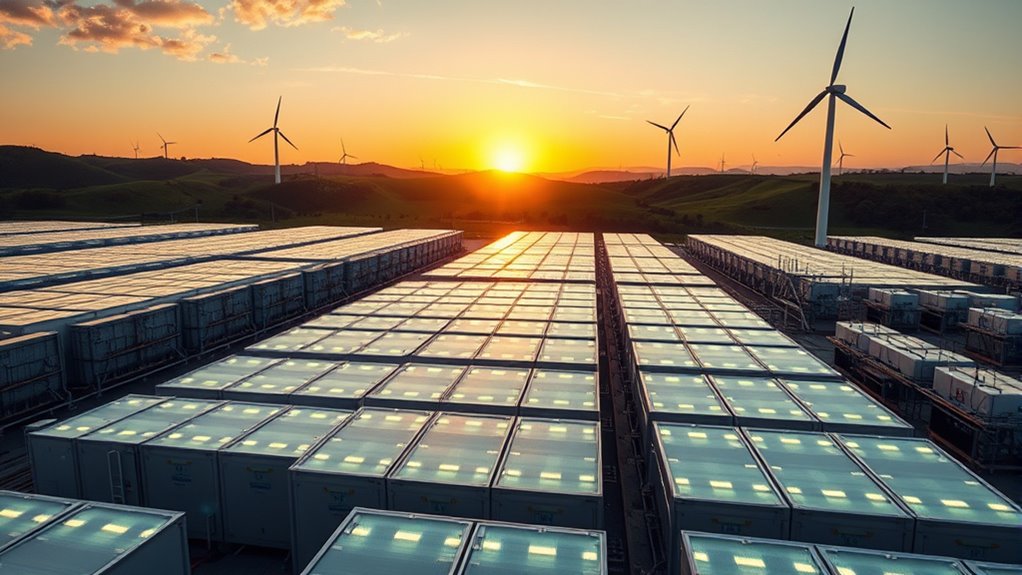
Hybrid energy storage systems are transforming how we manage and optimize power grids by combining different technologies to enhance performance and flexibility. By pairing lithium-ion batteries with supercapacitors, you can meet both rapid response needs and long-duration storage, ensuring grid stability during fluctuating demand. These hybrid setups adapt seamlessly to variable renewable energy sources, smoothing out supply inconsistencies. Advanced integration allows for better load balancing and reduces reliance on fossil fuels. You’ll also notice cost savings through optimized deployment, as hybrid systems can reduce the number of individual units needed. Innovations like multi-sphere pod design and 3D-printed components further cut costs and simplify installation. Additionally, incorporating noise levels considerations in system components can improve overall operation comfort. Implementing energy storage efficiency techniques can further optimize system performance and longevity. Employing system integration strategies enhances the coordination between different storage technologies, maximizing their combined benefits. Furthermore, ongoing research into battery chemistry advancements promises to improve energy density and cycle life. Overall, hybrid systems make your energy grid more resilient, efficient, and capable of supporting a cleaner, sustainable future.
Advancements in Battery Recycling and Circular Economy Practices

You play a key role in advancing battery recycling technologies that turn end-of-life batteries into valuable materials. By adopting circular economy strategies, you help diminish waste and lower the environmental impact of energy storage systems. These innovations are essential for creating sustainable energy solutions that maximize resource use and ensure long-term viability.
Recycling Technologies Innovation
Advancements in battery recycling and circular economy practices are transforming how you manage the growing volume of used energy storage systems. New technologies now enable efficient extraction of valuable materials like lithium, cobalt, and nickel, reducing dependency on mining. You’ll find innovations such as automated shredding, hydrometallurgical processes, and direct recycling methods that preserve cathode materials for reuse. These methods lower environmental impact, cut costs, and extend battery lifespans.
- Automated systems streamline collection and disassembly
- Hydrometallurgy improves material recovery rates
- Direct recycling preserves battery chemistry for reuse
- Second-life applications extend battery usability
- Standards and regulations boost recycling efficiency and safety
These advances guarantee a sustainable future, minimizing waste and maximizing resource reuse.
Circular Economy Strategies
Innovative battery recycling methods and circular economy practices are reshaping how energy storage systems are managed at end-of-life. You can now recover valuable materials like lithium, cobalt, and nickel through advanced recycling techniques, reducing the need for virgin resource extraction. Circular approaches promote designing batteries for longevity, reuse, and easier disassembly, extending their lifecycle and minimizing waste. Implementing second-life applications allows used batteries to serve in less demanding roles, such as grid stabilization or backup power, before recycling. Regulations like the EU Batteries Regulation encourage sustainable practices, ensuring environmental impact remains minimal. By prioritizing smart recycling, reusing components, and designing for circularity, you help create a more sustainable energy storage ecosystem that supports the growth of renewables while reducing ecological footprints.
Long-Duration Storage Solutions and Their Impact on Renewable Integration
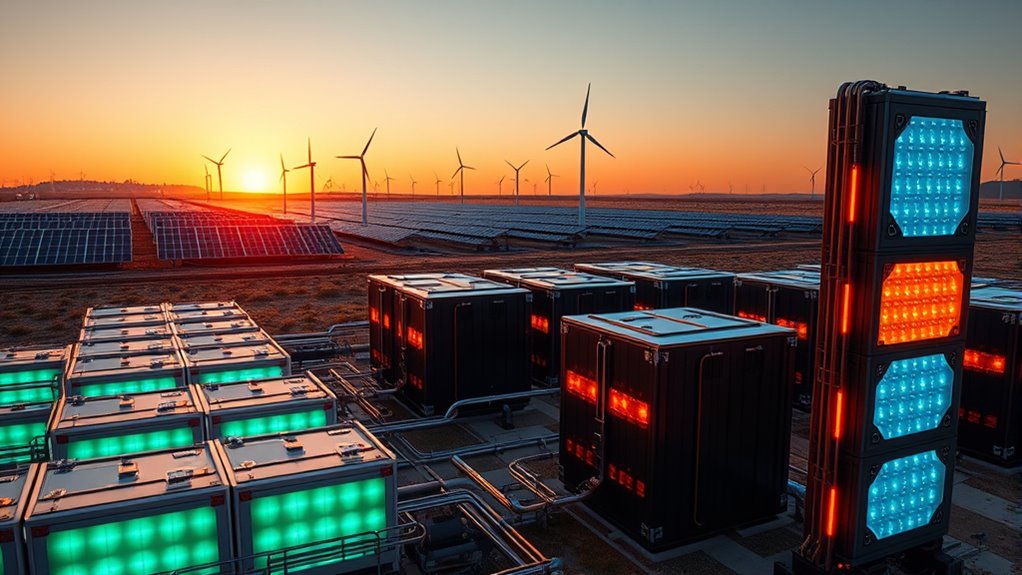
Long-duration storage solutions are transforming renewable energy integration by providing reliable, long-term power supply that bridges the gap between generation and consumption. They enable renewable sources like wind and solar to deliver consistent energy even when the sun isn’t shining or the wind isn’t blowing. These technologies include flow batteries, thermal storage, and ocean-based systems, which can store energy for days or weeks. You can see their impact in:
Long-duration storage unlocks reliable, long-term renewable energy by bridging supply gaps and enhancing grid stability.
- Reducing reliance on fossil fuels during low-generation periods
- Enhancing grid stability with flexible, dispatchable power
- Supporting large-scale renewable projects with extended storage capacity
- Lowering overall system costs by decreasing curtailment
- Promoting energy independence in remote or off-grid locations
Policy and Regulatory Developments Shaping Storage Deployment
Policy and regulatory frameworks are increasingly shaping how energy storage projects are developed, deployed, and integrated into the grid. Governments worldwide are introducing incentives, standards, and policies to accelerate storage adoption, such as tax credits and streamlined permitting processes. In the US, recent federal and state initiatives promote storage alongside renewable energy, boosting investor confidence. Regulations are also evolving to address grid integration, safety, and interconnection procedures, reducing barriers to deployment. Internationally, countries are setting storage targets and establishing frameworks to support innovation and market participation. These policies create a predictable environment that encourages investment, drives technological advancements, and guarantees storage solutions effectively support renewable integration and grid resilience. Ultimately, clear policies are essential for scaling energy storage and transforming energy systems.
Future Perspectives: Toward Sustainable and Resilient Energy Systems
As renewable energy continues to expand, building sustainable and resilient energy systems becomes increasingly essential. You’ll see a shift toward integrating diverse storage solutions, making grids more flexible and reliable. This involves combining technologies to handle variable supply and demand effectively. You can expect:
- Deployment of hybrid systems that blend batteries, flow, and thermal storage
- Advancements in recycling and circular economy practices to reduce environmental impact
- Increased focus on long-duration storage like liquid air and ocean-based systems
- Smarter grid management through digitalization and real-time data
- Greater emphasis on local, community-based energy solutions for resilience
These efforts aim to create systems that withstand disruptions, optimize renewable use, and minimize ecological footprints, paving the way for a truly sustainable energy future.
Frequently Asked Questions
What Are the Key Challenges in Scaling New Battery Technologies Globally?
You face several challenges when scaling new battery technologies globally. High development costs and limited manufacturing infrastructure slow adoption. Sourcing sustainable, affordable materials like lithium or alternatives such as potassium remains difficult. Regulatory hurdles and safety concerns can delay deployment. Additionally, establishing recycling systems to manage end-of-life batteries is vital. Overcoming these issues requires innovation, investment, and collaborative efforts to guarantee these advanced solutions can meet worldwide energy needs efficiently.
How Will Emerging Materials Impact Battery Cost and Environmental Sustainability?
Imagine replacing lithium with abundant potassium in large-scale batteries. Emerging materials like potassium-ion batteries could substantially lower costs and reduce environmental impact by decreasing reliance on expensive, scarce lithium. These alternatives promise longer-lasting, more sustainable storage solutions, especially for grid applications. As these technologies mature, you’ll see a shift toward eco-friendlier, cost-effective batteries, making renewable energy more accessible and environmentally responsible.
What Role Do Policy Changes Play in Accelerating Storage Innovation Adoption?
Policy changes can markedly boost storage innovation by providing incentives, subsidies, and regulations that encourage research and deployment. When policies favor renewable energy and storage solutions, you’ll see increased investments, faster development of new technologies, and streamlined approval processes. These policies also promote recycling and sustainability efforts, making storage solutions more affordable and environmentally friendly. As a result, you’ll help accelerate the shift to cleaner, more resilient energy systems.
How Can Recycling Improve the Lifecycle and Sustainability of Energy Storage Systems?
Think of recycling as giving batteries a second wind, much like a phoenix rising from ashes. You can extend the life of energy storage systems by reprocessing valuable materials, reducing waste and environmental impact. Recycling also cuts costs, lessening reliance on costly raw materials like lithium. By embracing circular economy principles, you help create a sustainable future where batteries serve longer, perform better, and support renewable energy growth more responsibly.
What Are the Most Promising Long-Duration Storage Solutions for Future Grids?
You should focus on promising long-duration storage solutions like flow batteries, liquid air, and ocean-based systems. Flow batteries offer reliable, scalable energy storage with long discharge times, ideal for grid stability. Liquid air storage can handle large capacities efficiently, especially paired with offshore wind farms. Ocean-based systems last decades, providing sustainable, low-cost energy storage. Investing in these innovations will help future grids manage renewable energy fluctuations effectively and sustainably.
Conclusion
As you watch the energy storage landscape evolve, it’s clear the tide is turning in favor of sustainable solutions. With breakthroughs in batteries and smarter recycling, you’re riding a wave toward a greener, more resilient future. Think of these innovations as the backbone supporting renewables—strong, flexible, and ready to carry us through any storm. Embrace this momentum, because together, you’re shaping a world where clean energy truly powers tomorrow.