The Amazon rainforest is essential to everyone because it stabilizes the global climate, stores massive amounts of carbon, and supports an incredible diversity of life, including many species found nowhere else. Its health affects rainfall, weather patterns, and food security worldwide. Protecting it is indispensable for our future, as ecosystem loss and deforestation threaten this balance. If you want to understand why safeguarding the Amazon matters for your world, keep exploring what’s at stake.
Key Takeaways
- The Amazon hosts over 10% of the world’s known species, vital for global biodiversity and ecological stability.
- Its role as a major carbon sink helps regulate climate and mitigate global warming.
- Deforestation and fires threaten species extinction and compromise ecosystem services critical for human well-being.
- Loss of Amazon biodiversity disrupts global food security, medicine, and ecological resilience.
- Protecting the Amazon is essential to prevent climate change acceleration and preserve Earth’s ecological balance.
The Amazon’s Rich Biodiversity and Its Global Significance
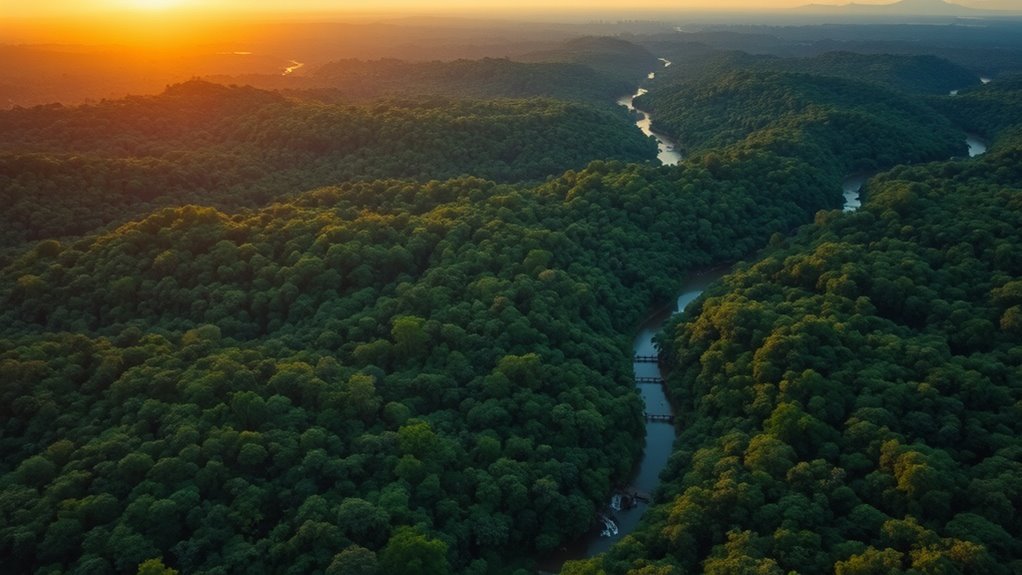
The Amazon rainforest is one of the most essential biodiversity hotspots on Earth, housing about 10% of the world’s known species. You’ll find over 40,000 plant species, 2,000 bird species, and 2.5 million insects thriving there. More than 15,000 tree species grow in this region, with some areas containing over 300 species per hectare. It’s also a critical breeding ground for one in five of all bird and fish species globally. Between 1999 and 2009, scientists discovered 1,200 new plant and vertebrate species, highlighting its vast, largely unexplored diversity. This incredible variety makes the Amazon a crucial reservoir of life, supporting ecological stability and resilience, and emphasizing its importance for global biodiversity conservation efforts. Additionally, the high species richness of the Amazon underscores its vital role in maintaining global ecological balance and climate regulation. Protecting this rich biodiversity is essential for safeguarding ecosystem services such as pollination, which are vital for agriculture and human survival worldwide. The Amazon’s vast and largely unexplored diversity also plays a key role in climate regulation, helping to stabilize global weather patterns.
Critical Ecosystem Functions and Climate Regulation

You rely on the Amazon’s ability to store vast amounts of carbon, which helps regulate global climate by offsetting emissions. Its hydrological support systems, originating from the Andes, transport nutrients and microorganisms that sustain soil fertility and forest health. Protecting these critical functions is essential to maintaining the Amazon’s role as a climate stabilizer for the planet.
Carbon Storage Capacity
Because of its vast extent and rich biodiversity, the Amazon rainforest plays a crucial role in global climate regulation by storing enormous amounts of carbon. It holds carbon equivalent to 15-20 years of worldwide CO2 emissions, making it a critical carbon sink. The diversity of tree species enhances this capacity through complementarity, allowing the forest to store more carbon and recover faster after disturbances. Functional diversity among trees provides resilience against climate change impacts. However, deforestation and fires threaten this capacity, releasing stored carbon and reducing the forest’s ability to act as a buffer. Protecting the Amazon’s carbon storage function is essential to slowing global climate change and maintaining climate stability, as the loss of this natural carbon reservoir would have devastating consequences worldwide.
Hydrological Support Systems
Hydrological support systems in the Amazon rainforest are essential for maintaining the region’s ecological balance and climate stability. These systems transport nutrients, microorganisms, and sediment from the Andes, enriching lower basin soils and supporting diverse ecosystems. They regulate rainfall patterns, influence regional weather, and sustain water cycles critical for both local and global climate regulation. Disruptions such as deforestation and fires weaken these systems, reducing water flow and nutrient transport, which harms biodiversity and ecosystem resilience. Additionally, hydrological support systems play a crucial role in mitigating climate change impacts by maintaining the rainforest’s capacity to sequester carbon. The integrity of these systems is vital for preserving the biodiversity that the Amazon sustains, which is fundamental for global ecological health. Understanding the water cycle and its components is key to appreciating how these support systems operate and their importance in climate regulation. Moreover, the conservation of natural water flow processes can help prevent extreme weather events linked to climate change, emphasizing the need for sustainable management practices.
The Impact of Deforestation and Fires on Biodiversity
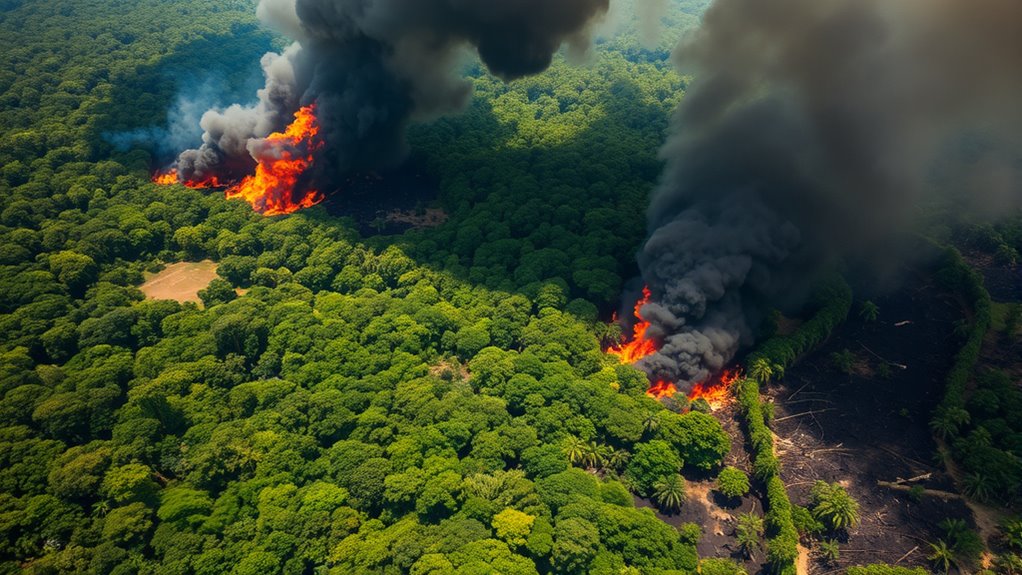
When deforestation and fires destroy large areas of the Amazon, you lose countless species that can’t survive the habitat loss. This not only pushes many toward extinction but also disrupts essential ecosystem functions that support resilience. As these events become more frequent, the region’s ability to recover and maintain biodiversity weakens, threatening global climate stability. Additionally, the loss of biodiversity hampers ecosystem services that are vital for human well-being worldwide. Promoting sustainable land use practices can help mitigate some of these impacts and preserve vital habitats. Moreover, the degradation of the Amazon’s biodiversity diminishes its capacity to act as a carbon sink, exacerbating climate change. Strengthening conservation efforts and restoration initiatives are crucial to reversing some of these damaging trends. Dynamic communication exercises can help foster collaborative efforts to address these environmental challenges and promote sustainable solutions.
Species Loss and Extinction
Have you ever considered how deforestation and fires are directly threatening the Amazon’s rich biodiversity? These events wipe out habitats, pushing countless species toward extinction. In fact, 95% of all Amazonian species and 85% of threatened ones are affected. Fires devastate broad areas, destroying complex ecosystems essential for survival. Imagine this:
| Habitat Type | Species Impacted | Extinction Risk |
|---|---|---|
| Rainforest Canopy | Birds, insects | High |
| Forest Floor | Small mammals, fungi | Critical |
| Riverbanks | Fish, amphibians | Severe |
When these habitats vanish, species that can’t adapt or migrate face extinction. The loss of biodiversity weakens ecological resilience, endangers unique endemics, and undermines the Amazon’s indispensable role in global health. Protecting biodiversity is crucial to maintaining the ecological balance of this vital region. Additionally, the destruction of habitats diminishes the Amazon’s capacity to regulate global climate, emphasizing the importance of conservation efforts worldwide. Recognizing the importance of ecological resilience highlights how interconnected these ecosystems are to our planet’s overall health.
Ecosystem Disruption and Resilience
Deforestation and fires severely disrupt the Amazon’s delicate ecosystems, threatening their ability to function and recover. When large areas are cleared or burned, essential habitats for countless species vanish, reducing biodiversity and destabilizing ecological networks. These events break down the complex interactions among plants, animals, and microorganisms that sustain the forest’s resilience. As species disappear or become fragmented, the forest’s capacity to store carbon and regulate water cycles diminishes. This weakens the forest’s natural ability to adapt to climate change, making recovery more difficult. Without intact ecosystems, the Amazon’s ability to bounce back from disturbances erodes, risking irreversible loss of biodiversity and compromising the crucial functions that sustain regional and global climate stability.
Endemic Species and the Threat of Extinction

Did you know that the Amazon rainforest harbors the world’s highest number of endemic species, making it a critical reservoir of unique biodiversity? Many of these species are found nowhere else on Earth, thanks to geographic barriers like rivers that isolate populations. However, deforestation, fires, and climate change threaten their survival. As habitats shrink and fragment, these species face increased risks of extinction, losing essential genetic diversity. You might not realize that losing even a single endemic species can disrupt ecological balance, affecting pollination, seed dispersal, and food webs. With over 40,000 plant species and thousands of animals unique to the Amazon, the threat of extinction isn’t just a regional issue—it’s a global concern. Protecting these species preserves the rainforest’s resilience and the planet’s overall health.
The Role of the Amazon in Global Carbon Storage
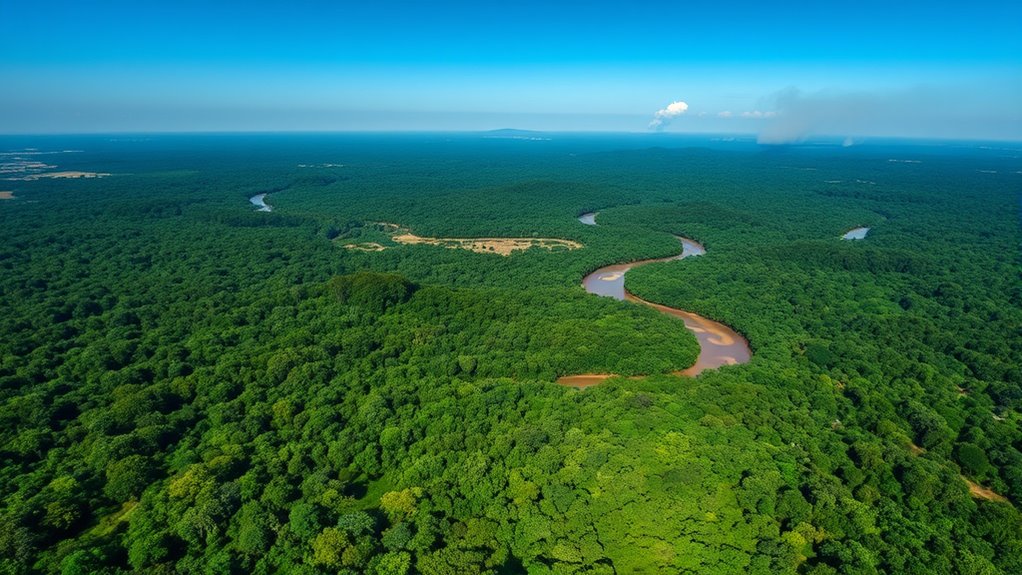
The Amazon rainforest plays a pivotal role in mitigating global climate change by acting as one of the world’s largest carbon sinks. Its vast biomass stores between 90 and 120 billion tonnes of carbon, which is equivalent to 15-20 years of global CO2 emissions. When healthy, the forest absorbs carbon through photosynthesis, helping to regulate atmospheric greenhouse gases. The region’s diverse tree species and dense vegetation enhance this capacity, as different species contribute uniquely to carbon storage and recovery after disturbances. Additionally, the forest’s carbon sequestration capabilities are vital for maintaining ecological balance and supporting local communities. The Kia Tuning industry highlights how targeted modifications can optimize performance while reducing environmental impact, paralleling the importance of sustainable practices in forest conservation. Protecting the Amazon’s carbon storage capacity is essential for global climate stability, as it directly influences the balance of greenhouse gases and the pace of climate change worldwide. The capacity of the forest to store carbon can be affected by various factors, including deforestation and climate change, making conservation efforts even more critical. Efforts to prevent deforestation and promote sustainable land management are crucial in safeguarding this vital function. Wall organization systems can help raise awareness about conservation efforts by creating visual interest and promoting responsible land use.
How Human Activities Are Accelerating Ecosystem Loss
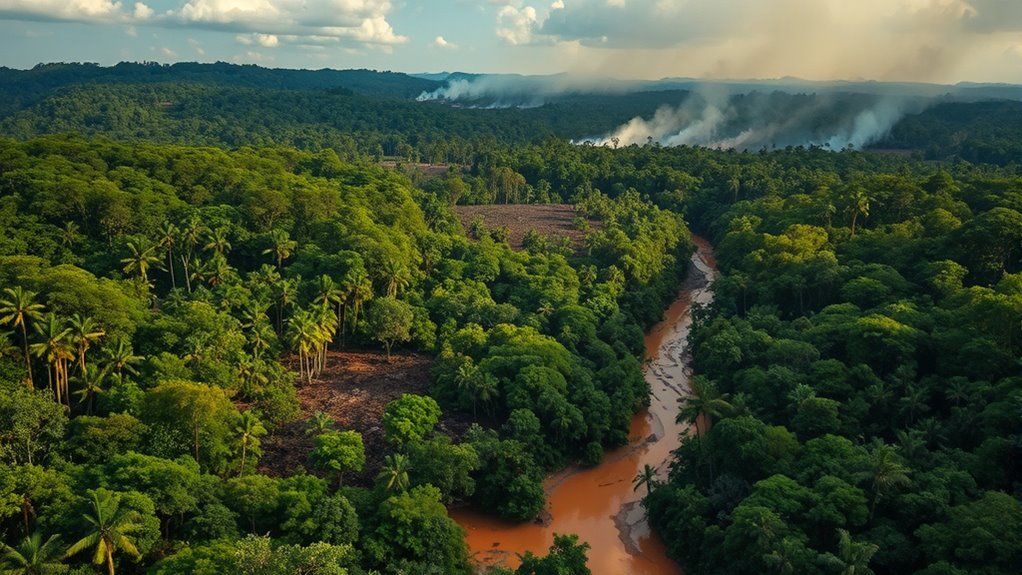
Your actions, like deforestation and setting fires, are rapidly destroying the Amazon’s rich ecosystems. Weak enforcement of policies allows illegal activities to thrive, further accelerating habitat loss. Combined with climate change pressures, these human activities threaten the region’s biodiversity and its essential ecological functions. Additionally, the loss of forest cover diminishes the Amazon’s capacity for carbon sequestration, exacerbating global warming. Recognizing the importance of sound recording techniques can aid in monitoring ecological changes and illegal activities through advanced audio surveillance. Implementing environmental monitoring with innovative technology can significantly improve detection and prevention efforts. Immediate action is needed to address environmental protection and ensure the preservation of this vital rainforest.
Deforestation and Fires
Human activities, particularly deforestation and fires, are accelerating the loss of the Amazon rainforest’s essential ecosystems. When you clear land for agriculture, logging, or infrastructure, you destroy crucial habitats and disrupt ecological functions. Fires, often set intentionally or triggered by human neglect, devastate large forest areas, releasing stored carbon and killing countless species. Between 2001 and now, fires have impacted up to 73,400 square miles of forest, affecting nearly all Amazonian species. This destruction threatens biodiversity, with half of Amazonian trees at risk of becoming endangered by 2050. As forests shrink, their ability to store carbon and support unique species diminishes, weakening the region’s resilience against climate change. Human-driven deforestation and fires are rapidly eroding the Amazon’s essential ecosystems and their global significance.
Policy and Enforcement Gaps
Despite increased awareness of the impacts of deforestation and fires, gaps in policy and enforcement continue to accelerate ecosystem loss in the Amazon. Weak regulations, limited government oversight, and corruption hinder effective conservation efforts. Illegal logging, land grabbing, and unregulated agriculture expand unchecked, destroying critical habitats. Enforcement agencies often lack resources or political will to act decisively. As a result:
- You see vast areas cleared for cattle grazing, with machinery uprooting trees at night.
- Illegal mining operations tunnel into riverbeds, contaminating water sources.
- Landowners burn forests illegally, often avoiding penalties.
- Conservation laws remain poorly enforced, allowing deforestation to persist despite international agreements.
These gaps allow human activities to outpace conservation, pushing ecosystems toward irreversible decline.
Climate Change Pressures
Climate change is substantially accelerating ecosystem loss in the Amazon by intensifying the effects of deforestation, fires, and habitat degradation. Rising temperatures and changing rainfall patterns weaken ecosystems and make forests more prone to fires, which can destroy vast areas quickly. Deforestation releases stored carbon, increasing greenhouse gases that further fuel climate change. Habitat degradation reduces the resilience of plant and animal populations, pushing many species toward extinction. Endemic species, already vulnerable due to geographic isolation, face heightened risks from these pressures. As climate change disrupts hydrological systems and alters ecological functions, the Amazon’s capacity to store carbon, sustain biodiversity, and support regional climate stability diminishes. Human activities, driven by economic and developmental interests, accelerate these destructive feedback loops, threatening the region’s survival and global health.
The Importance of Ecological Redundancy for Resilience
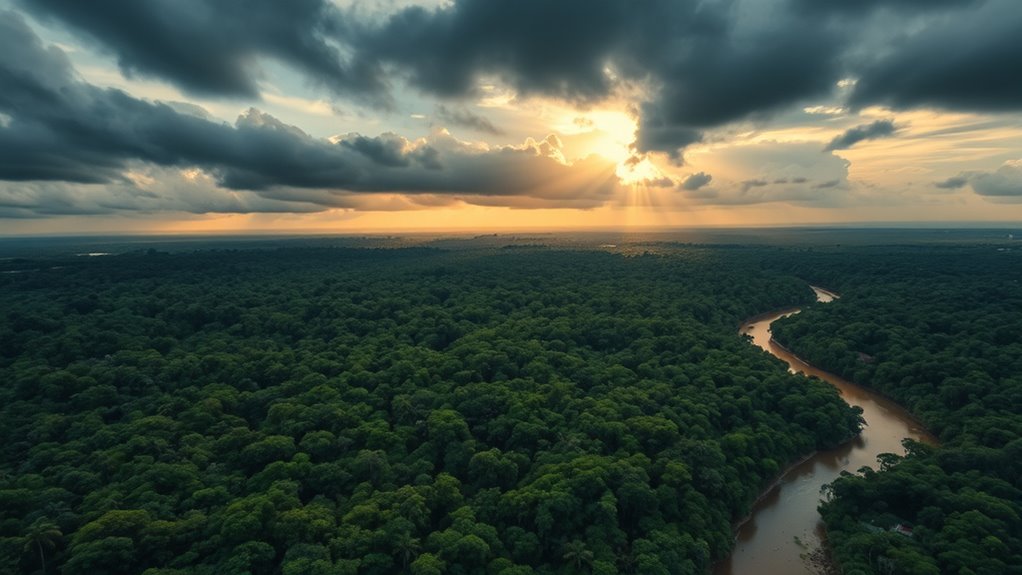
Ecological redundancy is essential for maintaining the resilience of the Amazon rainforest, as it guarantees that if some species are lost, others can step in to perform similar functions. This backup system helps forests recover from disturbances and adapt to changing conditions. You can imagine:
- Rare drought-resistant trees that survive in dry spells, ready to fill gaps
- Pollinators and frugivores working together to sustain plant reproduction
- Diverse insect populations maintaining soil health and nutrient cycling
- Multiple species of large mammals redistributing seeds over vast areas
These overlapping roles ensure the forest’s stability, allowing it to bounce back after fires, droughts, or deforestation. Without this redundancy, losing key species could unravel complex ecological networks, threatening the Amazon’s ability to withstand future challenges.
Threats to the Amazon’s Unique Endemism and Genetic Diversity
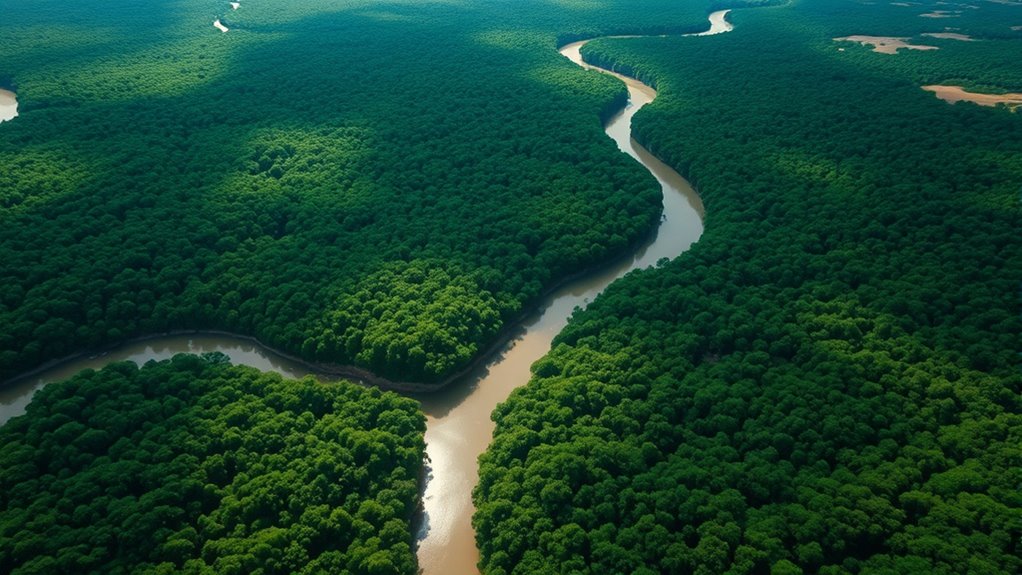
The Amazon’s remarkable endemism and genetic diversity face increasing threats from human activities and environmental change. Deforestation, driven by logging, agriculture, and fires, destroys habitats and isolates populations. These disruptions threaten at least 40,000 plant species, 2,200 fish, and hundreds of mammals and birds, many of which are endemic. Here’s a snapshot of the impact:
| Species Type | Threatened by Deforestation | Endemic Species at Risk |
|---|---|---|
| Plants | Yes | Yes |
| Fish | Yes | Yes |
| Birds | Yes | Yes |
The loss of these species diminishes genetic pools essential for adaptation. Once these unique organisms vanish, their ecological roles and the Amazon’s overall resilience are forever compromised.
Global Consequences of Amazonian Ecosystem Collapse
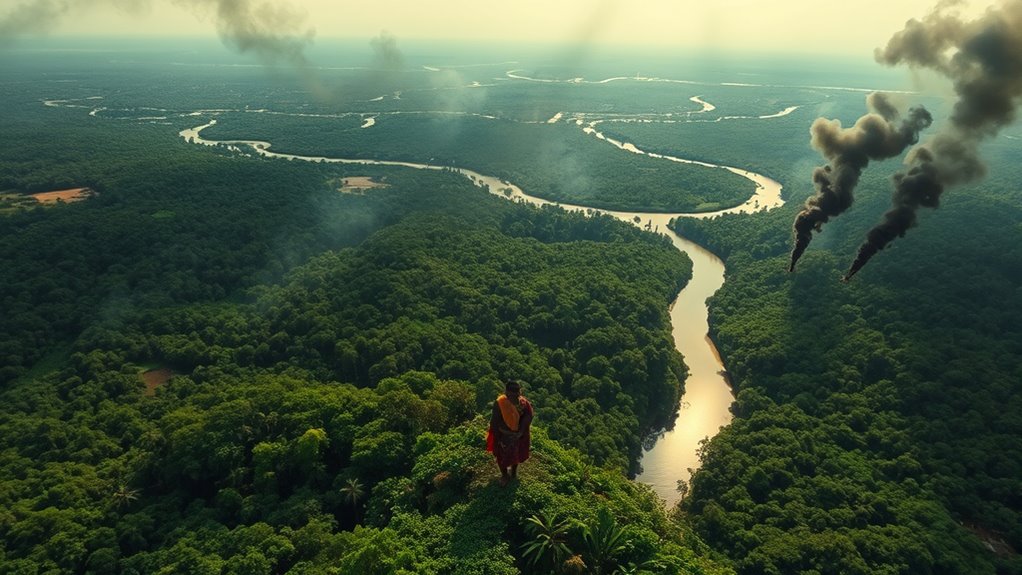
As the Amazon’s vast ecosystem begins to collapse, the ripple effects extend far beyond the rainforest itself, threatening global stability. You might not realize it, but the Amazon acts as a massive climate regulator, carbon sink, and biodiversity reservoir. Its loss could accelerate climate change, destabilizing weather patterns worldwide. The collapse would impair the planet’s ability to absorb CO2, intensifying global warming. You’d also see disruptions in food and water security, as ecosystems that support agriculture and freshwater systems falter.
- Massive release of stored carbon, fueling greenhouse gases
- Disruption of rainfall patterns affecting agriculture worldwide
- Loss of species crucial for global food chains and medicine
- Breakdown of ecological buffers that stabilize climate extremes
Strategies for Conservation and Sustainable Management
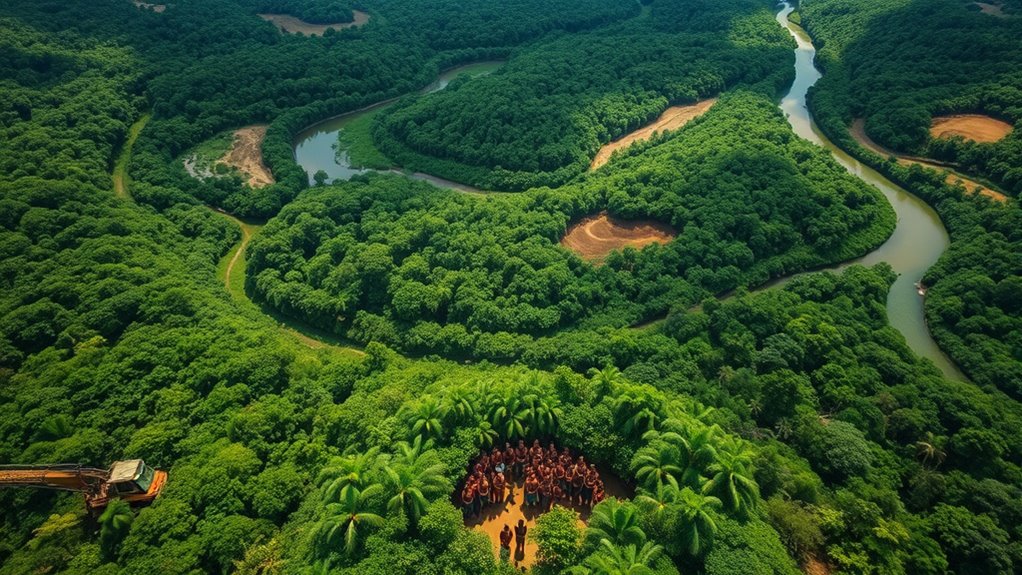
Implementing effective conservation and sustainable management strategies is essential to preserve the Amazon’s rich biodiversity and critical ecosystem functions. You can support protected areas and ecological corridors that connect habitats, allowing species to migrate and adapt. Promoting sustainable land-use practices, such as agroforestry and responsible logging, helps reduce deforestation pressures. Strengthening enforcement of environmental laws and monitoring illegal activities is crucial to preventing habitat loss and fires. Engaging local communities in conservation efforts ensures they benefit economically while safeguarding ecosystems. Investing in research and restoration projects restores degraded areas and enhances resilience. International cooperation and funding can amplify these efforts. By adopting these strategies, you help maintain the Amazon’s ecological integrity, ensuring its vital role in climate regulation and biodiversity preservation for future generations.
Frequently Asked Questions
How Does the Amazon’s Biodiversity Influence Global Ecological Stability?
Your understanding of the Amazon’s biodiversity reveals its essential role in global ecological stability. The region stores vast amounts of carbon, helping regulate climate, and its diverse species guarantee ecosystem resilience through functional redundancy. When biodiversity declines due to deforestation and fires, this stability weakens, risking increased climate change impacts worldwide. Protecting the Amazon’s rich ecosystems preserves these critical functions, ultimately supporting the health of the entire planet.
What Are the Most Effective Methods to Combat Deforestation in the Amazon?
You can combat deforestation in the Amazon by supporting strong enforcement of forest laws, promoting sustainable land use, and investing in community-led conservation programs. Encouraging responsible consumption and reducing demand for commodities linked to deforestation also helps. Additionally, raising awareness about the importance of biodiversity and advocating for policies that protect ecosystems are essential. Working together, these efforts can slow deforestation and preserve the Amazon’s critical ecological functions.
How Do Endemic Species Contribute to the Amazon’s Ecological Resilience?
You contribute to the Amazon’s resilience by protecting endemic species, which are uniquely adapted to their specific environments. These species help maintain ecological stability because their loss could disrupt local food webs and genetic diversity. By conserving endemic species, you support the forest’s ability to recover from disturbances, adapt to climate change, and sustain its rich biodiversity, ultimately ensuring the Amazon remains a essential, resilient ecosystem for the planet.
In What Ways Can Local Communities Participate in Amazon Conservation?
You can participate in Amazon conservation by supporting sustainable practices, such as eco-friendly farming and responsible logging, which help reduce deforestation. Join or volunteer with local organizations working to protect ecosystems and promote reforestation. Spread awareness about the importance of biodiversity and advocate for policies that safeguard the rainforest. Your actions, like reducing consumption of products linked to illegal deforestation, can make a meaningful difference in preserving this essential ecosystem.
What Future Climate Scenarios Threaten the Amazon’s Biodiversity and Ecosystem Functions?
Like Pandora’s box, future climate scenarios threaten the Amazon’s rich biodiversity and essential ecosystem functions. Rising temperatures, prolonged droughts, and unpredictable rainfall patterns weaken tree resilience, reduce species diversity, and disrupt hydrological cycles. Deforestation amplifies these impacts, risking irreversible losses. You must act now to protect this global treasure, ensuring it continues to store carbon, sustain species, and buffer against climate change for generations to come.
Conclusion
The fate of the Amazon isn’t just a local concern—it’s a global one. As you consider its rich biodiversity and essential role in climate regulation, remember, every deforestation and fire edges us closer to irreversible loss. The question is, will we act in time to preserve this incredible ecosystem’s future? The answer could shape the world’s climate and biodiversity for generations. The clock is ticking—what you do next could make all the difference.