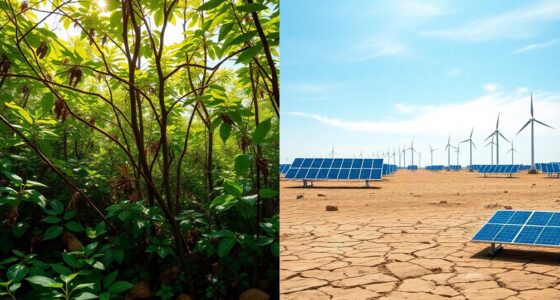

While green energy helps fight climate change, its production often harms ecosystems and biodiversity. Mining for materials like lithium, nickel, and cobalt requires extensive land clearing, disrupting habitats and fragmenting ecosystems. Water use and pollution pose additional threats, and the energy needed for extraction increases carbon footprints. If you want to discover how these hidden environmental costs impact our planet and what can be done to balance growth and conservation, keep exploring.
Key Takeaways
- Mining for renewable materials causes significant land clearing, habitat loss, and ecosystem fragmentation, threatening biodiversity and endangered species.
- The extraction process consumes large amounts of water, generates waste, and pollutes water bodies, harming aquatic ecosystems.
- High energy demands for mining, especially for lithium, cobalt, and nickel, result in substantial carbon emissions and environmental impacts.
- Overlapping mining sites with protected areas intensifies habitat destruction and endangers wildlife conservation efforts.
- Sustainable practices require careful site selection, eco-friendly techniques, and strategic planning to balance renewable energy development with environmental preservation.

Augine Swedish Dishcloths for Kitchen, Swedish Dish Cloths 5 Pack, Super Absorbent Reusable Paper Towels Washable, Biodegradable, Quick Drying, Dishwasher Safe
Eco-friendly Materials: Our Swedish dishcloths for kitchen are made from 30% cotton and 70% cellulose wood pulp and...
As an affiliate, we earn on qualifying purchases.
The Expansive Footprint of Mining for Renewable Materials
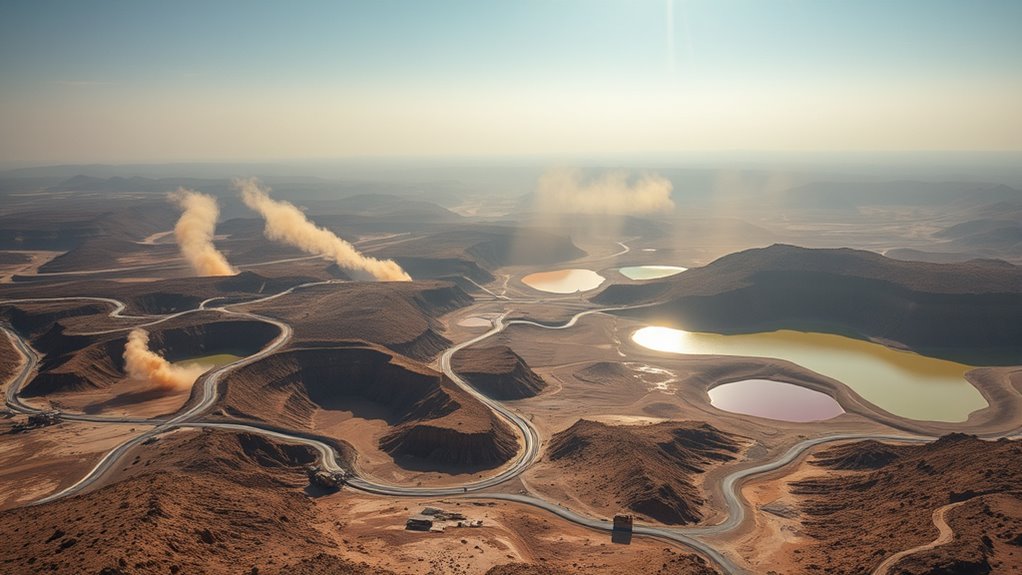
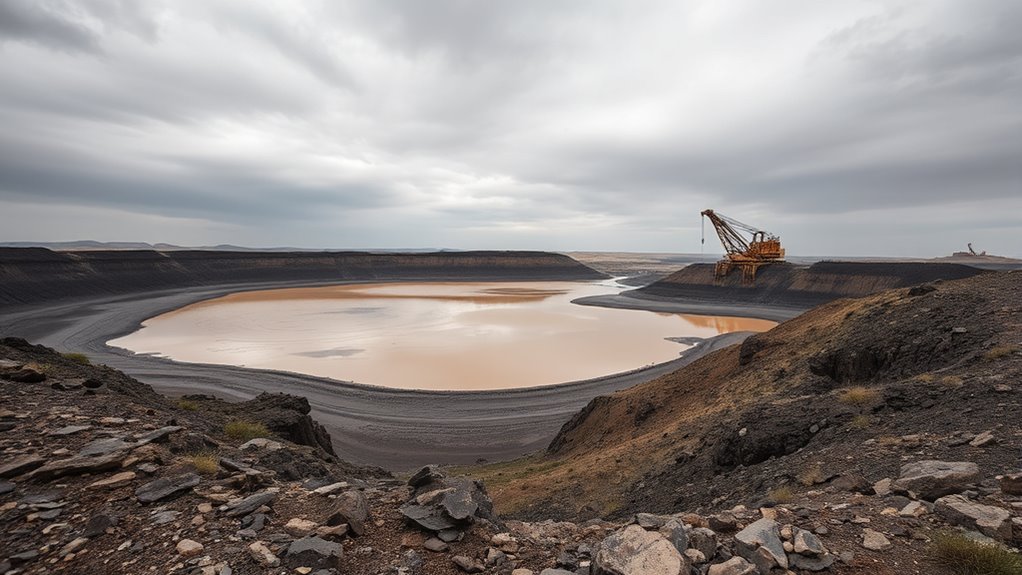
The push for renewable energy has led to an unprecedented expansion of mining activities across the planet. You might not realize that mining for materials like lithium, cobalt, nickel, and silver now affects about 50 million km² of Earth’s land surface. Most of this land, around 82%, is dedicated to extracting resources essential for clean energy technologies. Alarmingly, 8% of these mining areas overlap with Protected Areas, and 7% with Key Biodiversity Areas, risking biodiversity loss. Mining density is higher in overlapping zones, intensifying environmental pressures. As demand for renewable materials grows, so does the land footprint, potentially threatening ecosystems and species. Without strategic planning, the expansion could undermine the very environmental benefits renewable energy aims to provide. Regulatory oversight remains a critical factor in balancing resource extraction with environmental conservation. Additionally, sustainable mining practices are increasingly discussed as a way to mitigate environmental impacts and promote responsible resource utilization. Given the significant environmental implications, implementing environmental impact assessments is essential before expanding mining operations further. The integration of innovative extraction technologies could also help reduce the overall land disturbance associated with mining activities. Furthermore, adopting renewable energy-powered mining equipment can help lower the carbon footprint of extraction processes.

Remerry 13 Pcs Zero Waste Gift Set Beeswax Wraps, Reusable Farmers Market Bags, Mesh Bags, Straws Kit and Natural Loofah Dish Tool Christmas Kitchen Gifts
Comprehensive Set: this versatile set includes 3 sizes of reusable beeswax wraps, 1 cotton mesh shopping bag, 3...
As an affiliate, we earn on qualifying purchases.
Environmental Consequences of Land Clearing and Habitat Disruption
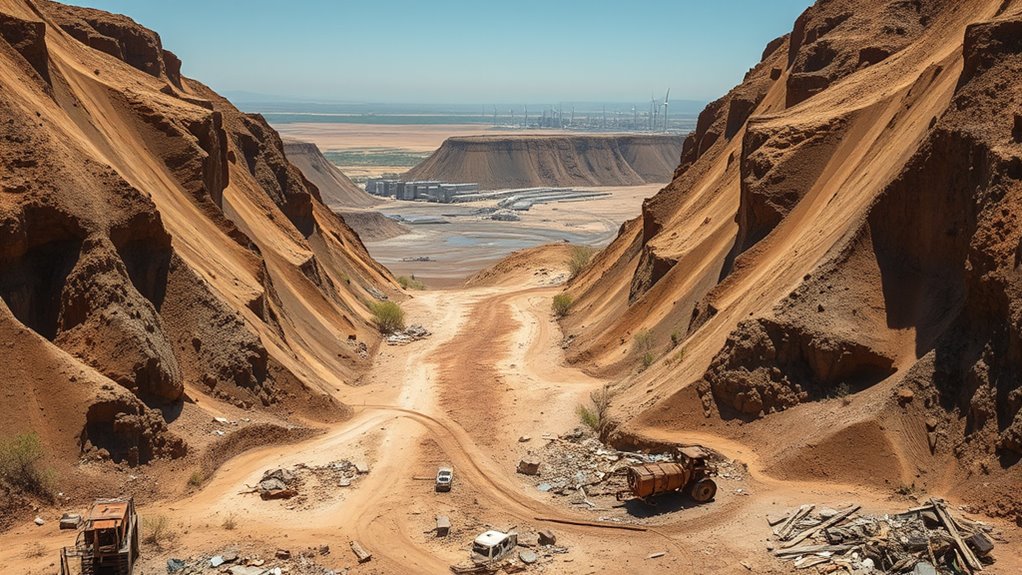
When land is cleared for mining, habitats are lost and ecosystems become fragmented, making it harder for wildlife to survive. You might not see how this disruption increases threats to biodiversity, especially for endangered species. Without careful planning, these activities can cause irreversible damage to the natural balance of ecosystems. The use of environmentally friendly equipment can help mitigate some of these impacts during mining operations. Additionally, understanding the pollution and hydrogen fuel cells cycle highlights how alternative energy sources can reduce environmental strain if implemented responsibly. Incorporating Gold IRA strategies into investment portfolios can also promote financial resilience while supporting sustainable energy initiatives. Recognizing the importance of secure financial transactions, such as verifying SWIFT/BIC codes, ensures that investments and funds are transferred safely and efficiently.
Habitat Loss and Fragmentation
Land clearing for renewable energy mining directly causes habitat loss and fragmentation, disrupting ecosystems and threatening biodiversity. As land is cleared, natural habitats are broken into smaller, isolated patches, making it harder for species to survive and reproduce. This process impacts ecosystems in three key ways:
- It reduces available space for wildlife, forcing animals into smaller areas.
- Fragmented habitats hinder migration and genetic exchange, weakening species resilience.
- Loss of continuous habitats increases vulnerability to invasive species and environmental stressors. Additionally, sustainable practices are essential to minimize environmental impact and preserve biodiversity in the face of land development. Recognizing the importance of ecosystem dynamics can guide better land management decisions that balance energy needs with environmental preservation, emphasizing the need for conservation strategies to mitigate these effects. Incorporating restoration efforts can help recover degraded habitats and support ecosystem health after land clearing.
Biodiversity Threats Increase
As mining activities expand to meet the material demands of renewable energy, biodiversity faces escalating threats from habitat disruption. Clearing land for mines destroys ecosystems that many species depend on, pushing vulnerable populations closer to extinction. Protected Areas and Key Biodiversity Areas are often affected, even when mining overlaps are unintentional. Over 80% of endangered species are threatened by habitat loss caused by land clearing, with disruption intensifying as mining spreads. This destruction fragments habitats, making it harder for wildlife to migrate, find food, or reproduce. The environmental footprint of renewable mineral extraction increases pressure on biodiversity, especially in delicate ecosystems like rainforests and wetlands. Without careful planning, the expansion of renewable infrastructure risks undermining conservation efforts and accelerating species declines.
Ecosystem Disruption Risks
Clearing land for renewable energy projects can profoundly disrupt ecosystems, fragmenting habitats that countless species rely on for survival. This land clearing causes direct loss of biodiversity and alters natural processes. Here’s how:
- Habitat Fragmentation: Divides ecosystems, isolating animal populations and reducing genetic diversity.
- Disruption of Migration Paths: Blocks routes animals depend on for seasonal movement, threatening survival.
- Altered Water Flows: Changes in landscape affect local hydrology, leading to erosion and loss of wetlands.
- The loss of natural buffers can also increase vulnerability to climate change impacts and reduce the effectiveness of natural wall organization systems that support ecosystem stability.
These disruptions weaken ecosystem resilience, making species more vulnerable to extinction. If not carefully planned, renewable energy land use can exacerbate ecological imbalances, undermining conservation efforts. The environmental cost of land clearing isn’t just local—it can have ripple effects across entire ecosystems.

Tieralia Bamboo Dish Brush Gift Set – 5-Piece Kitchen Cleaning Set with Bottle Brush, Round Scrub Brush, Palm Brush & 2 Plant-Based Sponges | Wooden Handle Cleaning Tools for Dishes & Surfaces
🧼 All-in-One Cleaning Kit for Every Task: This 5-piece set includes a long bottle brush, palm scrubber, round...
As an affiliate, we earn on qualifying purchases.
Water Use and Pollution Challenges in Mining Operations

Have you ever considered how mining operations for renewable energy materials can strain local water resources? Mining consumes vast amounts of water for processing, cooling, and dust suppression, often leading to water shortages for nearby communities. Additionally, water pollution from tailings dam leaks, runoff, and dust mitigation chemicals contaminates rivers and groundwater. These pollutants can harm aquatic ecosystems and pose health risks to humans. In regions with limited water availability, such as deserts or tropical rainforests, this strain is even more severe. Mining operations may require diverting water from natural sources, reducing flows essential for local flora and fauna. The cycle of water stress, ecological damage, and community hardship is exacerbated by the self-watering plant pots used in reclamation efforts and environmental restoration projects. Furthermore, the use of environmentally friendly chemicals in processing can sometimes reduce additional chemical runoff, but often at increased costs and technical complexity. Recognizing the importance of sustainable practices, some companies are now adopting water management strategies to minimize their environmental footprint. Implementing integrated water management can help balance resource needs with ecological preservation.

Isshah Plant-Based Kitchen Sponges - FSC Certified and PETA Approved, Natural, Eco-Friendly, Biodegradable Sisal Hemp Sponges for Dishes, Cleaning Sponge for Kitchen, Bathroom, Household - 12 Count
Natural and Eco-Friendly - Our Kitchen Sponges are made from wood cellulose and the other side made from...
As an affiliate, we earn on qualifying purchases.
The Carbon Footprint of Extracting Renewable Energy Resources
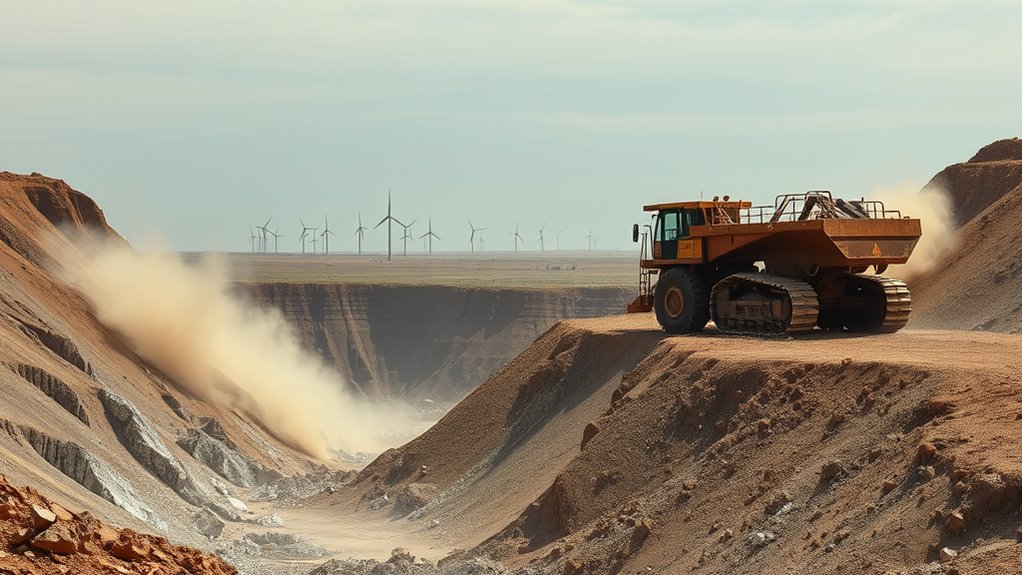
You might assume renewable energy extraction is entirely green, but land clearing releases significant carbon emissions by destroying vegetation and soils. Mining activities require a lot of energy, especially in less concentrated deposits, which adds to the carbon footprint. As ecosystems are disturbed, they release stored carbon, further contributing to greenhouse gas emissions. Additionally, the cultural and regional differences in traditional breakfast preparations highlight the diverse environmental impacts associated with local food sourcing and production methods. The energy consumption of mining operations can be substantial, often relying on fossil fuels that increase overall emissions. Incorporating sustainable mining practices can help mitigate some environmental impacts, but challenges in balancing demand and conservation remain. The cybersecurity vulnerabilities during major outages can also disrupt critical systems involved in environmental monitoring and resource management, emphasizing the importance of resilient digital infrastructure in sustainable practices. Moreover, implementing advanced digital security measures can ensure the continuity of environmental data collection and management during such disruptions.
Emissions From Land Clearing
How much do land clearing activities contribute to the carbon footprint of renewable energy extraction? They release significant amounts of greenhouse gases by destroying vegetation and soils. This process contributes to overall emissions in three key ways:
- Vegetation removal releases stored carbon, increasing atmospheric CO₂ levels.
- Soil disturbance exposes organic matter, which decomposes and emits greenhouse gases.
- Land use change in carbon-rich ecosystems, like forests, amplifies emissions.
These activities occur before actual mining begins and can double the carbon footprint associated with resource extraction. While renewable energy aims to reduce emissions overall, land clearing for materials like lithium, cobalt, and nickel contributes substantially to greenhouse gases, undermining climate benefits and exacerbating ecological damage. Additionally, land management practices can influence the total emissions from these activities, highlighting the importance of sustainable approaches to resource extraction.
Energy Intensity of Mining
Mining for renewable energy materials varies greatly in energy intensity, with some resources requiring substantially more energy to extract than others. For example, mining a kilogram of diamond produces about 800,000 kg CO2e, while iron requires only around 2 kg CO2e. Less concentrated deposits demand more energy for extraction, increasing emissions per unit. Materials like lithium, nickel, and cobalt are particularly energy-intensive because they often come from deep or low-grade deposits, meaning more effort and fuel are needed. This higher energy demand results in a larger carbon footprint for producing these materials. Consequently, the environmental cost of mining renewable resources can rival or exceed that of some fossil fuels, especially when considering the full life cycle and energy used during extraction, processing, and transportation.
Carbon Release in Ecosystems
Ever wonder how extracting renewable energy materials impacts ecosystems’ carbon balance? Mining releases carbon in several ways:
- Land clearing destroys vegetation, releasing stored carbon into the atmosphere.
- Disruption of soils accelerates decomposition, releasing greenhouse gases.
- Heavy machinery burns fossil fuels, emitting significant CO₂ during extraction.
These activities contribute to the carbon footprint of renewable resource mining, often outweighing the environmental benefits in the short term. In ecosystems like tropical rainforests, the impact is especially severe, causing long-term carbon release. Even in less sensitive areas, ongoing mining operations add to atmospheric greenhouse gases. While renewable energy aims to reduce carbon emissions globally, the extraction process itself can temporarily increase carbon levels locally. Recognizing this paradox is vital for developing truly sustainable mining practices and minimizing ecosystems’ carbon release.
Comparing the Mining Demands of Different Energy Technologies

Renewable energy technologies vary substantially in their mining demands, impacting land use, resource depletion, and environmental health differently. For example, solar and wind require significant amounts of raw materials, but nuclear power demands less overall mining per unit of energy produced. Here’s a comparison:
| Technology | Mining Demand (per unit energy) | Land Use Impact |
|---|---|---|
| Solar PV | High | Moderate to high |
| Wind | Moderate | Low to moderate |
| Nuclear | Low | Low |
You’ll find that solar and wind, while essential for clean energy, place more pressure on land and resources. Nuclear power, with smaller mining footprints, offers a different trade-off—less mining but higher construction emissions.
Material Needs for Solar, Wind, and Battery Technologies
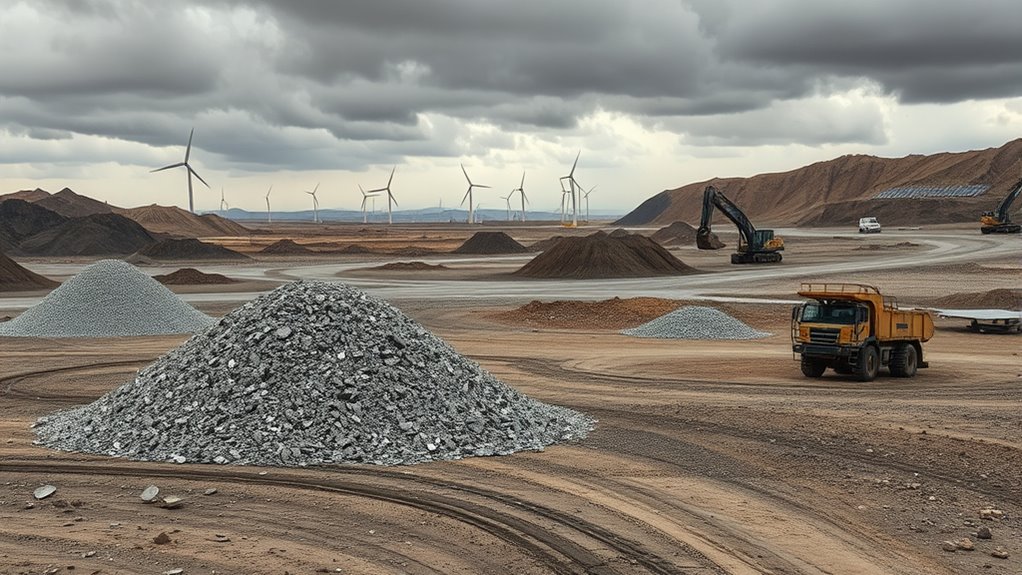
The materials required for solar panels, wind turbines, and batteries substantially influence the environmental footprint of clean energy development. You’ll need significant quantities of specific minerals:
- Lithium (around 16 kg per battery pack)
- Nickel (46 kg per pack)
- Cobalt (46 kg per pack)
Global mining for renewables demands millions of tonnes of nickel, silver, manganese, and lithium ore annually. For example, 190 million tonnes of nickel ore and 2.3 million tonnes of lithium ore are mined each year. These operations generate vast amounts of waste—about 72 billion tonnes of earth and rock—and only a fraction undergoes chemical processing. This intense mineral extraction can lead to habitat disruption, water pollution, and high energy use, emphasizing that even green tech comes with significant environmental costs.
The Overlooked Impact on Biodiversity and Protected Areas
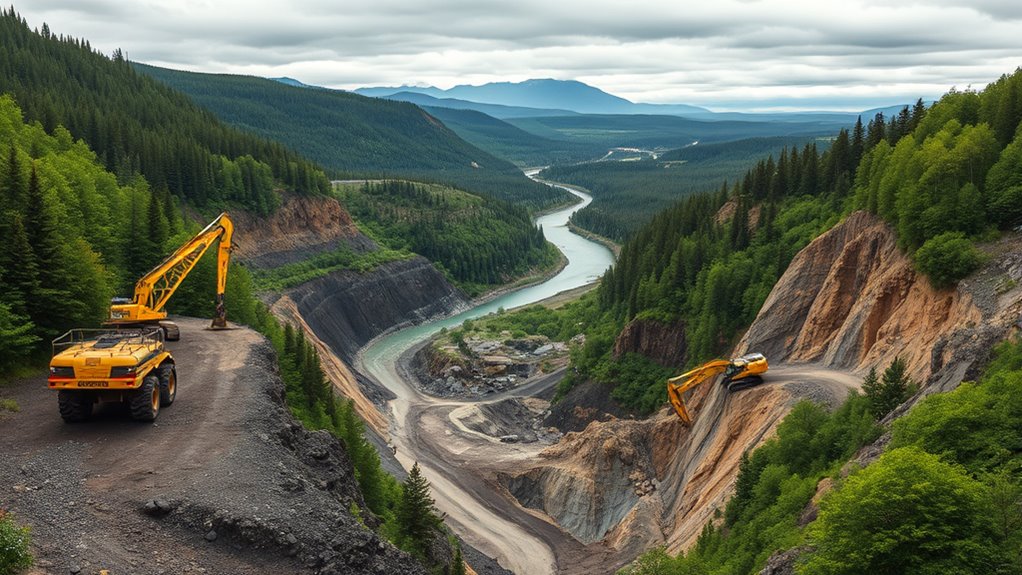
Although the push for green energy aims to reduce carbon emissions, it often overlooks the profound threats it poses to biodiversity, especially within protected areas. Mining for renewable materials encroaches on habitats crucial for endangered species, causing habitat loss and fragmentation. About 8% of mining sites overlap with protected areas, increasing risks of disturbance and ecological degradation. This expansion threatens biodiversity beyond conservation zones, impacting Key Biodiversity Areas and remaining wilderness. As mining activities intensify, habitat destruction accelerates, endangering countless species. Many ecosystems are ill-equipped to recover from such disturbances, leading to long-term biodiversity declines. Without strategic planning, the rapid growth of renewable infrastructure could undermine conservation efforts, making biodiversity loss an unintended consequence of our climate action. Protecting ecosystems must be integral to sustainable energy development.
Balancing Climate Goals With Conservation Priorities

Balancing climate goals with conservation priorities requires careful planning and strategic decision-making. You must consider three key factors:
Effective planning balances climate objectives with conservation, focusing on site selection, eco-friendly mining, and strong regulations.
- Site Selection: Prioritize areas with minimal biodiversity value to reduce ecological disruption.
- Mining Techniques: Adopt advanced, environmentally sensitive methods that lower land and water impacts.
- Regulatory Frameworks: Enforce strict environmental safeguards and habitat protections to prevent overreach.
Strategies for Minimizing Mining’s Environmental and Ecological Impact
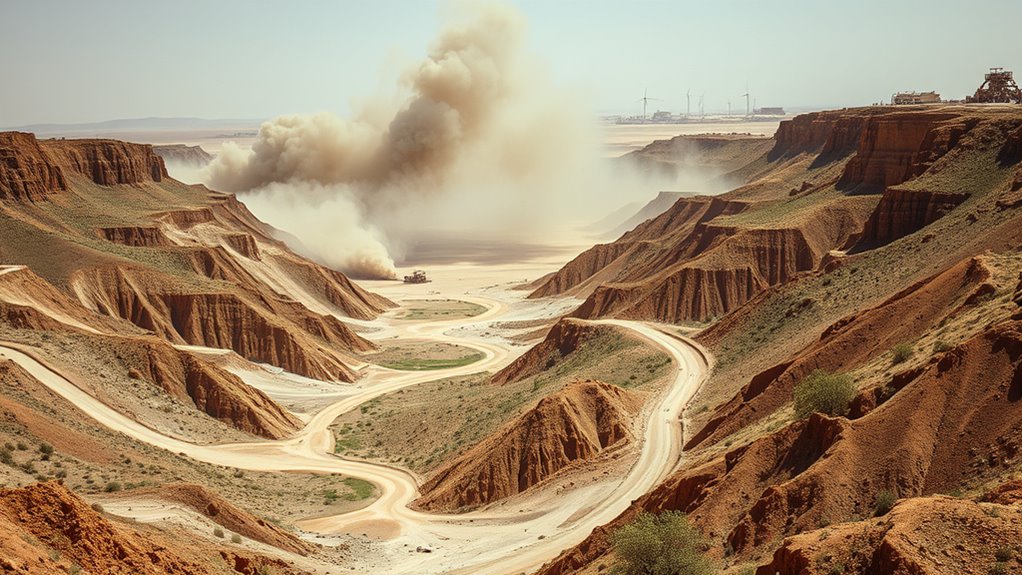
Implementing effective strategies to minimize mining’s environmental and ecological impacts is crucial as renewable energy expansion accelerates. You should prioritize sustainable mining practices, such as using advanced technologies that reduce land disturbance and water use. Strategic planning can help avoid mining in protected areas and critical biodiversity zones, minimizing habitat destruction. Recycling and reusing materials, like lithium and cobalt, lessen the need for new extraction. Supporting innovations in alternative materials or low-impact technologies can also reduce overall mining demand. Additionally, enforcing stricter regulations, environmental assessments, and monitoring ensures compliance and early detection of ecological harm. Combining these approaches helps balance the urgent need for renewable energy with the imperative to conserve ecosystems, protecting biodiversity and reducing long-term environmental costs.
Frequently Asked Questions
How Can Mining for Renewables Be Made More Environmentally Sustainable?
You can make mining for renewables more sustainable by prioritizing strategic planning to minimize habitat disruption and protect biodiversity. Use advanced technology to reduce land and water use, and prioritize recycling to lessen new mining. Supporting policies that enforce strict environmental standards and encouraging responsible sourcing also help. By balancing demand with conservation efforts, you ensure renewable energy development benefits the climate without causing excessive ecological harm.
What Are the Long-Term Ecological Effects of Mining in Protected Areas?
You might think protected areas are safe from long-term ecological harm, but mining proves otherwise. Over time, it damages habitats, threatens endangered species, and causes soil and water pollution, undermining conservation efforts. The irony? While aiming for clean energy, you risk destroying the very ecosystems you’re trying to protect. Without strategic planning, mining in these areas could erode biodiversity, making sustainability a fragile illusion rather than a lasting solution.
Are There Alternative Materials to Reduce Mining Impacts for Renewable Tech?
You can reduce mining impacts for renewable tech by exploring alternative materials like recycled metals, bio-based composites, or less harmful mineral substitutes. Supporting research into new technologies may help develop batteries and components that need fewer rare materials. Additionally, advocating for better recycling practices and circular economy approaches guarantees you reuse materials more efficiently, decreasing the need for new mining and protecting ecosystems from further damage.
How Does Renewable Energy Mining Compare to Fossil Fuel Extraction in Environmental Harm?
Ever wonder which causes more harm: renewable energy mining or fossil fuel extraction? You’ll find that mining for renewables, while impactful, generally results in less environmental damage than fossil fuels. Fossil fuel extraction releases vast amounts of greenhouse gases, contaminates water, and destroys ecosystems on a massive scale. In contrast, renewable mining impacts are concentrated in specific areas, but still threaten biodiversity and land use. Overall, renewables tend to be cleaner, but not without environmental costs.
What Policies Can Balance Renewable Energy Expansion With Biodiversity Conservation?
You can support policies that balance renewable energy growth with biodiversity conservation by advocating for strategic mining planning, stricter environmental regulations, and protected area safeguards. Push for thorough environmental impact assessments before approving mining projects, promote renewable technologies with lower land footprints, and encourage recycling of materials to reduce new mining needs. Engaging local communities and conservation groups ensures that biodiversity priorities are integrated into energy expansion strategies effectively.
Conclusion
You can’t ignore that mining for renewable energy isn’t a small footprint—it’s a giant footprint on our planet’s delicate balance. Every solar panel, wind turbine, and battery demands a heavy toll on land, water, and ecosystems. If we want truly green energy, we’ve got to find smarter ways to minimize this environmental cost. Because, honestly, ignoring these impacts is like trying to hide an elephant in the room—eventually, it’ll be impossible to overlook.