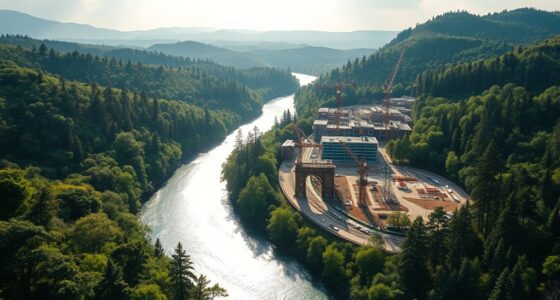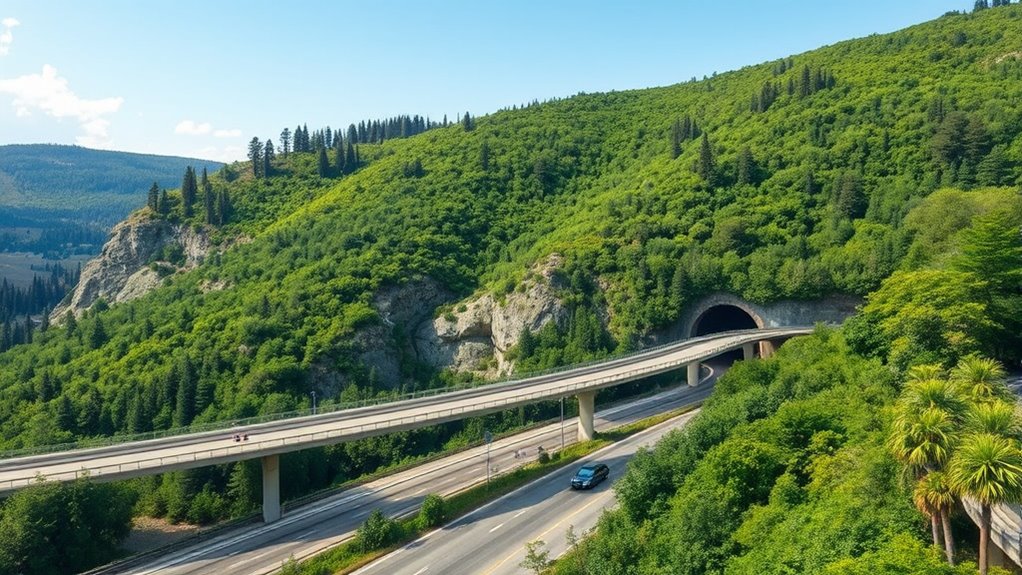

Wildlife crossings like bridges and tunnels help you protect animals by reducing collisions and reconnecting fragmented habitats. These structures guide animals safely across busy roads, with features like fencing and natural landscaping to encourage use. They also improve safety for drivers and can save money in the long run. Supported by policies and funding, these crossings foster biodiversity and ecological health. Keep exploring to discover how these innovative solutions are transforming conservation efforts nationwide.
Key Takeaways
- Highway bridges and tunnels provide safe, dedicated pathways that prevent animals from crossing busy roads, reducing collisions.
- Overpasses with natural vegetation mimic habitats, encouraging animals to use crossings confidently.
- Fencing directs wildlife toward crossings, minimizing dangerous roadside crossings and enhancing safety.
- Properly placed crossings reconnect fragmented habitats, supporting biodiversity and wildlife migration.
- These structures significantly decrease wildlife-vehicle collisions, saving animal lives and reducing human injuries and costs.

30" H*12.4" W Solar Fountain Hanging Bird Bath, Metal Bird Bath Bubbler, Outdoor Bird Bath Bowl, for Outdoors Garden Patio Decor.
🌞WORKING PRINCIPLE OF THE BUBBLER: The solar bubbler is completely powered by solar energy and needs to be...
As an affiliate, we earn on qualifying purchases.
The Role of Overpasses and Underpasses in Wildlife Conservation

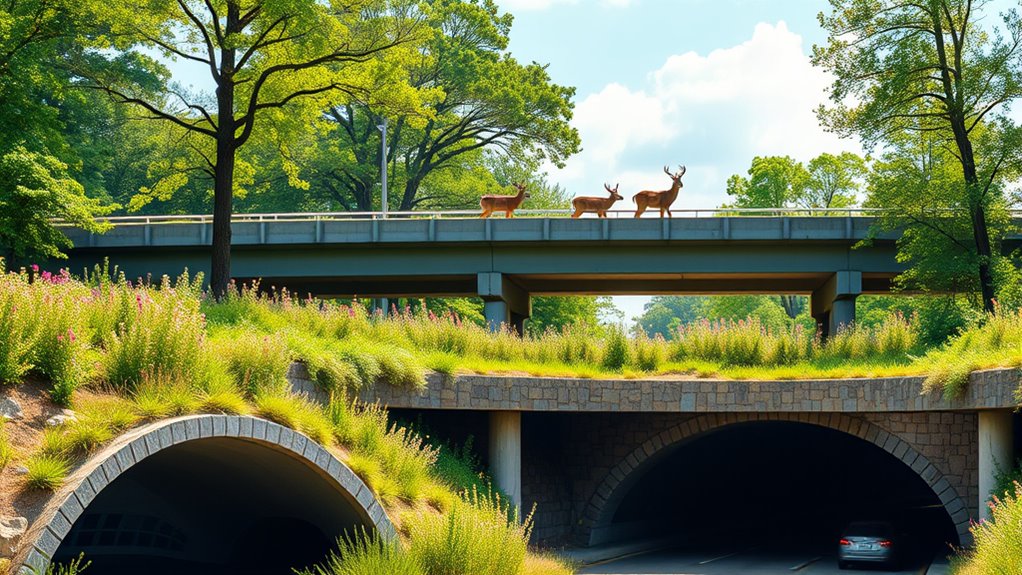
Overpasses and underpasses play a crucial role in wildlife conservation by providing safe crossing points that reduce vehicle-wildlife collisions. These structures create dedicated pathways that guide animals away from busy roads, lowering the risk of crashes and fatalities. Overpasses, often vegetated and designed to mimic natural habitats, attract larger mammals like deer, mountain lions, and bobcats. Underpasses and tunnels are especially effective for species such as amphibians and smaller animals, offering secure passage beneath traffic. Proper placement near migration corridors and habitat areas encourages use and enhances connectivity. Fencing along roads directs animals toward these crossings, preventing dangerous crossings elsewhere. Together, overpasses and underpasses serve as essential tools to protect wildlife, save lives, and maintain ecological integrity.

Bird Bath for Outside, 12.6" Solar Powered Bird Bath with Fountain, Metal Bird Bath Bowl, Outdoor Patio Lawn Decor (Bronze)
Bring Your Garden to Life with Solar Power: Watch your garden flourish with the gentle sounds of our...
As an affiliate, we earn on qualifying purchases.
Design Features That Encourage Animal Use of Crossings

Design features play an essential role in ensuring wildlife feel comfortable and motivated to use crossings. You should incorporate natural vegetation on overpasses to mimic their habitats, making animals more willing to cross. Fencing directs animals toward crossing points and prevents dangerous road access, increasing safety and usage. For underpasses and culverts, choose sizes and shapes that suit specific species, like larger tunnels for deer or smaller ones for amphibians. Location matters—place crossings near migration routes or habitat corridors to maximize use. Surface textures and planting can also encourage animals to enter and traverse structures confidently. By tailoring these features to the needs of local species, you create inviting crossings that promote safe movement, reduce collisions, and support ecological connectivity. Additionally, considering cost and budgeting factors ensures that the design remains sustainable and effective over time.

wartleves Hanging Solar Bird Bath Fountain, Solar Powered Cascading Outdoor Water Fountain, Hanging Bird Bath with Water for Outdoors Garden Patio Backyard Lawn Decor (Blue)
【Solar Powered Fountain】: This hanging solar bird bath fountain runs on sunlight with no wiring or electricity needed....
As an affiliate, we earn on qualifying purchases.
Economic and Safety Benefits of Installing Wildlife Infrastructure
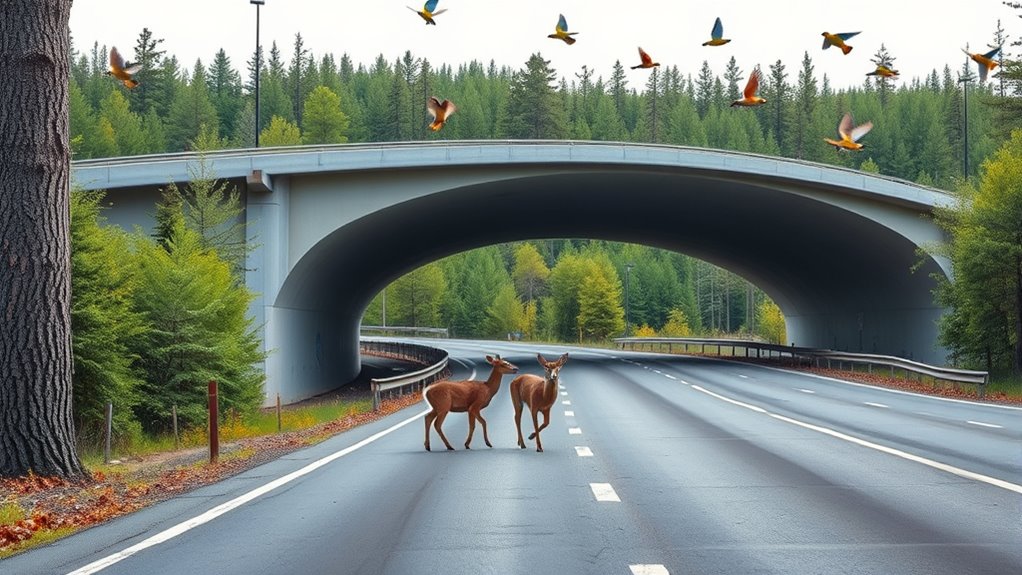
Installing wildlife infrastructure offers significant economic and safety advantages by reducing costly collisions and protecting lives. Wildlife crossings combined with fencing can cut large mammal road deaths by up to 83%, saving on vehicle repairs, medical costs, and legal liabilities. In Wyoming, a $12 million project with overpasses and underpasses is projected to pay for itself within 17 years through fewer crashes and less road damage. These structures also enhance driver safety by lowering collision risks, especially at night or in rural areas where animal movements peak. Roads fitted with crossings and fencing have decreased wildlife-related crashes by up to 97%, reducing emergency responses and insurance claims. Additionally, implementing expert-designed voiceover recordings in public awareness campaigns can further promote driver caution and wildlife preservation. Incorporating wildlife detection systems can further optimize the effectiveness of these crossings by alerting drivers to animal presence in real-time. Investing in wildlife infrastructure not only saves costs but also promotes ecological balance by facilitating safe animal movement across busy roads. Moreover, ongoing research into animal movement patterns helps improve the design and placement of these crossings for maximum benefit. Studies have shown that effective placement of crossings greatly increases their usage by animals, maximizing safety and ecological benefits. Overall, investing in wildlife infrastructure results in substantial savings while safeguarding both human lives and animal populations.

15 FT Telescoping Bird House Pole, Durable Bat Houses Kit with Ground Socket, Heavy Duty Outdoor Telescoping Bird Pole for Bat Houses, Purple Martin Houses and Other Wooden Structures
Premium Wildlife Pole Kit: Includes a complete bat house mounting system: 15ft telescopic pole, rust-resistant screws/hardware, bat house...
As an affiliate, we earn on qualifying purchases.
Legislation and Funding Initiatives Supporting Wildlife Connectivity
You should examine how federal programs, like the Infrastructure Investment and Jobs Act, allocate funding to support wildlife connectivity projects. State legislation plays a key role, with efforts in places like California, Florida, and Utah prioritizing corridor development. Interagency collaboration guarantees these initiatives are effectively planned and implemented, maximizing conservation and safety benefits. Incorporating advanced sound design techniques can further enhance the effectiveness of these wildlife crossings by improving auditory cues for animals and drivers alike. Additionally, adopting trailer music techniques such as building tension and dynamic contrasts can be employed in designing auditory signals that alert drivers to wildlife activity, thereby increasing safety and ecological connectivity. Paying attention to drivetrain maintenance can also ensure that signage and signals remain reliable and effective over time, supporting these conservation efforts. Proper infrastructure upkeep ensures the longevity and functionality of these crossings, making them more reliable for wildlife movement.
Federal Funding Programs
Federal funding programs play a crucial role in supporting wildlife connectivity initiatives across the United States. These programs provide essential resources to plan, build, and maintain crossing structures that reduce vehicle-wildlife collisions. They also promote habitat preservation and improve migration corridors. Here are three key initiatives:
- The 2021 Infrastructure Investment and Jobs Act allocated $350 million over five years specifically for wildlife crossings and habitat connectivity projects nationwide. This funding underscores the importance of trustworthy infrastructure in ensuring effective conservation efforts.
- The Federal Highway Administration’s Wildlife Crossings Program offers grants for planning, pilot projects, and research to enhance wildlife safety and habitat linkages. The effectiveness of these projects can be enhanced through cost-effective design and implementation strategies.
- Various state-specific funds, like Florida’s $850 million and Utah’s $20 million, supplement federal efforts, ensuring sustained investment in wildlife infrastructure.
Together, these programs empower agencies and communities to implement effective, safer crossings for animals and drivers. Sustainable infrastructure plays a vital role in ensuring long-term preservation and connectivity for wildlife populations.
State Legislation Efforts
State legislation plays a vital role in advancing wildlife connectivity by providing targeted funding and streamlined permitting processes. These laws prioritize the construction of crossings, ensuring projects move efficiently through regulatory hurdles. For example, California’s Assembly Bill 1889 (2024) simplifies permits and focuses on key wildlife corridors, boosting habitat connectivity. Other states, like Florida and Utah, have allocated hundreds of millions of dollars specifically for crossings and habitat protection, demonstrating strong legislative commitment. Funding from state budgets, often supplemented by federal grants, supports planning, construction, and maintenance. Legislation also encourages collaboration among agencies and conservation groups, aligning efforts to reduce wildlife-vehicle collisions while reconnecting fragmented habitats. These policies create a foundation for sustainable, effective wildlife crossing initiatives across the country. Additionally, conservation funding mechanisms are essential in ensuring the long-term success of these projects. Incorporating innovative design features can further enhance the effectiveness and safety of wildlife crossings, ensuring they serve their purpose for years to come. Moreover, integrating data analytics can optimize placement and design, making crossings more effective and adaptable to changing conditions, supported by an understanding of ecological connectivity. Utilizing adaptive management strategies ensures that crossings can be modified over time based on monitoring data and ecological needs.
Interagency Collaboration
How do various government agencies work together to promote wildlife connectivity? They coordinate through legislation, funding, and shared goals. Agencies like the Federal Highway Administration, USDA, and state departments collaborate to develop policies, secure resources, and implement crossing projects. This partnership ensures that wildlife needs are integrated into transportation planning.
Here are three key ways they work together:
- Funding Alignment: Federal grants, such as the $350 million from the 2021 Infrastructure Investment and Jobs Act, support crossing projects nationwide.
- Legislative Support: Laws like California’s AB 1889 streamline permits and prioritize wildlife corridors.
- Data Sharing: Agencies share collision and habitat data to identify hotspots and optimize crossing locations.
This collaboration maximizes resources, advances conservation, and reduces vehicle-wildlife conflicts effectively.
How Crossings Restore Habitat Connectivity and Promote Biodiversity
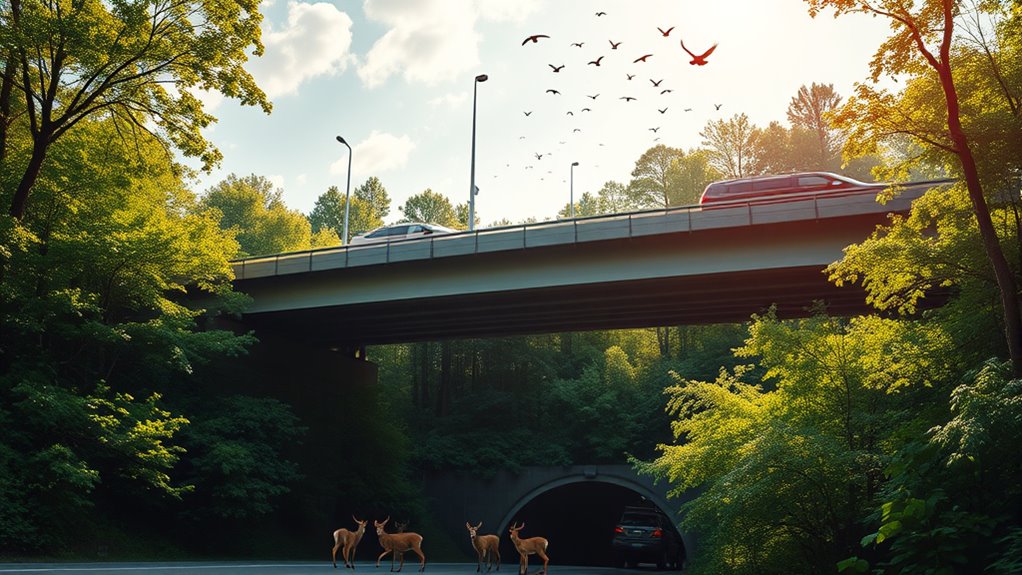
Have you ever wondered how wildlife crossings help reconnect fragmented habitats and support biodiversity? These structures create safe passageways that link isolated populations, allowing animals to move freely across landscapes divided by roads. By reconnecting habitats, crossings enable gene flow, which sustains healthy, diverse populations and reduces inbreeding. They also facilitate seasonal migrations, helping species access breeding grounds and resources. When crossings are strategically placed near migration corridors and key habitat areas, they maximize conservation benefits. This connectivity prevents population decline and promotes ecosystem resilience. As animals traverse these safe passageways, biodiversity flourishes because more species can thrive, reproduce, and maintain healthy ecological interactions. Ultimately, crossings serve as essential links that restore the natural movement patterns vital for long-term species survival and thriving ecosystems.
Overcoming Challenges and Implementing Effective Crossing Projects

Implementing effective wildlife crossing projects often faces significant hurdles, from securing sufficient funding to maneuvering complex permitting processes. This process often benefits from early stakeholder engagement and clear communication of project goals. To overcome these challenges, you need strategic planning and collaboration. Here are key steps:
- Secure Funding: Explore federal grants, state budgets, and private partnerships to finance crossings, leveraging programs like the Infrastructure Investment and Jobs Act. Additionally, researching popular beverage brands that support sustainability initiatives may open up alternative funding avenues. Building community support and demonstrating the ecological benefits can also enhance funding prospects. Incorporating sustainable funding sources is vital for long-term project success. Engaging with local communities and environmental organizations can further strengthen funding applications and project visibility.
- Navigate Permitting: Work closely with agencies to streamline approvals, especially when retrofitting existing infrastructure or designing new structures. This process often benefits from early stakeholder engagement and clear communication of project goals.
- Design Thoughtfully: Prioritize species-specific needs, migration routes, and habitat features to increase crossing use and effectiveness. Incorporating wildlife habitat considerations into design can significantly improve the success of crossing structures. Additionally, understanding local ecological dynamics can help tailor solutions that effectively support wildlife movement.
Frequently Asked Questions
How Do Wildlife Crossings Impact Local Communities and Land Use?
Wildlife crossings positively impact your community by reducing accidents, saving lives, and lowering vehicle repair costs. They help preserve local habitats and promote safer, more connected landscapes, which can boost eco-tourism and property values. Land use becomes more sustainable as crossings integrate conservation efforts with development plans, minimizing habitat fragmentation. Overall, these structures foster safer coexistence between people and wildlife, enhancing quality of life and promoting environmental stewardship in your area.
What Species Are Most Likely to Benefit From Crossings?
You see herds of deer stepping onto lush green overpasses, confident and safe as they cross busy highways. Large mammals like deer, elk, and mountain lions, along with hoofed animals and carnivores, benefit most from crossings. Amphibians and smaller species also find refuge in tunnels and culverts. These structures connect their habitats, reducing danger and supporting their natural migrations, ensuring their survival amidst human-made landscapes.
How Is Crossing Effectiveness Monitored and Evaluated Over Time?
You monitor crossing effectiveness by collecting data on wildlife-vehicle collisions before and after installation, tracking crossing usage through camera footage or tracking devices, and conducting regular field surveys. You analyze this data to identify trends, assess reductions in collisions, and determine if animals are using the structures as intended. This ongoing evaluation helps you adjust designs or placement, ensuring the crossings remain effective and meet conservation and safety goals over time.
Are Wildlife Crossings Cost-Effective Compared to Other Mitigation Methods?
Wildlife crossings are highly cost-effective compared to other mitigation methods. You see, they can reduce wildlife-vehicle collisions by up to 97%, saving lives, property, and emergency costs. For example, a $12 million project in Wyoming pays for itself within 17 years through fewer crashes and road repairs. Their ability to reconnect habitats and prevent accidents makes them a smart investment, offering long-term safety and conservation benefits that outweigh traditional fencing or signage alone.
How Can Individuals Support Wildlife Crossing Initiatives?
You can support wildlife crossing initiatives by advocating for increased funding and policy changes, volunteering with conservation groups, and spreading awareness about their benefits. Consider participating in community planning meetings, donating to organizations that build crossings, or helping with habitat restoration projects nearby. Your voice and actions encourage local governments and agencies to prioritize safe animal crossings, ultimately protecting wildlife while enhancing road safety for everyone.
Conclusion
Imagine a quiet highway, where bridges and tunnels become safe passageways for wildlife, weaving forests and fields back together. These crossings act like crucial lifelines, guiding animals safely across busy roads and restoring their natural habitats. By supporting these structures, you help create a world where wildlife thrives alongside us, their paths seamlessly reconnecting in a dance of life. Together, we can protect nature’s harmony, ensuring future generations witness the beauty of animals crossing freely once more.