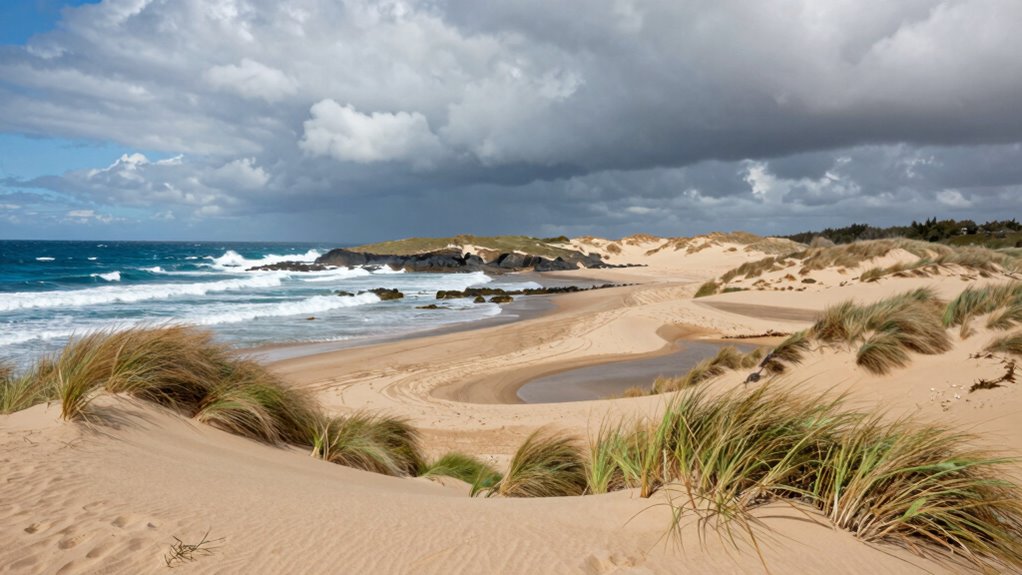

Barrier islands are highly dynamic because natural forces like waves, storms, and currents constantly move sediments, reshaping the landscape. This fluid process helps them adapt but also makes them vulnerable to erosion, rising sea levels, and storms. Human activities, such as development, can disrupt these natural processes, increasing erosion and land loss. Their fragile balance between resilience and vulnerability means they need careful management. To understand what makes them so unpredictable, keep exploring how these forces work together.
Key Takeaways
- Natural forces like waves, storms, and tides constantly reshape and move sediment, driving island migration and shape changes.
- Barrier islands serve as natural buffers, absorbing storm energy but are eroded over time, weakening their protective role.
- Their fragile, fluid nature requires ongoing sediment redistribution; disruption accelerates erosion and land loss.
- Rising sea levels threaten island stability by causing inundation, fragmentation, and increased vulnerability.
- Human activities, such as construction and shoreline development, interfere with natural processes, heightening erosion risks.

Barrier islands are among the most dynamic and vulnerable landforms along coastlines, constantly shifting in response to natural forces like waves, storms, and tides. You might notice how these islands seem to change shape or size over relatively short periods, a sign of their ongoing movement. Their fluid nature is driven by continuous processes such as coastal erosion, which gradually wears away their shores, and sediment deposition, which can rebuild or reshape them over time. This constant dance makes these islands both resilient and fragile, depending on the circumstances and the forces acting upon them.
Because of their position right at the edge of the ocean, barrier islands serve as natural buffers, providing storm protection for inland areas. During hurricanes or intense storms, they absorb the brunt of high winds and powerful waves, helping to reduce the impact on the mainland. However, this protective role also makes them highly susceptible to damage. As storms hit, the energy of the waves can erode large sections of the island, stripping away sand and altering the coastline considerably. Over time, repeated storm activity can lead to substantial loss of land, leaving the islands more exposed to future events and changing sea levels.
Barrier islands protect inland areas but are vulnerable to storm erosion and rising sea levels over time.
You might think of barrier islands as a delicate balancing act. They need to naturally migrate, erode, and rebuild to maintain their protective functions. This constant change is partly driven by the dynamic movement of sediment—sand, gravel, and other materials—that shifts with currents and tides. Human activities, like construction and shoreline development, can interfere with this natural process, often accelerating coastal erosion or disrupting sediment flow. When that happens, the islands might lose their ability to serve as effective storm protection, exposing inland communities to increased risk.
Furthermore, rising sea levels compound the susceptibility of barrier islands. As water levels increase, the islands face the threat of permanent inundation or notable land loss. You might observe that what once was a stable stretch of sand can become submerged or fragmented, making recovery more difficult after storms. Their vulnerability lies in their very nature—they’re constantly reshaping, often shrinking or migrating, in response to the changing environment. This sediment movement is essential to their resilience, yet it is highly sensitive to both natural and human influences. Yet, it’s this very dynamism that makes them indispensable for coastal ecosystems and communities, acting as first lines of defense while also requiring careful management to preserve their protective functions. Additionally, efforts to manage coastal erosion must carefully balance human intervention with the islands’ natural processes to ensure their long-term resilience.

Sandbaggy Coir Mat | Erosion Control Product for Stopping Soil Erosion on Hillsides, Riverbanks & Oceanfront | Lasts 5X Longer Than Straw Blanket | Lasts 2-5 Yrs (Homeowner Size – 4 ft by 30 ft Roll)
- Long-lasting erosion control: 2-5 years of soil retention
- Extra-large coverage: Covers over 1,000 square feet
- Durable alternative to straw blankets: Lasts up to 5X longer
As an affiliate, we earn on qualifying purchases.
As an affiliate, we earn on qualifying purchases.
Frequently Asked Questions
How Do Barrier Islands Form Over Time?
You might notice barrier islands form over time through sediment accumulation, where waves and currents deposit sand and sediments along the shoreline. Erosion patterns also shape these islands, as waves wear away parts of the land, creating new landforms. Over years, this constant process of sediment build-up and erosion causes barrier islands to shift, grow, or shrink, making them highly dynamic and sensitive to environmental changes.
What Role Do Humans Play in Their Vulnerability?
You play a significant role in their vulnerability through coastal development, which often leads to habitat destruction and increased erosion. Human activities like construction and tourism can destabilize barrier islands, making them more susceptible to storms and rising sea levels. Additionally, pollution impacts from runoff or waste weaken their ecosystems, reducing their natural resilience. Your actions directly influence how well these islands can withstand environmental stresses and adapt over time.
How Do Climate Change and Sea Level Rise Impact Them?
Climate change and sea level rise threaten barrier islands by accelerating coastal erosion and disrupting ecosystem services. You’ll see higher water levels, which can drown habitats and reduce their ability to protect inland areas. As erosion worsens, the islands may shrink or disappear, losing crucial ecosystems that support wildlife and improve resilience against storms. These changes make barrier islands more vulnerable, emphasizing the need for conservation efforts to preserve their dynamic nature.
Can Barrier Islands Fully Recover From Severe Storms?
Barrier islands can bounce back like a resilient boxer after a tough round, but their recovery depends on ecosystem resilience and natural recovery processes. Severe storms strip away sand and reshape the landscape, yet over time, natural forces rebuild these islands. However, repeated or intense storms can weaken their ability to fully recover, especially with climate change accelerating erosion. So, while they often recover, their resilience has limits.
What Are the Economic Benefits of Barrier Islands?
Barrier islands boost your local economy by attracting tourists, which increases tourism revenue and creates jobs. They also enhance real estate value, making waterfront properties more desirable and valuable. These islands serve as natural barriers that protect inland areas, helping maintain the stability of coastal communities. By supporting tourism and real estate, barrier islands contribute markedly to economic growth and community development, benefiting residents and businesses alike.
Conclusion
So, as you stand on these shifting sands, imagine barrier islands as living, breathing protectors—ever-changing, yet fragile as glass. Their dynamic nature dances with the forces of wind, waves, and storms, making them both resilient and vulnerable. Like a delicate sculpture carved by the sea, their beauty and power remind you that while they adapt and survive, they need your care to stay resilient against nature’s relentless march. Protect these islands, or risk losing their fleeting magic forever.