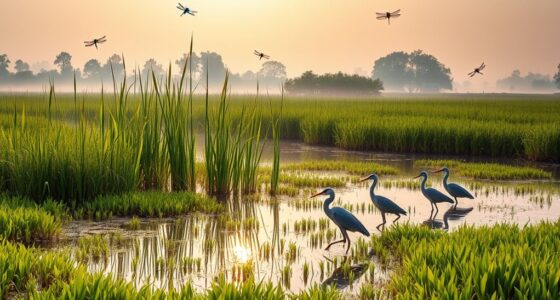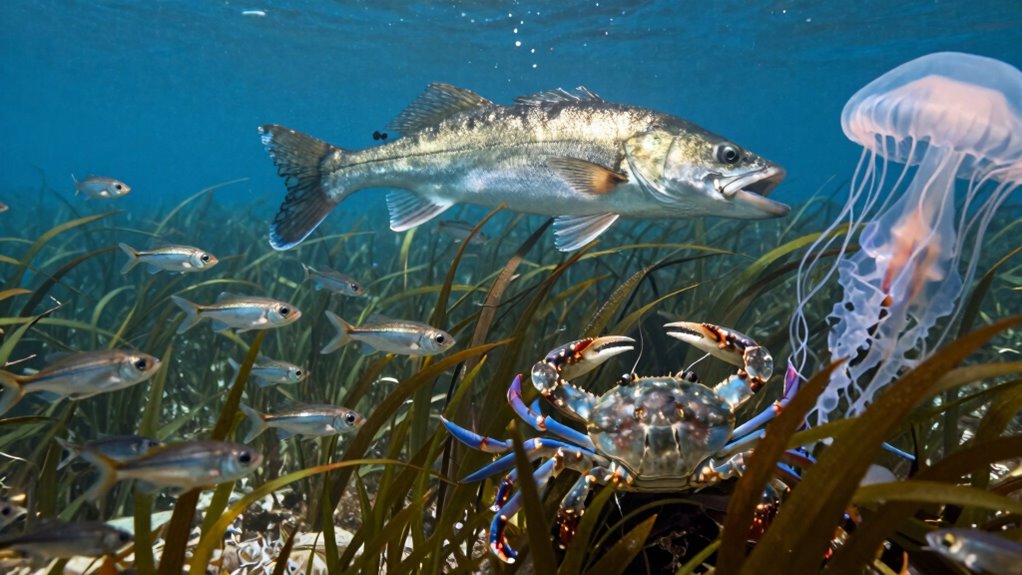

Inside the Chesapeake Bay food web, you see how aquatic plants like eelgrass provide the foundation by producing oxygen and supporting tiny invertebrates and larval fish. Small fish, such as menhaden, feed on plankton and plants, while larger fish, birds, and mammals prey on them. These predator-prey relationships keep populations balanced. Human impacts like pollution disrupt this web, but by understanding these connections, you can learn how conservation efforts help restore the bay’s significance. Keep exploring to discover more.

Prime made for students and young adults
- Fast, free delivery for dorm and study essentials
- Prime Video and Amazon Music included
- Member-only deals
Key Takeaways
- Aquatic plants like eelgrass form the foundation by producing energy and oxygen for the ecosystem.
- Small fish feed on plankton and plants, while larger predators control their populations.
- Species interactions maintain biodiversity and ecosystem stability through predator-prey relationships.
- Human activities such as pollution and habitat destruction disrupt these connections, harming the food web.
- Conservation efforts focus on protecting and restoring aquatic plants and habitats to sustain ecological balance.
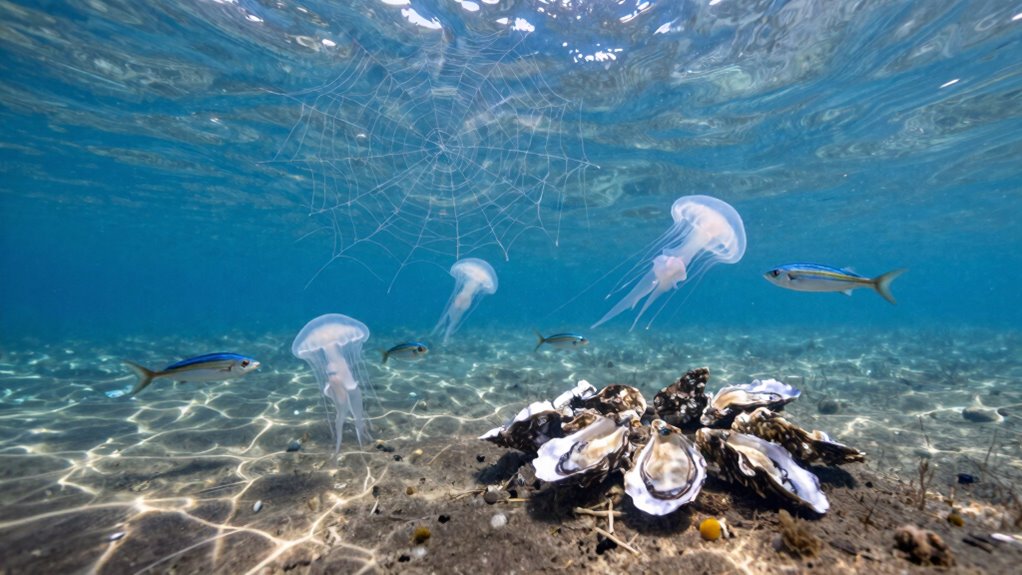
Have you ever wondered what keeps the Chesapeake Bay thriving? The answer lies in its complex food web, a delicate balance of countless species interconnected through predator-prey relationships. At the foundation of this web are aquatic plants, which serve as the primary producers. These plants, including eelgrass and submerged grasses, harness sunlight to create energy through photosynthesis. They not only provide essential oxygen but also form the base for the entire ecosystem, supporting a variety of smaller organisms like tiny invertebrates and larval fish. As these creatures feed on the plants, they become food for larger animals, setting off a chain reaction that sustains the bay’s biodiversity.
Your understanding of this web deepens when you realize how predator-prey relationships regulate populations. Small fish like menhaden, which feed on plankton and aquatic plants, are preyed upon by larger fish, birds, and even marine mammals. These relationships keep populations in check, preventing any one species from overwhelming the system. For instance, when predator numbers increase, prey populations often decline, which in turn influences the predators’ food supply. This constant ebb and flow maintain a stable environment, ensuring the bay remains healthy and resilient. It’s a finely tuned dance, where each species plays a crucial role, directly or indirectly supporting others. Recognizing how species interactions influence the overall health of the ecosystem highlights the importance of maintaining balanced predator-prey relationships.
You should also recognize how human activities impact these predator-prey relationships and aquatic plants. Pollution, overfishing, and habitat destruction threaten these fragile connections. When aquatic plants diminish due to sedimentation or nutrient overload, the entire food web suffers. Without enough plants, the tiny organisms that depend on them for food decline, which then affects larger fish and animals that rely on those prey species. Disrupting one part of this web can trigger cascading effects, leading to decreased biodiversity and a less resilient ecosystem. Monitoring species populations and their health is crucial for understanding these changes and implementing effective conservation strategies. That’s why protecting aquatic plants and maintaining the balance of predator-prey relationships is essential for the health of the Chesapeake Bay. Additionally, restoring degraded habitats and promoting sustainable practices can help support the delicate ecosystem balance necessary for the bay’s vitality. Understanding the importance of color accuracy in monitoring these changes can improve conservation efforts, as precise observation helps identify shifts in species populations and health.
As an affiliate, we earn on qualifying purchases.
Frequently Asked Questions
How Does Pollution Affect Species Interactions in the Chesapeake Bay?
Pollution disrupts species interactions in the Chesapeake Bay by harming water quality and altering nutrient cycling. When pollutants like excess nutrients enter the bay, they cause harmful algal blooms that deplete oxygen and harm aquatic life. This impacts predator-prey relationships, as some species struggle to find food or avoid predators. Ultimately, pollution weakens the balance of the ecosystem, making it harder for species to survive and maintain healthy interactions.
What Role Do Invasive Species Play in the Food Web?
Invasive species disrupt predator-prey dynamics in the Chesapeake Bay, often outcompeting native species for resources. You’ll see invasive predators, like Asian shore crabs, preying on native species, which alters the balance. This can lead to declines in native populations, affecting the entire food web. Invasive species can also introduce new diseases, further threatening native species and changing the natural predator-prey relationships you observe in the bay.
How Do Seasonal Changes Impact Food Web Dynamics?
Seasonal changes markedly impact food web dynamics by triggering seasonal migration and causing nutrient fluctuations. As temperatures rise or fall, species migrate to different areas, altering predator-prey relationships. Nutrient levels also vary, affecting algae growth and the availability of food sources for other organisms. You’ll notice shifts in species populations and interactions, making the food web more dynamic and responsive to seasonal cycles, which helps maintain ecological balance in Chesapeake Bay.
Are There Any Endangered Species Within the Food Web?
You might be surprised to learn that some endangered species, like the Atlantic sturgeon and the black sea bass, are essential parts of the Chesapeake Bay food web. Conservation efforts are critical to protect these species from extinction, ensuring the delicate balance of this ecosystem remains intact. By supporting such efforts, you help preserve biodiversity, allowing the bay’s complex web of life to thrive and continue functioning for generations to come.
How Do Human Activities Influence the Food Web Stability?
Human activities, through anthropogenic impacts like pollution, overfishing, and habitat destruction, threaten the Chesapeake Bay food web’s stability. These actions disrupt predator-prey relationships and reduce biodiversity, which weakens ecosystem resilience. When you limit pollution and support conservation efforts, you help maintain balance, allowing the food web to recover and adapt. Your actions directly influence the health of this ecosystem, ensuring its sustainability for future generations.
Conclusion
Now, imagine yourself diving into the Chesapeake Bay’s vibrant food web, where tiny plankton launch a never-ending chain of feast and famine, fueling a universe more bustling than Times Square on New Year’s Eve. Every creature, from the smallest shrimp to the mighty striped bass, plays a role in this chaotic, colorful dance of survival. Totally interconnected, it’s a wild, underwater spectacle so intense, it’s like witnessing the Earth’s greatest, most chaotic party—on a massive, watery stage.
Columbus Day / Indigenous Peoples' Day Picks
long weekend sales
As an affiliate, we earn on qualifying purchases.