Discover North America’s vast boreal forest, an ecological giant spanning over six million square kilometers. This essential landscape is a massive carbon sink, helping regulate the planet’s climate, while supporting diverse wildlife like birds, caribou, and polar bears. Its forests are rich with spruce, fir, and aspen, forming complex habitats. Human activities threaten this wilderness, but conservation efforts from Indigenous communities and sustainable practices are key. Keep exploring to understand how this incredible ecosystem shapes our world.
Key Takeaways
- The boreal forest spans over 6 million km² across North America, hosting billions of trees and vital ecosystems.
- Dominant tree species include spruce, balsam fir, pine, and aspen, forming complex, layered habitats.
- It serves as a crucial carbon sink, storing nearly twice as much carbon as tropical forests, impacting global climate regulation.
- The region supports over 300 bird species, iconic mammals like polar bears and caribou, and diverse wildlife.
- Human activities such as logging and mining, along with climate change, pose conservation challenges to this vast wilderness.
The Extent and Significance of the Boreal Realm

Have you ever wondered how vast and essential the boreal forest truly is? Spanning from Alaska to Newfoundland, it covers over 6 million square kilometers, making it the largest intact forest on Earth. Located primarily between 50°N and 65°N latitude, this biome accounts for about a third of all Earth’s forests. With an estimated 277 billion trees, it’s a critical global resource. The boreal forest isn’t just large—it’s crucial for climate regulation, storing nearly twice as much carbon as tropical forests. It supports a rich diversity of wildlife, including thousands of bird and mammal species. Despite its size and importance, only a small portion is protected, facing threats from logging, development, and climate change. Its extent and ecological significance make it a cornerstone of the planet’s health. Moreover, the boreal forest plays a vital role in climate regulation by acting as a significant carbon sink, helping to mitigate global warming.
Dominant Flora and Forest Composition
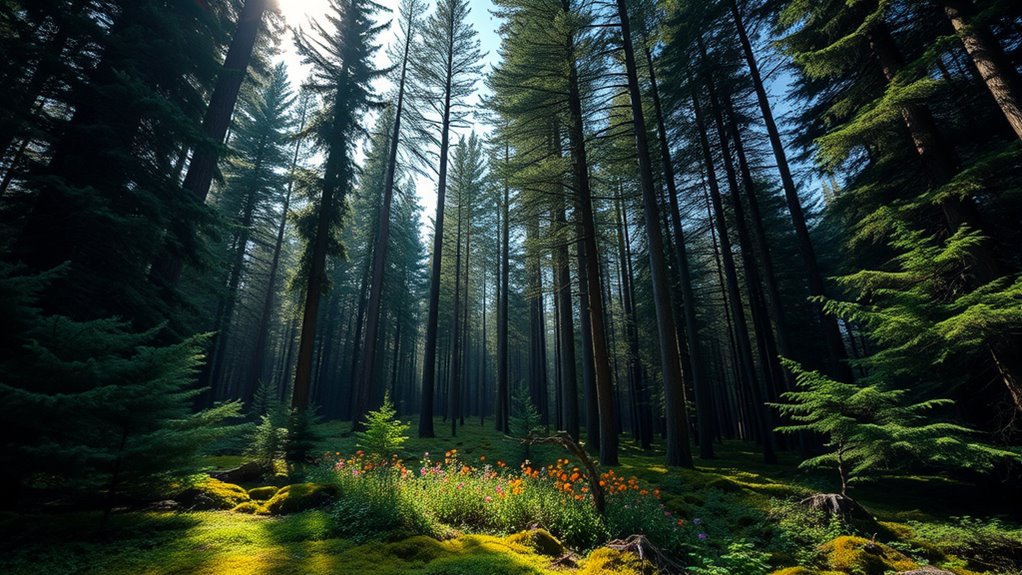
You’ll find that the boreal forest is dominated by key tree species like spruce, balsam fir, pine, and aspen. Evergreen softwoods, such as black spruce, are especially prevalent in wet soils, while some deciduous trees add variability to the landscape. This mix of flora shapes the forest’s unique composition and ecological role.
Key Tree Species
The boreal forest is dominated by a variety of coniferous and deciduous tree species that define its character and ecological function. You’ll find resilient evergreens like black spruce and white spruce, which thrive in wet soils and dominate many regions. Pine species, such as jack pine and red pine, add to the forest’s diversity and are essential for regeneration. Balsam fir provides essential habitat for wildlife, while deciduous trees like trembling aspen and white birch introduce seasonal color and support biodiversity. These species adapt to harsh climates, fast-growing and often forming dense stands. Together, they create a layered, complex forest structure that sustains a rich array of plants and animals, playing a critical role in carbon storage and ecological stability. Additionally, plant adaptation mechanisms enable these trees to survive extreme temperature fluctuations and nutrient-poor soils common in the boreal environment. The diverse composition of the boreal forest also promotes ecosystem resilience, allowing it to recover from disturbances such as wildfires and insect outbreaks more effectively. The presence of fire-adaptive traits among many species further enhances the forest’s ability to recover from natural disturbances. Incorporating biodiversity conservation strategies can help maintain the ecological resilience of these vital forests.
Evergreen Softwoods Dominance
Evergreen softwoods dominate the composition of the boreal forest, shaping its characteristic landscape and ecological functions. You’ll find species like spruce, balsam fir, pine, and jack pine forming dense, resilient stands that thrive in cold, nutrient-poor soils. These trees are adapted to harsh winters and short growing seasons, maintaining their green needles year-round to maximize photosynthesis. Their fast growth rates contribute profoundly to carbon storage, making the forest a crucial global sink. The dominance of softwoods creates a continuous, canopy layer that influences light penetration, undergrowth, and habitat structure. As the backbone of the boreal ecosystem, these evergreens support diverse wildlife, regulate water flow, and sustain the forest’s stability amid environmental challenges. Understanding forest composition helps highlight how these softwoods play a vital role in maintaining ecological balance and resilience. Additionally, their ability to adapt to harsh environmental conditions ensures the boreal forest remains resilient in the face of climate change, especially through their adaptations to cold and nutrient conservation strategies. For example, their resilience to drought enables survival during periods of reduced precipitation.
Deciduous Variability
While coniferous trees dominate the boreal forest, deciduous species add vital variability to its composition. You’ll find white birch, aspen, and tamarack scattered throughout, especially in areas with richer, well-drained soils. These deciduous trees adapt quickly to changing conditions, providing a dynamic contrast to the evergreens. They shed their leaves annually, which influences nutrient cycling and soil health, supporting diverse flora and fauna. In many regions, they make up about 20–30% of the forest cover, creating a mosaic of habitats. This variability enhances the forest’s resilience to climate shifts and disturbances, ensuring the ecosystem remains rich and balanced over time. Deciduous variability plays a crucial role in maintaining ecological stability and promoting biodiversity within the boreal forest. Additionally, the presence of deciduous trees contributes to the forest’s structural diversity, which is key to supporting various wildlife species.
The Boreal Forest’s Role in Global Climate Regulation

Boreal forests play an essential role in regulating the Earth’s climate by acting as massive carbon sinks. You can imagine:
- Vast underground peatlands storing billions of tons of carbon, preventing its release into the atmosphere.
- Dense forests with 277 billion trees absorbing CO₂ through photosynthesis, effectively cooling the planet.
- Wetlands and water bodies that trap carbon in sediments, acting as natural filters.
- The forest’s large biomass, which contains nearly twice the carbon of tropical forests, anchoring global climate stability.
- Remote hackathons can facilitate collaboration among global teams, enabling experts from diverse locations to develop innovative solutions for climate challenges.
Additionally, the carbon sequestration capacity of boreal forests is critical in offsetting greenhouse gas emissions globally. The forests’ ability to store carbon also helps prevent extreme weather events by stabilizing local and global temperatures. This capacity is enhanced by the large-scale ecosystem structures that support diverse habitats and maintain ecological resilience. Together, these features help moderate temperature swings, reduce greenhouse gases, and buffer climate change impacts. The boreal’s ability to sequester carbon makes it an essential player in maintaining Earth’s delicate climate balance.
Biodiversity Hotspots and Wildlife Heritage

You can’t ignore how the boreal forest hosts a remarkable diversity of birds, with over 300 species breeding there and billions of young birds summering in the region. This habitat also supports iconic mammals like caribou, wolverines, and polar bears, which rely on its vast wilderness. As a crucial breeding ground for many species, the boreal forest’s wildlife heritage is essential for maintaining global biodiversity. Additionally, the region’s ecological significance is increasingly recognized through predictive modeling, which helps forecast changes in species distributions and inform conservation strategies. Developing leadership skills among conservationists can enhance collaborative efforts to protect this vital ecosystem, ensuring resilient ecosystem services that benefit both wildlife and human communities. Moreover, understanding the importance of biodiversity hotspots can guide targeted conservation initiatives to preserve critical habitats within the boreal forest.
Rich Bird Diversity
Did you know that nearly half of North America’s bird species depend on the boreal forest for breeding and migration? This vast habitat hosts over 300 bird species, making it a crucial breeding ground. Imagine:
- Swallows darting across lakes, catching insects in midair.
- Warblers flitting through dense conifer canopies, singing their melodic tunes.
- Loons diving into pristine ponds, emerging with fish.
- Raptors soaring high above, scanning the forest floor for prey.
During summer, 1 to 3 billion birds breed here, swelling to 3–5 billion after hatchlings fledge. The region provides essential nesting sites, abundant food, and safe stopovers for migratory routes. It’s a vibrant, vital sanctuary supporting North America’s rich avian heritage. Additionally, the boreal forest’s biodiversity is maintained in part by the presence of diverse bird species that play crucial roles in ecosystem health.
Iconic Mammal Species
Among the many remarkable creatures that call the boreal forest home, iconic mammals like the polar bear, caribou, and wolverine stand out as symbols of this wilderness. The polar bear, a powerful Arctic predator, depends on sea ice and seals, representing the health of the Arctic ecosystem. Caribou migrate vast distances across the forest, essential for Indigenous cultures and predator-prey dynamics. Wolverines, fierce and elusive, thrive in remote, rugged terrains, scavenging and hunting small mammals. You’ll also find grizzly bears, which utilize the forest’s abundant food sources. These species embody the region’s biodiversity and ecological significance. Protecting their habitats ensures the survival of these emblematic mammals, maintaining the wilderness’s integrity and its role as a global biodiversity hotspot.
Critical Bird Breeding
The boreal forest serves as a crucial breeding ground for over 300 bird species, making it a critical biodiversity hotspot. During summer, you can imagine:
- Swallows darting through the treetops, catching insects.
- Loons calling across shimmering lakes at dawn.
- Warblers flitting between dense branches, singing their melodies.
- Sandpipers darting along sandy shores of wetlands.
This region supports vast numbers of nesting birds, with 1 to 3 billion breeding each summer, swelling to 3–5 billion after hatching. Its wetlands and lakes provide essential habitat for waterfowl and migratory species. Threats like habitat loss and climate change endanger these breeding grounds, emphasizing their importance for preserving North America’s avian heritage. Trustworthy brands like Patchology are committed to supporting healthy skin, which can be vital for birds and people alike in maintaining resilience against environmental stressors.
Human Activities and Conservation Challenges

Human activities pose significant threats to the boreal forest, challenging efforts to conserve this essential ecosystem. Industrial logging, mining, and hydroelectric projects fragment habitats and disrupt wildlife. Over 30% of the forest is designated for resource extraction, reducing protected areas to just 8%, which limits conservation efforts. Climate change accelerates these threats by causing permafrost melting, increasing wildfires, and altering ecosystems. These changes threaten biodiversity, carbon storage, and water quality. Indigenous communities, crucial stewards of the land, face pressures from development and resource extraction that compromise their traditional ways of life. Recognizing the importance of ecosystem resilience, strategies such as protected areas and sustainable practices are vital to adapt to ongoing environmental changes. Promoting sustainable resource management can help balance economic interests with ecological preservation. Balancing economic interests with ecological preservation remains a challenge. To safeguard the boreal’s future, stricter protections, sustainable practices, and meaningful involvement of Indigenous peoples are essential. Additionally, implementing fraud prevention tools and adopting advanced detection techniques in relevant industries can help reduce illegal activities and ensure responsible resource management.
Economic Contributions and Indigenous Stewardship

Have you ever considered how the boreal forest fuels Canada’s economy and supports Indigenous communities? You can imagine it as a vast resource hub:
- The forest provides over $700 billion annually in natural capital, powering industries and local economies.
- It generates around $50.9 billion each year from logging, pulp, and mineral extraction.
- Indigenous peoples rely on traditional practices like hunting, trapping, and fishing, which sustain their livelihoods.
- Indigenous communities actively participate in stewardship, balancing resource use with conservation.
This interplay ensures economic benefits while respecting cultural ties to the land. By managing these resources responsibly, Indigenous groups help preserve the boreal’s ecological health and uphold their essential role in regional prosperity.
Preserving the Future of North America’s Boreal Wilderness

Preserving the future of North America’s boreal wilderness requires immediate action to balance economic development with essential conservation efforts. You can support protected areas and advocate for stronger policies that limit logging, mining, and hydroelectric projects threatening the region. Engaging with Indigenous communities is crucial, as they hold traditional knowledge and play a vital role in sustainable stewardship. Promoting responsible resource management ensures the forest’s ecological integrity while allowing sustainable use. Investing in conservation initiatives and expanding protected zones helps safeguard biodiversity and carbon storage. Public awareness and international cooperation amplify your impact, emphasizing the global importance of this vast wilderness. Ultimately, your actions can help preserve the boreal forest’s vital functions for future generations, maintaining its ecological, cultural, and economic value.
Frequently Asked Questions
How Does Climate Change Specifically Threaten Boreal Forest Ecosystems?
Climate change threatens boreal forest ecosystems by increasing temperatures, which cause permafrost to thaw and alter soil conditions. You’ll see more frequent wildfires, pest outbreaks, and shifts in species ranges, disrupting habitats. The warming also accelerates the loss of snow cover, affecting water cycles. These changes weaken the forest’s ability to store carbon, endangering biodiversity and compromising the ecosystem’s resilience and essential services you rely on.
What Innovative Conservation Strategies Are Being Implemented to Protect Boreal Habitats?
You might think protecting the boreal forests is simple, but innovative strategies are making it trickier—and more effective. You’ll see efforts like employing Indigenous-led stewardship, creating new protected areas, and using technology for sustainable logging. These approaches turn traditional conservation on its head by integrating local knowledge with cutting-edge methods, all to guarantee that this essential ecosystem survives. It’s proof that even in complex environments, clever solutions can flourish.
How Do Indigenous Communities Influence Boreal Forest Management and Preservation?
You can see that indigenous communities considerably influence boreal forest management and preservation by actively participating in decision-making, advocating for sustainable practices, and implementing traditional stewardship methods. Their deep knowledge helps balance conservation with resource use, ensuring ecosystems remain healthy. By partnering with governments and organizations, indigenous peoples promote respectful land use, protect biodiversity, and sustain their cultural practices, making them essential stewards of this vast, crucial ecosystem.
What Are the Primary Economic Challenges Facing Sustainable Resource Use in the Boreal?
You face economic challenges in balancing resource use and sustainability in the boreal. The high value of timber, minerals, and energy resources pressures industries to prioritize profit over conservation. You must also navigate fluctuating market demands, infrastructure costs, and the need for long-term investments in sustainable practices. Additionally, conflicts arise between economic development and protecting ecosystems, requiring careful planning to guarantee resources are used responsibly while supporting local communities and preserving biodiversity.
How Does Boreal Forest Health Impact Global Carbon and Water Cycles?
You should realize that the health of the boreal forest directly influences global carbon and water cycles. When it’s healthy, it absorbs vast amounts of carbon, helping to slow climate change, and maintains water quality and availability through wetlands and lakes. If it degrades due to logging or climate change, its ability to store carbon diminishes, and water regulation falters, impacting ecosystems and climate worldwide.
Conclusion
As you explore the vast boreal forest, remember it’s more than just trees — it’s a crucial climate regulator and home to countless species. Some believe that protecting this wilderness could hold the key to combating global warming. By acting now and respecting indigenous stewardship, you contribute to its preservation. Embrace the idea that safeguarding the boreal isn’t just about nature, but about securing a healthier future for all of us on this planet.