Coastal sand dunes are dynamic ecosystems shaped by wind, waves, and vegetation. Sand moves inland, forming mounds that shift with wind direction and storms. Plants stabilize dunes by trapping sand and reducing erosion, helping protect inland areas from storm surges. Human activities can disrupt these natural processes, but monitoring and conservation efforts help preserve their essential role. Discover how these hidden landscapes work to safeguard shores and support biodiversity as you explore further.
Key Takeaways
- Coastal dunes form through wind and wave deposition, influenced by shoreline orientation and storms.
- Vegetation stabilizes dunes by anchoring sand and reducing erosion, supporting ecological health.
- Dunes act as natural buffers, protecting inland areas from storms and high waves.
- Human activities like development and vegetation removal disrupt sand movement, accelerating erosion.
- Monitoring technologies and conservation efforts are vital to preserving dune ecosystems amid climate change.
Top picks for "dune dynamic hidden"
Open Amazon search results for this keyword.
As an affiliate, we earn on qualifying purchases.
The Formation and Movement of Coastal Dunes
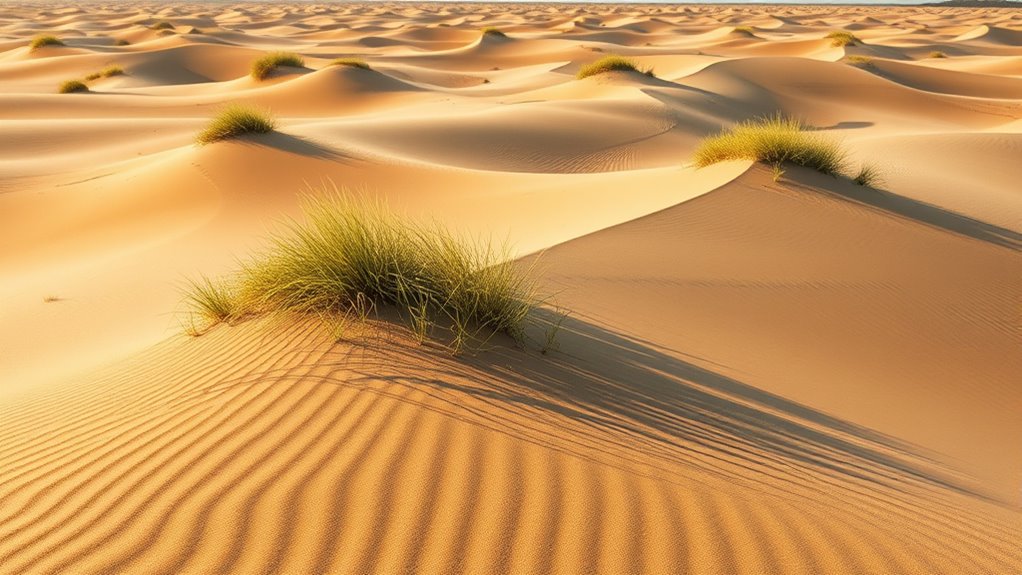
Have you ever wondered how coastal dunes form and shift over time? It all starts with sand entering the system from dry backshore zones, carried by wind and waves. Wind moves sand particles inland, depositing them when airflow slows or obstacles like rocks and vegetation trap the particles. Over time, these deposits build up into small mounds, which grow larger as more sand accumulates. Wind direction and shoreline orientation influence how and where dunes develop, causing them to shift and change shape. The process is ongoing: storms can erode parts of dunes, while calm periods allow new sand to settle and create new formations. This constant movement keeps coastal dunes dynamic, constantly reshaping the landscape and supporting their ecological and protective functions.
The Role of Vegetation in Dune Stability and Growth
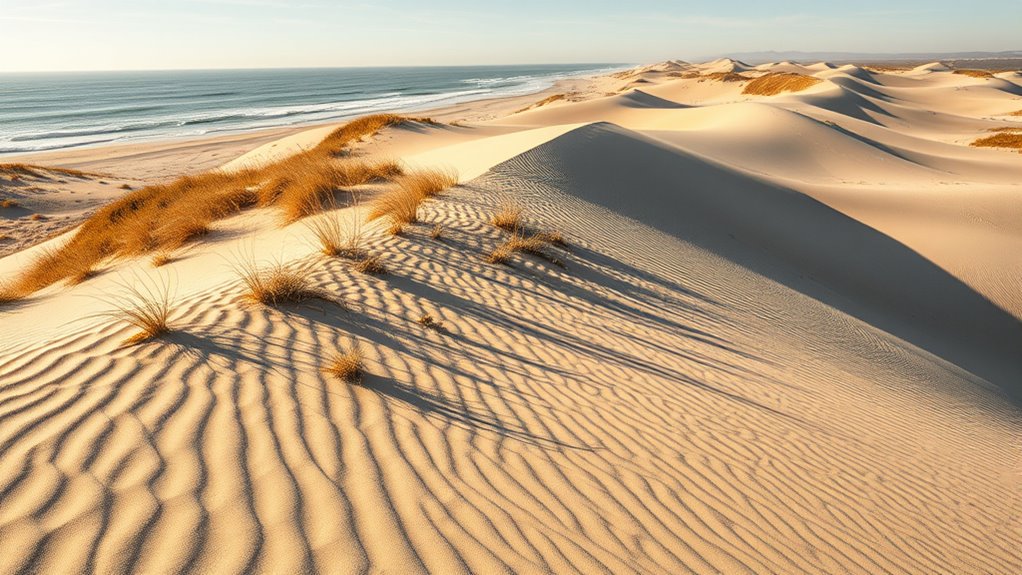
Vegetation plays a vital role in maintaining dune stability and promoting growth. Your plants act as natural anchors, helping to trap and stabilize moving sand. They influence dune shape and resilience by:
Vegetation stabilizes dunes by anchoring sand and reducing wind erosion.
- Reducing wind speed at the surface, decreasing erosion.
- Entangling sand particles with roots, creating a firm foundation.
- Growing upwards and outwards, adapting to burial and stabilizing new areas.
- Supporting biodiversity, which strengthens the dune’s ecological health.
Natural Defenses: How Dunes Protect Shorelines and Ecosystems
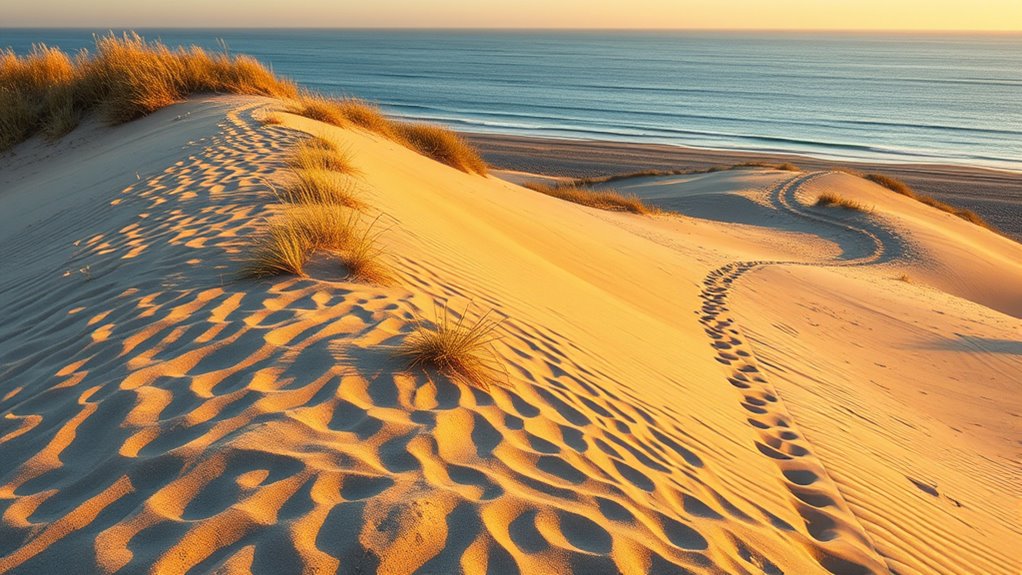
Did you know that coastal sand dunes act as natural shields, safeguarding inland areas from the destructive power of storms and high waves? These dunes absorb and dissipate wave energy, reducing the impact of storm surges and preventing flooding. As a buffer zone, they slow down strong winds and trap sediment, helping to stabilize the shoreline. Their height and width influence how effectively they protect communities and ecosystems behind them. Dunes also prevent erosion by trapping sand that would otherwise wash away, maintaining the shoreline’s shape. The contrast ratio of the dunes’ surfaces can influence how well they absorb or reflect sunlight, which affects their erosion resistance. Additionally, the coastal ecosystem functions of dunes are vital for supporting biodiversity and ecological resilience. Their ability to adapt to changing sea levels demonstrates their importance in coastal resilience and long-term shoreline stability. Recognizing these dunes’ natural signs can help in early detection of changes in coastal environments. By acting as resilient barriers, dunes play a crucial role in sustaining coastal ecosystems and communities against natural threats.
Human Activities and Their Impact on Dune Dynamics
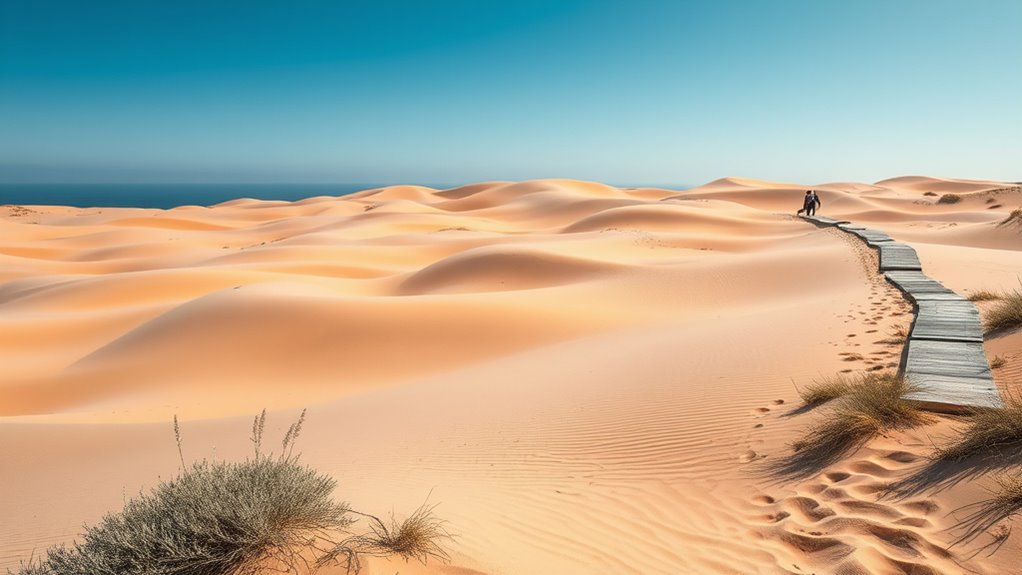
Human activities considerably alter dune dynamics by disrupting natural sand movement and destabilizing dune structures. When you build coastal developments, you often stabilize dunes with fences, concrete barriers, or planting non-native plants, which can hinder natural sand transport. Recreational use, like trampling dunes and removing vegetation, accelerates erosion. Additionally, sand extraction for construction depletes the sand supply essential for dune growth. Here’s how human actions impact dunes: 1. Stabilization efforts reduce sand mobility, hindering natural replenishment. 2. Development projects increase erosion by removing or covering dunes. 3. Recreation damages vegetation, exposing dunes to wind erosion. 4. Sand mining depletes the source material needed to maintain dune systems. These activities disturb the ecosystem balance and threaten the dunes’ protective functions. Moreover, human interference often hampers the natural sand transport processes that sustain dune ecosystems. Implementing conservation measures, such as natural sand transport preservation techniques, can help mitigate these impacts and preserve dune ecosystems.
Monitoring and Preserving Dune Systems in a Changing Climate
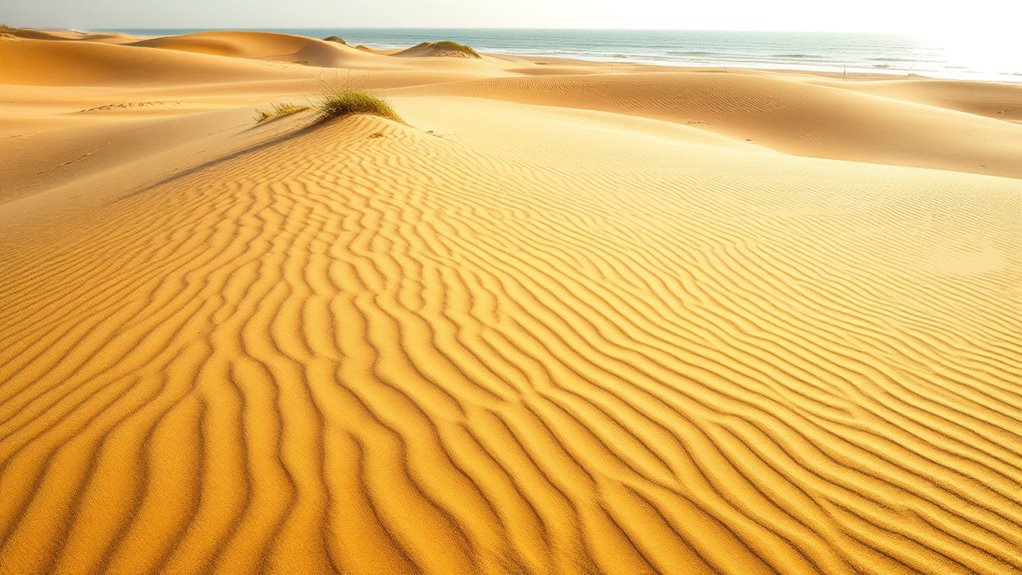
Monitoring and preserving dune systems has become increasingly critical as climate change accelerates coastal hazards. Rising sea levels, stronger storms, and shifting wind patterns threaten dune stability and their protective roles. You can help by supporting monitoring efforts using advanced tools like aerial lidar and satellite imagery, which detect subtle changes in dune morphology over time. These technologies allow you to assess erosion, sediment deposition, and vegetation health, informing targeted conservation strategies. Preserving dunes relies on maintaining natural sand supply, promoting native vegetation, and minimizing human disturbance. Engaging local communities in dune management fosters resilience. Additionally, understanding regional divorce statistics can highlight the importance of collaborative efforts and community support in managing environmental challenges. Regular dune monitoring with innovative technologies ensures timely responses to erosion and degradation, safeguarding these vital ecosystems. Employing community engagement strategies can enhance conservation efforts and ensure sustainable management practices. By actively supervise these ecosystems, you ensure they continue to buffer coastlines, support biodiversity, and adapt to the evolving climate challenges. Incorporating public education about dune importance can further motivate community involvement and stewardship. Utilizing environmental data analysis helps identify emerging threats and prioritize conservation actions effectively.
Frequently Asked Questions
How Do Climate Change and Rising Sea Levels Affect Dune Stability?
Climate change and rising sea levels threaten dune stability by increasing erosion and flooding risks. You’ll see more frequent storm events that strip away sand and weaken vegetation, essential for dune support. As sea levels rise, the shoreline shifts landward, making dunes more vulnerable to erosion. To protect these ecosystems, you need to support natural sand supply, monitor changes, and implement management strategies that bolster dune resilience against these climatic impacts.
What Are the Most Effective Strategies for Restoring Damaged Dunes?
To restore damaged dunes effectively, you should stabilize sand movement by planting native dune grasses and installing sand fences. Nourishing sand supplies through controlled nourishment helps rebuild eroded areas. Avoid over-stabilization that hampers natural dynamics. Regular monitoring with tools like lidar allows you to track changes and adapt your management plan. Combining these methods supports dune resilience, enhances ecological functions, and provides better coastal protection for communities and habitats.
How Does Dune Biodiversity Influence Overall Ecosystem Resilience?
You might think biodiversity isn’t essential, but it actually strengthens dune resilience. When you support a variety of specialized plants and animals, these species work together to stabilize sand, trap nutrients, and repair damage after storms. This diversity creates a resilient ecosystem that adapts quickly to environmental changes, reducing erosion and maintaining habitat health. By promoting biodiversity, you’re ensuring the long-term stability and protection of the entire dune system.
Can Artificial Structures Enhance or Hinder Natural Dune Processes?
Artificial structures can both help and hinder natural dune processes. If designed thoughtfully, they can stabilize dunes and protect against erosion, supporting ecosystem resilience. However, poorly planned structures may block sand movement, disrupt natural dynamics, and prevent dunes from adapting to changing conditions. You should consider using eco-friendly designs like sand fences and managed nourishment to enhance dune stability without impeding natural processes.
What Role Do Dunes Play in Supporting Local Wildlife Populations?
You can see that dunes support local wildlife by providing essential habitats for many species adapted to harsh, sandy environments. They offer shelter, nesting sites, and food sources for birds, insects, and small mammals. Dunes also create a unique ecosystem that promotes biodiversity, helping species thrive despite challenging conditions like salt spray and wind. By protecting dunes, you help preserve these crucial habitats and support the health of local wildlife populations.
Conclusion
Understanding dune dynamics reveals how essential these hidden ecosystems are to our coastlines. By protecting dunes, you help preserve biodiversity, prevent erosion, and defend communities from storms. As climate change accelerates, can we afford to ignore the fragile balance of these natural defenses? Your actions—whether supporting conservation or being mindful of development—make a difference. Embrace the role you play in safeguarding these dunes, ensuring they’ll stand strong for generations to come.