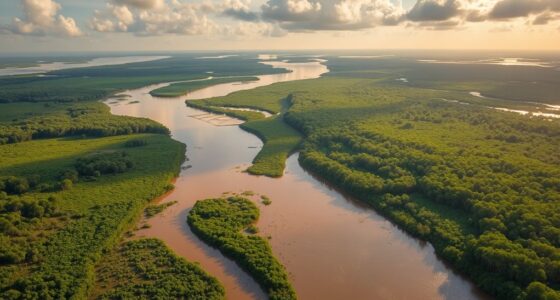
The Everglades, known as the “River of Grass,” is a vast, dynamic wetland in Florida that supports diverse plants and animals. Its slow-moving freshwater flows nourish marshes, mangroves, and estuaries, providing essential habitat for endangered species and bird colonies. Human activities like water diversion and development threaten this delicate ecosystem, but ongoing restoration efforts aim to protect its natural flow and biodiversity. Exploring further reveals how this unique landscape sustains both nature and local communities.
Key Takeaways
- The Everglades, known as the “River of Grass,” is a vast, slow-moving freshwater ecosystem vital for biodiversity and water filtration.
- It supports endangered species like the Florida panther, American crocodile, and hosts North America’s largest wading bird colonies.
- Natural water flow has been disrupted by human infrastructure, prompting extensive restoration efforts such as the CERP project.
- Coastal mangroves and seagrass beds provide critical habitats and act as natural buffers against storms and erosion.
- The Everglades play a crucial role in climate regulation, flood control, and supplying drinking water to over 8 million people.
The Unique Geography of the Everglades

Spanning roughly 2 million acres at Florida’s southern tip, the Everglades’ geography is shaped by a slow-moving, southward flow of freshwater from Lake Okeechobee. This creates a vast, shallow river known as the “River of Grass,” stretching over 100 miles long and about 60 miles wide. Unlike traditional rivers, it’s characterized by sawgrass marshes, freshwater ponds, and wetlands that blend seamlessly. The landscape is dynamic, influenced by seasonal changes that alter water levels and plant communities. Peat soils and marl deposits support diverse vegetation, while the gentle flow of water sustains a rich ecosystem. This unique geography fosters a mosaic of habitats and provides critical conditions for countless plant and animal species. The Everglades’ shape and hydrology are essential to its ecological identity, which is maintained by the slow, steady movement of water through this wetland ecosystem. Additionally, the presence of mangrove forests along coastal areas helps protect the inland habitats from storm surges and supports biodiversity. The hydrological processes that sustain this landscape are influenced by natural and human factors, making the preservation of its delicate balance vital. Human activities such as water management and urban development can significantly impact these wetland processes, highlighting the importance of conservation efforts. Understanding these processes is crucial for wetland conservation efforts that aim to maintain its ecological health.
Diverse Habitats and Ecosystem Components

You’ll notice that sawgrass marshes dominate the landscape, forming the core of the Everglades’ unique ecosystem. Along the coastlines, extensive mangrove shorelines provide essential habitat and shoreline protection. Meanwhile, the ecosystem features distinct freshwater zones inland and saltwater areas near Florida Bay, creating a complex mosaic of habitats. This wetland environment is vital for supporting diverse flora and fauna, including many species of birds, fish, and reptiles. The hydrological cycle in the Everglades plays a crucial role in maintaining this rich diversity by regulating water flow and quality. Additionally, understanding the regional ecological data helps in conservation efforts to preserve this delicate habitat. Incorporating environmental monitoring techniques ensures ongoing protection and sustainable management of this vital ecosystem.
Sawgrass Marshes Dominance
Sawgrass marshes are the defining feature of the Everglades, forming a vast, interconnected landscape that supports a rich diversity of life. These expansive wetlands are dominated by tall, sharp-edged sawgrass plants that thrive in the nutrient-poor, peat-rich soils. The slow, southward flow of water through these marshes creates ideal conditions for many species of wading birds, fish, and invertebrates. You’ll observe how the sawgrass’s dense, interconnected stems form a nearly continuous sea of green, shaping the entire ecosystem. These marshes serve as essential breeding grounds and nurseries for fish and amphibians. Their extensive reach and unique plant community help filter water, prevent erosion, and sustain the delicate balance of the Everglades’ broader landscape. Additionally, the high contrast ratio of the wetlands’ environment enhances the visibility of the diverse flora and fauna thriving within it. The dense sawgrass also plays a crucial role in habitat diversity, supporting a wide array of specialized species. The presence of sawgrass encourages a healthy wetland environment that benefits countless organisms and maintains ecological stability.
Mangrove Shorelines Extent
Did you know that mangrove shorelines form some of the most dynamic and essential habitats in the Everglades? These coastal forests stretch extensively along the shoreline, acting as important buffers between land and water. They provide indispensable shelter for juvenile fish, crustaceans, and other aquatic species, supporting the region’s rich biodiversity. Mangroves also stabilize shoreline sediments with their complex root systems, preventing erosion during storms and high tides. The extent of these shorelines varies but covers thousands of acres, forming a continuous barrier along Florida’s southwestern coast. Their presence influences local water quality by filtering pollutants and trapping nutrients. As one of the largest mangrove ecosystems in the Western Hemisphere, they are essential for maintaining the ecological balance and resilience of the Everglades’ coastal zones. Additionally, maximizing space and organization in conservation efforts ensures effective management and protection of these vital habitats.
Freshwater and Saltwater Zones
The Everglades’ unique landscape is defined by its dynamic interplay between freshwater and saltwater zones, each supporting distinct and essential ecosystems. You’ll find freshwater marshes, sawgrass prairies, and floodplains where water flows slowly southward, nurturing plants and wildlife. In contrast, saltwater zones like Florida Bay feature mangroves, seagrass beds, and tidal marshes that adapt to brackish conditions. These zones create a mosaic of habitats, supporting diverse species such as alligators, crocodiles, and countless bird species. The table below highlights key features:
| Zone | Habitat Types | Key Species |
|---|---|---|
| Freshwater | Marshes, ponds, prairies | Wading birds, panthers |
| Saltwater | Mangroves, seagrass | Crocodiles, fish, shellfish |
| Transition | Estuaries, tidal marshes | Snails, herons, juvenile fish |
Additionally, the ecological balance between these zones is crucial for maintaining the health of the entire wetland system.
Biodiversity and Endangered Species

Have you ever wondered why the Everglades is one of North America’s most biologically rich ecosystems? It’s because you find a stunning variety of plants and animals thriving in its diverse habitats. Many species here are threatened or endangered, like the Florida panther, American crocodile, and snail kite. You’ll also see animals unique to this region, such as the Cape Sable seaside sparrow and Florida leafwing butterfly. The wetlands support North America’s largest wading bird colonies and the biggest mangrove forests in the Western Hemisphere. These ecosystems are essential for maintaining food webs, providing critical habitats, and supporting species survival. Protecting these species is crucial to preserving the Everglades’ incredible biodiversity for future generations. biodiversity Understanding the complex interactions within this ecosystem highlights the importance of ecosystem conservation efforts to ensure its longevity. Additionally, the presence of endangered species underscores the need for targeted preservation initiatives to prevent extinction.
Challenges Threatening the Wetland System

Despite its natural resilience, the Everglades faces numerous threats that jeopardize its delicate balance. You need to understand these challenges to grasp the ecosystem’s fragile state. 1. Water diversion and infrastructure—canals and levees—disrupt natural flow, reducing freshwater supply and harming habitats. 2. Urban development and agriculture—create runoff loaded with nutrients—leading to invasive species and algae overgrowth. 3. Rising sea levels—due to climate change—threaten low-lying areas, causing saltwater intrusion and habitat loss. 4. Invasive species—such as Brazilian pepper and melaleuca—outcompete native plants, degrading biodiversity. 5. Implementing airless paint sprayers for habitat restoration projects can improve efficiency and reduce environmental impact during large-scale work. Furthermore, restoration efforts often require careful planning to ensure that native species are protected and that ecosystem balance is maintained. Additionally, water flow management is essential to restore natural hydrological patterns and support diverse wetland habitats. A comprehensive environmental monitoring system can help detect early signs of ecological imbalance, enabling timely intervention. Effective monitoring and assessment are also crucial to track the success of restoration projects and adapt strategies accordingly. These issues threaten the ecosystem’s health, impacting wildlife, water quality, and regional stability. Addressing them requires ongoing efforts and sustainable management to preserve the Everglades’ unique ecological value.
The Role of Water Flow and Management

Water flow and management are at the heart of maintaining the Everglades’ delicate balance. You need to understand that the natural, slow southward movement of freshwater from Lake Okeechobee once shaped this vast wetland. However, about 1,400 miles of canals and levees now divert and control water, mainly for flood control, agriculture, and urban needs. These structures disrupt the original flow, reducing water reaching crucial habitats like sloughs and freshwater marshes. As a result, many species suffer, and ecosystems degrade. Restoration efforts aim to reconnect water flows and improve water quality, helping to restore the wetland’s health. Using ecological models, managers predict responses to different water management scenarios, making sure that every decision supports the Everglades’ survival and resilience.
Conservation Efforts and Restoration Projects

Conservation efforts and restoration projects are actively working to repair the damage caused by decades of altered water flow and habitat loss in the Everglades. These initiatives aim to restore natural hydrology, improve water quality, and protect endangered species. Additionally, promoting puppy socialization in the region’s parks and outdoor spaces supports the development of well-adjusted and adaptable wildlife populations. 1. The Holistic Everglades Restoration Plan (CERP) leads large-scale efforts to reconnect water flow, reduce flood risks, and restore natural habitats. 2. The Everglades Headwaters National Wildlife Refuge protects critical upland areas and promotes sustainable land use. 3. Projects like the Kissimmee River Restoration aim to revert channelized waterways to their natural meandering paths, restoring aquatic habitats. 4. Invasive species control programs target non-native plants and animals, helping native species recover and ecosystems regain balance. Moreover, wetland restoration techniques play a vital role in reestablishing the natural water filtration and flood control functions of the Everglades. Together, these efforts endeavor to sustain the Everglades’ unique landscape and biodiversity for future generations.
Ecosystem Services Supporting Human Life

The Everglades provide essential ecosystem services that directly support human life and well-being. These wetlands filter pollutants, improving water quality for millions of Floridians. They protect coastlines from storm surge, reducing flood risks and saving lives. Mangroves and wetlands sequester carbon, helping combat climate change. The ecosystem sustains fisheries crucial for local economies and recreation. Additionally, it recharges the Biscayne Aquifer, supplying drinking water to over 8 million people. The table below highlights key services:
| Service | Benefit | Impact on Humans |
|---|---|---|
| Water purification | Clean drinking water | Reduces health risks |
| Shoreline protection | Flood and storm surge defense | Safeguards communities |
| Carbon storage | Climate regulation | Mitigates global warming |
| Fisheries | Food and economic activity | Supports livelihoods and recreation |
Facing Climate Change and Future Outlook

As climate change accelerates, the Everglades face increasing threats from sea-level rise, higher temperatures, and more intense storms. You must understand that these changes will reshape the landscape and threaten its delicate balance. To adapt, experts are focusing on:
- Restoring natural water flow to counteract altered hydrology and support wetland resilience.
- Protecting and expanding mangrove forests to serve as natural barriers against storm surges and rising seas.
- Monitoring species and habitats to identify early signs of climate-related stress and develop targeted conservation strategies.
- Implementing adaptive management practices that integrate climate projections into restoration and development plans.
These efforts aim to preserve the Everglades’ ecological integrity, safeguarding its wildlife and essential ecosystem services for future generations.
Frequently Asked Questions
How Do Invasive Species Impact the Everglades’ Natural Balance?
Invasive species disrupt the Everglades’ natural balance by outcompeting native plants and animals for resources. You might notice native species declining, which affects the entire food chain. Invasive plants like Brazilian pepper and melaleuca choke out essential habitats, while non-native fish and predators threaten native wildlife. These changes degrade ecosystem health, reduce biodiversity, and impair critical services like water purification, making it harder for the Everglades to sustain its unique and delicate environment.
What Role Do Fire Regimes Play in Ecosystem Health?
You should understand that fire regimes are essential for maintaining ecosystem health in the Everglades. Regular fires prevent overgrowth of woody plants, promote native grasses like sawgrass, and recycle nutrients. They also help control invasive species and create habitats for diverse wildlife. Without these natural fires, the landscape could become overgrown, threatening native plants and animals, reducing biodiversity, and disrupting the delicate balance that keeps the Everglades thriving.
How Do Local Communities Benefit From Everglades Conservation?
You benefit from Everglades conservation because it sustains your drinking water, supports local tourism, and boosts your economy through fishing and recreation. Conservation efforts protect habitats that preserve wildlife, including endangered species, enriching your experience in nature. By maintaining the ecosystem’s health, you also reduce the risk of flooding and storm damage, ensuring a safer, more resilient community. Overall, conservation safeguards your quality of life and Florida’s natural heritage.
What Are the Most Effective Ways to Restore Water Flow?
You can restore water flow most effectively by removing or modifying canals and levees that block natural water movement, allowing water to flow more freely through the ecosystem. Investing in large-scale projects that reconnect the historic flow paths and implementing sustainable water management practices also help. Additionally, controlling upstream water diversions and reducing pollution improve water quality, supporting the health and resilience of the Everglades’ delicate hydrological balance.
How Will Climate Change Alter the Habitat Distribution?
Climate change could inundate up to 10% of the Everglades, drastically shifting habitats. Rising sea levels will push mangroves inland, encroaching on freshwater marshes, and alter the delicate balance of plant and animal communities. You’ll see coastal areas become more saline, threatening species adapted to freshwater. This shift may force wildlife to migrate or face extinction, disrupting the ecosystem’s biodiversity and resilience, ultimately changing the landscape you explore.
Conclusion
You hold the power to protect this breathtaking wetland wonder, a lush, living masterpiece more vibrant than any painting. By understanding its delicate balance and supporting conservation efforts, you help guarantee the Everglades’ magic endures for generations. Imagine a future where this incredible river of grass continues to thrive, a shining jewel in America’s natural crown. Together, your actions can preserve this awe-inspiring ecosystem, safeguarding its beauty from vanishing like a fleeting dream.