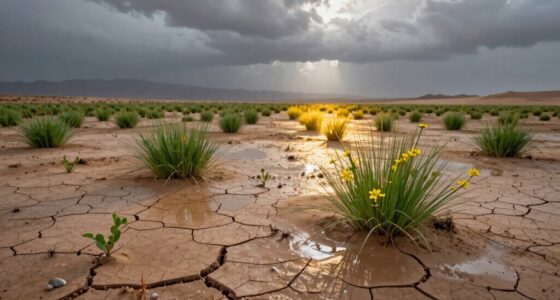

The intertidal zone is both brutal and beautiful because it’s a harsh environment where waves, changing tides, and exposure to sun and air challenge your survival. Organisms adapt with tough shells, flexible arms, and dehydration-resistant tissues, showing nature’s resilience. These adaptations help them thrive despite the extreme conditions. It’s a fragile yet vibrant ecosystem that highlights life’s incredible ability to endure. Continue exploring, and you’ll uncover more about how these remarkable creatures survive and flourish.
Key Takeaways
- The intertidal zone experiences extreme fluctuations in water, temperature, and exposure, creating a harsh but dynamic environment.
- Organisms develop specialized adaptations like tough shells and dehydration-resistant tissues to survive these brutal conditions.
- The zone’s ecological interactions, such as predation and sheltering, thrive despite constant environmental stress.
- The resilience and diversity of life in intertidal zones showcase nature’s remarkable ability to adapt and flourish amid adversity.
- The contrasting elements of destruction and beauty highlight the zone’s raw, vibrant, and resilient ecosystem.
Between the crashing waves and shifting tides lies the intertidal zone—a harsh yet stunning environment where life must adapt to constant change. As the tide rises and falls, you’re witnessing a battleground of survival, where organisms develop remarkable marine adaptations to thrive amidst relentless conditions. Your journey through these tide pool ecologies reveals a world teeming with resilience, diversity, and striking beauty.
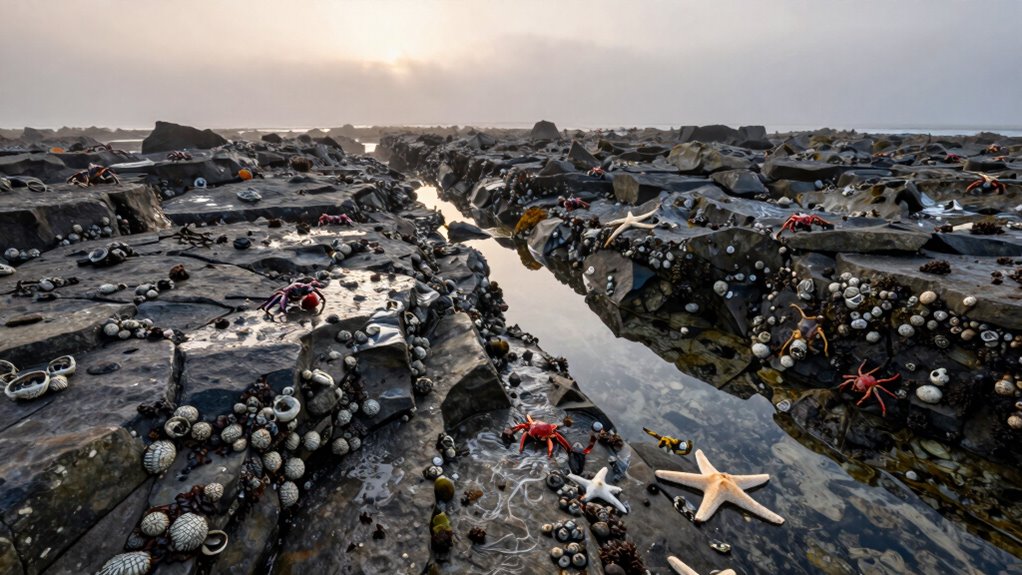
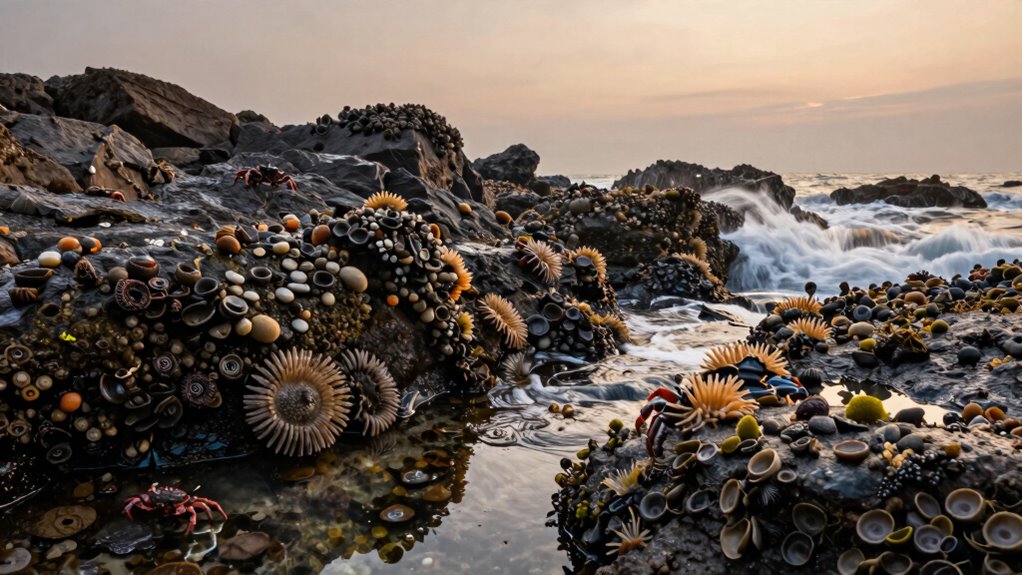
In this zone, the challenge isn’t just the changing water levels but also the exposure to air, sunlight, and waves. Marine animals and plants have evolved unique adaptations to withstand desiccation, temperature fluctuations, and the force of crashing surf. Marine adaptations are crucial; without them, survival would be impossible in such a volatile environment. You’ll notice barnacles with their tough shells, clinging tightly to rocks to prevent drying out or being swept away. Sea stars, with their flexible arms, can grip uneven surfaces, ready to escape predators or scour for food. Algae and seaweeds have developed specialized tissues that resist dehydration, allowing them to photosynthesize during low tide. These marine adaptations are essential; without them, survival would be impossible in such a volatile environment. Additionally, the ability of some organisms to resist dehydration highlights the importance of specialized tissues and behaviors in maintaining internal moisture levels.
Marine life adapts through tough shells, flexible arms, and dehydration-resistant tissues to survive the intertidal environment.
The tide pool ecology offers a fascinating glimpse into how life persists despite the brutal conditions. When you peer into a tide pool, you see a microcosm of adaptation at work. Crustaceans like crabs scuttle sideways, hiding under rocks to avoid predators and conserve moisture. Small fish dart through the water, taking advantage of the shelter from larger predators and the abundance of food sources. Anemones, with their stinging tentacles, capture passing plankton and small fish, demonstrating how predation strategies have evolved to exploit available resources. These ecosystems are fragile yet resilient, constantly changing with each tide, yet always bouncing back. The diversity of species present demonstrates the importance of evolutionary adaptations in thriving in such an environment.
Your exploration of the intertidal zone highlights not just the brutality of nature but its incredible beauty. It’s a place where life’s tenacity shines brightest, where every organism plays a role in a delicate yet dynamic balance. The adaptations you observe here aren’t just survival tactics—they’re a tribute to evolution’s power. The interplay between organisms and their environment creates a vibrant tapestry of life, a reminder of nature’s resilience amid adversity. The diversity of species and their adaptation strategies showcase the extraordinary capacity of life to thrive in extreme conditions. In this domain of constant flux, the intertidal zone stands as a tribute to the remarkable capacity of life to adapt, endure, and flourish against all odds.

Life on Intertidal Rocks: Identifying Marine Life of the North Atlantic Coast, Including Tidepools and the Intertidal Zones (Nature Study Guides)
As an affiliate, we earn on qualifying purchases.
As an affiliate, we earn on qualifying purchases.
Frequently Asked Questions
How Do Intertidal Organisms Communicate With Each Other?
You see, intertidal organisms communicate mainly through chemical signaling, releasing specific chemicals into the water to send messages. They also form symbiotic relationships, sharing resources and signals to survive harsh conditions. When predators are near, they might release alarm chemicals. By using these methods, they coordinate activities, warn each other of danger, and maintain their complex community amid the brutal, yet beautiful intertidal environment.
What Are the Longest-Living Species in Intertidal Zones?
You’ll find the longest-living species in intertidal zones are often mollusks like certain limpets and barnacles, which adapt through tough shells and ability to cling tightly to rocks. These adaptation strategies help them withstand harsh conditions and predator-prey dynamics. Their resilience allows them to survive for decades, making them some of the most enduring organisms in these brutal, yet beautiful, environments.
How Do Intertidal Zones Impact Local Climate?
Intertidal zones act like nature’s thermostat, influencing local climate through tidal fluctuations and coastal erosion. You’ll find that these zones regulate temperature and humidity, creating microclimates. Tidal movements bring cooler air and moisture inland, moderating extreme temperatures. Coastal erosion shapes the landscape, affecting wind patterns and humidity levels. By constantly shifting, intertidal zones help stabilize local climate, making coastal areas more resilient and vibrant, despite their brutal beauty.
Are There Undiscovered Species in Intertidal Areas?
Yes, there are likely many undiscovered species lurking in intertidal areas. You might not see them, but these zones harbor hidden biodiversity that scientists are still exploring. The constantly changing environment creates perfect conditions for undiscovered species to thrive, especially small or cryptic ones. Your curiosity could help uncover new life forms, revealing the true richness and complexity of these dynamic ecosystems.
How Do Intertidal Zones Recover After a Storm?
Think of the intertidal zone as a resilient dancer, recovering with grace after a storm. Tidal erosion clears debris, while sediment redistribution helps rebuild habitats. You’ll see new shells settle, algae sprout anew, and animals reclaim their space. Nature’s persistence shines through as these zones bounce back, transforming chaos into beauty. Your observation reveals the zone’s remarkable ability to heal and adapt amidst relentless tidal forces.

Dissect-It Super Shark Lab Dissection Kit, 40-Piece Realistic Synthetic STEM Science Kit with Tools, Reusable Toy Marine Biology for Kids Ages 6+
Shark Dissection Kit: Experience the thrill of scientific exploration with the simulated Super Shark Lab dissection kit for…
As an affiliate, we earn on qualifying purchases.
As an affiliate, we earn on qualifying purchases.
Conclusion
You’ve seen how intertidal zones are both brutal and beautiful—like a wild dance floor where creatures fight to survive and thrive. The harsh tides test your resilience, but they also reveal nature’s incredible artistry. Embrace the chaos and beauty of these zones, because just like a stormy sea, they remind us that life’s most remarkable moments often come from the toughest conditions. In these zones, resilience shines as brightly as the sun over the waves.

Beach Aquarium Kit for Kids, Ocean Animal Observation Tank Set with Net, Sand Shovel Set and Fish Catching Tongs, Tide Pool Explorer Kit, Beach Outdoor Exploration Toy for Toddlers Kids Age 2-12
COMPLETE OCEAN EXPLORATION KIT: This set includes a clear observation tank, extendable fish net, fish catching tongs, and…
As an affiliate, we earn on qualifying purchases.
As an affiliate, we earn on qualifying purchases.

Aquarium Log: A Fishkeeping Record Book for Tracking Feeding, Water Parameters & Equipment Maintenance | Fish Tank Management Notebook for Aquarists of All Levels
As an affiliate, we earn on qualifying purchases.
As an affiliate, we earn on qualifying purchases.