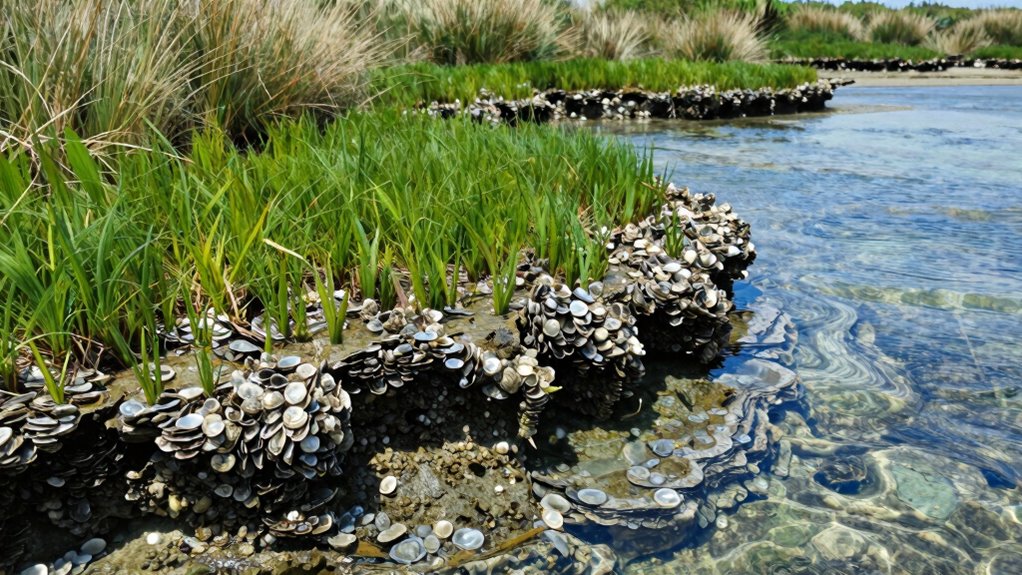

Oyster reefs are a coastal comeback story because they restore essential habitats, improve water quality, and protect shorelines from erosion and storm surges. As natural filters, oysters clean water by removing pollutants, supporting diverse marine life. Their sturdy structures act as barriers, reducing wave energy and shielding coastlines. By rebuilding these reefs, you help promote a healthier ecosystem and stronger coastal communities. Keep exploring to discover more about their incredible impact on our shores.
Key Takeaways
- Oyster reefs restore biodiversity by providing essential habitats for various marine species.
- They naturally filter water, improving water quality and reducing harmful algae and pollutants.
- Reefs act as natural barriers, protecting coastlines from storm surges and erosion.
- Restoration efforts revitalize ecosystems and support sustainable livelihoods for coastal communities.
- Their ecological role offers a sustainable, nature-based solution for shoreline resilience and coastal health.
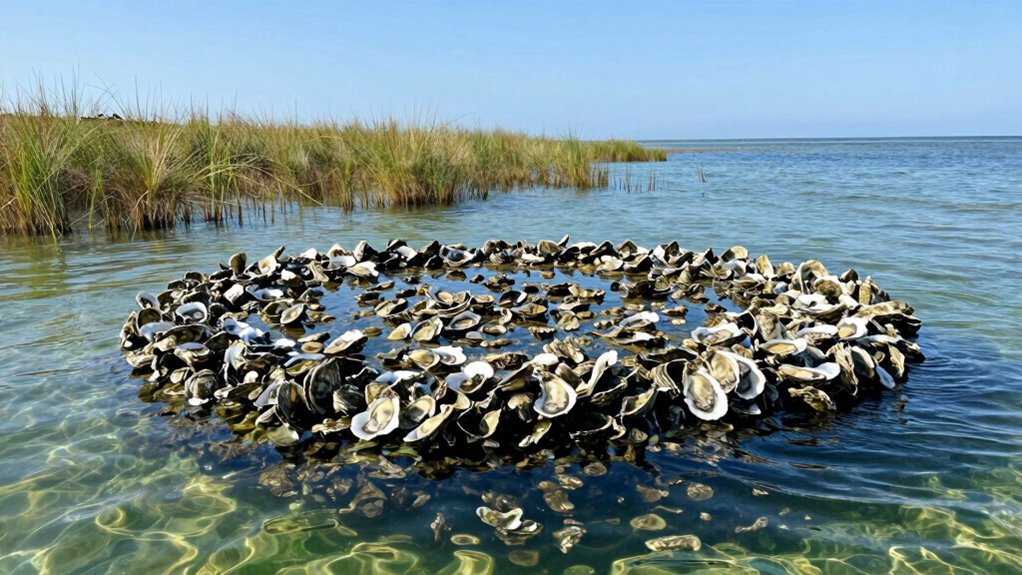
Have you ever wondered how tiny oysters can have a huge impact on the health of our coastlines? These small creatures play an essential role in supporting marine biodiversity, which is fundamental for a thriving ocean ecosystem. Oysters live in dense colonies called reefs, and these structures serve as homes for countless marine species, from small fish to crabs and barnacles. By creating complex habitats, oyster reefs increase the diversity of life in coastal waters, making the environment more resilient and productive. This biodiversity is indispensable, not only for the health of marine life but also for the fishing industries and communities that depend on these waters. When oyster reefs are healthy and intact, they help maintain a balanced ecosystem that benefits everyone.
Oyster reefs create vital habitats, boosting biodiversity and supporting thriving coastal ecosystems.
One of the most impressive ways oysters contribute to their environment is through water filtration. As oysters feed, they filter vast amounts of water—up to 50 gallons per day—removing algae, sediments, and pollutants. This natural filtration process helps improve water quality, reducing the occurrence of harmful algal blooms and decreasing sedimentation that can smother other marine habitats. When oyster populations decline, water quality often worsens, leading to less hospitable conditions for many marine species. Restoring oyster reefs means restoring this essential filtration service, which is crucial for maintaining clear, healthy waters along the coast.
Oyster reefs also act as natural barriers against storm surges and coastal erosion. Their sturdy structures absorb the energy of waves, reducing the impact of storms and protecting inland areas. This natural defense system can be more effective and environmentally friendly compared to man-made seawalls. As climate change leads to rising sea levels and more intense storms, oyster reefs become even more valuable in safeguarding coastal communities.
The comeback of oyster reefs isn’t just about restoring a single species; it’s about revitalizing entire ecosystems that support both marine life and human livelihoods. Efforts to rebuild reefs involve planting oysters and protecting existing ones from overharvesting and pollution. These initiatives help restore marine biodiversity, improve water quality, and provide natural defenses against the destructive forces of nature. By understanding the pivotal role oysters play, you can appreciate why protecting and restoring oyster reefs is a smart, sustainable way to bring coastal areas back to life. The tiny oyster, in its humble way, becomes a giant contributor to the health and resilience of our coastlines.
As an affiliate, we earn on qualifying purchases.
Frequently Asked Questions
How Do Oyster Reefs Improve Water Quality?
Oyster reefs improve water quality through water filtration and nutrient cycling. As you observe, oysters filter large volumes of water, removing pollutants, excess nutrients, and sediments. This process clears the water, making it healthier for other marine life. Additionally, by cycling nutrients, oyster reefs help maintain a balanced ecosystem, preventing harmful algal blooms and promoting clearer, cleaner water, which benefits both wildlife and local communities.
What Are the Main Threats to Oyster Reefs Today?
You see, oyster reefs face a storm of threats, with climate change casting rising seas and warming waters, like a relentless tide eroding their foundation. Pollution impacts, from runoff to chemicals, poison their delicate balance, choking their survival. These forces threaten to wipe out these essential ecosystems, turning vibrant reefs into ghostly remnants. To protect them, we must combat pollution and address climate change, or risk losing this coastal treasure forever.
How Long Does It Take for Oyster Reefs to Establish?
Oyster reefs typically take 3 to 5 years to establish, depending on environmental conditions and oyster species. During this time, they develop into essential oyster habitats that support diverse marine life. As the reef grows, it enhances reef resilience, helping the ecosystem withstand threats like storms and pollution. Your active efforts in restoration can speed this process, creating a thriving oyster habitat that benefits both nature and local communities.
Can Oyster Reefs Be Restored Naturally Without Human Intervention?
Oyster reefs can sometimes restore naturally through natural regeneration, especially if environmental conditions like water quality and sediment levels improve. You see, when the conditions are right, oyster larvae settle and grow, helping rebuild the reef and restore ecological balance. However, without human intervention, this process can be slow and uncertain, often requiring protection and better habitat management to guarantee success. So, while possible, natural restoration often benefits from some human support.
What Economic Benefits Do Oyster Reefs Provide to Local Communities?
You might be surprised, but oyster reefs boost local economies more than you’d expect. They enhance fish populations, supporting fishing industries and tourism, which fuels economic impact. Plus, healthy reefs improve community resilience by protecting shorelines from erosion and storm damage, reducing costly repairs. By restoring oyster reefs, you’re investing in a natural asset that creates jobs, sustains livelihoods, and strengthens the economic backbone of coastal communities—truly a win for everyone involved.
Conclusion
So, next time you see an oyster reef, remember it’s more than just a cluster of shells. It’s an essential part of our coastal ecosystem, helping fight erosion, filter water, and support marine life. Isn’t it incredible how these resilient creatures are making a comeback and restoring balance? By protecting and restoring oyster reefs, you can be part of this coastal revival. Will you help preserve these natural defenders for future generations?