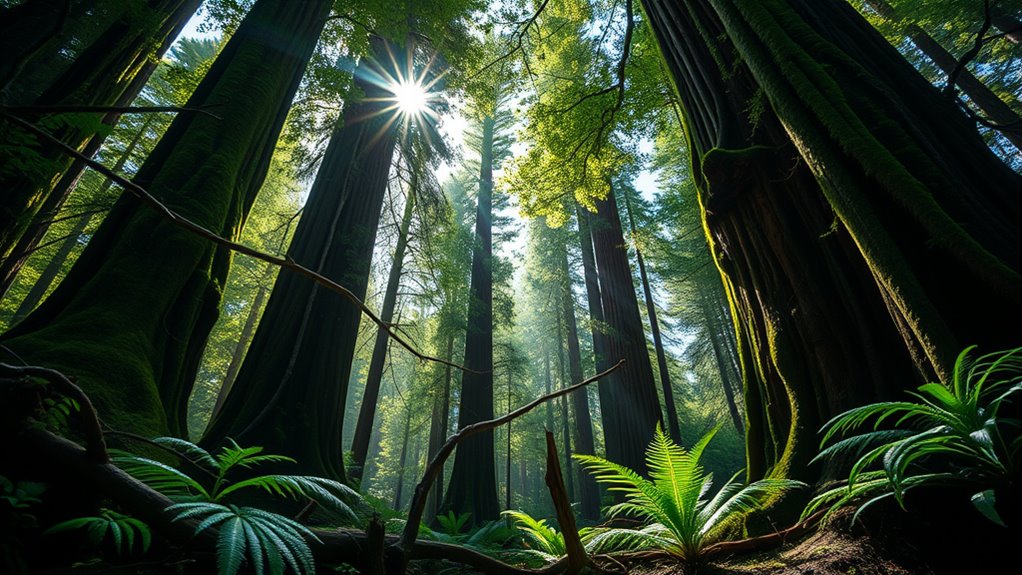

Beneath California’s towering redwoods, you find a complex ecosystem shaped by layered canopies, nutrient-rich soils, and diverse microhabitats. These giants create microclimates that trap moisture, support epiphytes, and provide shelter for wildlife. The rich soils and geology influence tree growth, while adaptations like thick bark and clonal reproduction guarantee their longevity. Revealing these secrets reveals how redwoods thrive for thousands of years—if you explore further, you’ll discover even more about this extraordinary ecosystem.
Key Takeaways
- The layered canopy captures moisture from fog and rain, creating microhabitats that support diverse plants, fungi, and animals.
- Extensive root and clump structures facilitate water sharing, stability, and rapid clonal regeneration after damage.
- Organic matter deposition and soil microbial activity drive nutrient cycling, soil health, and tree growth.
- Microclimates influenced by fog, elevation, and geology shape forest composition, distribution, and resilience.
- Branch mats and bark adaptations enable water retention, drought resistance, and long-term survival of redwoods.
The Structure and Diversity of Redwood Forests
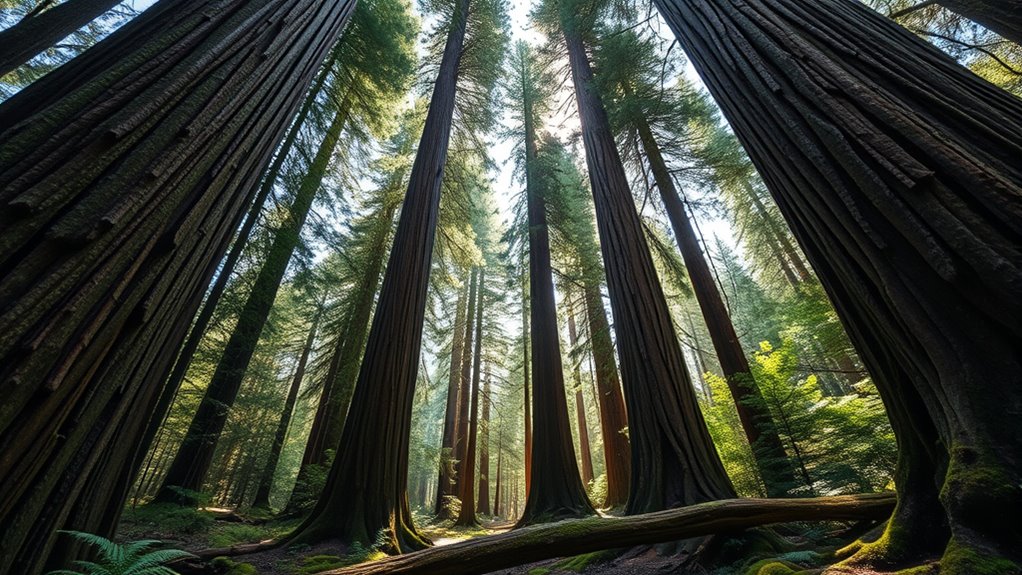
Redwood forests display a fascinating range of structures and diversity that reflect their dynamic ecological processes. You’ll notice that second-growth redwoods have an even-aged, open, park-like appearance, with dominant coast redwoods often accompanied by Douglas-fir, tan oak, and madrone, depending on the location. The understory supports shade-tolerant shrubs, ferns, and mosses, creating a lush, layered environment. Trees grow in clumps, sprouting from trunks and roots, forming natural “family circles.” Fire and flooding shape the forest’s composition, encouraging succession and regeneration. The canopy is multi-layered, with towering old trees and younger growth below. This structural complexity supports rich biodiversity, from moss mats and epiphytes high in the branches to diverse ground-dwelling species thriving beneath the canopy. The presence of diverse species and layered habitats is crucial for maintaining healthy ecosystems and supporting the forest’s resilience biodiversity.
Soil Composition and Nutrient Dynamics in Redwood Ecosystems
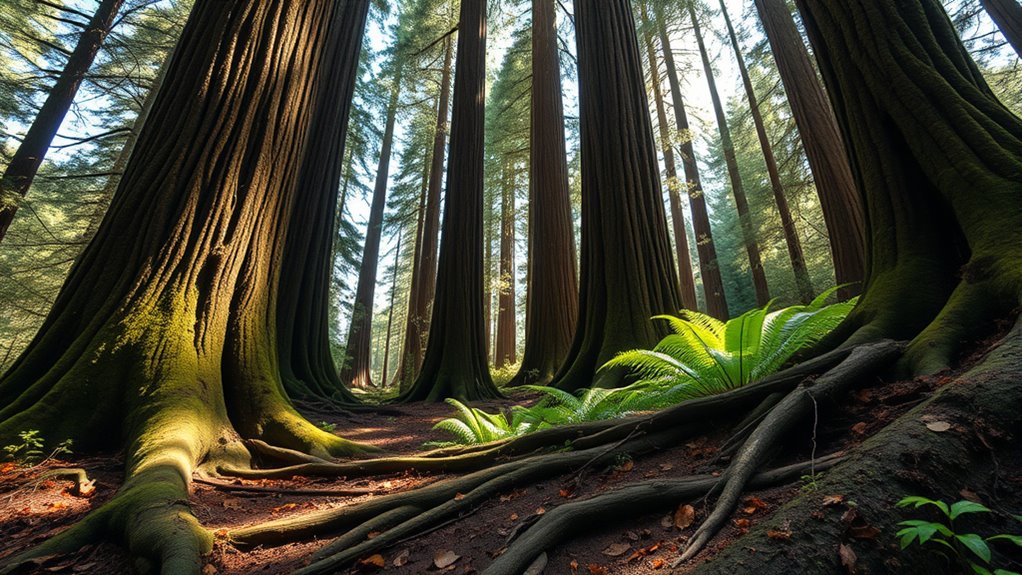
Beneath the towering redwoods, the soil plays an essential role in sustaining the forest’s health and growth. The rich, dark topsoil, formed from decomposed leaf litter and wood, recycles nutrients crucial for the trees. Organic matter, about 50% carbon, helps sequester atmospheric CO₂. Shallow redwood roots depend on this nutrient-rich layer, while weathered, nutrient-poor soils lie beneath. Floods deposit new nutrients, boosting fertility, especially on floodplains. Stable ridgetop soils are old, weathered, with high iron and clay content, affecting plant distribution. Here’s a quick look:
| Soil Type | Characteristics |
|---|---|
| Organic Layer | Rich in decomposed material, nutrient-dense |
| Weathered Bedrock | Low nutrients, high clay and iron oxides |
| Floodplain | Frequently renewed with nutrients |
| Ridgetop | Old, weathered, nutrient-poor |
Additionally, the soil microbial community plays a vital role in nutrient cycling and maintaining soil health in these ecosystems. Understanding the soil composition helps explain how nutrients are recycled and why certain areas support lush growth while others remain sparse. Moreover, natural processes such as weathering continually transform the soil, influencing nutrient availability and plant adaptation. The presence of soil organic matter also influences water retention and overall soil fertility, further supporting the diverse plant life.
How Canopy Architecture Supports Water and Microhabitats
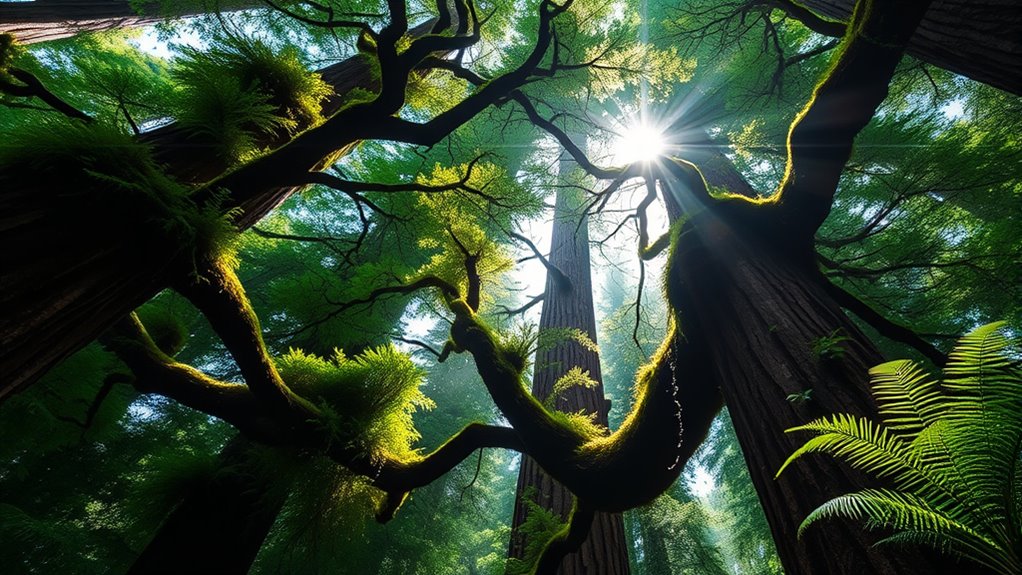
You can see how the layered canopy of redwoods captures moisture from coastal fog, with older trees absorbing water directly through their leaves. This architecture helps funnel water down to the soil and shallow roots, supporting the trees’ survival during dry periods. Additionally, branch mats create microhabitats that host plants, insects, and fungi, enriching the forest’s biodiversity. These canopy architecture features also facilitate nutrient cycling, promoting a resilient and thriving ecosystem. The complex structure of the canopy also provides habitat diversity that sustains a wide array of wildlife within the forest.
Canopy Layers and Water Capture
The multi-layered canopy architecture of redwood forests plays a crucial role in capturing water and creating diverse microhabitats. The different canopy layers, from towering old-growth giants to younger trees, intercept fog and rain, funneling moisture downward. This structure maximizes water absorption and retention, supporting the forest’s lush ecosystem. Clumping of trees from sprouting roots and burls enhances water capture and stability. The canopy’s complexity also provides niches for epiphytes, mosses, and ferns, which thrive in branch mats and microhabitats. By efficiently intercepting moisture, the layered canopy sustains soil moisture levels and promotes biodiversity, reinforcing the resilience of redwood ecosystems.
| Canopy Layer | Function in Water Capture |
|---|---|
| Upper Canopy | Intercepts fog and rain, directing moisture downward |
| Middle Canopy | Supports epiphytes that absorb water directly |
| Lower Canopy | Drips moisture onto understory and soil |
| Branch Mats | Create microhabitats that retain water |
| Intertwined Roots | Facilitate water sharing and stability |
Microhabitats in Branch Mats
Branch mats, formed by mosses, ferns, and other epiphytes growing in the tangled branches of redwoods, create complex microhabitats that substantially enhance water retention within the canopy. These mats trap moisture from fog, rain, and dew, providing a steady water source for epiphytes and small animals. Their dense, layered structure offers shelter and nesting sites for insects, birds, and amphibians, supporting biodiversity high above the forest floor. As water collects in these mats, it slowly drips down, nourishing the bark, branches, and roots below, helping redwoods withstand dry periods. The microhabitats also facilitate nutrient cycling, with decomposing organic matter enriching the canopy environment. Overall, branch mats play a vital role in maintaining moisture, supporting diverse life forms, and strengthening the resilience of redwood ecosystems.
The Role of Redwood Trees in Their Ecosystem and Biodiversity
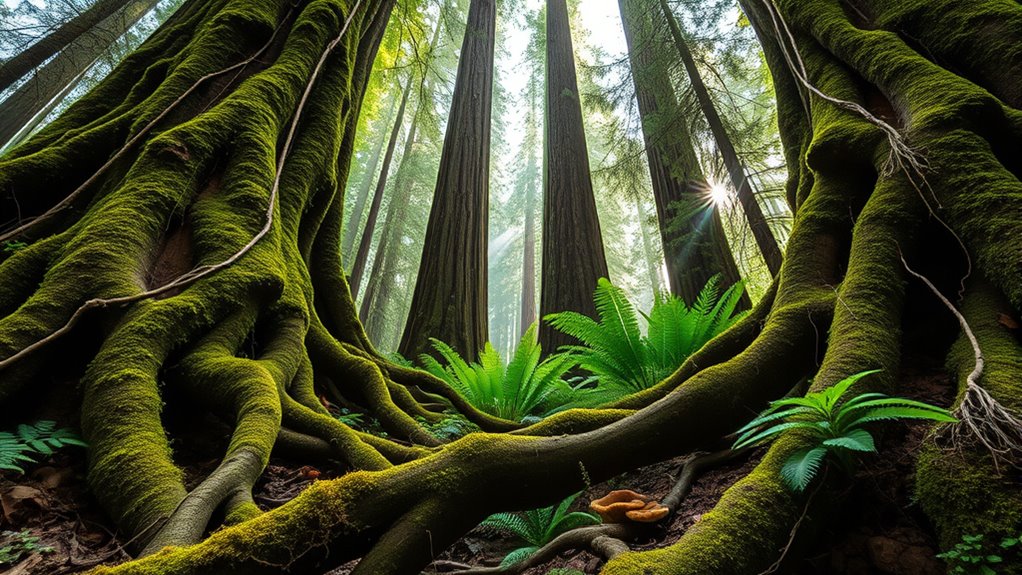
Redwood trees play a essential role in shaping their ecosystem by supporting a diverse array of plants, animals, and microorganisms. Their towering canopies create shaded, moist environments that foster shade-tolerant species like ferns, mosses, and understory shrubs. The trees provide habitat for numerous wildlife, including birds, insects, salamanders, and fungi, which thrive in the complex microhabitats they create. Their extensive root systems facilitate water and nutrient sharing, strengthening community resilience and supporting seedling growth. Redwood trees also influence soil health through organic matter deposition, promoting nutrient cycling and biodiversity. Moreover, their ability to regenerate via sprouting helps maintain forest continuity despite disturbances. Additionally, their robust bark offers protection against pests and environmental stresses, further supporting ecosystem stability. Their presence also impacts microclimate regulation, helping to moderate temperature and humidity levels that benefit many species. The complex interactions among redwoods and their environment underscore their role as vital ecosystem engineers, ensuring the stability, diversity, and longevity of their forest communities. Furthermore, redwoods can influence local climate patterns, contributing to a cooler and more humid microenvironment that benefits the entire ecosystem.
Geological Foundations and Climate Influences on Redwood Growth

You’ll see that the rocks beneath the redwoods, like sandstone and shale, shape the soil and influence tree growth. Coastal fog plays a crucial role by providing moisture and moderating temperatures, especially at lower elevations. These factors combine with climate and elevation to create the ideal conditions that allow redwoods to thrive along California’s coast.
Rock Types and Soil
The geological foundations of California’s redwood forests are primarily composed of sedimentary and metamorphic rocks from the Franciscan assemblage, including sandstone, siltstone, shale, chert, and greenstone. These rocks influence soil formation, with weathered surfaces creating nutrient-rich topsoils and older, weathered layers beneath affecting tree distribution. The soil varies across microclimates, impacting water retention and nutrient availability. To understand this better, the rock types interact with climate patterns to shape the overall ecosystem. | Rock Type | Soil Impact |
| ————— | ———————————————- |
|---|---|
| Sandstone | Well-drained, low nutrient |
| Shale | Fine-textured, retains moisture |
| Chert | Hard, influences mineral content |
| Greenstone | Weathered, contributes to mineral diversity |
Additionally, the soil composition plays a vital role in supporting the unique growth patterns of redwoods in different microclimates. Their roots adapt to these soils, accessing nutrients and moisture in diverse conditions. The weathering processes further modify soil characteristics, influencing redwood health and distribution. Understanding the geological processes involved helps explain the diversity of soil types and their effects on forest health. Moreover, climate influences such as fog and rainfall patterns work in tandem with geology to sustain these majestic trees.
Coastal Fog Effects
Coastal fog plays a pivotal role in shaping the growth and survival of redwoods by influencing both their microclimate and water availability. As fog rolls inland from the Pacific Ocean, it creates a moist, cool environment that reduces temperature extremes and maintains high humidity levels essential for redwood health. Your redwoods have adapted to intercept this fog with their multi-layered canopies, absorbing moisture directly through their leaves. This fog can supply up to 40% of their annual water intake, especially during dry summer months. It also helps keep soil moisture levels stable, supporting shallow roots and nutrient uptake. The persistent presence of fog fosters the unique microclimate that allows redwoods to thrive in coastal California’s challenging conditions, ensuring their long-term growth and resilience. Additionally, the types of headphone jacks used in various audio equipment are crucial for monitoring and studying these ecosystems through technology. The ability of redwoods to utilize moisture from fog is a remarkable adaptation that distinguishes them from other tree species in similar environments.
Climate and Elevation
Redwoods thrive within specific geological and climatic conditions that shape their growth and distribution. You’ll find these giants primarily on sedimentary and metamorphic rocks of the Franciscan assemblage, such as sandstone, shale, and chert. Elevations below 1,000 feet on moist slopes and riverine areas offer ideal environments, where temperature and humidity stay moderate. Coastal fog plays a crucial role, providing moisture and lowering temperatures, especially during dry seasons. These trees have persisted for over 20 million years, adapting to microclimates created by elevation and soil type. The combination of cool, moist air and nutrient-rich soils allows redwoods to grow tall and live for centuries. Variations in elevation and geology influence where different species and forest structures thrive, maintaining a diverse and resilient ecosystem. Understanding these factors helps explain the redwoods’ remarkable longevity and adaptability across various microclimates. Additionally, soil composition significantly impacts nutrient availability, further supporting redwood growth and health.
Adaptations That Ensure the Longevity and Resilience of Redwood Giants
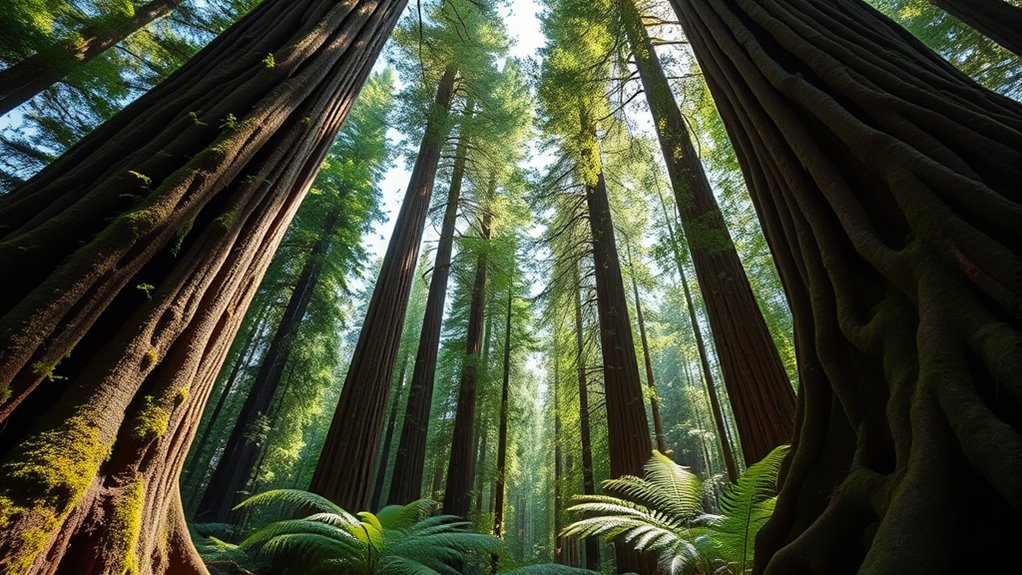
Redwood giants have developed a suite of remarkable adaptations that enable them to survive and thrive for centuries. Their roots spread extensively, intertwining with neighbors’ roots to provide stability during floods and high winds. This interconnected system also allows water and nutrients to flow between trees, supporting growth and recovery. Redwood trees also benefit from clonal reproduction, which allows them to regenerate rapidly from their trunks and roots, often outpacing seed-based growth. Their genetic resilience helps them adapt to environmental stresses and recover from damage, ensuring their longevity. Their enormous limbs create organic matter that enriches the soil, fostering new growth. Additionally, their thick bark resists fire and pests, while their ability to absorb moisture from coastal fog helps them endure droughts. These adaptations, combined with their genetic diversity, ensure redwoods can withstand ecological challenges, maintain their dominance, and live for thousands of years. Ongoing research into their resilience continues to reveal new insights into the remarkable longevity of these ancient giants. Moreover, studies of their adaptation mechanisms suggest that redwoods possess a remarkable capacity to adapt to changing environmental conditions over time.
Frequently Asked Questions
How Do Redwoods Communicate and Share Resources With Each Other?
You might not realize it, but redwoods communicate and share resources through their interconnected root systems and fungal networks. These roots intertwine with neighboring trees, allowing them to transfer water, nutrients, and chemical signals. This cooperation helps young saplings thrive and supports the overall health of the forest. By working together, redwoods increase their resilience against environmental stresses like drought, fire, and disease.
What Specific Roles Do Fungi Play in Redwood Soil Health?
Fungi act like the forest’s hidden maestros, orchestrating soil health with silent precision. They decompose leaf litter, wood, and organic matter, transforming debris into essential nutrients. These networks of mycelium connect roots, facilitating nutrient and water sharing among trees. By sequestering carbon and breaking down toxins, fungi keep the soil fertile and resilient, ensuring redwoods thrive in their ancient, moss-draped world, silently supporting the forest’s vitality.
How Do Fires Influence Long-Term Redwood Ecosystem Development?
Fires shape long-term redwood ecosystems by clearing underbrush, promoting nutrient cycling, and creating openings for new growth. You’ll find that fire-adapted species, like some hardwoods, thrive after burn events, helping restore ecological balance. Fires also reduce competition, allowing redwoods and other conifers to regenerate more effectively. Over time, controlled fires uphold forest diversity, support soil health, and guarantee the resilience of these ancient ecosystems.
What Is the Genetic Diversity Among Ancient Redwood Populations?
Imagine an ancient tapestry woven with countless vibrant threads—that’s the genetic diversity among redwoods. You’ll find high variation in these populations, which acts like a resilient shield, helping trees adapt to changing conditions and recover from disturbances. This genetic richness guarantees they stand tall through centuries, sharing a common history while holding the secrets to survival, growth, and longevity in their DNA, making each grove a living monument of evolutionary resilience.
How Do Climate Change and Droughts Threaten Redwood Longevity?
Climate change and droughts threaten redwood longevity by reducing water availability, especially from fog, which supplies up to 40% of their water. You might notice stressed trees with decreased growth, increased susceptibility to pests and disease, and higher mortality rates. Drought weakens roots, hampers reproduction, and makes trees more vulnerable to wildfires. Without adequate moisture, redwoods can’t maintain their resilience, risking overall forest health and long-term survival.
Conclusion
As you explore California’s redwood forests, remember these giants can live over 2,000 years, with some reaching heights of nearly 380 feet. Their complex canopy supports diverse microhabitats, showcasing nature’s incredible adaptability. By understanding their soil, climate, and unique structures, you gain a deeper appreciation for their resilience. Protecting these ancient forests isn’t just about preserving trees; it’s about safeguarding a essential, thriving ecosystem that’s been centuries in the making.