In the animal kingdom, countless creatures master the art of disguise to survive. You’ll be amazed by insects that blend into cityscapes, resemble dirt, or hide among trash, and chameleons that change color in seconds to match their surroundings. Underwater, animals use textured skin and bioluminescence to stay hidden. Reptiles and amphibians also change appearance quickly to blend into nature. If you keep exploring, you’ll discover even more astonishing ways animals stay unseen.
Key Takeaways
- Many insects and animals use advanced camouflage techniques, blending into environments like urban areas, forests, and oceans to avoid predators.
- Chameleons change their skin color rapidly through specialized cells called chromatophores for communication and concealment.
- Marine creatures, such as coral reef fish and bioluminescent species, adapt textures and colors to remain nearly invisible underwater.
- Reptiles and amphibians utilize pattern mimicry and quick color shifts to blend with leaves, bark, or rocks, enhancing their survival chances.
- Camouflage evolution is driven by natural selection, resulting in remarkable abilities like color shifting, pattern encryption, and adaptive concealment.
Insect Camouflage: Nature’s Tiny Masters of Disguise

Insect camouflage showcases some of the most impressive examples of disguise in the animal kingdom. You might not realize it, but many insects use urban camouflage to blend seamlessly into city environments, hiding in plain sight among concrete, leaves, or trash. This tactic helps them avoid predators and increases their survival odds. Urban camouflage is a clever form of predator deception, allowing insects to mimic their surroundings precisely. For instance, certain beetles resemble dirt or debris, making them nearly invisible to predators like birds or lizards. By mastering disguise, these tiny creatures stay hidden from danger, demonstrating nature’s remarkable ability to adapt. Their ability to blend into diverse environments proves that even the smallest animals can be masters of camouflage coverage area, illustrating how effective concealment strategies are vital for survival. Furthermore, understanding these camouflage techniques can provide insights into animal adaptation and survival strategies across different habitats. Recognizing the diversity of camouflage mechanisms employed by insects enhances our appreciation for their evolutionary ingenuity. Additionally, the evolution of camouflage strategies highlights how insects have developed complex adaptations to thrive in urban and natural environments alike.
Chameleons and Color Change: Dynamic Camouflage at Its Best
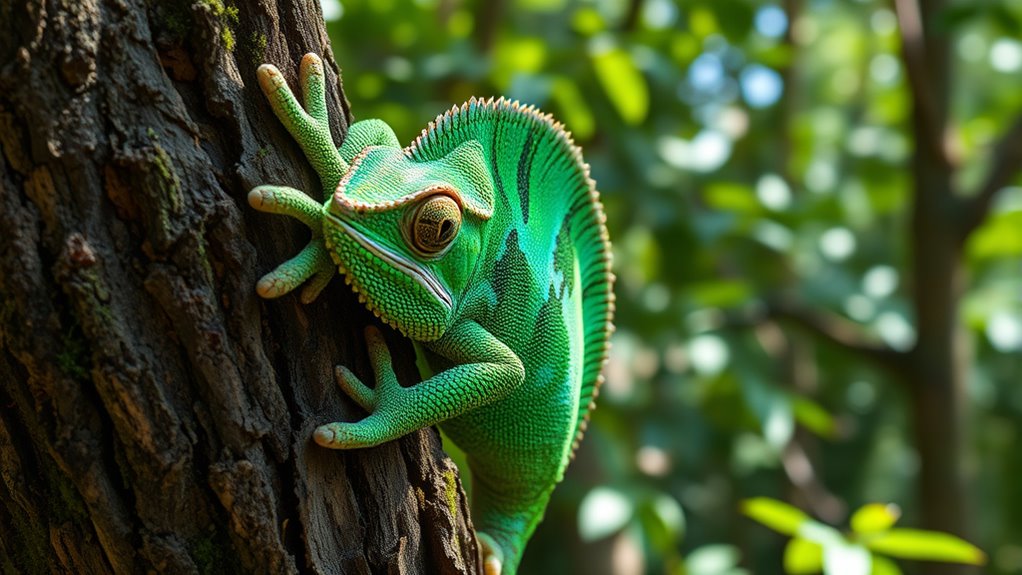
Chameleons are masters of disguise, capable of changing their color to blend seamlessly into their surroundings. This remarkable ability relies on sophisticated color adaptation, allowing them to shift hues in seconds. You’ll notice how they use pattern matching to mimic the textures and colors of their environment, whether they’re resting on a leafy branch or blending into a sandy background. Their skin contains specialized cells called chromatophores, which expand or contract to produce different colors and patterns. This dynamic camouflage helps them evade predators and communicate with others. As you observe a chameleon, you’ll see how it seamlessly shifts from vibrant greens to earthy browns, demonstrating nature’s incredible skill for adaptive concealment. It’s a perfect example of how animals use color change for survival, showcasing the importance of color accuracy in their ability to blend in effectively. Additionally, their ability to adapt quickly is crucial for survival strategies in their natural habitats. The precise control of their skin color changes exemplifies the complex biological processes involved in track development and adaptive responses, which are vital for their overall adaptability in diverse environments. Furthermore, ongoing research into chromatophore function continues to reveal new insights into biological mechanisms underlying rapid color changes in reptiles.
Marine Marvels: Camouflage Strategies of Underwater Creatures
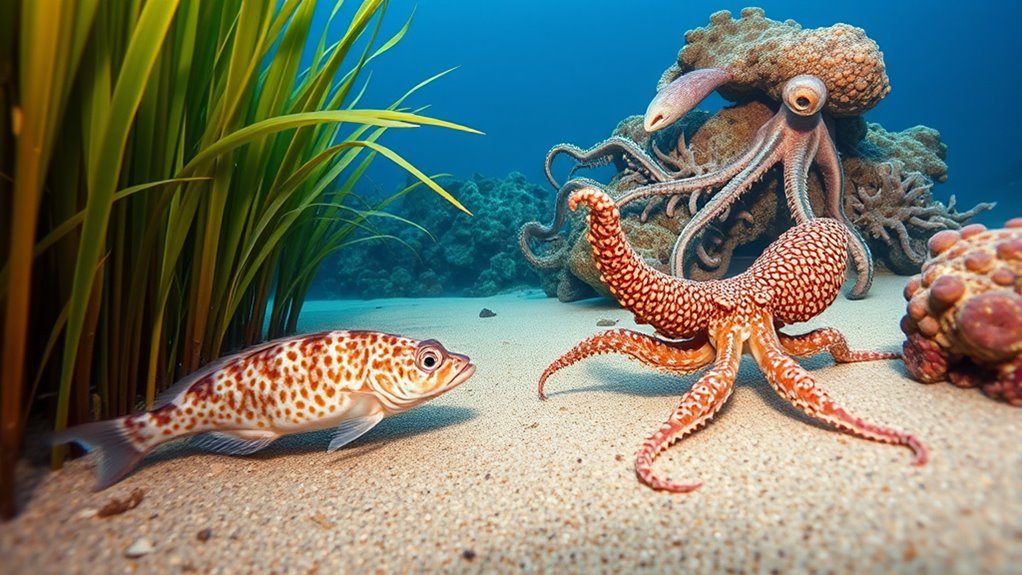
Just as land animals use color change for concealment, many underwater creatures have evolved extraordinary camouflage strategies to survive in their environment. You observe how they blend seamlessly into coral reefs or dark ocean depths, using specialized features like textured skin and color patterns. Some utilize bioluminescent signaling to communicate or lure prey without revealing their position. Others mimic the complex textures of their surroundings, making them nearly invisible. You also see how certain species exploit coral reef concealment, hiding among vibrant corals and anemones. Additionally, some creatures employ eco-friendly camouflage techniques that minimize their environmental impact while enhancing their survival strategies. These biological adaptations demonstrate the remarkable ingenuity of marine life in maintaining ecological balance while avoiding predators, highlighting the importance of understanding marine conservation efforts that protect these delicate ecosystems and ensure the preservation of their unique camouflage mechanisms. Moreover, many of these creatures have developed adaptive coloration that responds dynamically to their environment, further increasing their chances of survival.
Amphibian and Reptile Stealth: Blending Into the Environment
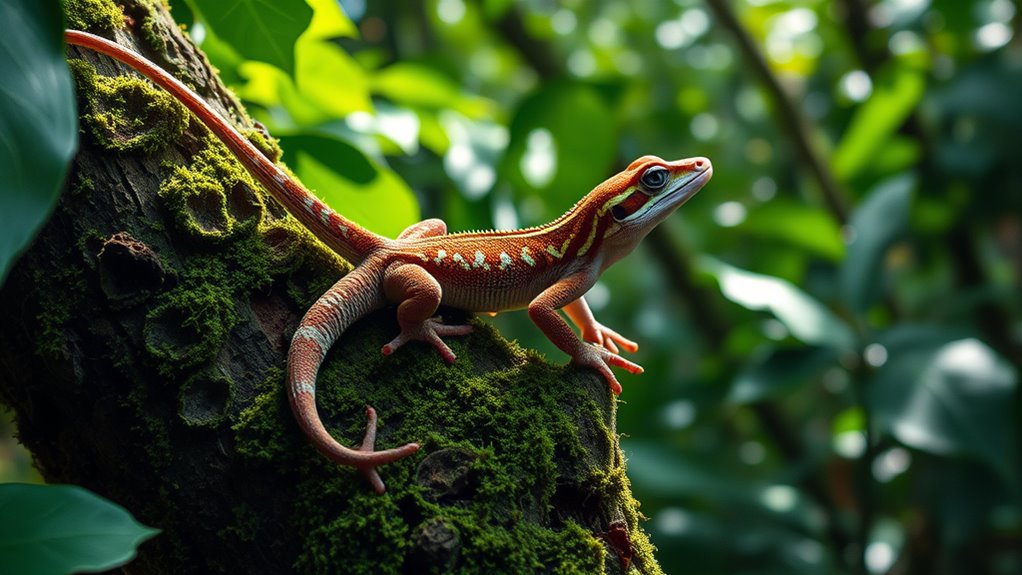
Amphibians and reptiles have developed remarkable ways to blend into their surroundings, helping them avoid predators and ambush prey. Many use nocturnal concealment, staying hidden during night hours when they’re most vulnerable. Their coloration and texture mimic leaves, bark, or rocks, making them nearly invisible in their environment. Some species, like certain frogs, utilize bioluminescent signaling to communicate subtly in darkness, avoiding predators while still attracting mates. Others rely on their ability to change color or pattern rapidly, matching their background perfectly. This adaptive camouflage technique is a crucial survival strategy that showcases the incredible diversity of adaptations in the animal kingdom. Their ability to master camouflage helps them remain undetected and successful in their habitats. Additionally, the ability to adjust coloration quickly is made possible by specialized cells called chromatophores, which enhance their capacity for color change. The evolution of these color-changing cells demonstrates their sophisticated adaptation to dynamic environments. By mastering these camouflage techniques, amphibians and reptiles remain masters of disguise in their natural habitats.
Adaptive Camouflage: How Animals Evolve to Survive
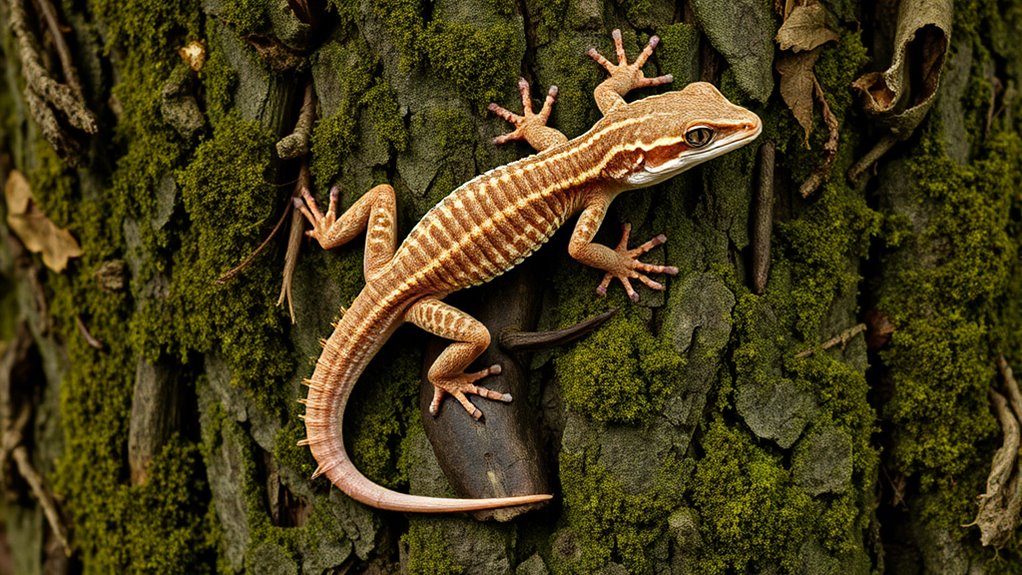
Many animals have evolved remarkable camouflage abilities that help them survive in their environments. This biological adaptation enhances their chances of evolutionary survival by allowing them to avoid predators or ambush prey. As environments change, species develop new traits through natural selection. You can see this in chameleons shifting color or cuttlefish blending with coral. These adaptations demonstrate how evolution shapes survival strategies. Additionally, some animals utilize encryption techniques, such as complex patterning, to further enhance concealment. These adaptations highlight how animals continually refine their appearance to match surroundings, develop quick responses to environmental cues, pass camouflage traits to future generations, and maximize concealment during vulnerable moments. This ongoing process showcases nature’s ingenuity, revealing how animals adapt to stay hidden and thrive. Furthermore, biological adaptation often involves a combination of behavioral and physiological changes that improve survival chances. Your understanding of biological adaptation reveals the incredible ways animals evolve to survive against odds.
Frequently Asked Questions
How Do Some Animals Change Their Camouflage Instantly?
Some animals change their camouflage instantly through dynamic color change and rapid pattern shifting. You might notice chameleons or cuttlefish using specialized cells called chromatophores that expand or contract, revealing new colors and patterns. This quick process allows them to blend into their surroundings, communicate, or deter predators. By controlling these cells with their nervous system, they can adapt their appearance almost instantly, giving them a remarkable edge in survival.
What Role Does Environment Play in Animal Camouflage Strategies?
You might be surprised to learn that over 80% of animals rely heavily on their environment for camouflage. The environment plays a crucial role in shaping their strategies, as habitat diversity requires animals to adapt uniquely. You’ll notice that animals in dense forests use green and brown tones to blend in, while those in deserts adopt sandy hues. This environmental influence ensures their survival by helping them stay hidden from predators or prey.
Are There Animals That Use Camouflage for Purposes Other Than Hiding?
You’ll find animals use camouflage beyond hiding, for purposes like mating displays and territorial signaling. For instance, some species showcase vibrant colors or patterns that blend with their surroundings to attract mates or warn others to stay away. By using camouflage creatively, they communicate their status, reproductive readiness, or dominance without alerting predators. This strategic use of disguise enhances their chances of survival and success in social interactions.
How Do Predators Adapt to Prey’s Camouflage Tactics?
You see, predators adapt to prey’s camouflage tactics through predator-prey dynamics that drive camouflage evolution. They develop sharper senses like enhanced vision or smell, allowing them to detect subtle movements or scent cues missed by camouflage. Some predators even evolve specialized hunting techniques, such as ambushing or following prey trails. These adaptations help predators overcome camouflage, maintaining the ongoing evolutionary arms race in nature.
Can Humans Mimic Animal Camouflage Techniques Effectively?
You can definitely mimic animal camouflage techniques effectively. Did you know that biomimicry innovations have led to advanced camouflage technology used in military and fashion industries? By studying animals like chameleons and cuttlefish, humans develop materials that change color or texture seamlessly. Such innovations enable you to blend into environments better, making animal-inspired camouflage a remarkable tool for concealment and stealth in various fields today.
Conclusion
You’ve seen how animals are masters of disguise, turning the tables on predators and prey alike. Their incredible camouflage proves nature’s own game of hide and seek, reminding you that in the wild, appearances can be deceiving. It’s a demonstration of survival’s cleverness—those who adapt best often stay one step ahead. So, next time you marvel at these hidden heroes, remember, in the animal kingdom, it’s often a case of “out of sight, out of mind.”