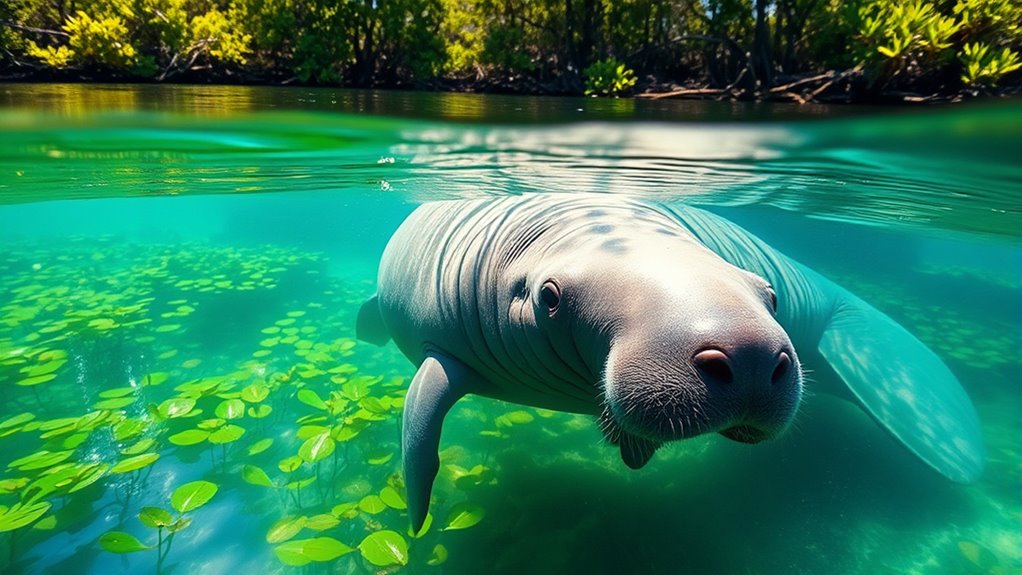

Florida’s gentle giant, the manatee, has seen a positive population increase to nearly 9,800 since its threatened status was improved in 2017, thanks to conservation efforts. They mainly inhabit warm waters and seagrass beds, but still face dangers from boat collisions, cold stress, and habitat loss. While protections have helped them recover, ongoing threats mean they remain vulnerable. To understand how conservation keeps these iconic mammals safe, keep exploring their story.
Key Takeaways
- Florida’s manatee population has steadily increased to approximately 9,790, showing signs of recovery from previous threats.
- Conservation efforts, habitat protection, and legal safeguards have played a critical role in their population growth.
- Despite progress, threats like boat collisions, pollution, and habitat loss still pose risks to their survival.
- Manatees primarily inhabit warm coastal and inland waters, with distribution patterns shifting due to environmental changes.
- Ongoing monitoring and public awareness are essential for ensuring the long-term health of Florida’s gentle giants.
Top picks for "florida gentle giant"
Open Amazon search results for this keyword.
As an affiliate, we earn on qualifying purchases.
Overview of the Manatee Population in Florida
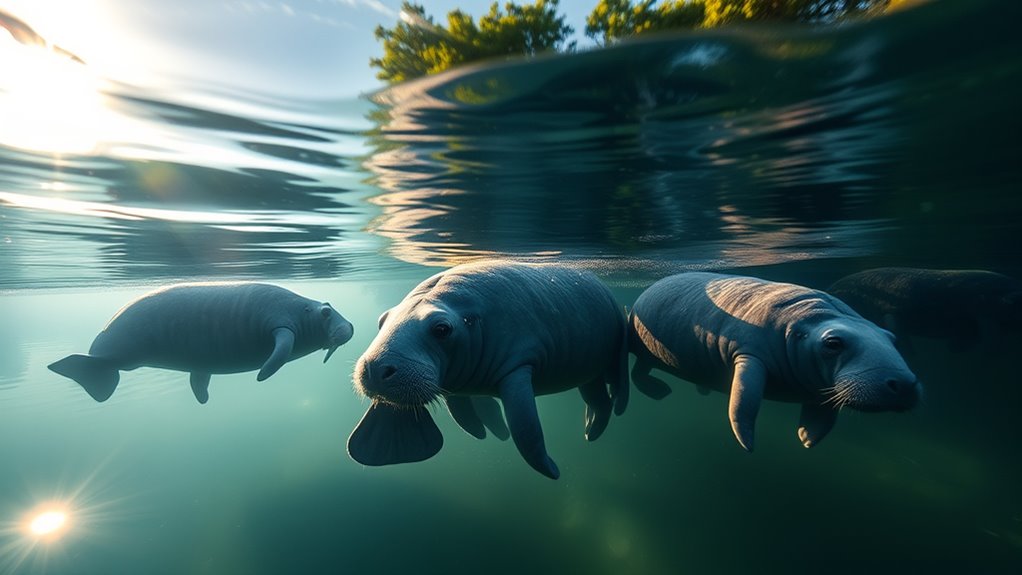
Have you ever wondered about the status of Florida’s manatees? Currently, there are about 9,790 manatees in the state, based on recent surveys. The west coast hosts around 4,630, while the east coast has approximately 5,160. Despite a deadly event in 2021, the population has increased from 8,810 over the past few years. In 2017, the species was reclassified from endangered to threatened, reflecting some recovery. These gentle giants now mostly stay in southeastern Florida’s coastal and inland waters during winter, gathering near warm springs and power plant outfalls. As water warms in spring and summer, they disperse across Florida and into neighboring states. This overall growth shows resilience, but ongoing threats still challenge their future. Monitoring efforts continue to track their population and health, ensuring conservation measures are effective. Moreover, population recovery demonstrates how targeted conservation strategies can positively impact endangered species.
Current Distribution and Habitat Preferences
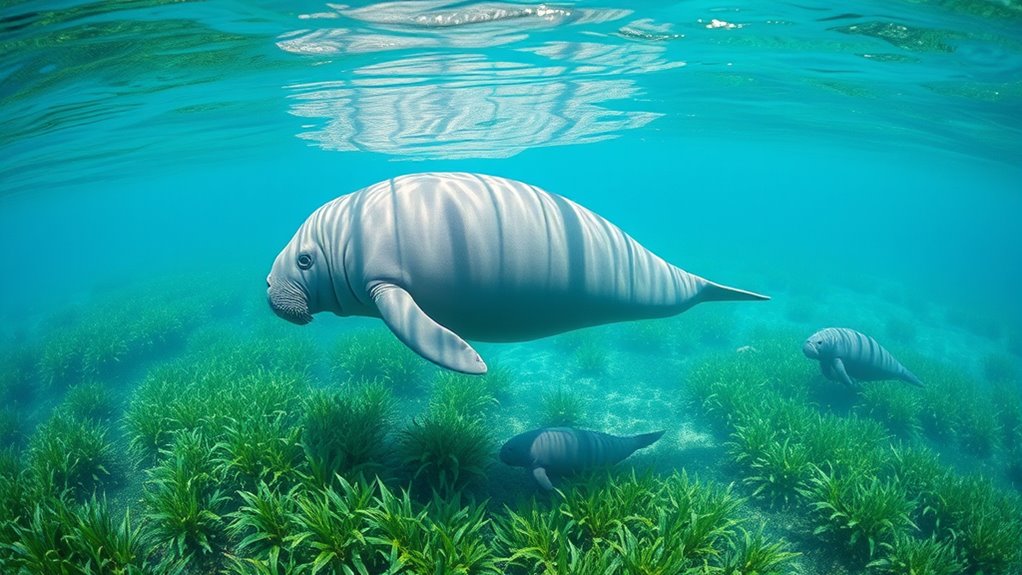
Florida manatees primarily inhabit coastal and inland waters of the southeastern United States, with their distribution limited by water temperatures below 18°C (65°F). During winter, you’ll find them mainly in southern Florida, where they gather in warm-water springs and thermal outfalls from power plants to escape the cold. As temperatures rise in spring and summer, they disperse throughout Florida and into neighboring states, occupying rivers, estuaries, and coastal areas. Manatees prefer shallow, slow-moving waters rich in seagrass beds, which serve as their primary food source. Their distribution reflects the availability of warm habitats and food resources. You’ll notice their presence closely tied to thermal refuges during colder months, and their range expands as water temperatures increase during warmer seasons. The availability of seagrass beds directly impacts their survival and distribution patterns. Because of their reliance on specific habitats, habitat conservation is crucial for their continued survival and recovery.
Population Trends and Recent Growth
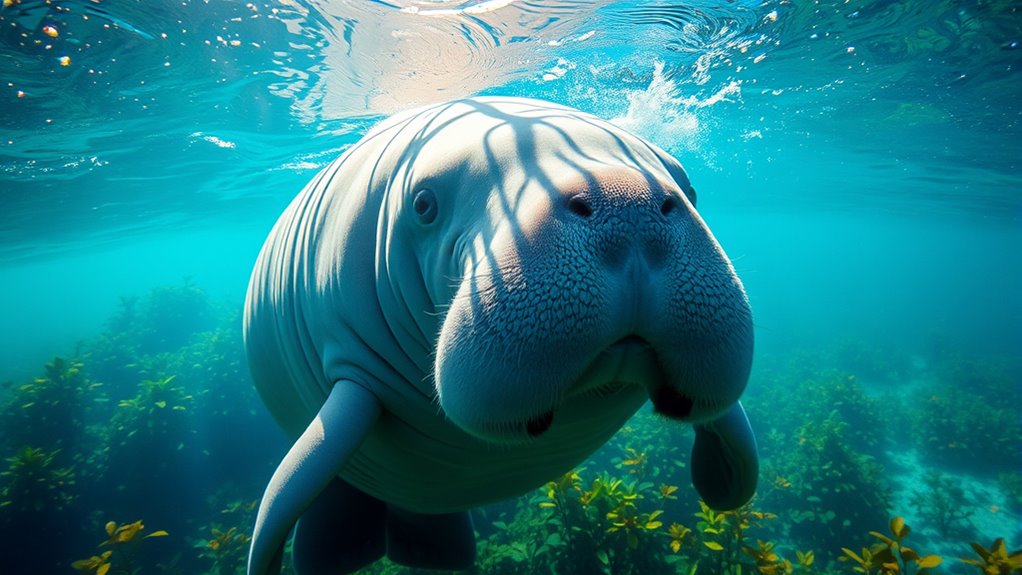
You’ll notice that the Florida manatee population has grown since 2017, despite facing several mortality events. Recent aerial surveys estimate around 9,790 manatees, showing a steady increase from previous counts. This growth suggests that conservation efforts are making a tangible difference, even as challenges remain. The positive trend is partly attributed to conservation initiatives that focus on habitat preservation and protection policies. Additionally, ongoing monitoring and assessment efforts help adapt strategies to ensure the species’ continued recovery. Implementing scientific research plays a critical role in understanding and supporting the species’ health and habitat needs. Moreover, increased public awareness and community involvement have contributed to the species’ resilience, fostering a collaborative approach to conservation. The integration of aesthetic wall organization systems and community engagement can further support habitat and species protection efforts.
Population Increase Since 2017
Since the reclassification of the Florida manatee from endangered to threatened in 2017, their population has increased considerably. The latest estimates from 2021-2022 aerial surveys show about 9,790 individuals, up from approximately 8,810 in previous assessments. Despite setbacks like the 2021 east coast mortality event, numbers continue to grow. Here’s a snapshot of recent population trends:
| Region | 2016 Estimate | 2022 Estimate | Change |
|---|---|---|---|
| West Coast | 4,500 | 4,630 | +130 |
| East Coast | 4,850 | 5,160 | +310 |
| Northern Florida | 1,200 | 1,300 | +100 |
| Central Florida | 3,600 | 3,950 | +350 |
| Overall | 8,810 | 9,790 | +980 |
This growth highlights ongoing recovery efforts and increasing population resilience, which are supported by conservation strategies like protected habitats. Additionally, population monitoring plays a vital role in tracking the health of the species and guiding future conservation initiatives. Long-term data collection helps researchers identify emerging threats and adapt management plans accordingly. Effective conservation strategies are crucial for maintaining the momentum of this positive trend. Continued monitoring efforts are essential to ensure the long-term survival of this gentle giant.
Recent Aerial Survey Data
Recent aerial survey data reveal a positive trend in the population of Florida manatees, with numbers reaching approximately 9,790 individuals in 2021-2022. You can see this increase despite challenges like recent mortality events and habitat threats. The west coast population is about 4,630, while the east coast has roughly 5,160 manatees. These figures mark a significant rise from the 8,810 counted in previous surveys. The data suggest that conservation efforts are helping the species recover, even as some regional shifts and distribution changes occur. You’ll notice that regular monitoring continues to provide valuable insights into population dynamics. Additionally, advancements in data collection methods are enhancing the accuracy of population estimates and informing conservation strategies. Ongoing research and population monitoring are essential for ensuring the long-term survival of this iconic species.
Growth Despite Mortality Events
Despite facing significant mortality events in recent years, the Florida manatee population has continued to grow, demonstrating resilience and effective conservation efforts. You can see this in the latest estimates, which show a population of about 9,790 individuals, up from previous counts. This growth persists despite challenges like cold snaps, algae blooms, and boat collisions. Key factors include:
- Population recovery from 8,810 to nearly 9,800 in recent surveys.
- Regional shifts, with the Atlantic Coast experiencing unexpected increases.
- Stable numbers in the Upper St. Johns River management unit.
- Continued growth on the west coast, despite earlier stagnation.
- Conservation efforts play a crucial role in supporting population rebound and habitat protection. These efforts are complemented by habitat management strategies that ensure safe and sustainable environments for manatees. Additionally, public awareness campaigns have helped reduce human-related threats and foster community involvement in conservation initiatives. The resilience of the species is further aided by adaptation to environmental changes, which allows them to survive in varying conditions.
Furthermore, ongoing research into manatee health and behavior provides valuable insights that guide management practices. These trends highlight the species’ ability to rebound, thanks to targeted protection and habitat management. They also underscore the importance of ongoing conservation to sustain this growth amid persistent threats.
Regional Management and Distribution Shifts
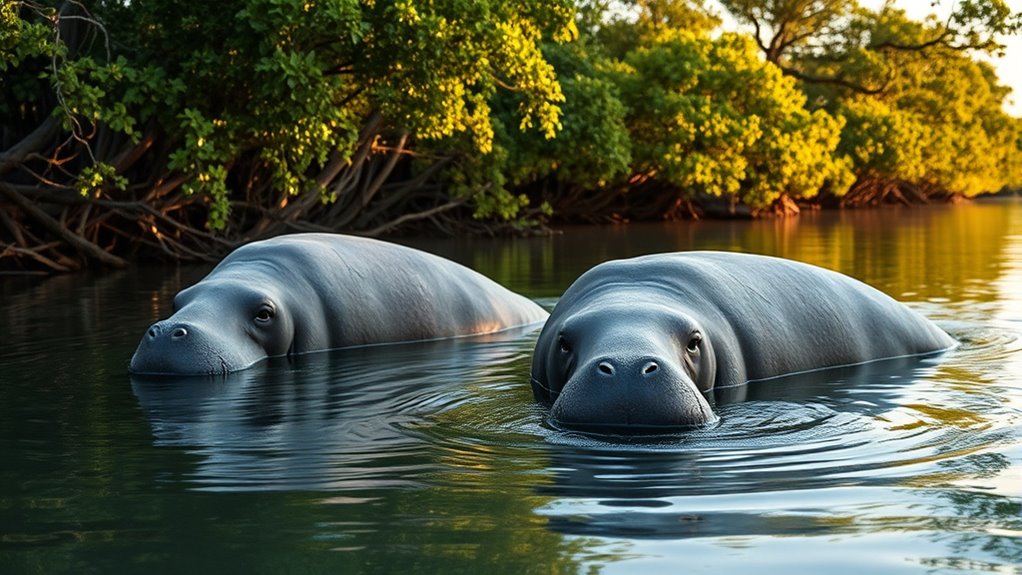
You’ll notice that manatee distribution patterns are shifting across Florida’s regions, with some areas showing unexpected increases or decreases in population. Management units reflect these changes, revealing how habitat use varies as water temperatures and environmental conditions evolve. These shifts highlight the importance of adaptive strategies to protect and conserve manatees effectively across different regions. Incorporating community engagement into conservation efforts can further enhance the effectiveness of these strategies.
Distribution Changes Noted
Have you noticed how the distribution of Florida manatees is shifting across different regions? Recent surveys reveal notable changes in their range. Consider these points:
- The Atlantic Coast management unit has seen an unexpected increase in abundance since 2016, indicating a potential expansion.
- The West Coast estimates remain stable overall, but individual management units suggest possible redistribution.
- The Upper St. Johns River population has stayed consistent, yet some seasonal movements hint at slight shifts.
- Emerging evidence points to some manatees exploring northern waters, possibly driven by temperature changes or habitat availability.
These distribution patterns reflect dynamic responses to environmental factors and human impacts, emphasizing the importance of ongoing monitoring to understand and protect their evolving range.
Management Unit Variations
Regional management units of Florida manatees exhibit notable variations in population estimates and distribution patterns, reflecting ongoing shifts across different areas. The Atlantic Coast unit has seen unexpected increases in abundance between 2016 and 2022, indicating possible expansion or improved detection. Meanwhile, the Upper St. Johns River unit‘s numbers remained stable, suggesting consistent habitat use. The Southwest unit’s estimates have fluctuated slightly, highlighting localized changes in water quality and habitat availability. The West Coast’s overall numbers stayed similar to past estimates, but individual management units reveal potential distribution shifts, possibly driven by environmental factors or water temperature changes. These variations emphasize that manatee populations are dynamic and that their distribution responds to evolving habitat conditions across Florida’s coastlines.
Shifts in Habitat Use
Recent population fluctuations across Florida’s manatee management units reflect notable shifts in habitat use and distribution patterns. You may observe that manatees are increasingly dispersing beyond traditional warm-water refuges, adapting to changing environmental conditions. These shifts include:
- Expansion into northern and inland waters during warmer months, highlighting altered seasonal ranges.
- Increased presence along the Atlantic coast, especially in areas previously considered less populated.
- Movement toward artificial warm-water sources, such as power plant outfalls, as natural habitats face degradation.
- Redistribution within management units, indicating dynamic responses to habitat quality, water temperature, and human activity.
These changes suggest that manatees are adjusting their distribution in response to environmental pressures, emphasizing the importance of monitoring habitat use to guide conservation efforts effectively.
Major Threats Facing the Species
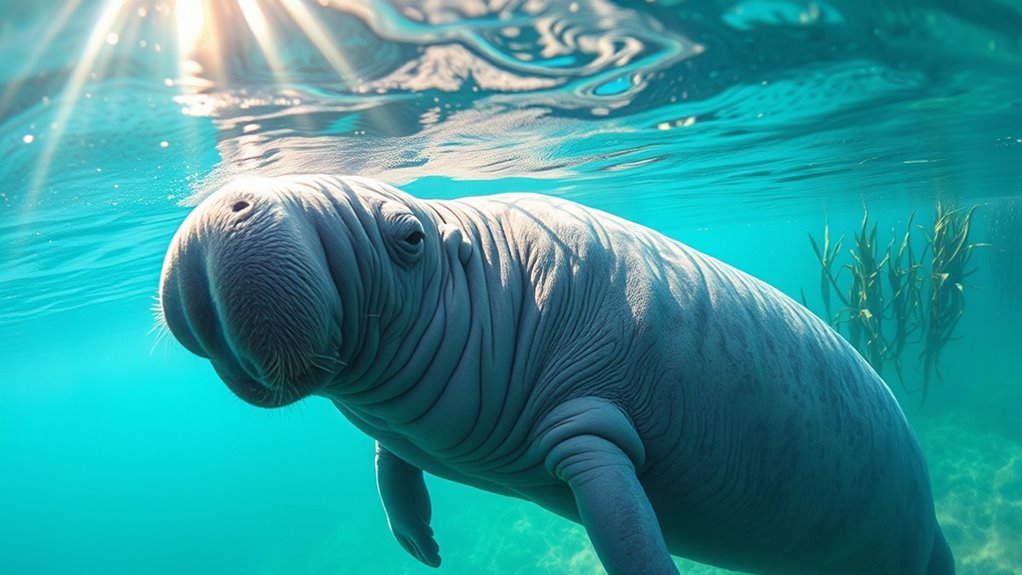
Major threats facing the Florida manatee stem from human activities and environmental changes that jeopardize their survival. Boat collisions are a leading cause of injury and death, often leaving scars or fatal wounds. High-speed vessels pose an ongoing risk, especially in busy waterways. Cold weather events are deadly when water temperatures drop below 18°C (65°F), causing hypothermia and mass die-offs. Pollution from agricultural runoff, sewage, and algae blooms degrades water quality and destroys seagrass beds, a primary food source. Habitat loss due to coastal development and waterway modifications limits access to warm-water refuges and foraging areas. These threats combine to threaten the species’ recovery, emphasizing the need for ongoing awareness, regulation, and habitat protection to guarantee their survival.
Legal Protections and Conservation Efforts
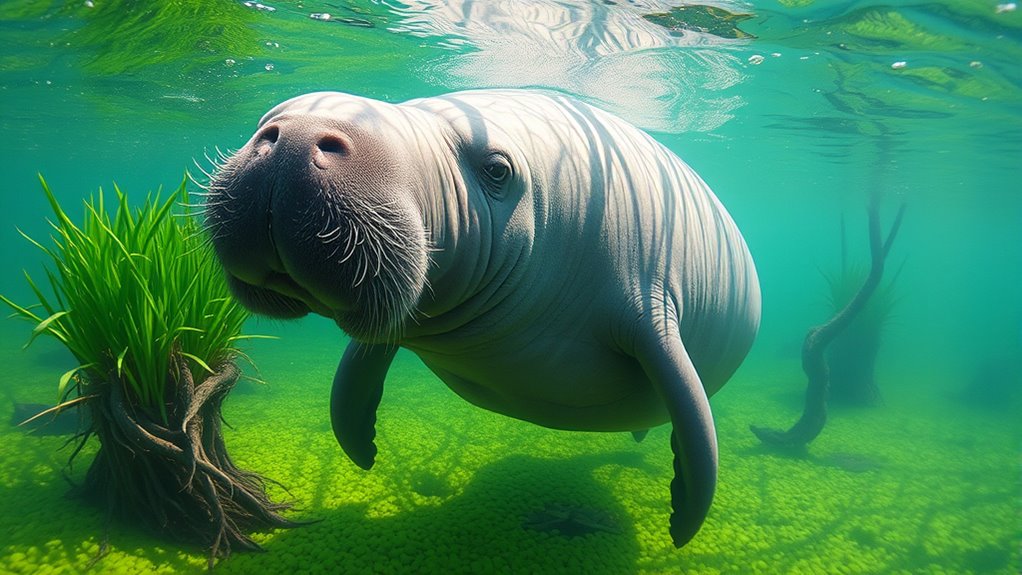
Since Florida manatees face numerous threats, extensive legal protections have been established to safeguard their populations. These laws aim to reduce human-related mortality and protect critical habitats. You should know:
- The Marine Mammal Protection Act (1972) prohibits harassment, harm, and harassment of manatees.
- The Endangered Species Act (1973) reclassified manatees from endangered to threatened in 2017, guiding conservation priorities.
- Florida’s Manatee Sanctuary Act (1893) designates specific areas as protected habitats.
- Conservation programs, like the Manatee Management Plan, coordinate efforts across agencies to monitor and restore populations.
These measures help limit boat collisions, habitat destruction, and pollution. They also foster public awareness and research, ensuring ongoing efforts to preserve this gentle giant.
Challenges of Reclassification and Reduced Protections
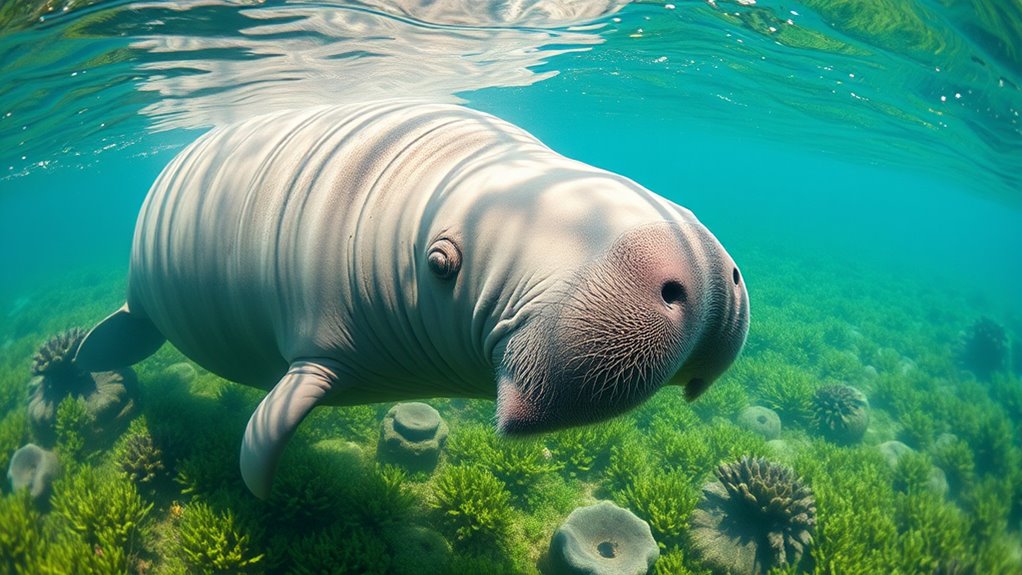
Reclassifying the Florida manatee from endangered to threatened in 2017 has created significant challenges for conservation efforts. This change can lead to decreased public awareness and funding, making it harder to prioritize their protection. It also risks weakening legal protections, as some regulations become less stringent under threatened status. You might assume the species no longer faces critical threats, but in reality, many dangers persist—like boat collisions, habitat loss, and climate impacts. Reduced protections can slow response times to emerging threats, allowing harmful activities to go unchecked. Without strong safeguards, population recovery could stall or reverse. You need to recognize that reclassification isn’t just a label change; it influences policy, funding, and public support crucial for ensuring the long-term survival of these gentle giants.
The Role of Manatees as Environmental Indicators
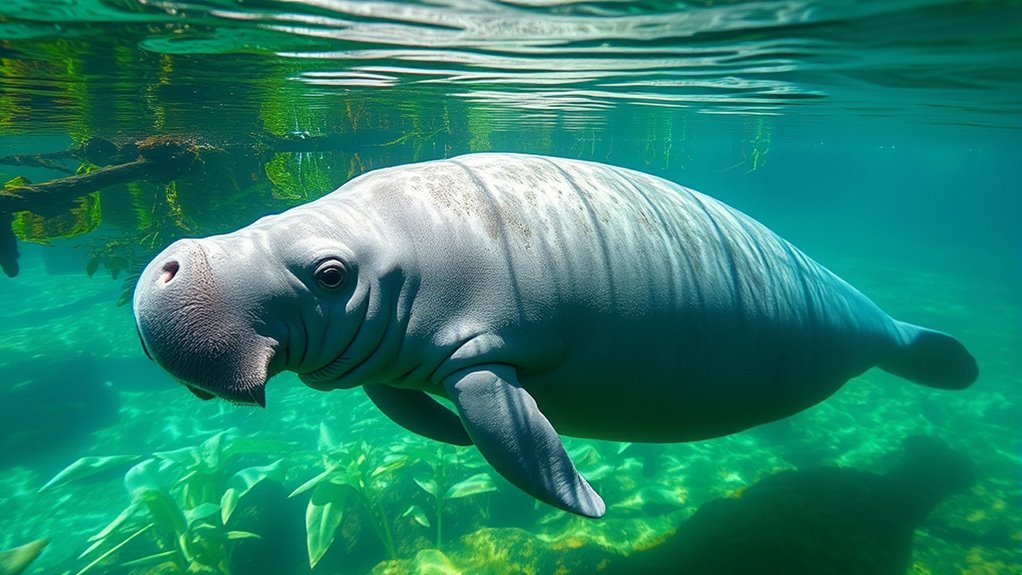
Have you ever considered how the health of Florida’s waterways is reflected in the well-being of its manatees? As a keystone species, manatees act as living indicators of the environment’s condition. When water quality declines or habitats degrade, you’ll see changes in their health and distribution. Specifically:
- Population shifts signal habitat loss or pollution hotspots.
- Increased injury rates from boat collisions indicate busy, congested waterways.
- Unusual mortality spikes often point to environmental toxins or algae blooms.
- Altered migration patterns reveal temperature or habitat disruptions.
Strategies for Ensuring a Sustainable Future

To secure a sustainable future for Florida’s manatees, proactive and adaptive management strategies are vital. You should prioritize habitat protection by enforcing regulations that limit boat speeds in high-traffic areas and expanding protected zones around key warm-water sites. Restoring degraded habitats, such as seagrass beds, helps improve food sources and shelter. Implementing ongoing monitoring programs allows you to track population trends and identify emerging threats early. Public education campaigns can raise awareness, encouraging responsible boating and habitat preservation. Collaborating with local communities, industries, and policymakers ensures thorough conservation efforts. Additionally, adapting strategies based on scientific data and environmental changes helps maintain a resilient population. Together, these actions support a balanced ecosystem where manatees can thrive sustainably.
Frequently Asked Questions
How Do Climate Change and Rising Temperatures Impact Manatee Migration Patterns?
Climate change and rising temperatures cause manatees to alter their migration patterns. You’ll notice them staying longer in warmer waters during winter, like power plant outfalls and natural springs. As water temperatures increase, they disperse further throughout Florida and into neighboring states during spring and summer. These shifts can disrupt traditional habitats and increase risks, making it essential for you to support conservation efforts that address climate impacts on these gentle giants.
What Specific Conservation Programs Are Currently Most Effective for Protecting Manatees?
You should know that conservation programs like the Florida Manatee Sanctuary Act and the Manatee Management Plan are currently the most effective. These initiatives focus on protecting essential habitats, regulating boat speeds, and reducing vessel collisions. They’ve helped increase the population from just over 8,800 to nearly 9,800 in recent years. Your support and awareness of these programs are indispensable for ensuring these gentle giants continue to thrive.
How Does Habitat Restoration Influence Long-Term Manatee Population Stability?
Habitat restoration plays a crucial role in guaranteeing long-term manatee population stability by improving water quality and restoring essential seagrass beds, which are essential for their diet and shelter. When you support or advocate for habitat projects, you help create safer, more sustainable environments that reduce threats like pollution and habitat degradation. This not only helps current populations recover but also ensures future generations have a healthy habitat to thrive in.
Are There Emerging Threats to Manatees From New Human Activities or Industries?
Yes, new threats emerge from human activities like increased boat traffic, coastal development, and pollution from industrial expansion. You’ll see more collisions with vessels, leading to injuries and fatalities. Additionally, habitat degradation from pollution and climate change worsens, affecting warm-water shelters vital for winter survival. These activities threaten to destabilize the growing manatee population, making continued conservation efforts essential to mitigate risks and protect their habitat.
How Can Community Involvement Enhance Manatee Conservation Efforts?
You can enhance manatee conservation by actively participating in local initiatives, such as volunteering with rescue and education programs, advocating for boat speed restrictions, and reporting injured or distressed manatees. Educate others about the importance of protecting their habitat and following guidelines in waterways. Your involvement raises awareness, fosters community stewardship, and helps enforce laws that safeguard these gentle giants, ensuring their populations continue to thrive.
Conclusion
As you see, Florida’s manatees remind us of nature’s delicate balance, thriving where we’ve made space and suffering when we forget. Their gentle presence signals the health of our waters, yet threats linger just beneath the surface. By staying vigilant and committed, you can help guarantee these peaceful giants continue to grace our coasts. Together, we can protect their future—because sometimes, the smallest actions make the biggest difference in preserving this gentle giant’s story.