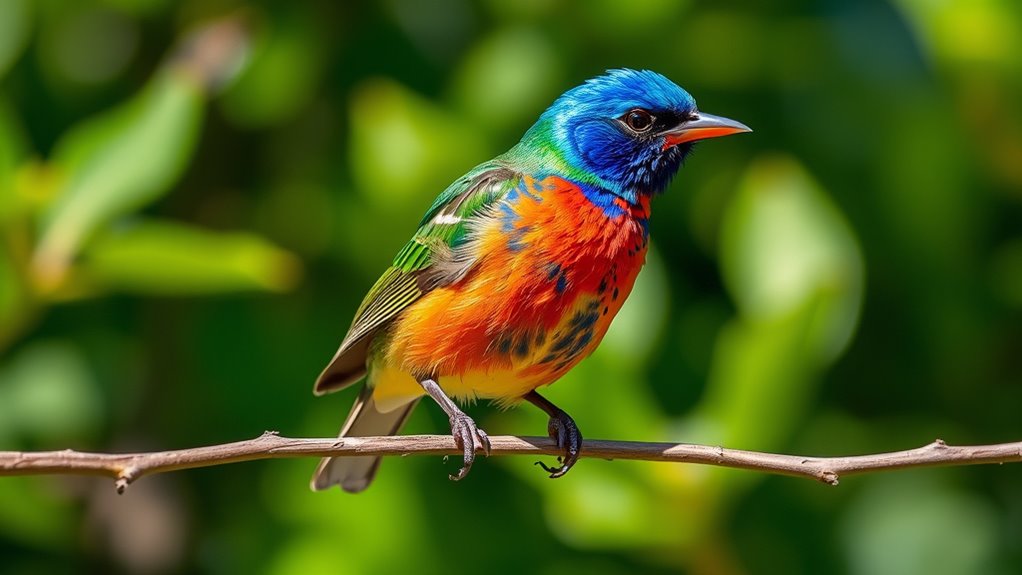
The painted bunting is one of North America’s most colorful songbirds, with a vivid blue head, fiery red breast, and shimmering green and purple feathers. You’ll spot them in southeastern U.S. habitats like shrublands and forest edges, where males perform striking displays and enthralling songs to attract mates. During migration, they travel thousands of miles and face challenges like habitat loss and trapping. Keep exploring to discover more fascinating facts about this living jewel.
Key Takeaways
- The Painted Bunting is a vividly colorful North American songbird with bright blue, red, green, and purple plumage.
- Males display rainbow-like feathers, while females and juveniles have camouflaging green or yellow-green feathers.
- They inhabit dense shrubs, woodland edges, and shrubby areas across southeastern and south-central U.S. regions.
- During breeding, males perform elaborate singing and visual displays to attract mates and defend territory.
- Conservation efforts focus on habitat protection, regulating trapping, and raising awareness of their migratory and habitat challenges.
Stunning Visual Traits of the Painted Bunting
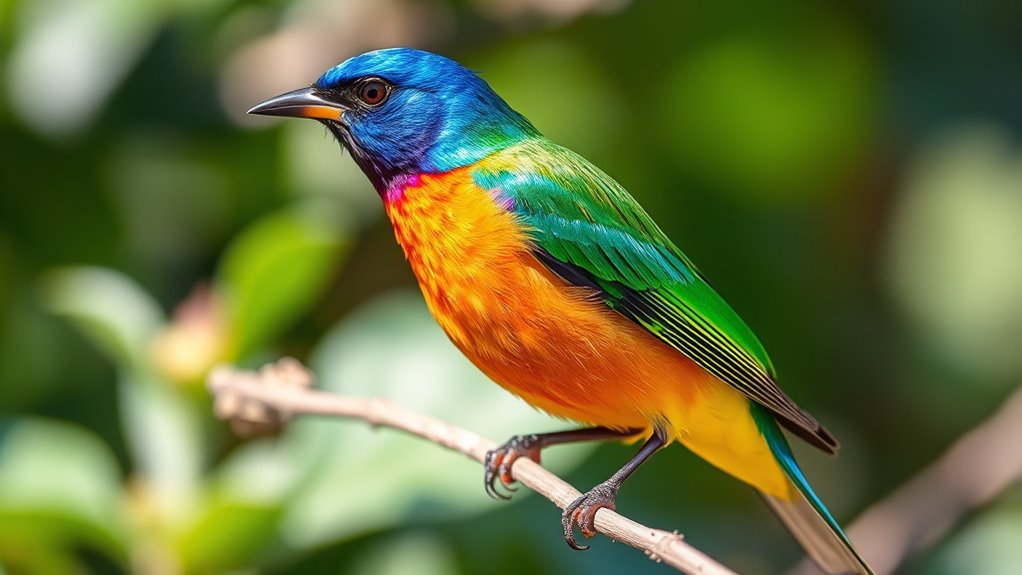
Have you ever seen a bird so vividly colored it looks like it’s straight out of a painting? The male Painted Bunting’s plumage is truly breathtaking. Its head is a brilliant blue, contrasting sharply with a fiery red breast and belly. The back and wings shimmer with shades of green, purple, and blue, creating a “technicolor” effect. Females and juveniles are less flashy but still striking, with bright green or yellow-green feathers that help them blend into dense foliage. The males’ vibrant coloration develops in their second year, making them look like living jewels. All Painted Buntings have stubby, thick bills and pale eye rings. Their small size—about 5.5 inches—adds to their charm, making them one of North America’s most colorful songbirds.
Where to Find These Vibrant Birds
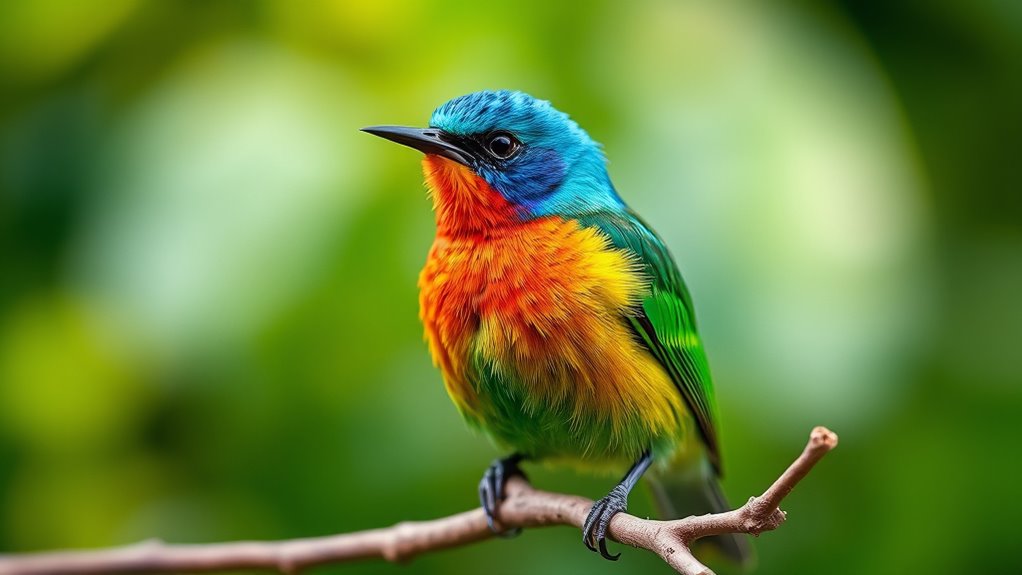
You can spot Painted Buntings in their breeding hotspots across the southeastern US, including Texas, Oklahoma, and along the Atlantic Coast from North Carolina to Florida. During winter, they migrate to Latin America, especially southern Florida, Mexico, and Central America. Knowing their preferred habitats and migration routes helps you find these colorful birds year-round. Additionally, understanding the benefits of listening to nature sounds can enhance your birdwatching experience by creating a calming environment that attracts these vibrant birds. Recognizing the cultural heritage associated with their habitats can also deepen your appreciation for these stunning songbirds. Observing their seasonal migration patterns offers valuable insights into their behavior and helps in planning the best times for viewing. Being aware of bird conservation efforts can also inform responsible birdwatching practices and support the protection of these beautiful species. Engaging with birdwatching communities can further enrich your experience by providing local insights and fostering conservation awareness.
Breeding Hotspots in US
The best breeding hotspots for Painted Buntings in the United States are found in the southeastern and south-central regions. In the southeast, look along the Atlantic Coast from North Carolina to Florida, where they favor dense shrubs, coastal dunes, and thickets. In the south-central US, Texas, Oklahoma, and Louisiana provide ideal habitats like woodland edges, fallow fields, and scrublands. These areas offer the dense vegetation and cover needed for nesting and protection. During the breeding season, you’ll find males establishing territories in these habitats, singing softly and defending their space vigorously. To observe them, visit parks, reserves, or riparian zones within these regions, especially during late spring and early summer when breeding activity peaks. Your best chance is to explore brushy, low-lying areas with thick vegetation. Recognizing the importance of spiritual energy in nature can deepen your connection with these vibrant birds and enhance your birdwatching experience. Additionally, being aware of their habitat preferences can help you locate these beautiful songbirds more easily. Paying attention to bird behavior during this time can also reveal their presence and increase your chances of sighting them. Understanding regional diversity can further improve your birding success.
Wintering Grounds in Latin America
During the winter months, Painted Buntings migrate south to warmer Latin American regions, where they find the dense vegetation and lush habitats they need for foraging and shelter. You’ll find these vibrant birds mainly in Mexico, Central America, and the Caribbean, often in dense forests, thickets, and scrublands. They prefer areas with thick cover near water sources, which provide food and protection from predators. Here’s a visual guide to their wintering grounds:
| Region | Typical Habitat | Key Features |
|---|---|---|
| Mexico | Dense forests, brushy areas | Near water, abundant seeds |
| Central America | Thickets, woodland edges | Lush vegetation, fruit availability |
| Caribbean | Coastal scrublands, mangroves | Dense cover, food-rich environments |
Understanding their habitat preferences can help birdwatchers locate and observe these colorful songbirds more effectively. Recognizing the importance of migration patterns is crucial in understanding their seasonal movements and habitat choices. Additionally, protecting these key areas ensures the survival of Painted Buntings during their wintering period. Preserving wintering habitats plays a vital role in maintaining healthy populations of these striking birds.
Life Cycle and Mating Habits
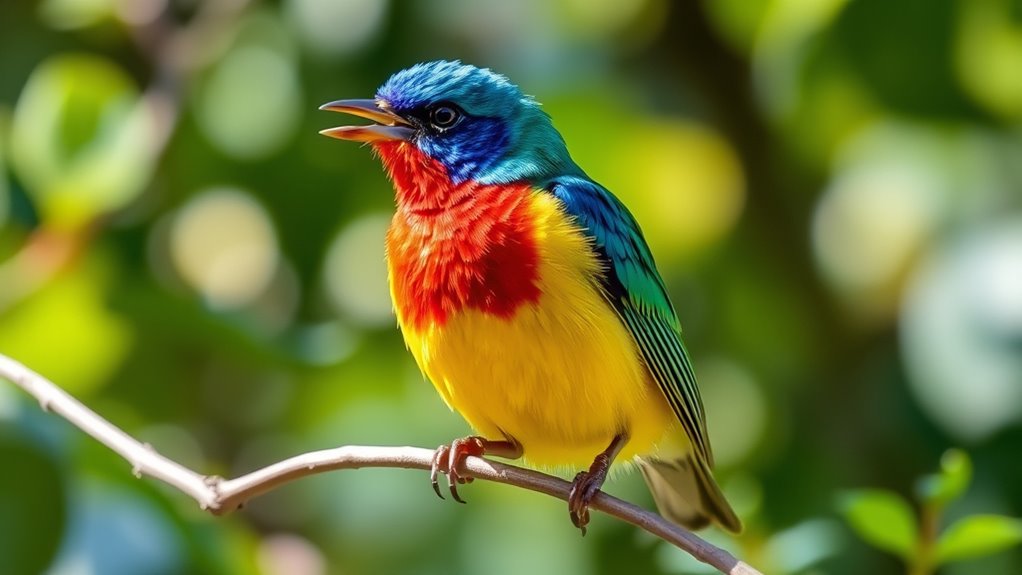
You’ll notice that male Painted Buntings use bright displays and aggressive behaviors to defend their territories during mating season. Females lay multiple eggs per clutch, often reusing nests for second broods, with breeding seasons varying by region. Understanding their reproductive timing and habits helps reveal how these vibrant birds reproduce and raise their young. Additionally, the courtship rituals of Painted Buntings are elaborate, involving singing and visual displays to attract mates, which are essential components of their reproductive behavior. These behaviors are influenced by environmental factors and resource availability, which can also impact their breeding success. Moreover, mating strategies among Painted Buntings may vary depending on local conditions and population density, affecting their overall reproductive outcomes. Environmental cues such as seasonal changes also play a crucial role in triggering breeding activities, ensuring synchronization with optimal conditions.
Mating Displays and Territory
Painted buntings exhibit striking mating displays that showcase the male’s vibrant plumage to attract females and establish dominance. During the breeding season, males perch prominently and puff out their chest, flashing their colorful feathers to catch the attention of potential mates. They sing soft, varied warbles to assert territory and ward off rivals. Males fiercely defend their nesting areas, engaging in aggressive chases and physical confrontations with intruders. Their territorial behavior is especially pronounced in the western population, where they establish and defend territories before migration. Females select mates based on the display behaviors and vocalizations. Once a territory is secured, males continue to defend it vigorously, ensuring they maintain dominance and attract the best possible mates for breeding. Additionally, their territorial behavior plays a crucial role in reproductive success by reducing competition and increasing the chances of successful nesting. Their aggressive territorial actions are often reinforced by visual signals and song complexity, which can influence female choice and male dominance hierarchies. Techniques such as digital sound synthesis are often used to create realistic sound effects that mimic bird calls and territorial displays in audio productions, emphasizing their importance in sound design. Moreover, increased smartphone usage among birds in some species has been observed in recent studies, indicating a fascinating intersection of technology and natural behavior.
Nesting and Clutch Size
The nesting process begins when females select suitable sites, often in dense vegetation or concealed scrubs, where they lay their eggs. They typically build cup-shaped nests using grasses, weeds, and fine plant materials, blending seamlessly into their surroundings. Females usually lay 3 to 4 eggs per clutch, with each egg being white or pale with reddish-brown speckles. Incubation lasts about 11 to 12 days, primarily performed by the female, who keeps the nest hidden from predators. Chicks fledge in approximately 9 days after hatching, and females often rear multiple broods per season, sometimes reusing nests for a second clutch. The clutch size and nesting behavior help guarantee the survival of this vibrant songbird despite threats like predators and habitat loss. Additionally, clutch size can vary depending on environmental conditions and resource availability.
Breeding Seasons and Reproduction
Breeding seasons for Painted Buntings typically occur from late spring through summer, when males establish territories and attract females with their vibrant plumage and song. During this time, males become highly territorial and aggressive, often defending their area fiercely against rivals. Females lay 3–4 eggs per clutch, incubating them for about 11–12 days. Chicks fledge in roughly nine days, and females usually brood hatchlings closely for the first two weeks. Multiple broods are common, with second clutches often laid about 30 days after the first. Males’ striking colors develop in their second year, while younger males resemble females. After breeding, they migrate to wintering grounds in southern Florida, Mexico, and Central America, completing their life cycle.
Unique Migration Patterns and Routes
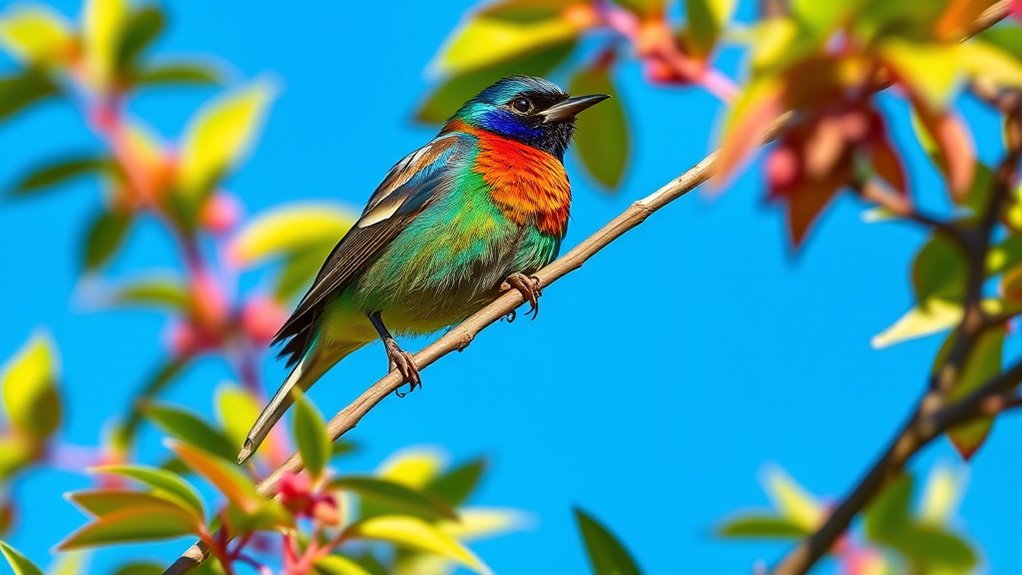
Unique migration patterns distinguish Painted Buntings from many other songbirds. You’ll notice that the western population migrates before molting, stopping in northern Mexico mid-migration to shed feathers—a rare behavior among songbirds. Meanwhile, the eastern group completes molting on their breeding grounds before heading south. These distinct routes reflect their geographic separation: the western birds travel southwest to Mexico and Central America, while eastern birds head southeast to Florida and the Caribbean. During migration, they often make brief stops for rest and feeding, especially to replenish energy before crossing large distances. Their routes are influenced by habitat availability, weather patterns, and food sources, ensuring they reach wintering grounds safely. This separation and specific route choice make Painted Buntings uniquely fascinating among North American migratory songbirds.
A Day in the Life: Feeding and Behavior
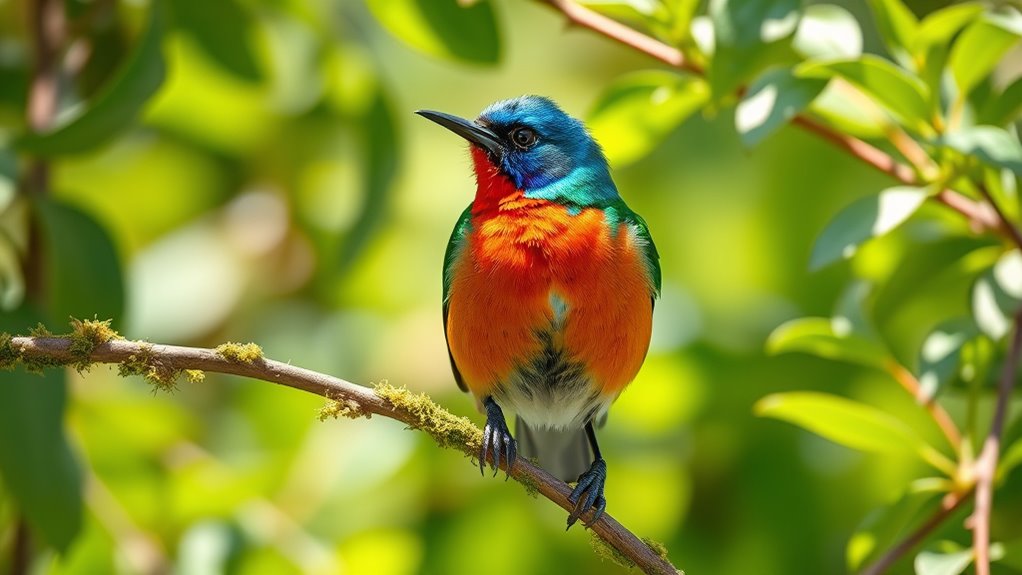
At dawn, Painted Buntings become lively participants in their daily routines, darting through dense vegetation to find food. You’ll notice them hopping low in shrubs and grasses, searching for seeds like grass, pigweed, and dock. During the summer, they switch to insects such as grasshoppers, caterpillars, and spiders to feed their young. You might see females and juveniles foraging close to the ground, blending into their surroundings with bright green plumage for protection. Males often defend their territory aggressively, chasing off rivals with swift flight and sharp calls. Throughout the day, they visit seed feeders and pick at plants, balancing their diet between seeds and insects. As evening approaches, they settle into dense cover, ready for another day of foraging and territory defense.
Nesting and Reproductive Strategies
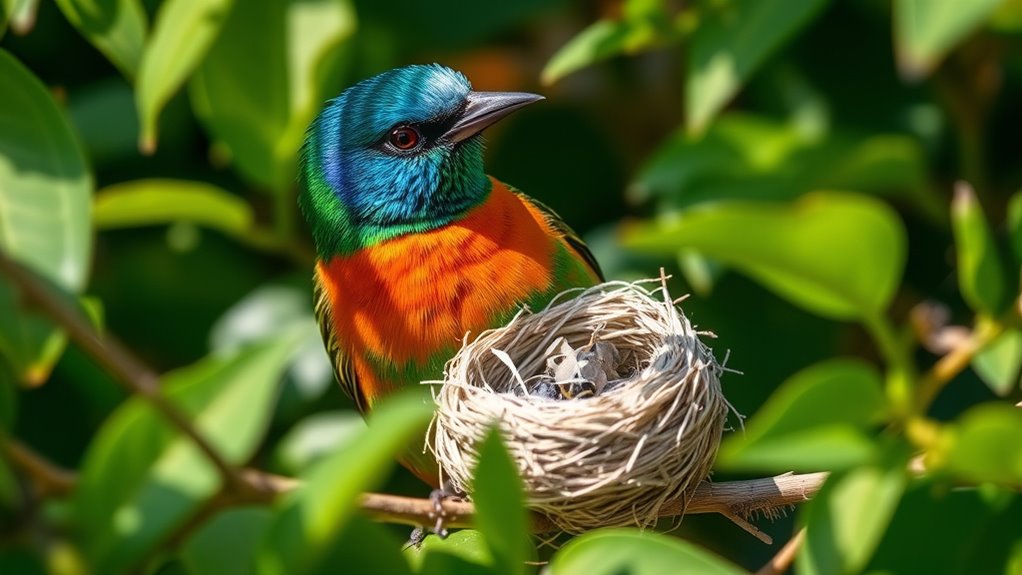
You’ll find that Painted Buntings usually lay 3 to 4 eggs per clutch, with incubation lasting about 11 to 12 days. The females are responsible for brooding during this time, often reusing nests for a second clutch later in the season. However, their nesting efforts face challenges like predators, parasitism, and habitat loss, which can threaten their reproductive success.
Clutch Size and Incubation
Painted Buntings typically lay 3 to 4 eggs per clutch, with females responsible for incubation. The female begins incubation shortly after laying the eggs, which lasts about 11 to 12 days. During this period, she keeps the eggs warm and protected, rarely leaving the nest except for short breaks to feed herself. Incubation requires constant attention, ensuring the eggs develop properly. Once the eggs hatch, the female continues to care for the nestlings, brooding them closely for the first two weeks. Depending on food availability and environmental conditions, she may raise multiple broods per season, often reusing the same nest. The clutch size and incubation period are crucial for the species’ reproductive success and survival.
Nesting Habits and Challenges
Painted Buntings demonstrate flexible nesting habits that help them maximize reproductive success despite environmental challenges. Females typically build cup-shaped nests low in dense shrubs, using grasses, leaves, and fine plant materials. They often reuse nests for a second clutch, repairing and lining them anew. Nest placement varies with habitat, from scrublands to dense thickets, providing concealment from predators. The birds face threats like snakes, snakes, and cowbird parasitism, which can destroy eggs or chicks. Incubation lasts about 11–12 days, with females brooding closely during this period. Multiple broods per season improve reproductive chances, but habitat loss and illegal trapping threaten their nesting success. Their adaptability in nest placement and reusing nests are key strategies to overcome these challenges.
The Diet of America’s Most Colorful Songbird
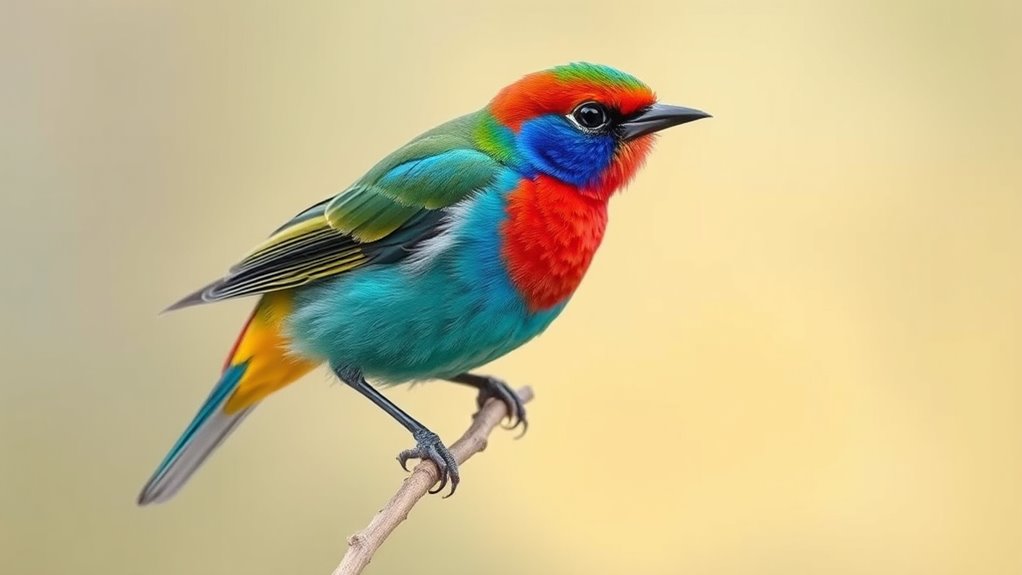
Have you ever wondered what fuels North America’s most colorful songbird? Painted buntings primarily eat seeds, especially grasses, pigweed, spurges, docks, St. John’s-wort, and rose seeds. During the breeding season, their diet shifts to include insects like grasshoppers, caterpillars, spiders, beetles, and cicadas, which provide essential proteins for feeding their young. They often visit backyard feeders, especially in breeding areas, making them easier to observe. Female and juvenile buntings forage low in dense vegetation, aided by their camouflaged plumage. Their diet reflects seasonal changes, balancing seed consumption with insect intake to meet nutritional needs. This dietary flexibility helps Painted Buntings thrive across diverse habitats and supports their energetic singing and breeding behaviors.
Challenges Facing Painted Buntings Today
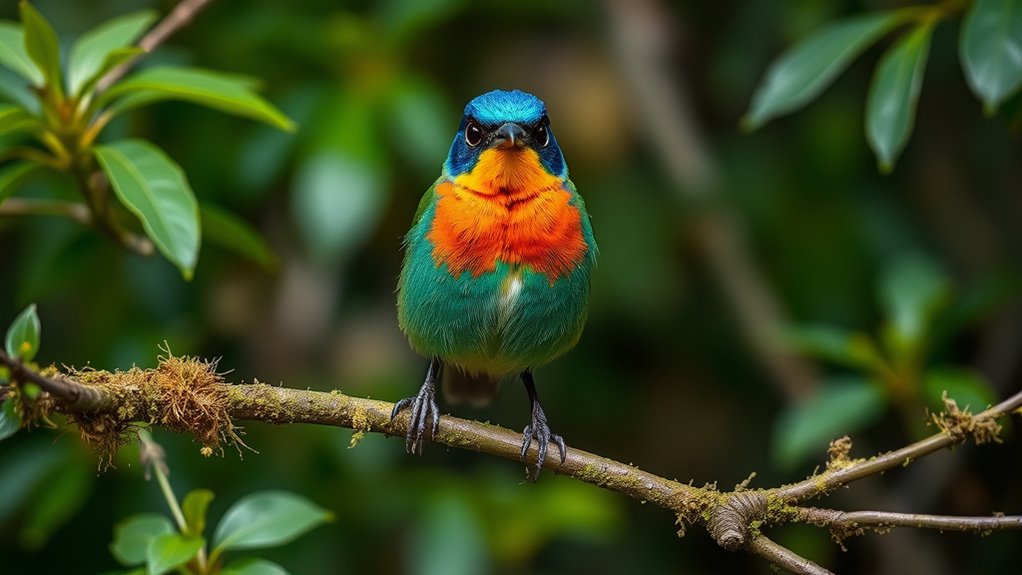
What are the biggest threats facing Painted Buntings today? Habitat loss from urban development and agriculture reduces their breeding and wintering grounds, making survival harder. Illegal trapping for the cage bird trade is another major issue, driven by their vibrant colors and territorial behavior, which makes them prime targets. Pesticides and pollution also threaten their food sources and nesting sites. Climate change disrupts migration patterns and timing, leading to mismatched breeding cycles and reduced reproductive success. Predation by snakes and parasitism by cowbirds further decrease chick survival rates. These combined challenges lead to declining populations in many areas, putting the Painted Bunting at risk. Protecting their habitats, regulating trapping, and reducing environmental hazards are vital steps to guarantee their future.
How to Support Their Conservation
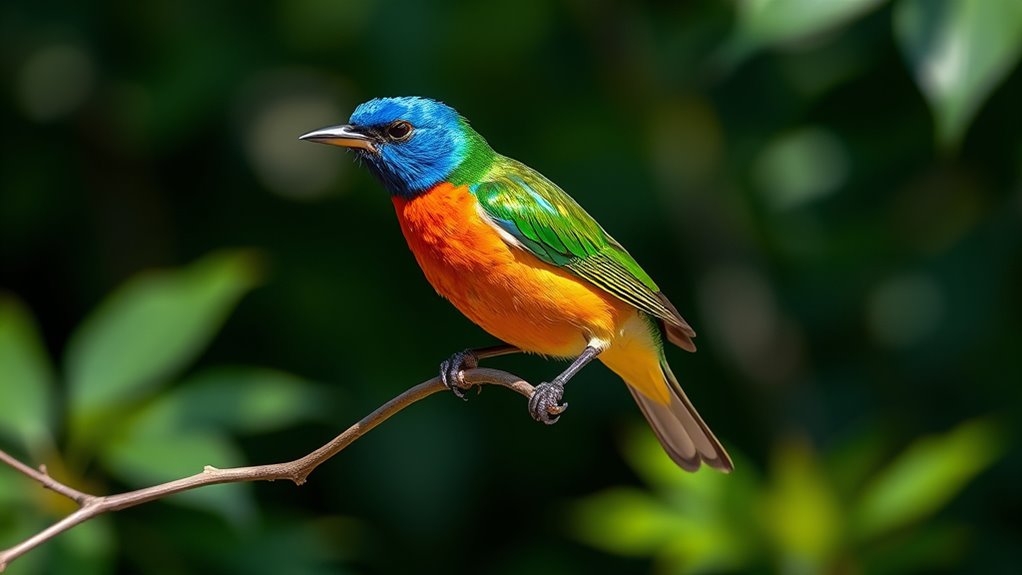
Supporting the conservation of Painted Buntings starts with raising awareness about their plight and the threats they face. You can make a difference by taking simple actions:
- Share information about their habitat needs and threats on social media or with friends.
- Support organizations that work to protect their habitats and oppose illegal trapping.
- Create bird-friendly environments in your yard by planting native vegetation and providing feeders.
- Participate in local bird conservation events or citizen science projects to monitor populations and report sightings.
Fun Facts and Why They Capture Our Hearts

Painted Buntings truly stand out as one of North America’s most colorful songbirds, mesmerizing bird lovers with their vibrant plumage. Their striking blue, red, green, and purple feathers look like a living rainbow, instantly catching your eye. Did you know males develop this “technicolor plumage” only in their second year, making first-year males blend in more easily? Their playful, energetic behavior and bold territorial displays during breeding season add to their charm. These birds are also fascinating migrants, sometimes flying thousands of miles twice a year, often stopping for molt along the way. Their sweet, varied songs and cheerful calls make them delightful to listen to. All these quirks and their incredible beauty make Painted Buntings deeply endearing and unforgettable for bird enthusiasts everywhere.
Frequently Asked Questions
How Long Do Painted Buntings Typically Live in the Wild?
You can expect a painted bunting to live around 10 to 12 years in the wild. However, their lifespan often varies due to threats like habitat loss, predators, and illegal trapping. You should know that many don’t reach this age, but some manage to survive longer with proper protection. If you want to help, supporting conservation efforts can make a real difference in ensuring these vibrant birds thrive for years to come.
What Are the Primary Threats to Painted Bunting Populations Today?
Imagine a painting fading with time—that’s what threatens painted bunting populations today. You should know habitat loss from human development and illegal trapping for the cage bird trade are their biggest enemies. You can help by supporting conservation efforts and spreading awareness. These vibrant birds are highly sought after for their striking colors, making them vulnerable to capture and habitat destruction, which could eventually cause their colors to fade forever.
How Can Birdwatchers Distinguish Males From Females in the Field?
You can distinguish males from females by their vibrant plumage. Males sport bright blue heads, red breasts and bellies, and multicolored wings, making them unmistakably colorful. Females and juveniles are bright green or yellow-green with pale eye rings, providing camouflage. During the breeding season, males display their striking colors openly, while females stay duller and more concealed in dense vegetation, helping you identify their gender in the field.
Do Painted Buntings Migrate Alone or in Groups?
You’ll see that Painted Buntings usually migrate in groups, especially during their seasonal movements. These flocks gather at stopover sites and move together to their wintering grounds in Mexico, Central America, or Florida. During migration, they’re often more visible and easier to spot in groups than alone. So, if you’re birdwatching, look for these colorful birds traveling together, especially in fall and spring when they’re on the move.
Are Painted Buntings Legal to Keep as Pets or in Captivity?
Keeping painted buntings as pets is like trying to cage a flame—illegal and harmful. In most places, it’s against the law due to conservation efforts and their protected status under laws like the MBTA. These vibrant birds thrive in the wild, where their colorful plumage and natural behaviors shine. Capturing or keeping them harms populations and disrupts ecosystems. Respect their wild nature and support conservation instead of attempting to keep them in captivity.
Conclusion
Now that you’ve met the painted bunting, you see why it’s America’s kaleidoscope in flight. Its vibrant colors paint the skies with joy, reminding us of nature’s breathtaking artistry. By protecting their habitats and spreading awareness, you help guarantee these living rainbows continue to brighten our world. Together, you and these stunning songbirds become the brushstrokes in a masterpiece of conservation, keeping their vivid legacy alive for generations to come.