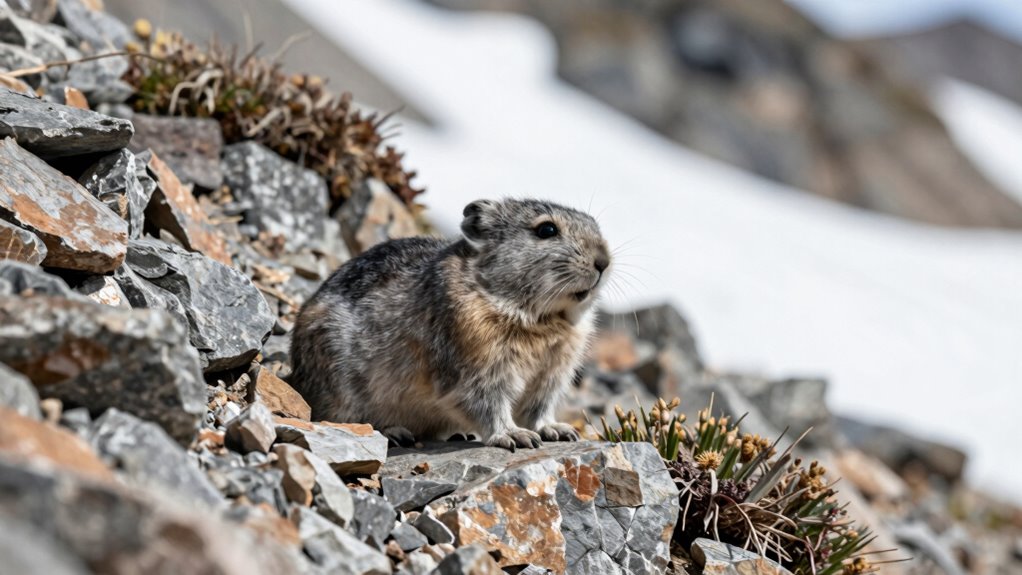

You can see pikas as tiny warning signals for climate change because they rely on specific mountain habitats that are shrinking due to rising temperatures. As their low-altitude homes warm up, they’re pushed higher, risking habitat loss and higher extinction chances. Their struggle highlights how climate change impacts ecosystems. If you want to understand how these small creatures reflect broader environmental shifts, there’s more to uncover about their essential role and what’s at stake.
Key Takeaways
- Pikas are highly sensitive to temperature increases, making their population declines early indicators of climate change.
- Habitat loss due to rising temperatures forces pikas to move higher, signaling environmental shifts.
- Their limited, fragmented habitats at higher elevations highlight the risks of climate-induced habitat loss.
- Declining pika populations reflect broader ecosystem stresses and biodiversity loss caused by climate change.
- Protecting pikas helps monitor and address broader ecological impacts of global warming.
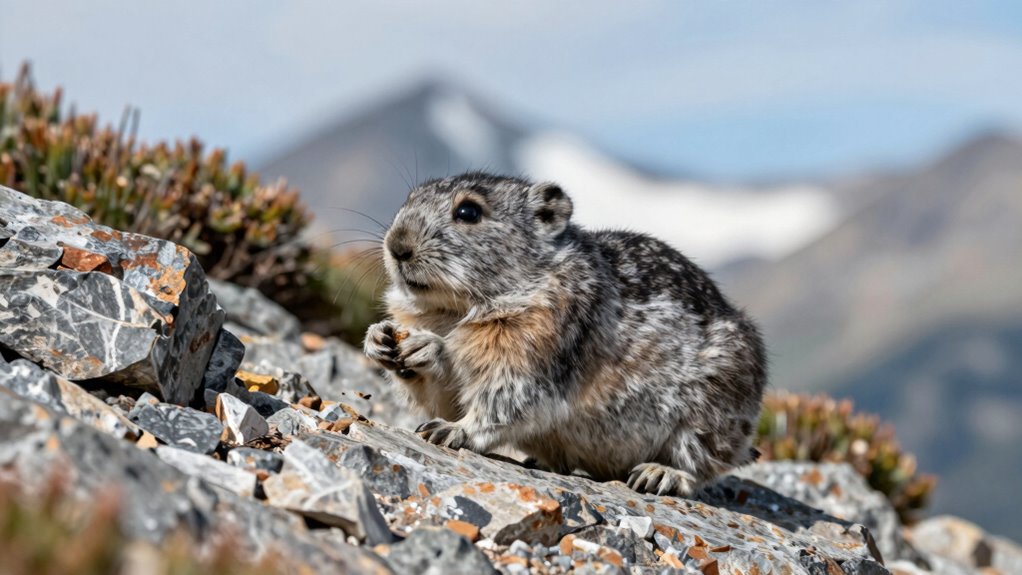
Pikas, small mountain-dwelling mammals known for their high-pitched calls and adorable appearance, are increasingly threatened by climate change. These tiny creatures have evolved to survive in specific altitude ranges, relying on altitude adaptation to stay within the cool, alpine environments they call home. As temperatures rise, however, their habitat shrinks, forcing them to move higher up the mountains in search of suitable climate conditions. But there’s only so much mountain they can climb before they run out of space, which puts their survival at serious risk. You might not realize it, but these shifts in habitat are a clear indicator of broader environmental changes happening around us.
The altitude adaptation that helps pikas survive in cold mountain climates also makes them more vulnerable to predator threats. When pikas are pushed to higher elevations, they often find themselves in more isolated patches of habitat, which can be both a blessing and a curse. On one hand, fewer predators may be be present at these elevations, but on the other hand, the limited space makes their populations more susceptible to local extinction if a predator or disease impacts them. Plus, as climate change forces these animals into tighter, more fragmented habitats, predators like foxes, hawks, and even domestic animals can more easily target these already vulnerable populations. The combination of habitat loss and predator threats creates a precarious situation for pikas, highlighting how interconnected climate change effects are. Habitat fragmentation further exacerbates their risk of extinction, as smaller, isolated populations struggle to survive. Additionally, the shrinking of their habitats mirrors the loss of natural landscapes seen across various regions, such as those in the Midwest where natural habitats are increasingly threatened. The decline of these ecosystems can also lead to a loss of biodiversity, which is essential for ecological resilience. Recognizing the importance of biodiversity conservation can help us understand how protecting these fragile ecosystems benefits many species. This ongoing habitat loss underscores the importance of conserving mountain ecosystems, which are vital for maintaining biodiversity and ecological balance.
Your awareness of pikas as climate change’s tiny warning signal can serve as a crucial reminder of the broader impacts we face. Because pikas are sensitive to temperature increases and habitat changes, their decline signals that climate change is already affecting ecosystems at a fundamental level. These small mammals act like canaries in the coal mine—they alert us to the dangers posed by rising temperatures and habitat disruption. The fact that they’re struggling to adapt to their changing environment underscores the urgency of addressing climate change before more species follow suit and ecosystems become further destabilized.
Pikas warn us of climate change’s deep impact on ecosystems and the urgent need for action.
In essence, watching pikas struggle gives you a glimpse into a future where many species could face similar threats. Their plight underscores the importance of taking immediate action to curb climate change and protect delicate mountain habitats. It’s a stark reminder that climate change isn’t just about rising temperatures—it’s about the survival of countless species, including these tiny, high-pitched mammals that, unknowingly, serve as a warning for us all.

What Is Climate Change? (What Was?)
As an affiliate, we earn on qualifying purchases.
As an affiliate, we earn on qualifying purchases.
Frequently Asked Questions
How Do Pikas Communicate With Each Other?
You’ll find that pikas communicate mainly through vocalizations and burrow signals. They use distinctive pika vocalizations—such as high-pitched calls—to alert others about predators or dangers. Additionally, they send signals via their burrows, like specific sounds or scents, to share information within their group. These communication methods help pikas stay safe, coordinate their activities, and maintain social bonds in their rocky habitats.
What Specific Altitude Do Pikas Typically Inhabit?
You might think pikas live just anywhere, but they typically inhabit high-altitude areas. Their preferred habitat elevation ranges from about 8,000 to 13,000 feet, where cool temperatures help them survive. Imagine rocky slopes and talus fields, providing shelter and food. This specific altitude range helps pikas avoid predators and extreme heat, but climate change threatens their delicate habitat, endangering their survival at these critical elevations.
Are Pikas Considered Keystone Species?
You’ll find that pikas are considered keystone species because their presence influences many other animals and plants in their habitat. Their diet mainly consists of grasses and herbs, which they store for winter. Pika predators, like hawks and weasels, impact their populations. By acting as prey and affecting plant communities, pikas play a essential role in maintaining the ecological balance, making their conservation indispensable amid climate change.
How Long Do Pikas Usually Live in the Wild?
In the wild, pikas usually live around 3 to 6 years, though some can reach up to 8 years. You’ll find that their lifespan depends on factors like their diet—mainly grasses, herbs, and flowers—and threats from predators such as foxes, hawks, and weasels. Pikas stay alert and gather food carefully, but their vulnerability to predators and climate changes can shorten their lives considerably.
Do Pikas Have Any Unique Adaptations to Cold Environments?
You’ll find that pikas have unique adaptation mechanisms to survive cold environments. They maintain their body temperature through behavioral strategies like collecting and storing food in their burrows, which helps with temperature regulation. Additionally, pikas have thick fur that insulates them against harsh temperatures and small ears to minimize heat loss. These adaptations enable them to thrive in frigid mountain habitats, making them sensitive indicators of climate change impacts.

Amazing Tigers!: A Wildlife Conservation Society Book About Endangered Animals for Kids (Ages 4-8) (I Can Read Level 2)
As an affiliate, we earn on qualifying purchases.
As an affiliate, we earn on qualifying purchases.
Conclusion
You can see how pikas act like tiny climate messengers. For instance, if a pika starts disappearing from a mountain range, it’s a clear sign that temperatures are rising and habitats are changing. Imagine hiking and noticing fewer pikas than before—it’s your cue that climate change is impacting even the smallest creatures. Paying attention to these signals helps us understand the bigger picture and motivates us to act before it’s too late.
mountain ecosystem preservation tools
As an affiliate, we earn on qualifying purchases.
As an affiliate, we earn on qualifying purchases.

The Petting Zoo Pika Stuffed Animal Plushie, Gifts for Kids, Wild Onez Wildlife Animals, Pika Plush Toy, 9 inches
Known as a mountain-dwelling mammal, this pika plush toy hails from the rabbit family and is ready to…
As an affiliate, we earn on qualifying purchases.
As an affiliate, we earn on qualifying purchases.