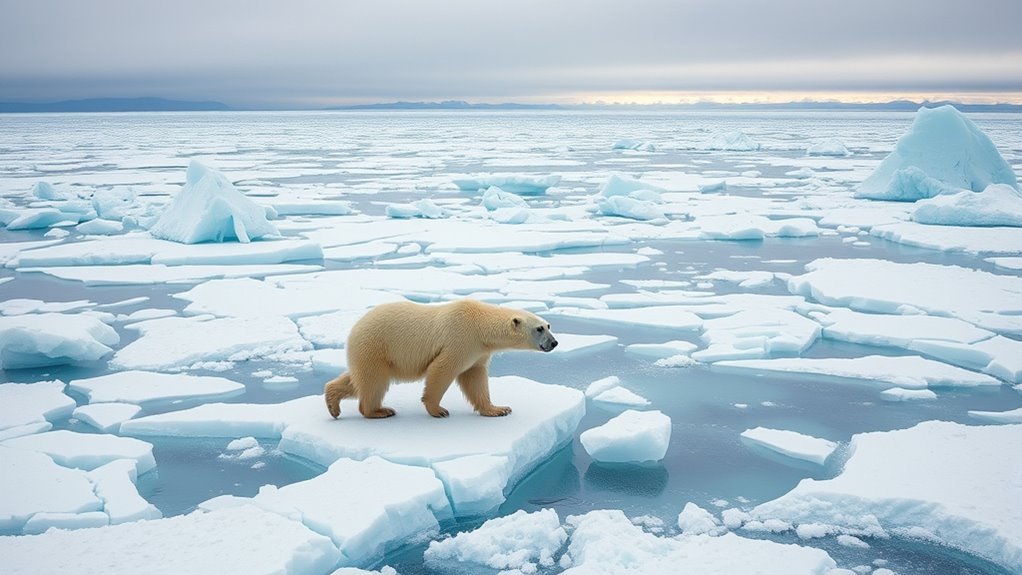

Polar bears are a striking symbol of climate change, as they depend on sea ice for hunting, resting, and breeding. As global warming causes sea ice to melt, their habitat shrinks, making it harder to find food and survive. This threat pushes them to travel farther and face more risks, including encounters with humans. To understand how these majestic animals reflect our environmental impact and what can be done, continue to explore this urgent issue.

Prime made for students and young adults
- Fast, free delivery for dorm and study essentials
- Prime Video and Amazon Music included
- Member-only deals
Key Takeaways
- Polar bears rely on sea ice for hunting, resting, and breeding, making them vulnerable to habitat loss caused by climate change.
- Melting sea ice reduces access to prey like seals, impairing polar bears’ ability to hunt and reproduce successfully.
- Habitat loss forces polar bears to travel greater distances, increasing risks of accidents, conflicts with humans, and energy expenditure.
- Conservation efforts include strict hunting regulations, protected habitats, and public awareness to ensure sustainable populations.
- Addressing climate change through greenhouse gas reduction is crucial to preserve Arctic environments and polar bear survival.

Have you ever wondered what it takes for polar bears to survive in the harsh Arctic environment? The answer isn’t just about their strength or adaptability but also depends heavily on the fragile ecosystem they call home. One of the biggest threats they face today is habitat loss, primarily driven by the rapid melting of sea ice caused by climate change. As global temperatures rise, the ice sheets that polar bears rely on for resting, hunting, and breeding shrink in size and duration. This shrinking habitat forces you to imagine a world where polar bears have fewer places to find food or even to rest safely. Without stable sea ice, their access to seals—their main prey—is severely limited, which impacts their ability to survive and reproduce. The loss of this habitat pushes polar bears closer to the brink, forcing them to travel greater distances or venture into human settlements in search of food, increasing their vulnerability to accidents and conflicts.
While climate change plays a dominant role in habitat loss, hunting regulations are another *crucial* factor in the survival of polar bears. Historically, unregulated hunting severely reduced their populations, but today, many countries bordering the Arctic have established strict hunting laws. These regulations are designed to protect polar bears from overharvesting and *ensure* sustainable populations. If you’re involved in conservation efforts or simply appreciate their existence, understanding these regulations helps you see how humans are working to balance cultural practices with the need to preserve this iconic species. Proper enforcement of hunting regulations prevents illegal poaching and uncontrolled hunting, which could wipe out local populations before they even have a chance to recover. In some regions, indigenous communities are allowed to hunt polar bears for subsistence, but they do so under strict guidelines that limit numbers and *ensure* the bears are harvested sustainably. These regulations aim to preserve the species’ future while respecting local traditions. Additionally, public awareness campaigns about the importance of conservation can help garner support for policies that protect polar bears and their habitat. Moreover, climate mitigation efforts are crucial in addressing the root causes of habitat loss and ensuring long-term survival.
In the face of these challenges, both habitat preservation and responsible hunting policies are *vital*. They work together to give polar bears a fighting chance against the mounting pressures of climate change and human activity. You can help by supporting policies that reduce greenhouse gases, protecting Arctic environments, and respecting wildlife conservation laws. Every effort counts in maintaining a balance that allows polar bears to thrive, not just survive. As the climate continues to change, your awareness and action can make a difference in *ensuring* that the majestic polar bear endures for generations to come. Additionally, understanding the ecosystem dynamics that support polar bear populations can help inform more effective conservation strategies. Recognizing the importance of biodiversity and how it sustains these animals emphasizes the need for comprehensive environmental protection measures. Supporting biodiversity hotspots and preserving the interconnected habitats they rely on can significantly bolster their chances of survival.
As an affiliate, we earn on qualifying purchases.
Frequently Asked Questions
How Do Polar Bears Adapt to Melting Ice Habitats?
You might wonder how polar bears adapt to melting ice habitats. They reduce their sea ice dependence by traveling further and longer to find food and new ice areas. Their dietary adaptations include hunting seals differently, sometimes scavenging or changing their hunting times. These strategies help them survive, but ongoing climate change threatens their ability to adapt, making it vital to protect their environment and guarantee their future.
What Is the Current Global Population of Polar Bears?
Imagine the Arctic’s silent sentinels, their numbers whispering a story of change. Currently, you learn there are around 22,000 polar bears left in the wild. Climate change threatens their habitats, forcing polar bear migration to find new ice. These majestic creatures serve as a stark reminder of the urgent need to address environmental issues, as their population reflects the fragile balance between nature and human impact.
How Do Polar Bears Impact Arctic Ecosystems?
You might not realize it, but polar bears play a essential role in Arctic ecosystems. Their dependency on sea ice impacts prey availability like seals, which they hunt. As sea ice diminishes, polar bears struggle to find food, disrupting the balance. This affects prey populations and the broader ecosystem, showing how their presence influences environmental stability. Protecting polar bears helps preserve the delicate Arctic ecological web.
Are Polar Bears Considered an Endangered Species?
So, you wonder if polar bears are endangered? Well, with their shrinking polar bear habitat due to climate change effects, these majestic creatures face real trouble. They’re classified as vulnerable, thanks to melting ice and disappearing hunting grounds. Climate change effects threaten their survival daily. So yes, polar bears are considered endangered, and it’s a stark reminder that our actions have consequences for these iconic Arctic residents.
What Conservation Efforts Are in Place for Polar Bears?
You should know that conservation efforts for polar bears focus on climate policy and habitat restoration. By advocating for stronger climate policies, you help reduce greenhouse gases, slowing ice melt. Additionally, habitat restoration projects aim to protect and restore critical Arctic areas. These combined efforts help guarantee polar bears have the environment they need to survive. Your support can make a difference in preserving these majestic creatures for future generations.
Conclusion
As you see, polar bears are more than just Arctic icons—they’re the canaries in the coal mine of climate change. If we don’t act now, their icy world will vanish faster than a snowflake in a heatwave. Your choices and voice matter more than ever in saving these majestic creatures. Together, we hold the power to turn the tide and guarantee their survival, proving that even small actions can make the biggest difference in the fight against climate change.
Fall Picks
fall essentials
As an affiliate, we earn on qualifying purchases.