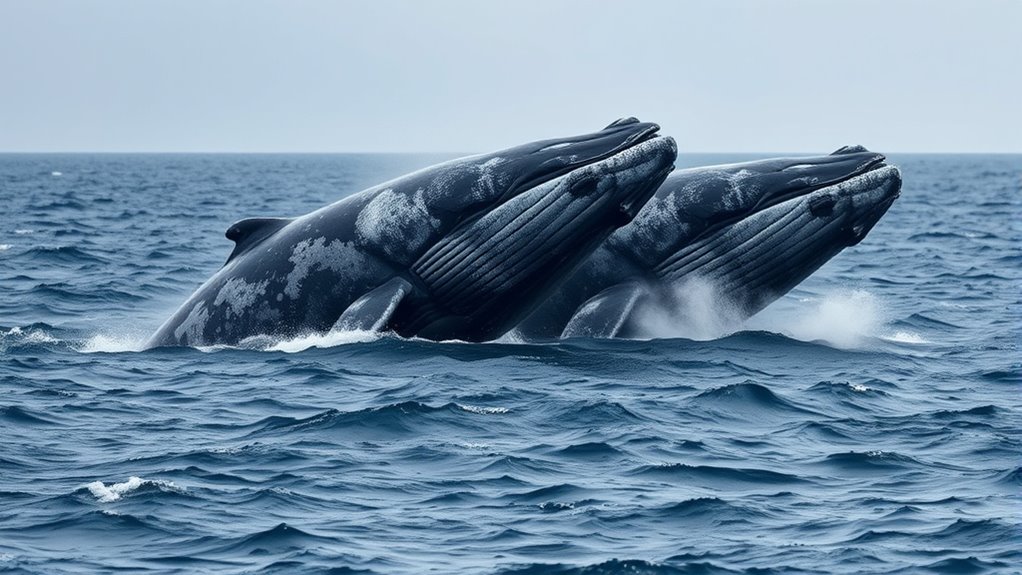

North Atlantic right whales are critically endangered, with fewer than 400 left and numbers still declining due to ship strikes, fishing gear entanglements, and low calf production. Human activities severely threaten their survival, hindering reproductive success and population recovery. Despite recent efforts, urgent actions like speed restrictions and innovative monitoring are essential. To understand how ongoing threats threaten these gentle giants and what can be done to save them, continue exploring their precarious plight.
Key Takeaways
- North Atlantic right whales are critically endangered, with only around 384 individuals remaining in 2024.
- Human activities, especially vessel strikes and fishing gear entanglements, are primary threats causing injuries and deaths.
- Reproductive rates are too low to ensure population stability, with only 11 calves born in 2024.
- Conservation efforts include vessel speed restrictions, real-time monitoring, and gear modifications to reduce threats.
- Immediate, strengthened actions are vital to prevent the species’ extinction within a lifetime.
Shark Biology and Conservation: Essentials for Educators, Students, and Enthusiasts
As an affiliate, we earn on qualifying purchases.
As an affiliate, we earn on qualifying purchases.
Current Population Trends and Challenges
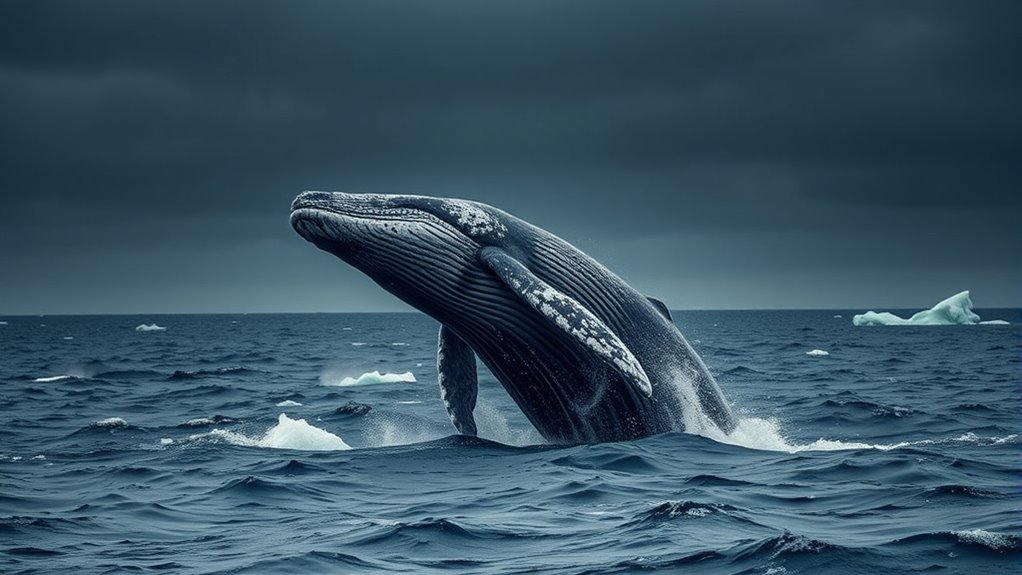
The North Atlantic right whale‘s population has shown cautious signs of recovery, with recent estimates reaching 384 individuals in 2024—up from 376 in 2023. This marks a steady, modest increase after several years of decline, beginning to reverse a sharp drop between 2015 and 2020. Despite this slight growth, the population remains critically small, with only about 70 reproductive females and 11 calves born in 2024. You should understand that these numbers highlight the fragile state of the species. Calving rates fall short of what’s needed for sustained recovery, and human-related threats continue to hamper progress. While the trend shows some hope, significant challenges remain to guarantee these whales’ long-term survival. Recognizing the importance of conservation efforts, ongoing initiatives are crucial to protect and bolster the population. Enhancing habitat connectivity can help improve the whales’ access to vital areas for feeding and breeding, which is essential for their recovery. Additionally, understanding the population trends can inform more effective protective measures and policy decisions. Incorporating public awareness campaigns can also increase support for conservation actions and reduce human-induced risks. Understanding decoding slang can help foster clearer communication and engagement with diverse audiences involved in conservation efforts.

Whale Watching Journal: a Simple & Minimalist Whale Watching Logbook to Keep a Detailed Record of all your Whale Sightings, Record your Marine … & Enthusiasts out There Men, Or Women.
As an affiliate, we earn on qualifying purchases.
As an affiliate, we earn on qualifying purchases.
Major Threats and Human Impacts
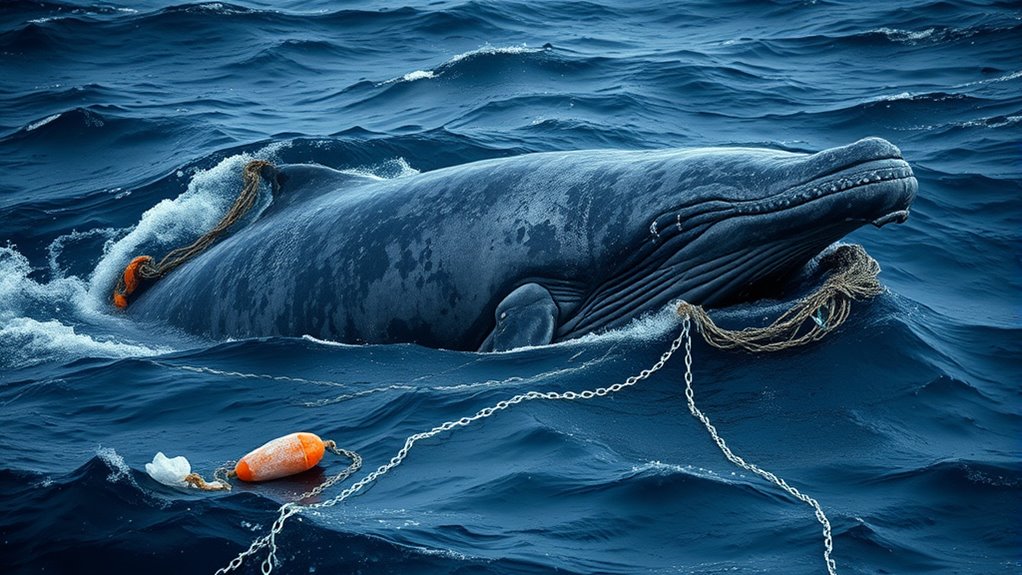
Human activities pose the most significant threats to North Atlantic right whales, with vessel strikes and fishing gear entanglements causing the majority of injuries and deaths. Large ships often fail to see these slow-moving whales, resulting in fatal collisions. Fishing gear entangles whales, restricting movement, causing injuries, and sometimes leading to death from starvation or drowning. Despite regulations, many vessels still operate at speeds that threaten whales, and fishing practices continue to entangle them. These human impacts have caused a sharp decline in their numbers, surpassing natural mortality rates. Efforts like speed restrictions, fishing gear modifications, and monitoring systems aim to reduce these threats. Remote hackathons have been used to develop innovative solutions for wildlife conservation challenges. However, ongoing human activities remain the primary obstacle to reversing the whales’ decline and ensuring their survival.

12 Pack Ocean Animal Toys with Educational Booklet for Kids, Realistic Soft Plastic Creatures Model Figures for Toddler Boys Girls, Under the Sea Party Favor, Birthday Gifts Water Table Toy
Sea Animal Playsets:Comes with a booklet, including 12 animals figurines that can be stored in a gift box:…
As an affiliate, we earn on qualifying purchases.
As an affiliate, we earn on qualifying purchases.
Reproductive Difficulties and Calf Production
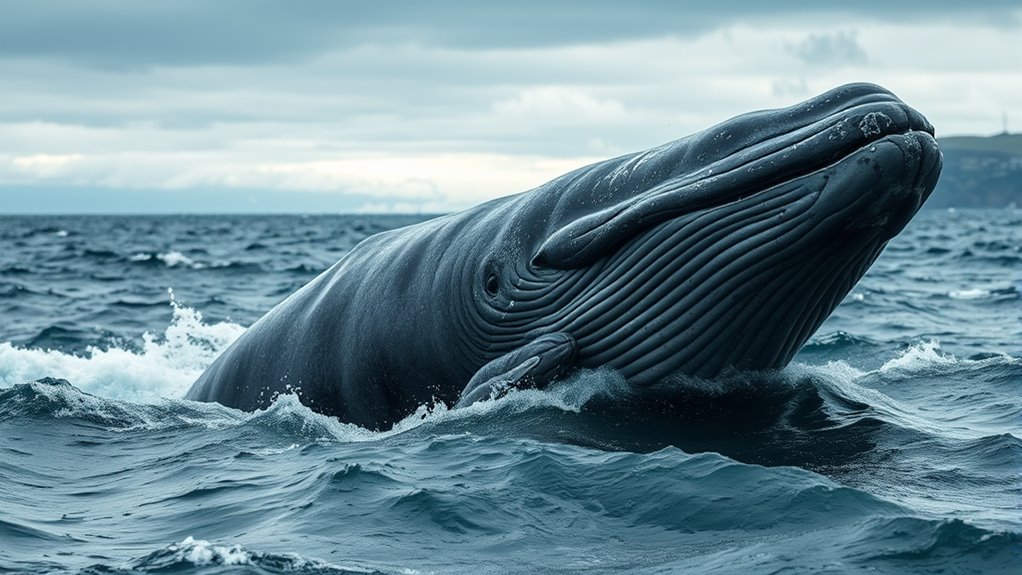
Why are reproductive difficulties hampering the recovery of North Atlantic right whales? You face a species struggling to produce enough calves to sustain growth. Despite slight recent gains, calving rates remain below what’s needed for recovery. Human impacts like entanglements and vessel strikes cause chronic stress, suppressing reproduction. Currently, only 11 calves were born in 2024, far fewer than the 50+ needed annually for population stability. This shortfall means the population can’t bounce back quickly.
Key factors include:
- High injury and mortality rates reduce the number of reproductive females.
- Stress from human activities hampers calving success.
- Low calf production limits population growth prospects. Additionally, the impact of low reproductive rates hampers long-term recovery efforts.
The reproductive challenges faced by these whales are compounded by environmental and human-induced pressures, making recovery even more difficult. Research indicates that reproductive health is crucial for population stability, yet ongoing threats continue to undermine these efforts. Without increased reproduction, recovery remains unlikely.
SF Strongest Magnetic Release Holder Keychain Fly Fishing Net Retractor Magnet Clip with Coiled Lanyard Aluminum Alloy Hook – Green
Advantage: New durable carabiner quick release magnetic clip. The magnets are very strong and have no problem staying…
As an affiliate, we earn on qualifying purchases.
As an affiliate, we earn on qualifying purchases.
Innovative Strategies for Conservation

Innovative conservation strategies are essential for turning the tide for North Atlantic right whales. You can support efforts like AIS monitoring systems that alert mariners to whale presence, helping reduce vessel strikes. Implementing dynamic management zones, where vessel speeds are temporarily lowered during peak whale activity, further minimizes collision risks. Funding on-demand fishing gear, designed to release entangling gear more easily, directly decreases entanglement injuries. Advanced tracking technologies enable scientists to monitor whale movements in real-time, informing targeted protection measures. Public awareness campaigns also play a crucial role in changing human behavior around critical habitats. These combined efforts, supported by strong policy enforcement, create a multifaceted approach that addresses immediate threats and fosters long-term recovery. Enhanced tracking technology allows for more precise monitoring of whale populations, significantly improving conservation strategies. Additionally, increasing public engagement is vital for building community support and ensuring the success of conservation initiatives. Your engagement can contribute considerably to safeguarding these endangered giants, as innovative marine monitoring systems provide invaluable data for ongoing efforts.
Urgent Need for Immediate Action
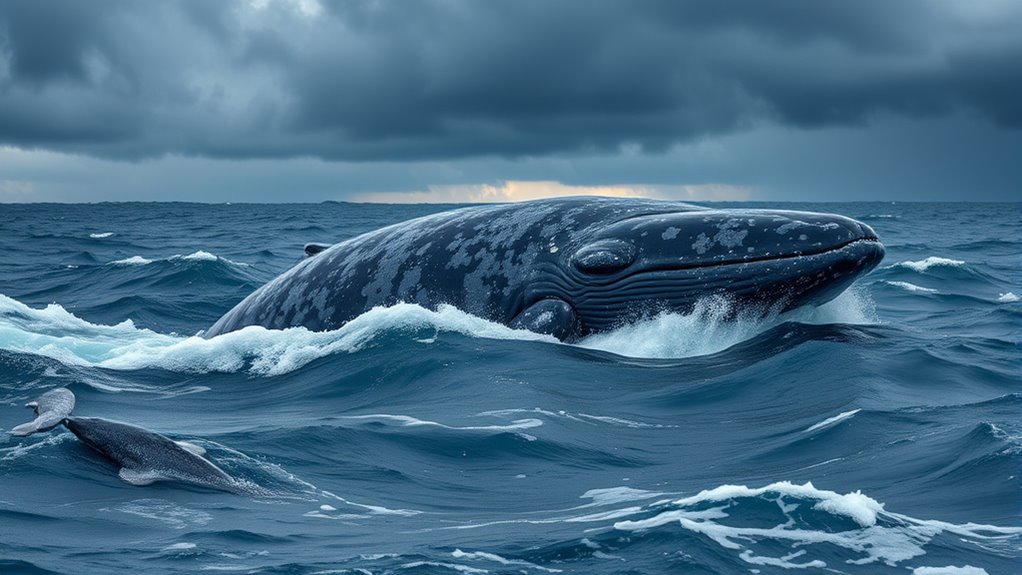
While progress has been made through conservation efforts like AIS monitoring and gear modifications, the urgency of the situation demands more immediate and decisive action. The North Atlantic right whale remains critically endangered, with only 384 individuals left. You must recognize that current measures are not enough to halt the decline. To protect these whales, you need to prioritize:
- Strengthening and enforcing vessel speed restrictions to reduce vessel strikes
- Expanding funding for on-demand fishing gear to prevent entanglements
- Accelerating research and implementation of innovative technologies for early whale detection, including advanced monitoring techniques
- Incorporating space management techniques to better monitor whale movements and avoid collisions, which can include predictive modeling to anticipate whale locations and behaviors. Utilizing early detection systems can significantly improve response times and prevent tragic encounters.
Without swift action, the species could face complete extinction within our lifetimes. Every day counts in saving these giants; your commitment and advocacy are essential to reversing their perilous trajectory.
Frequently Asked Questions
How Do Climate Change and Ocean Warming Specifically Affect Whale Migration Patterns?
Climate change and ocean warming directly impact your whale migration by shifting prey distribution, forcing you to travel farther or alter your usual routes. As zooplankton move northward, you must adjust feeding patterns, which can lead to increased energy expenditure and stress. These changes also disrupt breeding and calving grounds, making migration more challenging and reducing overall reproductive success, threatening your survival and long-term population stability.
What Are the Long-Term Ecological Impacts of Right Whale Extinction?
Have you ever thought about how losing the North Atlantic right whale would ripple through the ocean? Extinction would disrupt marine ecosystems, reducing biodiversity and weakening food webs. These whales help control prey populations and support healthy habitats, which benefit fisheries and climate resilience. Without them, we risk destabilizing ocean health, harming countless species, and losing an essential part of our planet’s natural balance. Their disappearance affects us all, directly and indirectly.
How Effective Are Current Protections in Reducing Vessel Strikes and Entanglements?
Current protections, like vessel speed limits and AIS monitoring, have helped reduce vessel strikes and entanglements, but they haven’t eliminated these threats entirely. You can see some progress with fewer deaths and injuries in recent years, yet ongoing human activities still pose significant risks. To improve effectiveness, you need stricter enforcement, expanded protected areas, and innovative gear to prevent entanglements, ensuring the whales’ survival chances increase over time.
Are There Successful Case Studies of Whale Population Recovery Elsewhere?
You’ll find that some whale populations, like the North Atlantic gray whales in the Pacific, have made remarkable comebacks through strict conservation measures and community efforts. These success stories show that with targeted protections, habitat restoration, and human cooperation, recovery is possible. It’s a demonstration to the fact that where there’s a will, there’s a way. Your efforts can contribute to turning the tide for endangered species worldwide.
What Role Can the Public Play in Supporting Conservation Efforts?
You can support conservation efforts by staying informed about whale protection policies and advocating for stronger protections. Reduce your impact by following speed limits in whale habitats and avoiding fishing gear if you’re a boater or angler. Support organizations working to save whales financially or through volunteering. Spread awareness on social media and educate others about the importance of safeguarding these endangered giants. Every action helps ensure their survival.
Conclusion
You stand at a crossroads, the fate of these gentle giants hanging in the balance like fragile threads. Every moment you delay is a drop in the vast ocean of their dwindling future. It’s a race against time, a call to action echoing through the waves. If you act now, you can turn the tide before these majestic whales vanish into the silent depths forever. The choice is yours—save their song before it’s drowned in darkness.