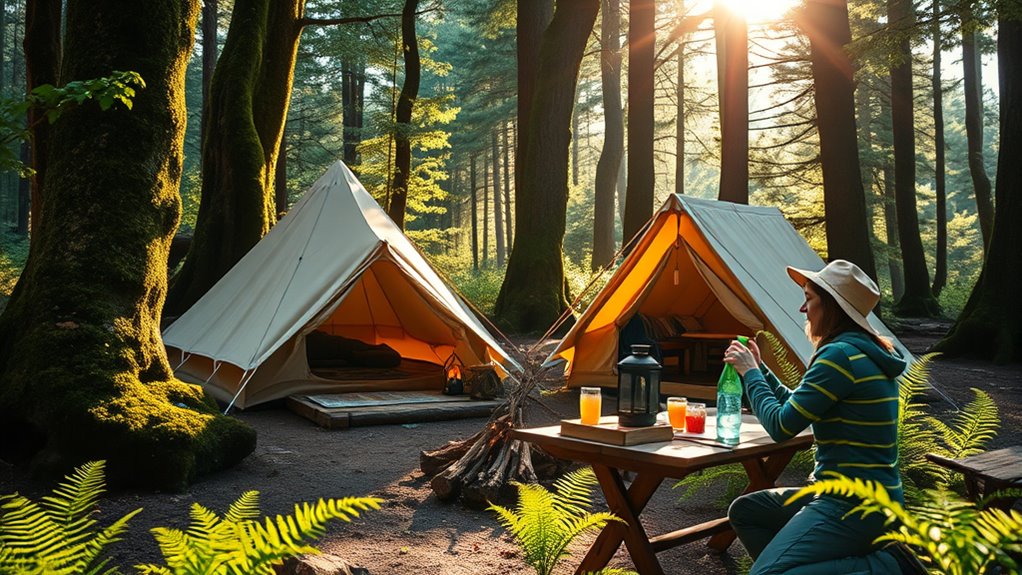

To make your camping trips eco-friendly, choose campsites that prioritize renewable energy, recycling, and wildlife protection. Use solar-powered gadgets and energy-efficient bulbs to conserve energy. Reduce waste by bringing reusable gear and recycling properly. Save water by washing dishes sparingly and disposing of wastewater responsibly. Respect wildlife, stay on designated trails, and follow Leave No Trace principles. Continue exploring to discover more practical tips for a greener outdoor adventure.
Key Takeaways
- Choose eco-conscious campgrounds that prioritize renewable energy, recycling, and habitat protection.
- Use solar-powered devices and energy-efficient lighting to reduce energy consumption during camping.
- Minimize waste with reusable gear, proper recycling, and responsible disposal of trash and wastewater.
- Conserve water by reusing towels, limiting washing, and following Leave No Trace principles.
- Engage in community conservation efforts, educate others, and support sustainable outdoor practices.
Choosing Eco-Conscious Campsites
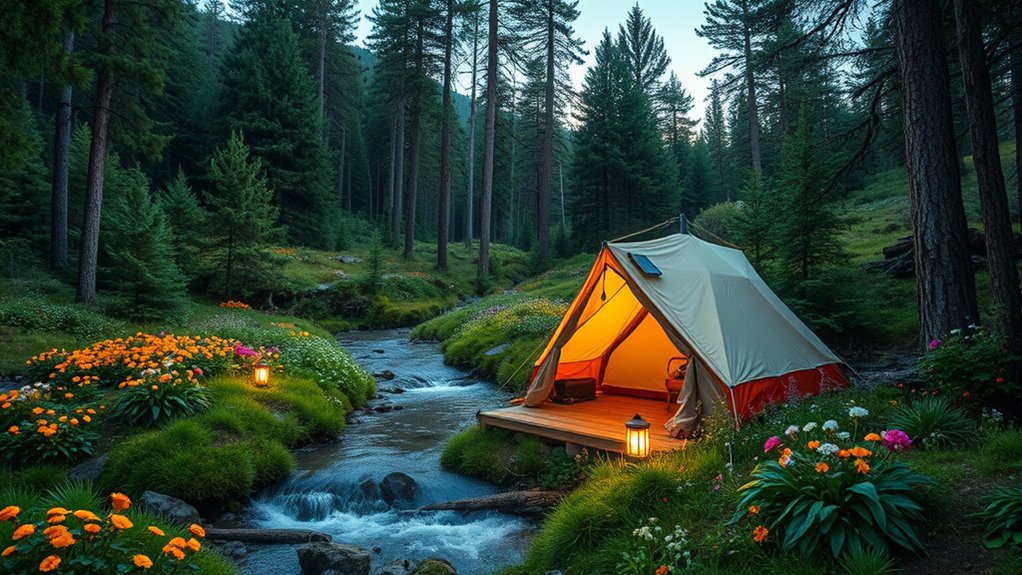
When selecting a campsite, prioritizing eco-conscious options can make a significant difference in reducing your environmental impact. Look for campgrounds that offer renewable energy sources, like solar power, which reduces reliance on fossil fuels. Check if they provide recycling facilities—about 60% of campgrounds do—so you can dispose of waste responsibly. Favor sites that support local produce or have sustainability initiatives, as these promote environmentally friendly practices. Research the campground’s commitment to wildlife and habitat protection, ensuring they follow Leave No Trace principles. Choosing places that educate visitors about conservation and engage the community amplifies your positive impact. Additionally, pay attention to the camp’s communication practices, as clear and open dialogue with visitors often indicates a commitment to sustainability and community involvement. Incorporating creative problem-solving into your planning can help you find innovative ways to minimize waste and energy use during your trip. Being aware of the local water resources and how your activities affect them is crucial for preserving nearby lakes, rivers, and streams. Understanding the importance of biodiversity conservation can further enhance your efforts to protect the natural environment during your stay. Engaging in responsible tourism practices supports conservation efforts and fosters a deeper connection to the natural environment. By making thoughtful choices, you help preserve natural resources and support sustainable tourism, making your camping trip both enjoyable and environmentally responsible.
Practicing Energy Saving Techniques
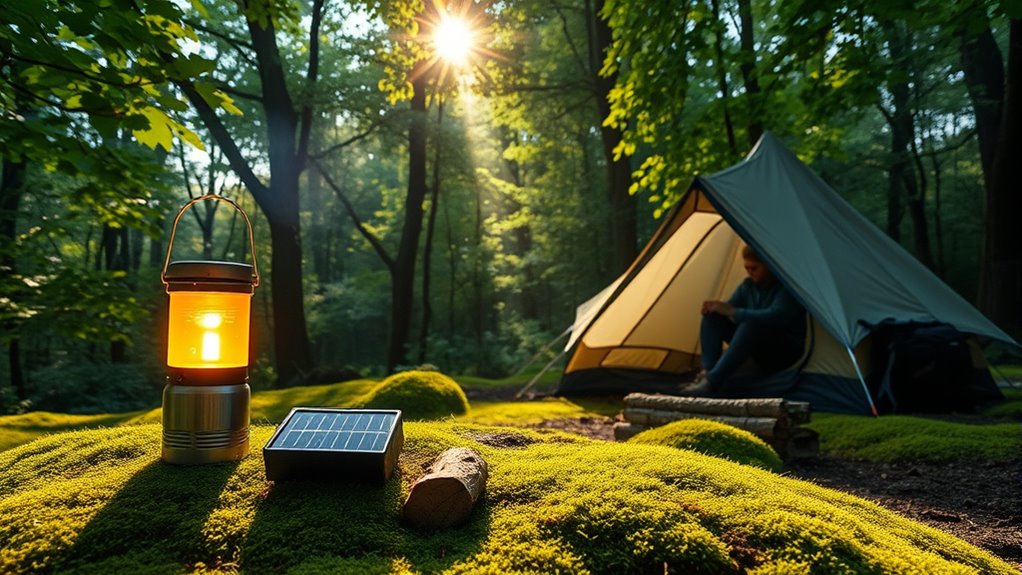
You can substantially cut your energy use by opting for solar-powered devices during your camping trip. Switching to energy-efficient bulbs like LEDs or CFLs also helps save power and extend battery life. These simple steps make your outdoor adventure more eco-friendly and reduce your carbon footprint. Incorporating solar energy solutions and curated messages and wishes for your campfire stories can also enhance your experience while emphasizing sustainable practices. Utilizing reliable whole-home backup power options can ensure your outdoor gear and devices stay charged without unnecessary energy waste. Additionally, selecting portable solar panels allows for greater flexibility in energy collection during your trip. Embracing renewable energy sources further supports your efforts to minimize environmental impact while enjoying the outdoors.
Use Solar Power Devices
Have you considered harnessing the sun’s energy to power your camping trip? Solar power devices are a practical way to reduce your carbon footprint and stay connected. Portable solar panels can charge your phones, tablets, and small gadgets without relying on fossil fuels. Look for lightweight, foldable options that are easy to carry and set up. Solar-powered lanterns and string lights provide illumination without draining batteries or using electricity from the grid. These devices are efficient, silent, and eco-friendly, making them perfect for outdoor settings. By choosing solar-powered gear, you save energy and help preserve natural resources. Plus, you’ll enjoy the convenience of renewable energy, allowing you to focus on appreciating your surroundings and practicing sustainable camping habits.
Switch to Energy-Efficient Bulbs
Switching to energy-efficient bulbs like LED and CFL lights is one of the simplest ways to cut down on energy use during your camping trip. These bulbs consume markedly less power than traditional incandescent bulbs, helping you conserve energy and extend your battery life. They also produce less heat, making them safer and more practical in outdoor settings. By replacing your standard bulbs with LEDs or CFLs, you reduce your carbon footprint and support eco-friendly camping practices. These bulbs are durable, long-lasting, and available in various sizes and shapes to fit your needs. Making this small change can lead to substantial energy savings, ensuring your camping experience is greener and more sustainable while still providing ample lighting for your activities.
Minimizing Waste and Recycling Responsibly
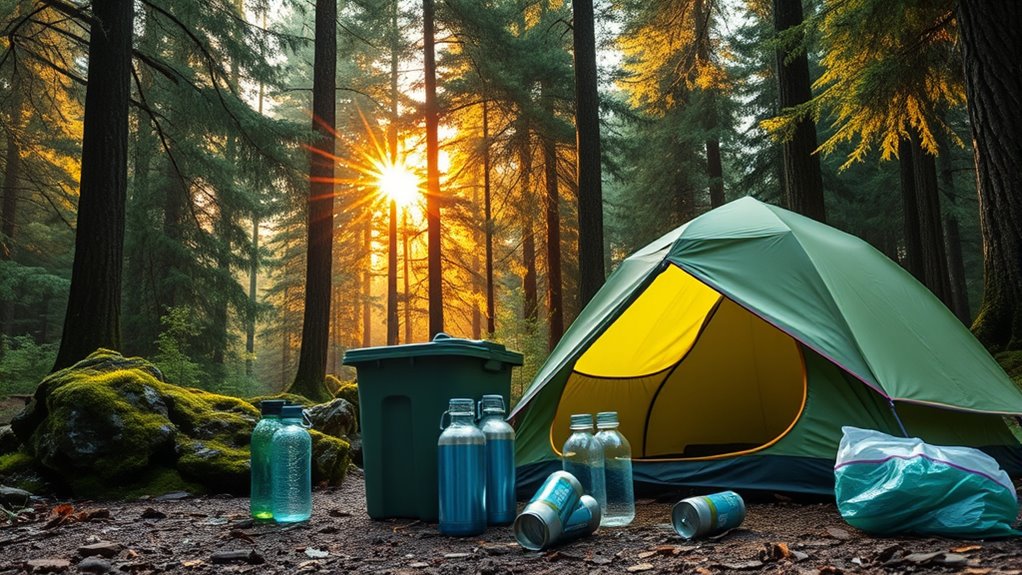
You can minimize waste by using reusable containers, utensils, and eco-friendly soaps to cut down on single-use plastics. Recycling and composting are essential; look for campgrounds that provide proper facilities or bring your own bins. Being responsible with your waste helps protect the environment and keeps natural areas pristine for everyone. Using rainwater capture techniques like portable waste management systems can further reduce environmental impact during your trip. Additionally, choosing eco-friendly laundry detergents ensures that cleaning your gear does not introduce harmful chemicals into the ecosystem. Incorporating waste reduction strategies can also significantly minimize your ecological footprint while camping. Embracing mindset principles from Law of Attraction practices can enhance your commitment to sustainable camping and inspire others to follow suit.
Recycling and Composting
Did you know that proper recycling and composting can considerably reduce a campsite’s environmental impact? When you separate recyclables like cans, bottles, and plastics from trash, you prevent these materials from ending up in landfills. Composting organic waste, such as food scraps and yard debris, turns waste into nutrient-rich soil instead of methane-producing garbage. Many campgrounds offer designated bins for recycling and compost, so take advantage of these facilities. Use reusable containers, utensils, and biodegradable soaps to minimize waste. Solar-powered compactors and sensor-equipped trash cans help manage waste efficiently, reducing overflowing garbage. Recycling waste management practices are essential for sustainable camping and help conserve natural resources, lower pollution, and support the health of the ecosystem. Incorporating composting methods can further enhance your efforts in reducing waste and enriching soil for future plant growth. Proper waste separation ensures that recyclable and compostable materials are processed correctly, maximizing their environmental benefits. Additionally, choosing energy-efficient camping gear can reduce overall environmental impact during your trip. Being mindful of environmental regulations can also help you stay compliant and protect natural habitats.
Reusable Camping Gear
Using reusable camping gear is one of the most effective ways to minimize waste and promote responsible recycling during your trip. Bring durable, eco-friendly items like metal water bottles, reusable utensils, and sturdy containers instead of single-use plastics. Opt for cloth napkins and biodegradable soap to reduce disposable waste further. Pack lightweight, multi-purpose gear that can be used multiple times, reducing the need for disposable alternatives. When you finish your meals or snacks, wash and store your reusable items properly for future use. This approach cuts down on trash, saves money, and lessens environmental impact. Additionally, properly recycling or composting any unavoidable waste ensures it’s processed responsibly. Your commitment to reusable gear helps protect natural habitats and promotes sustainable camping practices. Being aware of trademark laws can help you avoid unintentional infringement if you choose branded gear or apparel. Incorporating sustainable practices such as mindful waste disposal further enhances your eco-friendly camping experience. Using recycling guidelines can also ensure that waste is sorted correctly, maximizing environmental benefits. Properly food safety measures when handling reusable items help prevent contamination and ensure a healthy trip. Moreover, choosing items that are biodegradable can further reduce the environmental footprint of your waste.
Conserving Water During Your Stay
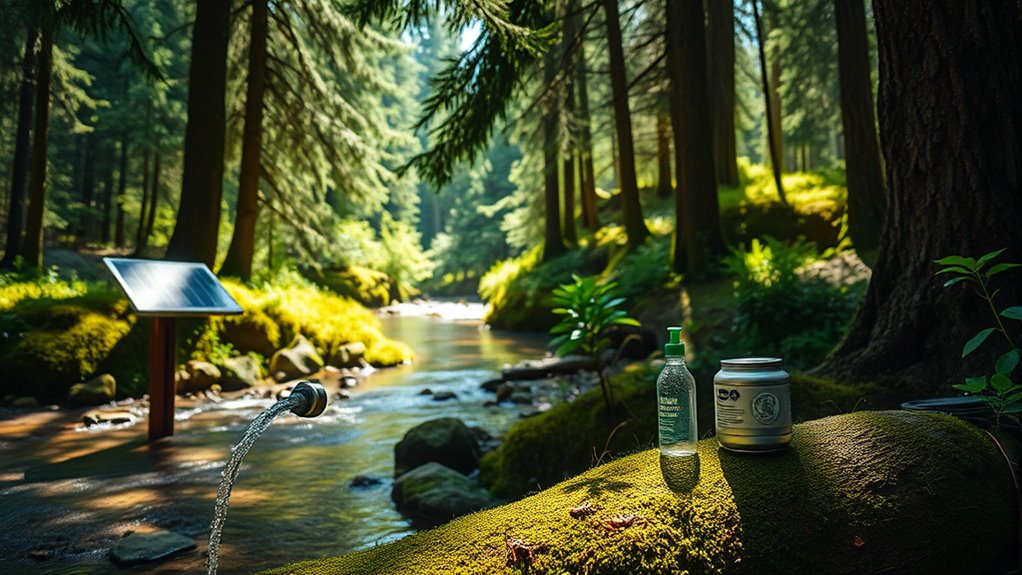
Wondering how to make your camping trip more eco-friendly? Conserving water is a simple yet impactful way to do so. Use water sparingly when washing dishes, bathing, or cleaning gear. Turn off taps when not in use and opt for quick, efficient washes. Reuse towels and washcloths to reduce laundry and water use. Always dispose of wastewater at least 200 feet from natural water sources to prevent contamination. Consider collecting rainwater for cleaning or drinking if permitted. Be mindful of your water footprint, especially in drought-prone areas. Encourage fellow campers to adopt water-saving habits and promote awareness about conserving this essential resource. Small actions, like these, protect local ecosystems and help ensure clean water for future adventures.
Protecting Wildlife and Natural Habitats
By conserving water and reducing waste, you’re already helping protect the environment, but safeguarding local wildlife and their habitats takes your efforts further. When camping, observe animals from a distance to avoid disturbing their natural behaviors. Never feed wildlife, as it can disrupt their diet and lead to dependency. Secure food and trash in bear-proof containers or hang them away from animal reach to prevent attracting pests. Stick to designated trails and campsites to minimize habitat disturbance and prevent soil erosion. Follow Leave No Trace principles by packing out all trash and avoiding damage to plants or natural features. Respecting wildlife and their habitats ensures these ecosystems remain healthy and vibrant for future generations of campers and animals alike.
Engaging With Community and Education Efforts
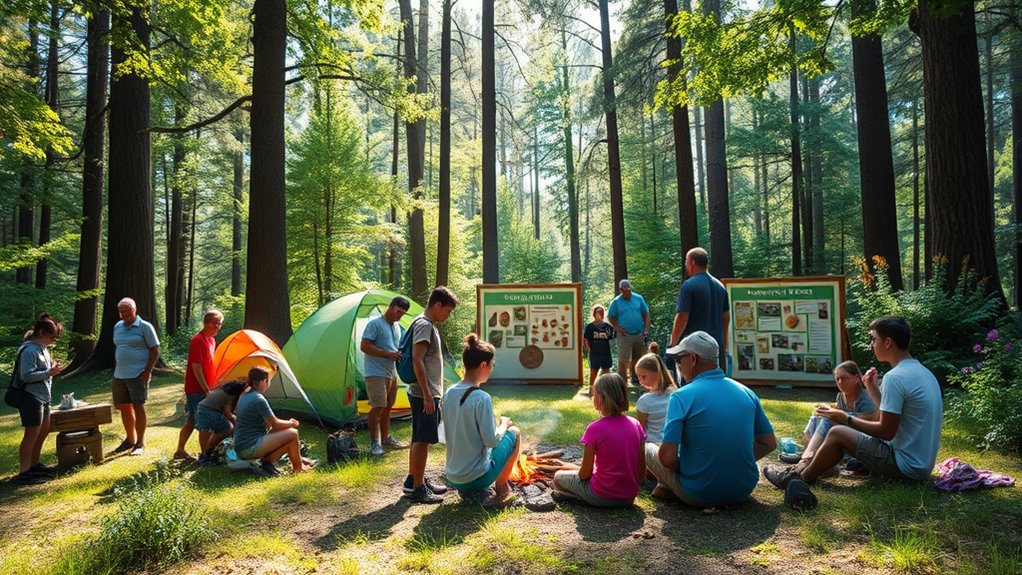
Engaging with community and education efforts is essential for promoting sustainable camping practices. When you participate in camp-led workshops or local conservation programs, you help spread awareness about eco-friendly habits. Many campsites offer educational campaigns focused on conserving energy, water, and waste, empowering you to make greener choices. Supporting local initiatives, whether through volunteering or donations, amplifies conservation efforts beyond your trip. Sharing your knowledge with fellow campers encourages a culture of responsibility and respect for nature. By actively engaging, you not only learn better practices but also contribute to a broader community aiming to protect natural resources. This collective effort ensures that camping remains a sustainable activity for future generations, fostering a deeper connection with the environment.
Frequently Asked Questions
How Can I Verify a Campsite’s Eco-Friendly Certifications?
To verify a campsite’s eco-friendly certifications, start by asking for their official accreditation or awards, like Green Seal or EarthCheck. Check their website for certification logos and detailed sustainability policies. You can also research third-party reviews or visit certification bodies’ databases. Contact the campsite directly to confirm their credentials, and look for transparent information on their eco practices to guarantee they meet recognized standards.
What Are the Best Reusable Products for Camping?
Did you know that sustainable camping reduces waste production to just 0.5 kg per day per person? For reusable products, opt for durable stainless steel or silicone water bottles, which cut down plastic waste. Bring reusable utensils, bamboo plates, and washable cloth napkins to minimize disposables. Don’t forget biodegradable soap and reusable food storage bags. These eco-friendly choices help protect nature and make your trip more sustainable.
How Do I Identify Wildlife-Friendly Camping Practices?
You can identify wildlife-friendly camping practices by looking for campgrounds that promote observing animals from a distance and avoid feeding or approaching wildlife. Choose sites with clear policies on securing food in bear-proof containers or hanging it away from animals. Support camps that follow Leave No Trace principles, minimize habitat disturbance, and educate visitors about respecting natural habitats. These practices help protect wildlife and guarantee a sustainable camping experience.
Are There Eco-Friendly Transportation Options to Reach Campsites?
You can choose eco-friendly transportation options like biking, walking, or carpooling to reach campsites, reducing your carbon footprint. Public transit is another great choice if available, as it minimizes emissions. Consider renting electric or hybrid vehicles for longer trips. Planning ahead to combine trips or using ride-sharing apps also helps cut down on unnecessary travel. By making these choices, you support sustainable travel and protect the environment.
How Can I Volunteer for Local Conservation Projects While Camping?
You can actively assist by applying for local conservation projects before your trip, volunteering your time and talents to protect pristine places. Participate in planting programs, preserve parks, or promote preservation efforts through community cleanup campaigns. Connect with local conservation groups online or at the campsite, sign up for scheduled service sessions, and support sustainability initiatives. Your proactive participation helps preserve natural beauty and promotes positive, pollution-free practices for future generations.
Conclusion
So, next time you hit the great outdoors, remember: Mother Nature’s got enough on her plate without you leaving a trail of trash and wasted water. Be the hero who leaves the woods greener than you found them—without sacrificing your Instagram-worthy moments. After all, what’s more eco-chic than showing off your commitment to the planet while still enjoying s’mores? Stay wild, stay green, and try not to turn your camping trip into a disaster zone!