
If you’re considering driving green, an electric car can substantially reduce your carbon footprint and improve air quality, especially as electricity sources become cleaner. EVs produce up to 78% lower emissions over their lifetime and help cut pollutants that harm health. While initial costs and charging options matter, advancements in technology make EVs more affordable and practical every day. To discover how EVs can benefit both you and the planet, keep exploring these important benefits.
Key Takeaways
- Electric cars significantly reduce lifecycle greenhouse gas emissions, especially as electricity grids become greener.
- They improve air quality by eliminating tailpipe pollutants, benefiting public health and urban environments.
- Growing charging infrastructure and technology make EV ownership more practical and convenient for daily use.
- Lower fuel and maintenance costs make EVs more economical over their lifespan compared to traditional cars.
- Advances in battery recycling and renewable energy integration enhance EV sustainability and environmental benefits.
Understanding the Environmental Benefits of EVs

Understanding the environmental benefits of electric vehicles (EVs) is essential when considering their role in reducing pollution and combating climate change. EVs produce up to 78% lower lifecycle greenhouse gas emissions compared to traditional gasoline cars, especially when powered by renewable energy. Although manufacturing emissions, particularly from battery production, are higher initially, this “carbon debt” is offset after about 17,000 km of driving. EVs generate zero tailpipe emissions, cutting harmful pollutants like nitrogen oxides and particulate matter, which improve air quality and health. Additionally, their overall lifecycle emissions are lower because electricity generation, especially from cleaner grids, produces fewer emissions than fuel extraction and refining. These benefits make EVs a crucial part of reducing both greenhouse gases and urban pollution. Understanding greenhouse gas emissions is key to recognizing the full environmental impact of EV adoption. Moreover, advancements in battery technology are continuously reducing manufacturing emissions and increasing the sustainability of EVs. For example, renewable energy integration into electricity grids further enhances the environmental advantages of EVs by decreasing the carbon footprint associated with charging. Additionally, ongoing improvements in battery recycling can significantly lessen the environmental impact of battery disposal over time. Incorporating sound design techniques in the development of EVs, such as creating realistic exterior and interior sounds, can also improve pedestrian safety without compromising environmental benefits.
Comparing Lifecycle Emissions: EVs vs. Gasoline Vehicles
When comparing the full lifecycle emissions of electric vehicles (EVs) and gasoline cars, it’s clear that EVs generally produce markedly fewer greenhouse gases over their lifespan. While manufacturing EVs, especially their batteries, generates about 40% more emissions than traditional cars, this “carbon debt” is offset after roughly 17,000 km of driving. Over their entire life, EVs emit around 37 metric tons of CO2, compared to about 76 tons for gasoline vehicles. This results in a 73-78% reduction in lifecycle emissions for EVs. Additionally, EVs produce no tailpipe emissions, reducing pollutants that harm air quality. As electricity grids become greener, the emissions gap widens, making EVs a more sustainable choice in the long run.
How EVs Improve Air Quality and Public Health
Electric vehicles substantially improve air quality by eliminating tailpipe emissions that release harmful pollutants like nitrogen oxides and particulate matter. Without these emissions, cities experience less smog, making the air safer to breathe, especially in dense urban areas. This reduction directly benefits your health by lowering the risk of respiratory issues, asthma, and cardiovascular diseases linked to air pollution. The U.S. EPA projects that increased EV adoption will cut fine particulate matter by 246,000 tons and nitrogen oxides by over one million tons by 2055. Cleaner air means fewer hospital visits, less absenteeism, and healthier communities overall. By choosing an EV, you’re not only reducing your carbon footprint but also helping to create a safer environment for everyone’s well-being.
The Role of Energy Sources in EV Sustainability
The environmental benefits of driving an EV depend heavily on where your electricity comes from. If your power is mainly generated from coal or other fossil fuels, the overall emissions reduction is less significant, though EVs still tend to produce fewer greenhouse gases than traditional cars. Conversely, if your electricity comes from renewable sources like wind, solar, or hydropower, your EV’s lifecycle emissions drop dramatically, making it a much greener choice. The cleaner your grid, the greater the climate benefits of driving an EV. As energy grids continue to decarbonize, EVs will become increasingly sustainable. Supporting policies and investments in renewable energy sources are essential to enhance these environmental advantages. Moreover, advancements in grid decarbonization will further amplify the environmental benefits of EV adoption. Additionally, the integration of solar panel systems into the energy infrastructure can further reduce the carbon footprint of electric vehicle charging. Investing in energy storage solutions can help balance supply and demand, making renewable energy use more reliable for EV charging. Overall, the energy source directly influences how environmentally friendly your electric vehicle truly is.
Practical Factors: Cost, Infrastructure, and Usage
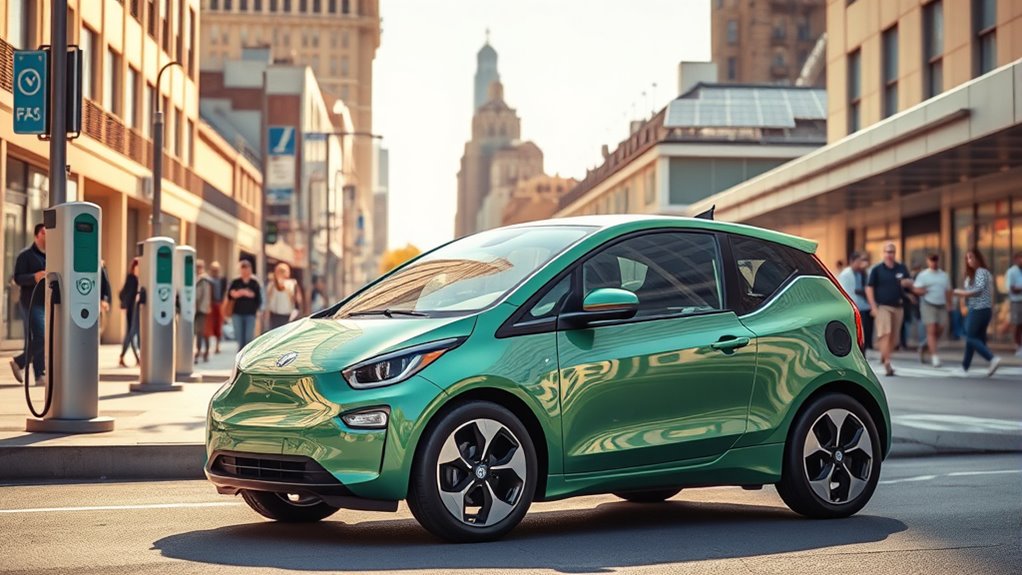
Before choosing an electric car, you should consider how you’ll access charging stations and the costs involved in ownership. Think about whether you have convenient charging options and how much you’ll save on fuel and maintenance over time. These practical factors can make a big difference in whether an EV fits your lifestyle and budget. Additionally, understanding battery technologies can help you assess the vehicle’s longevity and performance, as advancements in battery efficiency continue to improve electric vehicle reliability. Exploring tuning options for electric vehicles can also enhance performance and range, making your driving experience even more tailored to your needs. Considering the availability of charging infrastructure in your area can further influence your decision, ensuring you can charge conveniently and avoid range anxiety. Staying informed about electric vehicle innovations can help you keep up with the latest improvements and features, leading to smarter purchasing decisions.
Charging Access and Infrastructure
Accessing reliable charging infrastructure is essential for making the switch to an electric vehicle practical. Without convenient charging options, you might worry about running out of power during trips or daily commutes. Fortunately, charging stations are rapidly expanding in cities, workplaces, and public areas, making it easier to find a spot nearby. Home charging is a popular choice, allowing you to plug in overnight and start each day with a full battery. Fast chargers can considerably reduce charging time, but they’re still less common than standard outlets. Planning your routes around available charging stations becomes important for long trips. Overall, as infrastructure continues to grow, charging accessibility will further improve, making electric vehicle ownership even more practical. Additionally, understanding Volkswagen TDI Tuning can help you optimize fuel efficiency and performance if you prefer diesel options. As the network of charging stations expands, charging infrastructure will further support widespread EV adoption, and ongoing advancements in charging technology promise to make recharging even faster and more convenient for users. Furthermore, the development of portable charging solutions is beginning to address the needs of remote and off-grid locations, expanding the possibilities for electric vehicle use in diverse environments.
Ownership Costs and Savings
Owning an electric vehicle can substantially reduce your overall transportation costs, thanks to lower fuel expenses and decreased maintenance needs. Electricity is generally cheaper than gasoline, saving you money on each mile driven. Plus, EVs have fewer moving parts, which means less wear and tear, reducing repair bills over time. While EVs often have a higher upfront price, incentives and decreasing costs are closing that gap. Charging at home is convenient and affordable, and public charging infrastructure is expanding, making longer trips more feasible. Maintenance costs are also lower since EVs don’t require oil changes, filters, or exhaust system repairs. Additionally, the availability of Best Anime Movies and animated films with emotional depth offers entertainment options for EV owners during charging stops. The integration of solar-powered charging stations further enhances the sustainability of EV ownership by utilizing renewable energy sources. Incorporating renewable energy sources can further decrease the environmental impact of your vehicle, making EV ownership even more eco-friendly. Using smart charging technology can optimize energy use and reduce costs over time. Investing in vehicle charging infrastructure can improve convenience and support your transition to cleaner transportation. Over the vehicle’s lifespan, these savings can add up considerably, making EV ownership not only better for the environment but also easier on your wallet.
Debunking Common Myths About Electric Cars
Many common myths about electric cars persist despite mounting evidence that challenges them. You might think EVs produce more emissions due to battery manufacturing, but in reality, their overall lifecycle emissions are lower. Here are some myths debunked:
- EVs shift pollution to power plants – Even with fossil-fuel electricity, EVs emit less over their lifetime than gasoline cars.
- Batteries cause environmental harm – Advances in recycling and ethical sourcing reduce environmental impacts.
- EVs are more expensive to operate – They typically cost less in fuel and maintenance, lowering total ownership costs.
- Limited benefits in dirty energy grids – EVs help reduce emissions almost everywhere, and benefits grow as grids clean up.
Frequently Asked Questions
How Long Does EV Battery Recycling Take and Is It Environmentally Friendly?
Recycling EV batteries typically takes a few days to a few weeks, depending on the process and facilities involved. It’s generally environmentally friendly because recycling reduces the need for new mining and minimizes hazardous waste. Advanced technologies allow for the recovery of valuable materials like lithium, cobalt, and nickel, which are then reused in new batteries. This process helps lower the environmental impact of battery production and promotes sustainable resource use.
What Are the Ethical Concerns Related to Sourcing Battery Materials?
You should be aware that sourcing battery materials raises ethical concerns, especially regarding human rights and environmental impact. Mining cobalt and lithium often involves child labor, unsafe conditions, and displacement of communities. Additionally, mining can harm ecosystems and water supplies. By choosing brands committed to ethical sourcing, you can help reduce these issues, supporting fair labor practices and environmentally responsible extraction methods.
How Do EVS Perform in Extreme Weather Conditions?
In extreme weather, EV performance can be affected. Cold temperatures reduce battery efficiency, decreasing range by up to 40%, and may slow charging times. Hot weather can strain cooling systems, impacting battery longevity. However, modern EVs incorporate thermal management systems to mitigate these effects. You should consider climate conditions and plan for potential range adjustments, especially in very cold or hot environments, to guarantee reliable operation.
Are There Any Health Risks From EV Battery Manufacturing Emissions?
You might worry about EV battery manufacturing emissions as if they’re lurking shadows, but the truth is, advances are shining a light on safer practices. While some pollutants are released during production, industry efforts focus on reducing hazardous materials and improving recycling. Over time, these emissions are becoming less harmful, like clearing fog from a morning sky. So, the health risks are shrinking, making EVs a cleaner, safer choice for both you and the planet.
What Policies Are Supporting the Transition to Electric Vehicles Globally?
You’re seeing policies worldwide that promote EV adoption through incentives, subsidies, and stricter emissions standards. Many governments are investing in charging infrastructure, offering tax credits, and setting deadlines to phase out internal combustion engines. These measures make EVs more accessible and affordable. Additionally, some regions implement regulations encouraging renewable energy use, which enhances EV environmental benefits. Collectively, these policies accelerate the shift toward cleaner transportation and help reduce global emissions.
Conclusion
Like Icarus soaring toward the sun, you might worry about the risks of switching to an electric car. But just as Daedalus crafted wings built for a safer flight, choosing an EV can lead you toward a greener, healthier future. By understanding its true benefits and debunking myths, you’re not just driving—you’re steering the planet toward change. So, take flight with confidence, and drive green for a brighter tomorrow.