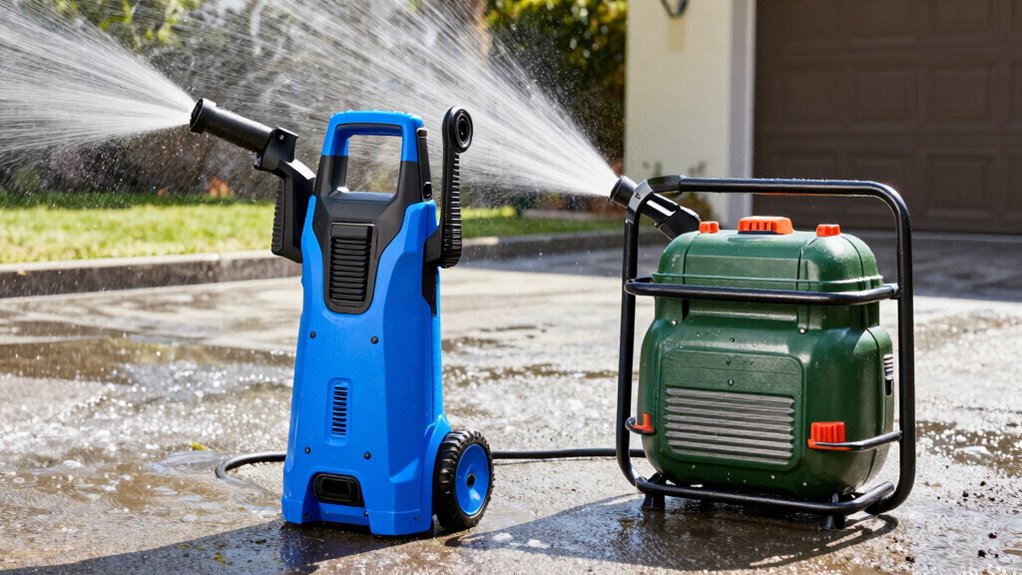

When you compare electric pressure washers with gas models, you’ll find that electric ones are quieter, lighter, and easier to maintain. They’re perfect for light to medium tasks like cleaning decks and vehicles. On the other hand, gas models are louder and bulkier but excel at heavy-duty jobs. If you prioritize convenience and low upkeep, electric might be your best bet. However, there’s more to take into account—let’s explore both options further.

Prime made for students and young adults
- Fast, free delivery for dorm and study essentials
- Prime Video and Amazon Music included
- Member-only deals
Key Takeaways
- Electric pressure washers are ideal for light to medium tasks, while gas models excel in heavy-duty applications and tough stains.
- Electric models operate quietly, making them suitable for residential areas, whereas gas washers are generally loud and disruptive.
- Electric washers are lighter and more portable, while gas models tend to be bulkier and harder to maneuver.
- Maintenance for electric models is minimal, focusing mainly on the power cord, while gas models require regular oil changes and spark plug care.
- Electric pressure washers produce no emissions, making them environmentally friendly, while gas models contribute to air pollution and have higher long-term costs.
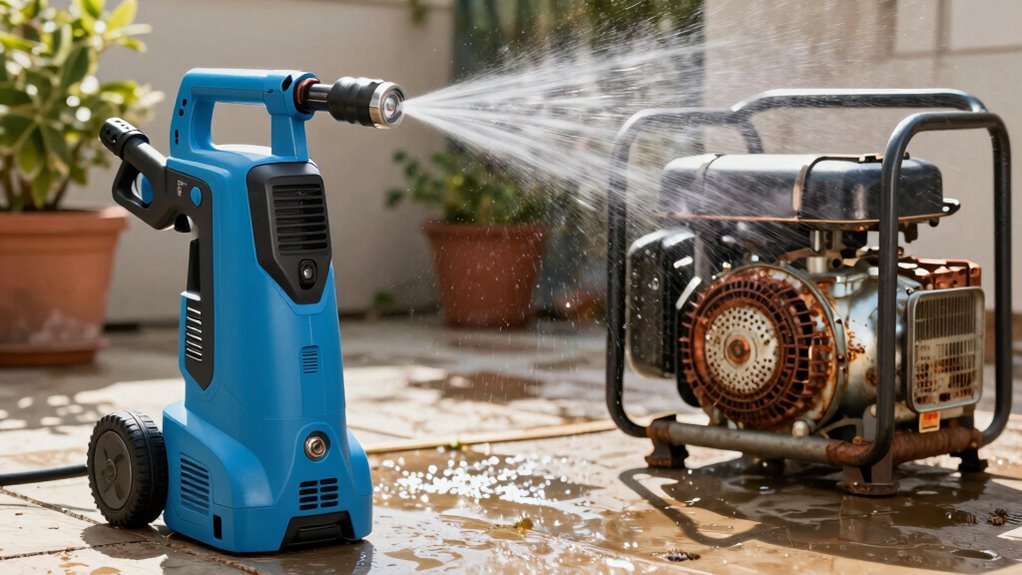
When it comes to pressure washers, you’ll often find yourself choosing between electric and gas models, each offering distinct advantages. Electric pressure washers generally excel in performance efficiency for light to medium tasks. They’re perfect for cleaning decks, patios, and vehicles, delivering sufficient power without overwhelming you. On the other hand, gas models shine in heavy-duty applications. If you’ve got tough stains or large areas to clean, gas washers usually tackle these jobs with more vigor.
One significant factor to take into account is noise levels. Electric pressure washers are especially quieter, making them ideal for residential areas where noise can be a concern. You can use one early in the morning or late in the evening without disturbing the neighbors. Gas models, while powerful, can be quite loud, which might not be suitable for every environment. So, if you value peace while cleaning, electric models might be your best bet.
Noise levels are crucial; electric pressure washers offer quiet operation, perfect for early mornings or late evenings in residential areas.
Portability options also play an essential role in your decision. Electric washers are generally lighter and easier to maneuver. They’re often designed with wheels and compact frames, making them simple to transport from one location to another. Gas pressure washers, however, tend to be bulkier and heavier, which could make them less convenient for some users. If you plan on moving your pressure washer frequently, think about how each model’s weight and design will affect your experience.
Maintenance requirements differ as well. Electric models usually require minimal upkeep; you’ll mainly need to check the power cord and verify it’s functioning correctly. Gas models, however, demand more attention, including regular oil changes and spark plug maintenance. If you’re not keen on spending time on upkeep, the electric option could save you both time and hassle. Additionally, electric models tend to have fewer parts that need replacing, making them generally more reliable for everyday use. Regularly checking air filters can also prolong the lifespan of electric pressure washers. Furthermore, electric models often incorporate simple maintenance features that make upkeep straightforward. Incorporating proper storage practices can also help extend the lifespan of your pressure washer, regardless of the type you choose.
Another vital aspect is environmental impact. Electric pressure washers are cleaner, producing no emissions during operation. If you’re environmentally conscious, this might sway your decision. Gas washers, while powerful, emit exhaust fumes, which can contribute to air pollution. Additionally, using air purifiers can improve indoor air quality when working in enclosed spaces.
Lastly, a cost analysis reveals that electric models are typically less expensive upfront. However, think about the long-term costs of fuel and maintenance for gas models. Ultimately, both options have their merits, but knowing your specific needs will guide you toward the right choice.
electric pressure washer for home use
As an affiliate, we earn on qualifying purchases.
As an affiliate, we earn on qualifying purchases.
Frequently Asked Questions
How Long Do Electric Pressure Washers Typically Last?
Electric pressure washers typically last around 3 to 7 years, depending on various durability factors like usage frequency and maintenance. If you’re careful with your unit, store it properly, and perform regular upkeep, you can extend its lifespan expectations. Some models may even last longer with the right care. So, keeping an eye on those factors can really make a difference in how long your pressure washer serves you well.
Can Electric Models Handle Heavy-Duty Cleaning Tasks?
Electric pressure washers can tackle heavy-duty cleaning tasks, but they’re like a strong runner in a marathon—capable, yet not always the fastest. While they offer decent cleaning power, their durability comparison to gas models may fall short for the toughest jobs. If you’re dealing with stubborn grime or large areas, consider the limitations of electric units. For lighter tasks, though, they shine brightly and get the job done efficiently.
What Maintenance Is Required for Electric Pressure Washers?
To keep your electric pressure washer running smoothly, follow some simple maintenance tips. Regularly check the hoses for leaks and clean the filter to guarantee peak performance. Don’t forget to store it in a dry place to prevent damage. Unlike gas models, electric ones don’t require oil changes, making upkeep easier. Just remember to inspect the power cord and connections for wear, and you’ll maintain great performance without much hassle.
Are Electric Pressure Washers Quieter Than Gas Models?
Absolutely, electric pressure washers are generally quieter than gas models. While gas washers roar with high noise levels, electric ones hum along, offering you a more peaceful cleaning experience. This lower noise doesn’t compromise operational efficiency; you still get powerful performance without the racket. So, if you value a quieter environment while tackling tough grime, you’ll appreciate the benefits of choosing an electric model over its gas counterpart.
Can I Use an Extension Cord With Electric Pressure Washers?
Yes, you can use an extension cord with electric pressure washers, but confirm it’s safe. Choose a cord that matches the power rating of your washer to avoid overheating. Look for heavy-duty cords rated for outdoor use, ideally 12 or 14 gauge. This guarantees you get enough power without risking safety. Always check the manufacturer’s guidelines for specific recommendations, and avoid using multiple cords together to maintain efficiency.
Conclusion
In the battle of electric versus gas pressure washers, it’s clear both have their perks. Electric models offer convenience and quiet operation, while gas units deliver raw power for tougher jobs. If you value ease and portability, you’ll lean towards electric; if you crave strength and endurance, gas might be your go-to. Ultimately, your choice hinges on your specific needs and preferences. So, consider your projects, weigh your options, and pick the pressure washer that fits your lifestyle.
Fall Picks
fall essentials
As an affiliate, we earn on qualifying purchases.