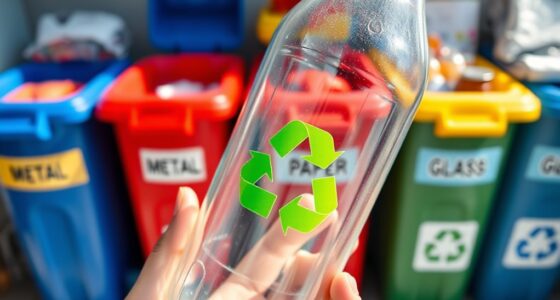
By embracing minimalism, you reduce your resource consumption, energy use, and waste, which directly lowers your carbon footprint. Living simply decreases the demand for new products, minimizes manufacturing emissions, and cuts down on landfills. Smaller spaces and eco-friendly choices like walking or biking further lessen your environmental impact. These lifestyle shifts not only help protect the planet but also bring mental and physical benefits. Discover how these strategies can make a difference for both you and the Earth.
Key Takeaways
- Minimalism reduces demand for new products, decreasing resource extraction and energy consumption in manufacturing.
- Decluttering minimizes waste and packaging, supporting recycling and reducing landfill pollution.
- Smaller living spaces require less energy for heating, cooling, and electricity, lowering overall carbon emissions.
- Owning fewer items encourages repair, reuse, and eco-friendly choices, decreasing environmental impact.
- Simplified lifestyles promote eco-conscious transportation and energy use, further reducing your carbon footprint.
How Minimalism Limits Resource Extraction

Minimalism directly reduces the demand for new products, which in turn limits resource extraction. When you choose to consume less, you lessen the need for raw materials like timber, minerals, and fossil fuels. This means fewer trees are cut down, and mining operations decrease, protecting ecosystems and biodiversity. Your reduced consumption also cuts down on energy use during manufacturing, which often involves harmful extraction processes. By buying less and reusing more, you help preserve precious resources that would otherwise be depleted. Producing fewer goods means less water, land, and energy are required, easing the strain on natural environments. Your minimalist habits contribute to a more sustainable world by decreasing the relentless extraction of resources necessary for mass production. Additionally, adopting a minimalist lifestyle can promote active listening and empathy, leading to more meaningful connections and a greater collective effort toward environmental preservation. Embracing resource conservation as a core principle further amplifies your positive impact on the planet. Incorporating mindful consumption encourages a circular economy, which aims to extend the lifecycle of products and reduce waste. Recognizing the importance of sustainable resource management can help you make more informed choices that support long-term environmental health. Moreover, choosing eco-friendly textile materials can significantly decrease environmental harm associated with resource extraction and manufacturing processes.
The Impact of Reduced Consumption on the Environment

By reducing your consumption, you directly lessen the demand for new products, which in turn decreases resource extraction and energy use. When you buy less, fewer raw materials like timber, minerals, and fossil fuels are needed, helping to prevent deforestation, mining, and pollution. Manufacturing fewer items also means factories use less energy and release fewer pollutants. This reduction in production translates to less waste ending up in landfills and less environmental degradation. Your mindful choices decrease the volume of packaging and disposable products, further lowering pollution. Additionally, choosing traditional or small-scale production methods, such as hand-made butter, can further reduce environmental impact by minimizing energy consumption and waste. Incorporating sustainable production practices can amplify these benefits by promoting eco-friendly manufacturing methods. For example, utilizing collagen and hyaluronic acid in skincare can lessen the need for synthetic ingredients and reduce chemical runoff. Overall, consuming less cuts down your carbon footprint by diminishing emissions from manufacturing and transportation. Additionally, adopting Whole-House Water Filtration Systems insights can help promote sustainable practices among fans and industry stakeholders alike.
Smaller Living Spaces and Energy Efficiency

Living in a smaller space means you’ll use less energy for heating, cooling, and electricity. This not only saves you money but also cuts your carbon footprint considerably. By choosing a compact home, you’re making a simple change that benefits the environment. Additionally, employing energy-efficient appliances and insulation can further reduce your overall energy consumption for a greener footprint. Small living spaces often promote minimalist lifestyles, which naturally lead to less resource consumption and waste. Being mindful of your energy use can amplify these benefits, making your lifestyle even more sustainable. Implementing energy-saving practices can maximize the positive environmental impact of your smaller home. Furthermore, understanding sound design techniques can help you create a more comfortable and energy-efficient living environment.
Reduced Heating and Cooling
Smaller living spaces naturally require less energy for heating and cooling, making them more energy-efficient choices. When you downsize, you reduce the area that needs temperature regulation, cutting your energy consumption markedly. This not only lowers your utility bills but also decreases your carbon footprint. To see how space impacts energy use, consider this table:
| Living Space Size | Estimated Energy Use |
|---|---|
| 1,000 sq ft | High |
| 500 sq ft | Moderate |
| 250 sq ft | Low |
| Tiny House | Very Low |
Additionally, incorporating natural materials into your living space can further improve energy efficiency by enhancing insulation and reducing reliance on mechanical heating and cooling systems. Using energy-efficient appliances also helps minimize overall energy consumption, making your home even more environmentally friendly. Choosing compact, multi-purpose furniture can optimize space and reduce the need for excess heating or cooling in unused areas. Embracing space-saving design strategies can maximize comfort while minimizing energy use. Considering passive solar design can also significantly decrease the need for active heating and cooling, further reducing your carbon footprint.
Lower Electricity Usage
Reducing the size of your living space directly lowers your electricity consumption. Smaller homes require less energy to heat, cool, and power appliances. With fewer rooms and surfaces, you use less lighting, which cuts down on electricity use. Additionally, a compact space makes it easier to maintain energy-efficient habits, like unplugging unused devices or using smart thermostats. By downsizing, you also minimize the need for large appliances and multiple electronics, further reducing energy demand. This shift not only saves money but also decreases your carbon footprint. Compact living encourages you to prioritize essentials, leading to more mindful energy use. Furthermore, choosing energy-efficient appliances tailored for smaller spaces can significantly enhance your home’s sustainability. Incorporating renewable energy sources such as solar panels can further reduce reliance on grid electricity and boost your eco-friendly efforts. Implementing smart home technology can optimize energy consumption and support sustainable living. Additionally, adopting practices like minimalist living can help reduce waste and conserve resources, amplifying the environmental benefits of a smaller home. For example, integrating portable solar generators allows for cleaner energy use even in smaller spaces, expanding your off-grid options. Overall, a smaller space makes your home more sustainable and less resource-intensive, contributing positively to the environment.
Sustainable Transportation Choices in Minimalist Lifestyles
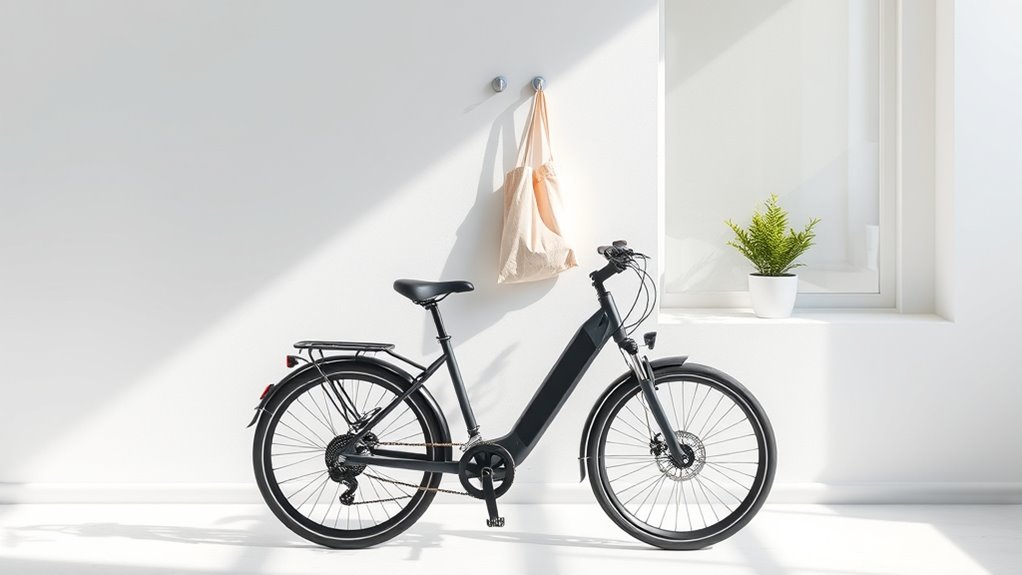
You can reduce your environmental impact by choosing active travel options like walking or biking whenever possible. Opting for eco-friendly vehicles, such as electric or hybrid cars, further lowers your carbon footprint. Making these sustainable transportation choices aligns with a minimalist lifestyle that values simplicity and environmental responsibility.
Promoting Active Travel Options
Active travel options like walking, cycling, and using public transportation are essential components of a minimalist lifestyle focused on sustainability. By choosing these options, you reduce reliance on fossil-fuel-powered vehicles, lowering your carbon footprint. Walking and cycling require no energy other than your own, making them the most eco-friendly choices. Public transit systems are energy-efficient ways to cover longer distances while decreasing emissions per passenger. Incorporating active travel into your routine also promotes better health and mental wellbeing. When you opt for these transportation methods, you minimize your environmental impact and avoid the clutter and costs associated with owning and maintaining a car. Embracing active travel aligns with minimalist values of reducing consumption and resource use, helping you live more sustainably and leave a lighter footprint on the planet.
Choosing Eco-Friendly Vehicles
Choosing eco-friendly vehicles aligns perfectly with a minimalist lifestyle focused on sustainability. By opting for electric cars, hybrids, or bikes, you reduce reliance on fossil fuels and lower emissions. These choices require fewer resources to produce and maintain, helping preserve the environment. Imagine the impact of ditching a gas guzzler for a sleek electric vehicle or choosing pedal power over driving. The table below shows how eco-friendly transportation benefits you and the planet:
| Benefit | Impact | Emotion |
|---|---|---|
| Lower Emissions | Cleaner air, healthier lungs | Feel refreshed and energized |
| Reduced Waste | Less oil and parts disposal | Feel responsible and proud |
| Cost Savings | Less fuel, maintenance | Feel confident in your choice |
Switching to sustainable transportation helps declutter your life and protect the planet.
Decreasing Waste and Landfill Contributions
Reducing waste and landfill contributions is a key benefit of adopting a minimalist lifestyle. When you buy less, you create less trash and reduce pollution. Here are four ways minimalism helps:
- Repair and Reuse: You fix items instead of discarding them, extending their life.
- Buy Less Packaging: You choose products with minimal or eco-friendly packaging, cutting down waste.
- Opt for Durable Goods: You prefer quality over quantity, reducing the need for frequent replacements.
- Recycle More: You actively separate and recycle materials, decreasing landfill overflow.
Conserving Water, Minerals, and Other Resources
By cutting down on waste and landfill contributions, you also help conserve essential resources like water, minerals, and energy. When you choose minimalism, you reduce the demand for new products, which lowers the need for resource extraction such as mining minerals, harvesting timber, and drilling for fossil fuels. This means less deforestation, habitat destruction, and water use—like the 20,000 liters needed to produce just one kilogram of cotton. Fewer purchases mean manufacturing uses less energy and releases fewer pollutants. Recycling and reusing become second nature, further preserving resources. By living simply, you lessen the strain on our planet’s finite supplies, helping protect ecosystems and maintain biodiversity. Your mindful choices directly contribute to conserving water, minerals, and energy for future generations.
The Environmental Toll of Manufacturing Industries
Manufacturing industries considerably harm the environment through resource depletion and pollution. Every product you buy often involves extracting raw materials, which damages ecosystems and depletes finite resources. These industries also release harmful pollutants into the air, water, and soil, affecting both nature and human health. Reducing your consumption can lessen this impact profoundly. Here are four ways manufacturing harms the environment:
- Resource extraction — Deforestation, mining, and water use threaten biodiversity.
- Pollution emissions — Factories release greenhouse gases and toxic chemicals.
- Energy consumption — Manufacturing demands large amounts of electricity, often from fossil fuels.
- Waste generation — Industrial waste contaminates land and water, contributing to pollution.
How Reuse and Recycling Minimize Ecological Damage

Reusing and recycling materials play a crucial role in minimizing ecological damage by cutting down on the need for new resource extraction. When you reuse items, you extend their lifespan, reducing demand for raw materials like timber, minerals, and water. Recycling transforms waste into new products, conserving resources and energy. For example, recycling aluminum saves up to 95% of the energy needed to produce new aluminum from bauxite. This process decreases pollution from mining, manufacturing, and transportation. By choosing to repair, donate, or repurpose items instead of discarding them, you help reduce landfill waste and pollution. Recycling also prevents hazardous waste from contaminating soil and water. Overall, these practices lower the environmental impact of production and help preserve ecosystems and biodiversity for future generations.
The Mental and Physical Benefits of a Simpler Life

Simplifying your life can considerably reduce stress and clear your mind. When you let go of clutter, you create space for focus and tranquility. Plus, embracing minimalism often leads to better physical health as you prioritize quality over quantity.
Reduced Stress Levels
Living with fewer possessions can considerably reduce your stress levels by creating a calmer and more organized environment. When your space is clutter-free, you spend less time searching for items and feel more in control. This simplicity can lead to a sense of calm and mental clarity.
Here are four ways minimalism lowers stress:
- Less visual clutter reduces sensory overload, helping you stay focused.
- Fewer belongings mean fewer decisions, decreasing decision fatigue.
- Organized spaces promote relaxation and improve sleep quality.
- Reduced responsibilities lessen the mental load of managing possessions, freeing your mind for what truly matters.
Embracing minimalism fosters a peaceful environment, supporting your mental and physical wellbeing.
Enhanced Mental Clarity
When your environment is free of clutter and possessions are organized, your mind naturally becomes clearer. Without visual distractions, you can focus more easily on what truly matters. Minimalism simplifies your surroundings, reducing mental overload and decision fatigue. With fewer possessions, you spend less time tidying and maintaining, freeing mental energy for creativity and reflection. Clutter often triggers stress and anxiety; removing it promotes a sense of calm and control. As your space becomes more orderly, your thoughts become more focused and purposeful. This mental clarity enhances your ability to prioritize, solve problems, and stay present. Embracing simplicity creates a peaceful mental state, helping you feel more centered and resilient amidst daily challenges.
Improved Physical Health
A simpler life can considerably boost your physical health by encouraging healthier habits and reducing stress-related issues. When you declutter, you create space for better routines and reduce distractions, making it easier to focus on self-care. Here are four ways minimalism benefits your body:
- Increases physical activity – Less clutter motivates you to move more, whether cleaning or engaging in outdoor activities.
- Improves sleep quality – A tidy environment promotes relaxation and better rest.
- Reduces stress – Fewer possessions lessen anxiety and mental clutter, supporting overall health.
- Encourages healthier eating – Minimalism often leads to mindful choices, including nutritious meals and better portion control.
Embracing Minimalism for a Greener Future
Embracing minimalism offers a powerful way to build a greener future by reducing your environmental footprint. When you choose to buy less, you decrease the demand for new products, which in turn lowers resource extraction like deforestation, mining, and fossil fuel use. Smaller living spaces require less energy for heating, cooling, and electricity, cutting your carbon emissions. By repairing, reusing, and recycling, you minimize waste sent to landfills and reduce pollution. Minimalism also encourages sustainable transportation choices, further reducing your emissions. Every item you avoid purchasing saves resources and energy, helping to preserve ecosystems and reduce pollution. Adopting a minimalist lifestyle directly supports a healthier planet while fostering personal fulfillment and mental clarity. Your choices can truly make a difference for a sustainable future.
Frequently Asked Questions
How Does Minimalism Influence Global Resource Consumption Trends?
Minimalism influences global resource consumption trends by encouraging you to buy less and reuse more. When you reduce demand for new goods, it cuts down on resource extraction, manufacturing, and waste. This shift helps lower environmental impacts like deforestation, pollution, and water use. As more people adopt minimalist habits, overall resource consumption decreases, leading to a more sustainable future and helping preserve crucial ecosystems worldwide.
Can Minimalism Significantly Reduce Individual Carbon Footprints?
Think of your carbon footprint like a shadow—you can make it smaller with mindful choices. When you embrace minimalism, you buy less, use less energy, and choose sustainable transportation. This directly cuts emissions from manufacturing and shipping, reducing your overall impact. By living simply, you not only lessen your environmental footprint but also promote healthier habits, proving that small changes can lead to significant environmental benefits.
What Are Practical Steps to Start Practicing Minimalism Sustainably?
To start practicing minimalism sustainably, prioritize buying only what you truly need. Opt for high-quality, durable items to reduce waste, and repair or reuse belongings instead of replacing them. Choose eco-friendly products and support local or secondhand stores. Declutter regularly to identify unnecessary items, and adopt a mindful purchasing mindset. Incorporate sustainable transportation by walking, biking, or using public transit, and minimize energy use at home.
How Does Minimalism Impact Industries Like Fashion and Electronics?
Imagine your choices as a ripple in a pond; when you choose minimalism, you calm the waves in industries like fashion and electronics. You cut demand for fast fashion and tech gadgets, prompting companies to slow down production and embrace sustainable practices. Your mindful consumption encourages brands to prioritize quality over quantity, reducing waste and pollution, and ultimately shifting industries toward greener, more responsible futures.
Is Minimalism a Viable Long-Term Strategy for Environmental Conservation?
Yes, minimalism is a viable long-term strategy for environmental conservation. By reducing your demand for new goods, you lower resource extraction, energy use, and waste production. This lifestyle encourages sustainable choices like repairing, reusing, and recycling, which collectively lessen pollution and conserve ecosystems. As more people adopt minimalism, it can shift industries toward greener practices, ultimately leading to a healthier planet and more sustainable future for generations to come.
Conclusion
By embracing minimalism, you gently clear the clutter from your life and the planet’s delicate balance. As you choose simpler living, you help ease the gentle hum of industry and allow nature’s colors to flourish anew. Each mindful decision becomes a brushstroke in creating a brighter, greener future. When you declutter your world, you’re not just making space—you’re nurturing a vibrant, sustainable harmony for generations to come.