Transforming your lawn into a native plant paradise supports local wildlife, conserves water, and cuts down on ongoing maintenance. Start by planning your site carefully, selecting suitable native species, and preparing your soil. Focus on creating habitats for pollinators and wildlife while using water-saving techniques like mulching and grouping plants by needs. With the right approach, you’ll turn your yard into a sustainable, vibrant ecosystem—continue exploring to discover how to make this transformation a success.
Key Takeaways
- Assess your site’s sunlight, soil, and water conditions to select appropriate native plants and design a resilient landscape.
- Remove invasive species and amend soil with organic matter to prepare for native plant installation.
- Choose diverse native species with varying bloom times to support pollinators year-round and enhance biodiversity.
- Incorporate water-saving features like rain gardens and mulching to conserve resources and reduce runoff.
- Engage the community through workshops and neighborhood projects to promote widespread adoption of native plant gardens.
Understanding the Benefits of Native Plant Landscaping
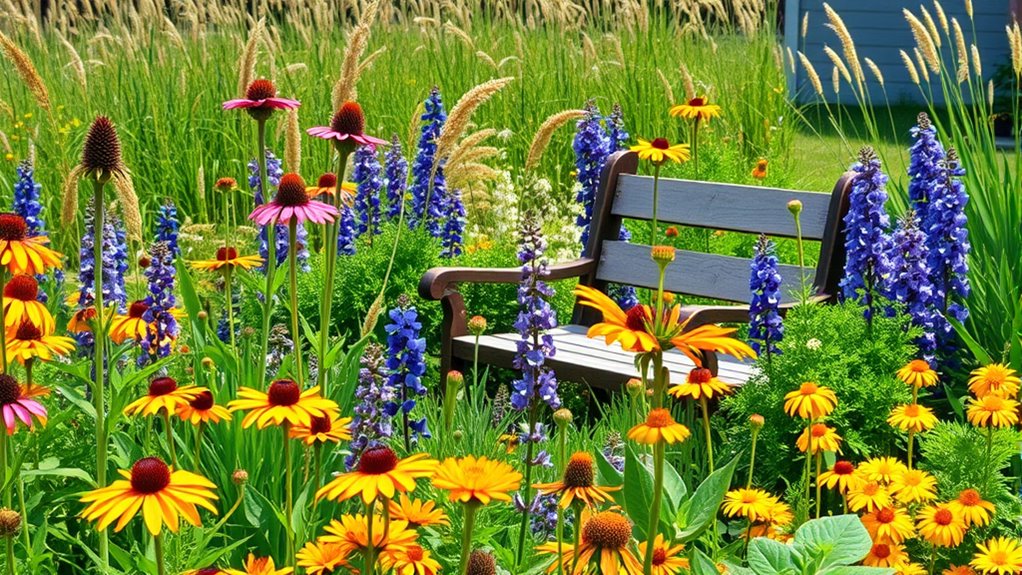
Understanding the benefits of native plant landscaping is essential for anyone looking to create a more sustainable and eco-friendly outdoor space. Switching from traditional lawns to native plants saves you money over time by reducing maintenance costs like mowing, fertilizing, and watering. It can also lower your water bills markedly, sometimes by up to 60%, and qualify you for rebates, easing upfront expenses. Native plants support local wildlife by providing food and shelter, strengthening biodiversity and resilience against climate extremes. They improve soil health, reduce stormwater runoff, and help sequester carbon, benefiting the environment. Additionally, native gardens can serve as vital habitats that connect fragmented ecosystems through wildlife corridors, promoting greater biodiversity. Plus, native gardens require less effort, no chemical treatments, and are more durable, making them a practical, long-term choice that benefits both your wallet and the planet.
Planning Your Native Garden: Design and Site Selection
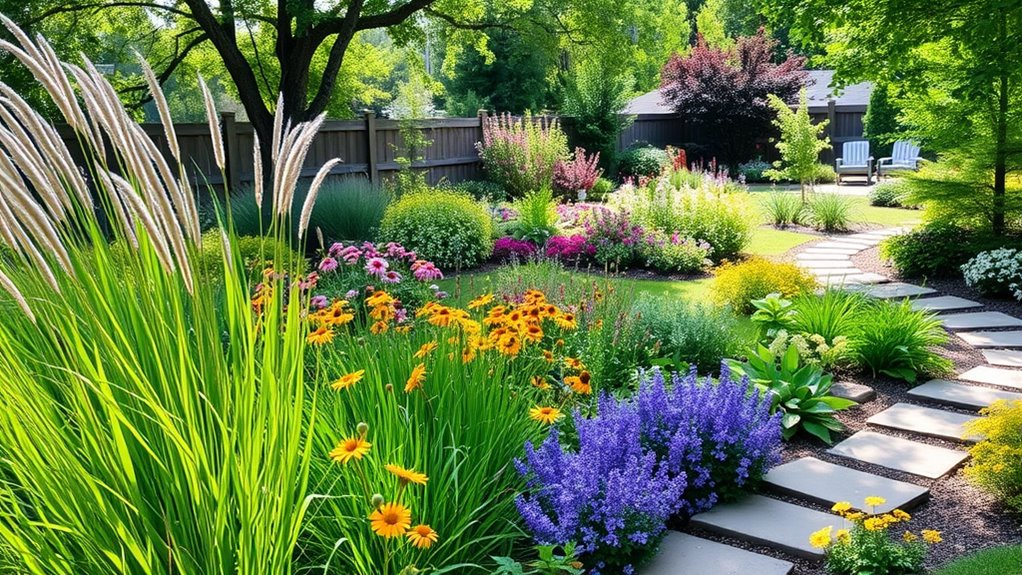
To create an effective native garden, start by carefully selecting a site that offers the right sunlight, soil conditions, and drainage. Observe how much sun the area receives throughout the day to determine if it’s full sun, partial shade, or shade. Assess your soil’s texture, drainage, and fertility; native plants often thrive in less-than-perfect soils, but knowing your conditions helps you choose suitable species. Check for proper drainage to prevent waterlogging, which can harm native roots. Consider existing features like slopes or flat areas to maximize water retention or runoff management. Think about accessibility and visibility, ensuring your garden is both functional and aesthetically pleasing. Proper planning at this stage sets a strong foundation for a thriving native plant landscape. Additionally, incorporating attention to ecological factors can improve your garden’s resilience and support local biodiversity. Understanding local environmental conditions allows you to select plants that will naturally thrive and require less maintenance. Moreover, researching native plant species specific to your region can guide your plant choices for better success and sustainability. Being aware of local climate patterns can further refine your plant selections to match seasonal variations and weather extremes.
Selecting the Right Native Plants for Your Region
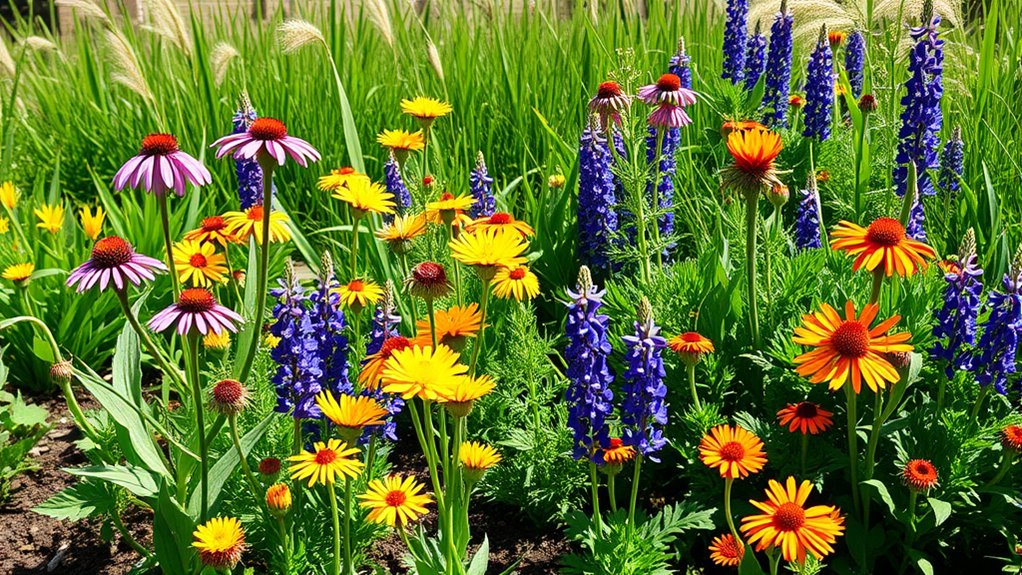
Choosing the right native plants for your region is essential to creating a successful and sustainable landscape. Start by researching native species that thrive in your climate, soil, and sunlight conditions. Local nurseries and native plant societies are valuable resources for identifying suitable plants. Focus on plants that match your site’s moisture levels—whether you need drought-tolerant options or plants that prefer moist soil. Consider the growth habits and mature size to ensure they fit your space without overcrowding. Incorporate a variety of bloom times to support pollinators year-round. Avoid non-native or invasive species that can harm local ecosystems. Embracing native plant diversity can enhance your garden’s resilience and ecological value. Additionally, selecting plants with appropriate growth forms ensures your landscape remains manageable and healthy over time. Incorporating adaptive planting strategies tailored to your area can further improve long-term success and sustainability. Understanding the importance of ecosystem compatibility helps foster a balanced and thriving garden environment.
Budgeting and Incentives for Lawn Conversion
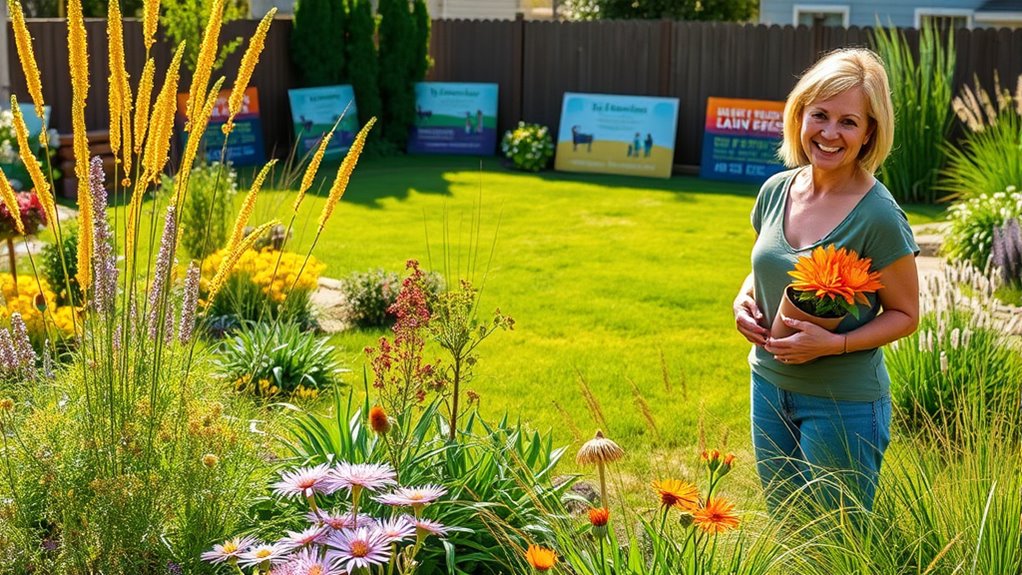
Converting your lawn to native plants can be a cost-effective way to enhance your landscape, especially when you take advantage of available incentives. Many programs offer rebates or financial assistance to offset initial costs, making the switch more accessible. For example, rebates can cover up to $2,000, reducing out-of-pocket expenses. Additionally, native plants help lower ongoing costs by eliminating lawn maintenance like mowing, fertilizing, and watering. Budgeting wisely involves considering these factors:
- Rebate programs and grants available in your area
- Lower maintenance costs over time
- Reduced water bills due to drought-tolerant species
- Savings from avoiding chemical treatments
- Potential long-term financial benefits from ecosystem services
Implementing native landscaping can also contribute to creating a sustainable and resilient outdoor space that benefits both your wallet and the environment. Understanding cost-saving benefits associated with native plant gardens can further motivate your transition, especially as native plants often require less high-tech equipment like specialized watering systems or fertilizers.
Preparing Your Lawn for Native Plant Transition
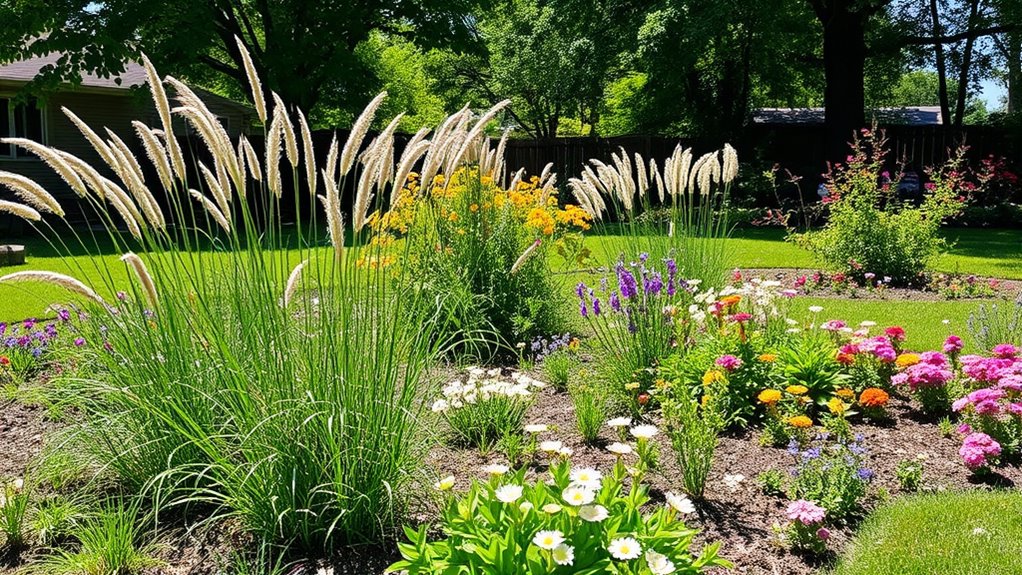
Before transforming your lawn into a native plant habitat, it’s essential to assess its current condition and prepare the space. Start by removing any invasive species, weeds, or old turf that may compete with native plants. Testing soil health helps determine if amendments are needed to improve fertility or drainage. Consider adjusting the soil pH and adding organic matter to create a welcoming environment. Proper preparation will ensure your native plants establish successfully and thrive long-term.
| Step | Action |
|---|---|
| Remove existing turf | Use a sod cutter or manual removal |
| Test soil | Check pH and nutrient levels |
| Amend soil | Add compost or organic matter |
| Clear invasive species | Remove non-native plants |
| Plan layout | Design for sunlight, water flow, and space |
Planting Techniques and Maintenance Tips
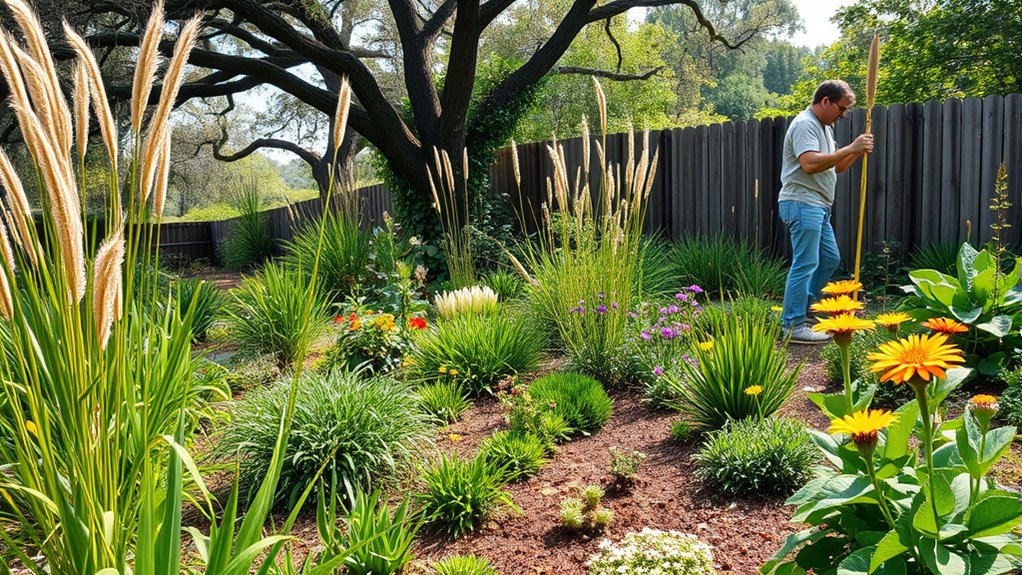
To guarantee your native plant garden establishes successfully, it’s essential to use proper planting techniques and follow consistent maintenance practices. First, prepare the soil by removing weeds and loosening it to ensure good root contact. When planting, space plants according to their mature size to prevent overcrowding. Water thoroughly after planting to settle the soil and eliminate air pockets. Mulch around plants to retain moisture and suppress weeds. Regularly monitor for pests or diseases, removing any signs promptly.
- Use native soil amendments if needed to improve drainage and fertility
- Plant during the appropriate season for your region, typically spring or fall
- Water consistently until plants are established, then reduce frequency
- Apply a layer of mulch to conserve moisture and regulate soil temperature
- Prune lightly, only removing dead or damaged growth to promote healthy development
Creating Habitat for Wildlife and Pollinators
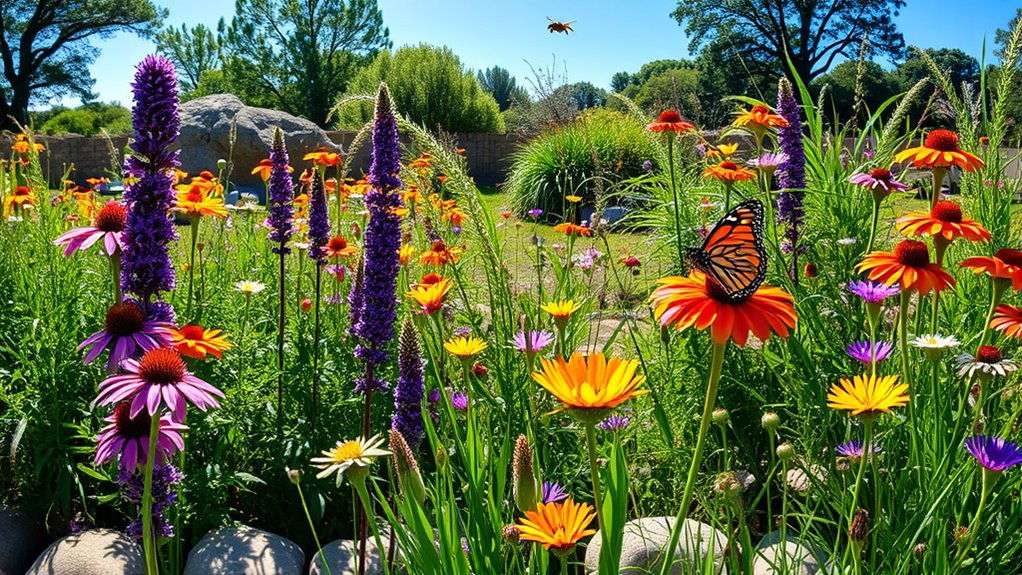
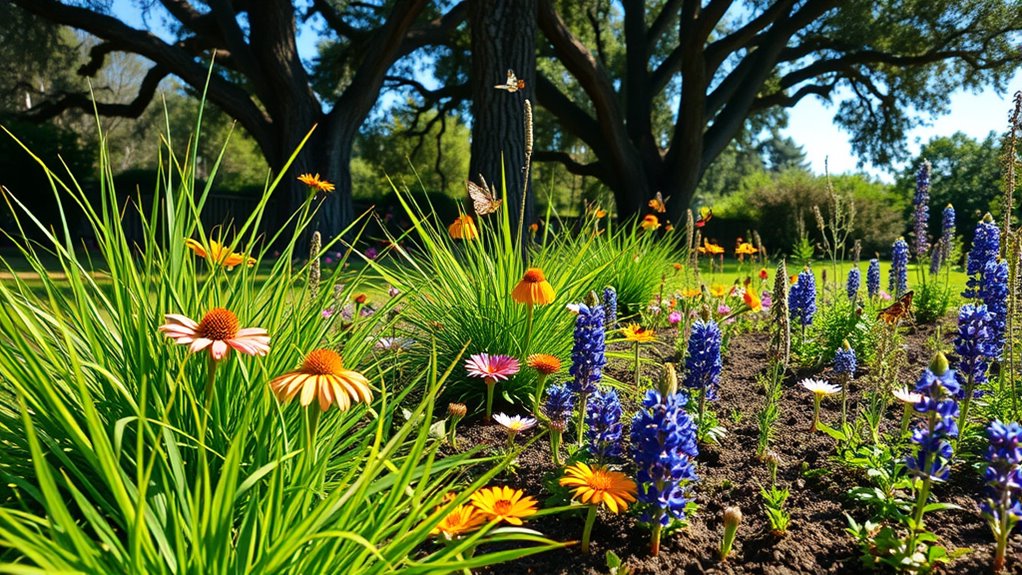
Creating habitat for wildlife and pollinators enhances the value of your native garden by providing food, shelter, and breeding spaces. You can achieve this by planting a diverse mix of native flowers, shrubs, and trees that attract bees, butterflies, and birds. Incorporate layered plantings to offer different niches and year-round resources. Leave some areas undisturbed for ground-nesting insects and cover plants for shelter. Install birdhouses and nesting boxes to support local bird populations. Use native plants that bloom across various seasons to ensure continuous nectar sources. Avoid pesticides, which harm pollinators and wildlife. By creating a welcoming environment, you foster a thriving ecosystem right in your yard, supporting biodiversity and helping sustain declining species. Necessary cookies enable basic site features (e.g., secure log-in), ensuring your access to helpful information about creating habitats. Additionally, understanding the importance of vibrational energy can help you attract the right wildlife and plants aligned with your intentions. Incorporating native plants that are well-suited to your local environment can further enhance the health and resilience of your habitat. Recognizing the role of native plant diversity can also improve the stability of your garden’s ecosystem.
Water Conservation Strategies With Native Plants
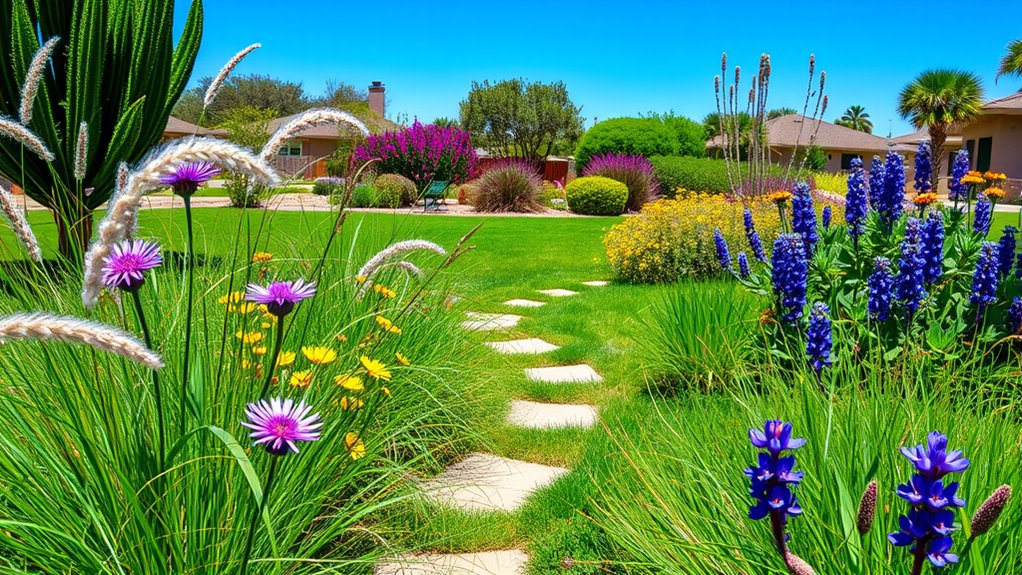
Switching to native plants can drastically cut your outdoor water use by up to 60%, saving you money and conserving resources. Their deep roots and mulch help retain water and reduce runoff, making your landscape more efficient. By choosing native species, you’ll lower your water bills while supporting a healthier, more resilient environment.
Drastically Reduce Irrigation
Native plants are a game-changer for reducing outdoor water use, often cutting irrigation needs by around 60% compared to traditional turfgrass lawns. By switching to native species, you minimize the need for frequent watering, saving both water and money. Their deep roots access groundwater and store moisture, reducing dependence on supplemental irrigation. Additionally, native plants tolerate drought conditions and thrive with natural rainfall. To maximize water savings, consider:
- Installing mulch to retain soil moisture
- Grouping native plants with similar water needs
- Using drip irrigation systems for targeted watering
- Collecting rainwater for landscape use
- Reducing lawn size and replacing it with drought-tolerant native beds
Implementing eco-friendly practices such as sustainable tourism practices can also support the health of your landscape and local environment. Incorporating seasonal planting strategies ensures your native landscape adapts effectively throughout the year. Proper soil health is essential for native plants to establish strong root systems and thrive with minimal watering, further enhancing drought resilience. Maintaining healthy soil promotes native plant growth and reduces the need for additional watering. Additionally, focusing on space and organization in your landscape design can improve water efficiency by creating distinct zones that optimize plant placement and irrigation. These strategies help you create a resilient, water-efficient landscape that requires minimal irrigation while supporting local ecosystems.
Enhance Water Retention
To effectively conserve water in your landscape, enhancing water retention is essential. Native plants naturally develop deep root systems that absorb and hold more moisture, reducing the need for frequent watering. Mulching around your plants helps retain soil moisture, suppresses weeds, and regulates soil temperature. Incorporating organic matter into the soil improves its ability to hold water, supporting healthier plant growth. Choose native species adapted to your area’s rainfall patterns, which can thrive with less supplemental irrigation. Additionally, designing your landscape with gentle slopes or rain gardens directs runoff into the ground, maximizing water absorption. Proper soil management techniques enhance water retention further by improving soil structure and porosity. Healthy soil structure enables better water infiltration and retention, fostering a more resilient landscape. These strategies work together to slow water loss, promote groundwater recharge, and create a resilient, eco-friendly yard that uses water efficiently.
Lower Water Bills
Reducing your water bills becomes much easier when you incorporate native plants into your landscape. Native plants naturally require less irrigation, often cutting water use by around 60%. This significant reduction helps lower your monthly water expenses and eases pressure on local water resources. By choosing drought-tolerant native species, you eliminate the need for frequent watering, fertilizing, and chemical treatments. Additionally, native plants’ deep roots improve soil moisture retention, reducing runoff and promoting groundwater recharge. Many communities offer rebates, further decreasing upfront costs. Over time, these strategies can save you hundreds or even thousands of dollars, especially as water prices rise. Incorporating native plants also supports beneficial ingredients by fostering a sense of accomplishment and connection to your environment.
- Use drought-tolerant native plants
- Reduce lawn size and replace with natives
- Mulch to retain soil moisture
- Install efficient drip irrigation
- Take advantage of local rebates
Overcoming Challenges and Ensuring Success
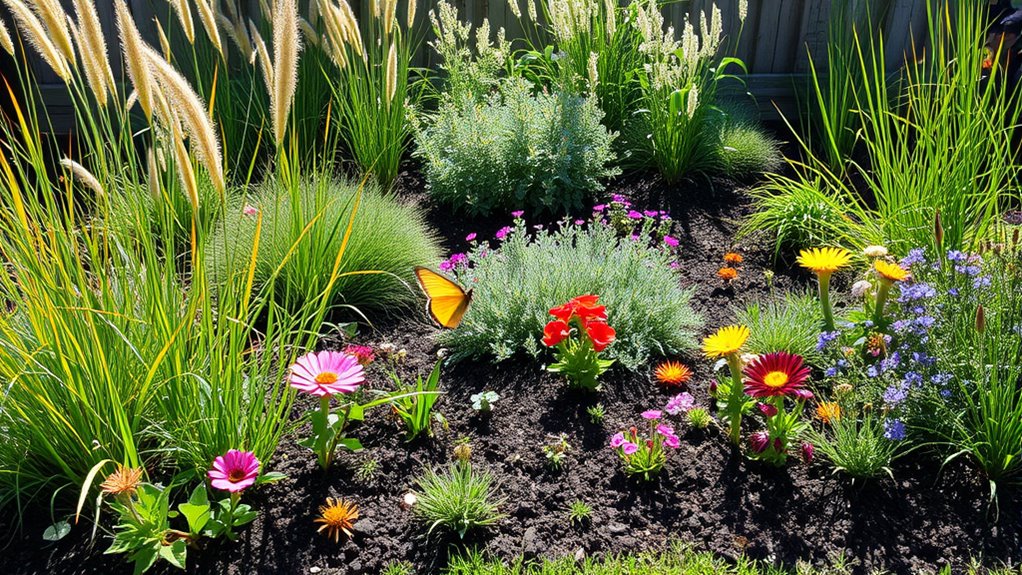
Choosing the right native plants is vital for a successful changeover, so you need to take into account your local climate, soil conditions, and available sunlight. Managing their establishment requires patience and proper watering practices to help them take root without overdoing it. With consistent care and proper planning, you’ll guarantee your native landscape thrives and sustains your ecological goals.
Selecting Appropriate Native Plants
Selecting the right native plants is essential for guaranteeing a thriving, sustainable landscape, but it can be challenging without proper knowledge. To succeed, consider your local climate, soil type, and sunlight exposure. Match plants to these conditions to improve survival and growth. Focus on diverse species to support pollinators and wildlife. Avoid invasive or non-native species that could disrupt the ecosystem. Use local native plant guides or consult with native plant nurseries for tailored recommendations. Here’s what to keep in mind:
- Choose plants suited to your area’s climate and soil
- Prioritize drought-tolerant and low-maintenance species
- Incorporate a mix of trees, shrubs, grasses, and wildflowers
- Avoid invasive species and non-native plants
- Seek expert advice or local resources for guidance
This approach helps guarantee your native garden flourishes and supports local ecosystems.
Managing Establishment and Maintenance
Establishing a native plant landscape can present initial challenges, but with proper planning and ongoing care, you can set your garden up for long-term success. Start by preparing the soil, ensuring proper drainage and removing invasive species. Water new plants regularly until they establish strong roots, typically the first growing season. Limit fertilizer, herbicides, and pesticides, as native plants usually don’t need them. Mulch around plants to conserve moisture and suppress weeds. Keep an eye out for pests and address issues early, but avoid over-treating. Native plants are resilient, so give them time to adapt. Once established, they require minimal maintenance—cut back dead growth, adjust watering during droughts, and enjoy your thriving native landscape with less effort and expense.
Engaging Your Community and Promoting Sustainability
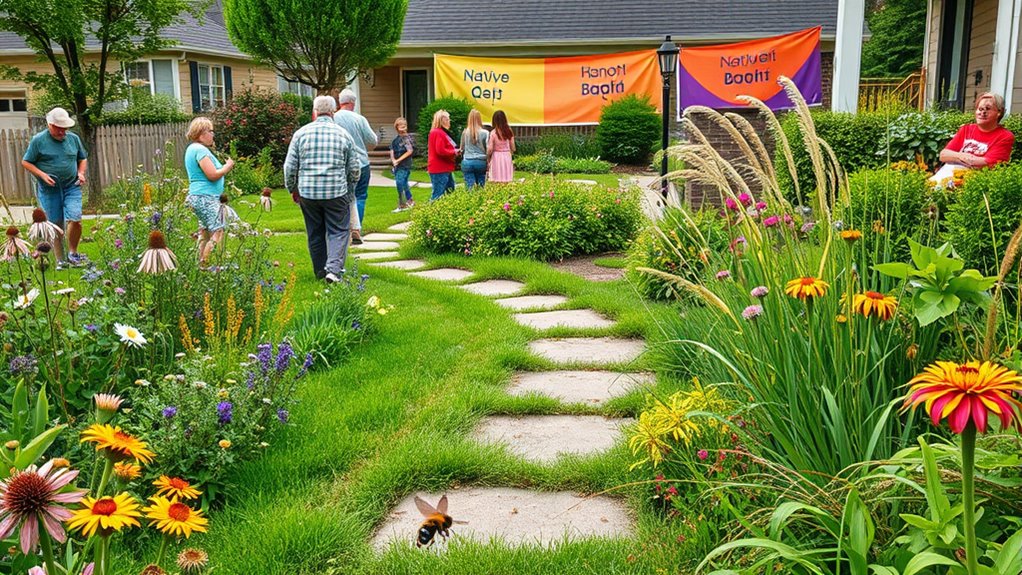
Engaging your community is essential for fostering widespread adoption of native plant landscaping and advancing sustainability efforts. When you involve neighbors, local organizations, and schools, you create a ripple effect that encourages others to join the movement. To promote collective action, consider:
- Hosting native plant workshops and garden tours
- Organizing neighborhood native plant swaps
- Partnering with local environmental groups for campaigns
- Sharing success stories on social media
- Participating in community clean-up and planting events
These activities build awareness, inspire participation, and strengthen community bonds. By demonstrating the ecological and economic benefits of native landscaping, you motivate others to follow suit. Together, you can transform your community into a resilient, sustainable landscape that supports biodiversity and reduces environmental impact.
Frequently Asked Questions
How Long Does It Take for Native Plants to Establish and Fully Grow?
It typically takes 1 to 3 years for native plants to establish and fully grow, depending on the species and local conditions. You’ll notice initial growth within the first year, but it can take a few seasons for plants to mature and form a resilient, thriving habitat. Patience is key; with proper watering, mulching, and minimal disturbance, your native garden will flourish over time.
Can Native Plants Handle Frequent Foot Traffic and Recreational Use?
Surprisingly, many native plants can handle frequent foot traffic better than you’d think. Native grasses and groundcovers, like *Carex*, are tough and resilient, often thriving amid recreational use. With proper selection and some initial care, they can endure regular activity without damage. So, you might just turn your lawn into a durable, eco-friendly space that’s perfect for both wildlife and your outdoor fun, no compromise necessary.
Are There Native Plants That Require No Maintenance Once Established?
Yes, some native plants require no maintenance once established. You can choose drought-tolerant species like *Carex* grasses, sedges, or certain wildflowers that thrive with minimal water and care. These plants naturally resist pests and weeds, so you won’t need to fertilize or use chemicals. Once they’re rooted, they create a resilient, low-effort landscape that supports local ecosystems, saving you time and money while providing beauty and habitat.
How Do I Prevent Invasive Species From Taking Over My Native Garden?
You can prevent invasive species from taking over your native garden by early detection and consistent removal. Regularly inspect your plants, and pull out invasive weeds before they spread. Use native plants that naturally compete with invasives, and avoid overwatering or fertilizing, which can encourage invasives to thrive. Mulching helps suppress weeds, while maintaining healthy, vigorous native plants creates a natural barrier against invasives.
What Are the Best Ways to Encourage Pollinators to Visit My Native Landscape?
You can encourage pollinators by planting a diverse mix of native flowers that bloom at different times, providing continuous nectar sources. Avoid pesticides and use organic methods to keep your garden safe. Include pollinator-friendly plants like milkweed and goldenrod, and create habitats such as bee hotels or undisturbed soil patches. Keep your landscape pesticide-free, offer water sources, and provide shelter to attract and support a thriving pollinator community.
Conclusion
By converting your lawn into a native plant paradise, you’re helping to restore local ecosystems—did you know that native plants support 90% of North American pollinators? Your efforts not only create a beautiful, wildlife-friendly space but also contribute to broader environmental health. With careful planning and community engagement, you can turn your yard into a vibrant, sustainable haven that benefits both nature and your family for years to come.