

Solar cooking lets you harness the sun’s energy to prepare meals safely, cheaply, and sustainably. It reduces greenhouse gases, cuts costs on fuel and electricity, and improves indoor air quality by eliminating harmful fumes. Plus, it preserves nutrients and offers versatile cooking options. With easy setup and portability, solar cookers fit outdoor activities and community sharing. Keep exploring to discover how solar cooking can transform your daily life and promote eco-friendly living.
Key Takeaways
- Solar cooking uses sunlight to prepare meals, eliminating the need for fuels like gas or charcoal.
- Most solar cookers are simple, portable, and easy to set up, making outdoor cooking quick and efficient.
- Proper alignment of reflectors or panels toward the sun enhances cooking performance and temperature.
- Solar cooking preserves nutrients and flavor by providing gentle, even heat without water loss.
- It offers environmental benefits by reducing greenhouse gases and indoor air pollution.
The Environmental Impact of Solar Cookers
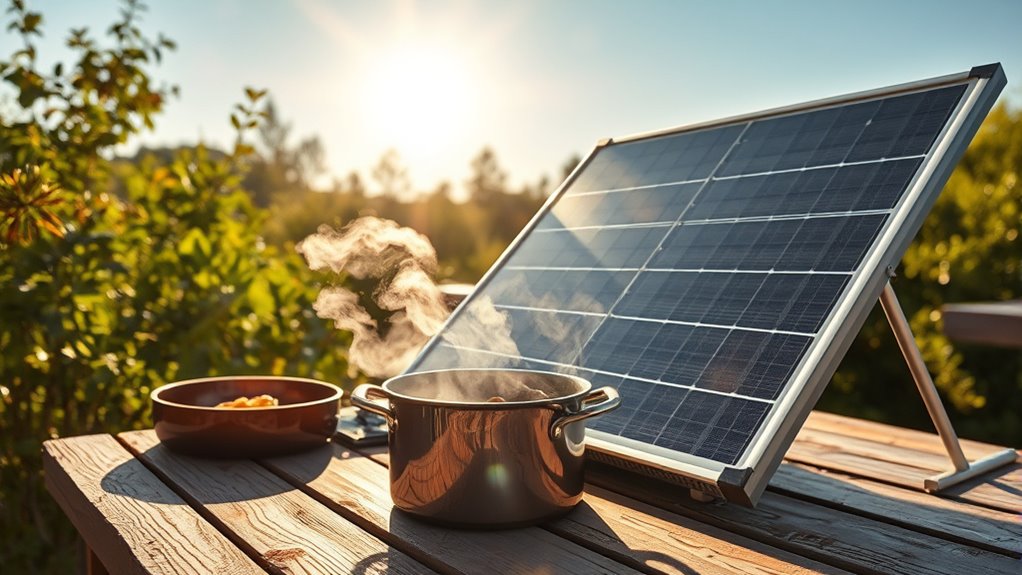
Solar cookers have a significant positive impact on the environment by drastically reducing greenhouse gas emissions. By replacing traditional cooking methods, they prevent over 5.8 million tonnes of CO2 from entering the atmosphere each year, which is like removing 1.25 million cars from the road. They eliminate reliance on fossil fuels such as gas, charcoal, wood, and dung, helping to lower deforestation and preserve natural resources. During operation, solar cookers produce zero emissions, meaning they don’t pollute the air or contribute to climate change. This clean energy solution also reduces indoor air pollution, improving air quality and health. Additionally, solar cookers promote sustainable energy use by harnessing renewable solar power instead of finite resources. Using solar cookers also encourages communities to adopt renewable energy technologies, further reducing their carbon footprint. As the adoption of solar cookers expands, it can also help mitigate the effects of climate change by decreasing overall carbon emissions. Promoting energy independence through solar cooking can empower communities to become more resilient to energy price fluctuations and supply disruptions. Integrating solar cookers into community programs can foster biodiversity preservation by decreasing the need for fuel collection and deforestation. Overall, solar cookers offer an eco-friendly alternative that supports a healthier planet and reduces the environmental footprint of everyday cooking.
Cost Benefits and Economic Advantages

Switching to solar cooking means you won’t have to spend money on fuel like gas or charcoal anymore. Since sunlight is free and plentiful, your utility bills can drop considerably, saving you money each month. Plus, you won’t need to buy electricity or other fuels, which helps ease your household expenses overall. Additionally, investing in solar cooking equipment can be a cost-effective long-term solution, reducing ongoing expenses and promoting sustainable living.
Zero Fuel Expenses
One of the biggest economic advantages of solar cooking is that it eliminates fuel expenses entirely. You won’t need to buy gas, charcoal, wood, or other traditional fuels, saving you money each month. Since solar energy is free and inexhaustible, your cooking costs drop markedly. This means you can allocate those savings to other essentials or investments. Plus, you won’t worry about fluctuating fuel prices or shortages. Solar cookers require no ongoing fuel purchases, making them a highly cost-effective choice over time. Efficient design also ensures that the maximum amount of solar energy is captured and utilized, further enhancing savings. This expense-free setup also reduces your household’s overall financial burden, especially for families in low-income areas. By harnessing the sun, you enjoy reliable, budget-friendly cooking without the recurring costs associated with conventional fuel sources. Proper sizing and load planning ensure efficiency and performance to optimize your solar cooker’s functionality and savings. Additionally, the use of glycolic acid products in skincare routines can improve skin texture and radiance, complementing the overall well-being benefits of sustainable living.
Lower Utility Bills
By eliminating the need for traditional fuels, solar cookers considerably cut down your household utility bills. You won’t pay for electricity, gas, or charcoal, saving money each month. Imagine your savings growing as the sun powers your meals, freeing funds for other essentials. Here’s a snapshot of how solar cooking impacts your costs:
| Expense Type | Traditional Cooking | Solar Cooking | Savings |
|---|---|---|---|
| Fuel (gas, charcoal) | $50/month | $0 | $50/month |
| Electricity | $30/month | $0 | $30/month |
| Kitchen cooling | $20/month (air conditioning) | Reduced need | $20/month |
| Total | $100/month | $0 | $100/month |
Switching to solar cooking means real savings, lower utility bills, and more financial freedom. Additionally, adopting solar cooking aligns with vibrational energy principles, fostering a positive mindset about sustainable living and financial abundance. Understanding how heat pumps operate can provide insights into efficient energy use in your home. Moreover, utilizing solar energy for cooking reduces reliance on fossil fuels, contributing to a cleaner environment.
Health and Safety Improvements With Solar Cooking

Solar cooking substantially enhances health and safety by eliminating many hazards associated with traditional fire-based methods. You no longer need to worry about open flames, harmful gas fumes, or accidental burns. Solar cookers reduce indoor air pollution, lowering respiratory issues caused by smoke. They also safely pasteurize contaminated water, preventing waterborne illnesses. With gradual heating, there’s less risk of food burning or overheating. Additionally, you avoid the dangers of handling hot charcoal or firewood. This safer cooking process minimizes injuries and health risks while providing a cleaner environment. Contrast ratio plays a key role in ensuring the quality of solar-cooked meals by improving visibility and food appearance. Incorporating sound design principles, such as clear audio cues and environmental sounds, can enhance the user’s understanding of safe practices through multimedia educational materials. Moreover, integrating safety protocols can further reduce risks and promote best practices for solar cooking. Implementing proper maintenance of solar cookers ensures their optimal performance and safety over time. Furthermore, advances in automation technology can help monitor and control cooking conditions, increasing safety and efficiency.
Enhancing Nutritional Quality and Food Preparation
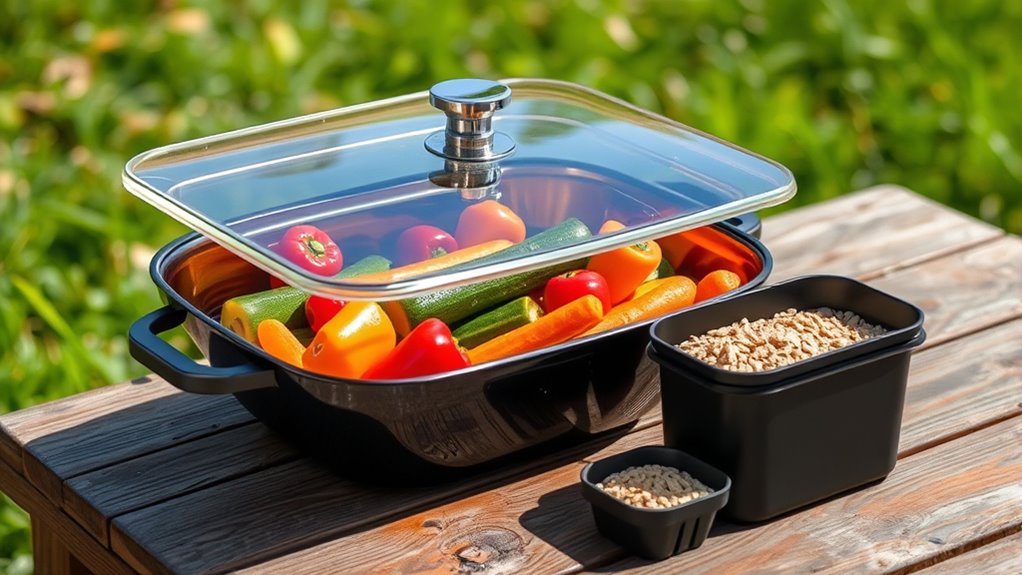
Using solar cookers not only improves safety but also enhances the nutritional quality of your meals. With gentle, even heat, you retain more vitamins, minerals, and proteins compared to traditional cooking methods. Because less water is needed, nutrients like vitamins B and C stay preserved, making your food more nutritious. The slow cooking process creates tender, flavorful dishes without overcooking or burning, which helps maintain food integrity. Additionally, solar cooking allows for extended cooking times, perfect for dishes like stews and braises that develop richer flavors and better texture. Versatility is another advantage; you can bake bread, steam vegetables, or roast meats, all while preserving their natural nutrients. This method encourages healthier eating habits while offering delicious, nutrient-rich meals. Understanding water chemistry can further help optimize your solar cooking setup for better results. Incorporating nutritional preservation techniques and understanding heat transfer principles can also maximize the health benefits of your solar-cooked meals.
Practical Use and Operational Flexibility

You’ll find that most solar cookers are simple to set up and operate, making them accessible even in remote locations. They adapt easily to various outdoor settings like camping, picnics, or boat trips, providing flexibility for different activities. With their portable and lightweight design, you can quickly move and adjust them to maximize sun exposure and cooking efficiency. Additionally, understanding emotional support can help users feel more confident and comfortable while using solar cookers in unfamiliar environments. Recognizing solar energy principles can further enhance users’ ability to optimize cooking performance and troubleshoot common issues efficiently.
Easy Setup and Use
Setting up a solar cooker is straightforward and requires minimal tools or technical knowledge. You simply position the reflector or panel toward the sun, adjust the angle for ideal sunlight, and place your cookware inside. Once aligned, you can start cooking without complicated steps. Many models are designed for quick setup and easy relocation, making them perfect for outdoor use. Here’s how to enjoy their simplicity:
- No electrical connections or fuel needed
- Adjustable angles for different sun positions
- Lightweight, foldable designs for portability
- Instant readiness once properly aligned
With minimal effort, you can begin cooking in minutes. The intuitive setup process allows you to focus on enjoying your meal, whether at home, camping, or picnicking, without hassle or delays.
Suitable for Various Locations
Thanks to their simple setup and portability, solar cookers are highly adaptable to a wide range of outdoor environments. You can use them in your backyard, on camping trips, at the beach, or during picnics, making them ideal for various locations. Their lightweight, collapsible design allows easy transportation, so you’re not limited by space or terrain. Whether it’s a sunny mountain hike or a remote fishing boat, solar cookers work efficiently in diverse settings. They require minimal infrastructure—just sunlight and a stable surface—so you’re free to cook almost anywhere the sun shines. This flexibility guarantees you can enjoy hot meals outdoors, even in areas without electricity or fuel sources, making solar cooking a practical choice for many outdoor activities.
Social Benefits and Community Empowerment

How does solar cooking foster social benefits and empower communities? It brings people together around shared goals, promotes health, and reduces dependency on external fuel sources. Solar cookers can improve gender equality by easing the burden of fuel collection, freeing up time for education or income activities. They also enhance safety by eliminating open flames, reducing fire-related accidents. Additionally, solar cooking encourages community innovation and knowledge sharing as people adapt and promote sustainable practices.
Solar cooking strengthens communities, enhances safety, promotes gender equality, and encourages sustainable innovation.
These benefits include:
- Reducing time spent gathering fuel, allowing more time for education and income
- Improving health by decreasing indoor air pollution and fire hazards
- Strengthening community ties through shared use and knowledge exchange
- Promoting energy independence, reducing reliance on external fuel supplies
Using solar cookers empowers communities to become more resilient and self-sufficient.
Frequently Asked Questions
How Long Does a Typical Solar Cooker Last Before Needing Replacement?
A typical solar cooker lasts about 5 to 15 years before needing replacement, depending on usage and maintenance. You can extend its life by storing it properly, avoiding exposure to harsh weather, and cleaning the reflectors regularly. Most models are durable, but over time, parts like glass panels or reflective surfaces may wear out. With proper care, you’ll enjoy eco-friendly cooking benefits for many years.
Can Solar Cookers Be Used in All Weather Conditions Year-Round?
You can use solar cookers year-round, even in cloudy or rainy weather, thanks to their ability to concentrate diffuse sunlight. While they work best in direct, bright sunlight, many models are designed to retain heat during less ideal conditions. So, instead of waiting for perfect weather, you can still enjoy cooking with the sun, saving energy and reducing emissions, no matter the season.
Are There Any Safety Hazards Associated With Improper Use of Solar Cookers?
Improper use of solar cookers can pose safety hazards like burns from hot surfaces or accidental fires if the cooker isn’t set up correctly. You might also risk skin or eye injuries from intense sunlight reflection or misjudging the cooker’s temperature. To stay safe, always follow the manufacturer’s instructions, supervise cooking activities, and keep the cooker away from children and flammable materials. Proper handling minimizes these risks effectively.
What Types of Foods Are Best Suited for Solar Cooking?
You’ll find that foods like stews, soups, rice, grains, and baked goods work best for solar cooking. These dishes benefit from slow, even heat, allowing flavors to develop fully. Vegetables, beans, and pasta also cook well, preserving nutrients and moisture. Since solar cookers take longer, choose hearty ingredients that can simmer gently. This method is perfect for preparing nutritious, flavorful meals with minimal effort and environmental impact.
How Difficult Is It to Learn and Operate a Solar Cooker for Beginners?
Learning and operating a solar cooker is pretty straightforward for beginners. You just need to set it up in direct sunlight, adjust the panels or reflectors if needed, and monitor the cooking process occasionally. Most models are user-friendly, with simple instructions. Once you get the hang of positioning it correctly, you’ll find solar cooking easy, eco-friendly, and a great way to prepare meals without much effort or technical skills.
Conclusion
By choosing solar cooking, you can reduce carbon emissions by up to 90%, making a significant environmental impact. Not only does it save you money—cutting energy costs by up to 70%—but it also improves health and safety while empowering communities. With over 2 billion people relying on traditional cooking methods, switching to solar can transform lives and protect the planet. Embrace solar cooking today and be part of the sustainable future.