

By adopting sustainable living, you can substantially cut your energy and water bills. Installing smart thermostats, LED lighting, and efficient water fixtures reduces waste and costs. Embracing eco-friendly transportation options like biking or electric vehicles saves money long-term, while recycling and reusing materials cut expenses and environmental impact. Investing in renewable energy sources like solar panels further lowers bills and promotes sustainability. Keep exploring how these strategies can help you save money while protecting the planet.
Key Takeaways
- Installing smart thermostats and LED lighting reduces energy consumption and lowers utility bills.
- Fixing leaks and using low-flow fixtures conserve water and decrease costs.
- Adopting renewable energy like solar panels cuts electricity expenses and offers potential income through net metering.
- Reusing materials, repairing items, and recycling minimize waste and reduce spending on replacements.
- Choosing eco-friendly transportation options like biking, public transit, or electric vehicles decreases fuel costs and emissions.
Cutting Energy Costs With Smart Home Upgrades

Are you looking for an effective way to lower your energy bills? Upgrading your home with smart technology can make a big difference. Smart thermostats allow you to control your home’s temperature remotely, ensuring units run only when needed. This prevents energy waste and can cut heating and cooling costs by up to 15%. LED lighting, paired with smart switches, offers energy-efficient illumination that lasts longer and consumes less power. Additionally, smart power strips automatically turn off devices that aren’t in use, eliminating phantom energy drain. These upgrades are easy to install and integrate seamlessly into your daily routine. By making your home smarter, you reduce energy consumption and save money over time, all while contributing to a more sustainable lifestyle. Incorporating smart utilities like water management solutions can further optimize resource use and enhance your home’s sustainability. Being mindful of energy conservation practices, such as proper insulation and window sealing, can also boost your savings.
Water Efficiency Tips That Save Money

Smart home upgrades can markedly reduce your energy bills, and water efficiency plays an equally important role in cutting costs. By adopting simple habits and installing water-saving fixtures, you can lower your utility bills while helping the environment. Start by fixing leaks promptly, as dripping faucets waste gallons daily. Consider installing low-flow showerheads and aerators on faucets to reduce water use without sacrificing comfort. Adjust your water heater to 120°F to cut energy costs. Take shorter showers and run dishwashers and laundry machines only when full. Additionally, collect rainwater for outdoor use and landscape with drought-tolerant plants. Incorporating water filtration techniques can also help you develop more conscious water use habits, making your efforts more effective. Be aware that leak detection devices can help identify hidden leaks early, preventing water waste and costly repairs. Reuse gray water for outdoor irrigation and insulate pipes to prevent leaks and improve efficiency.
Eco-Friendly Transportation for Your Wallet
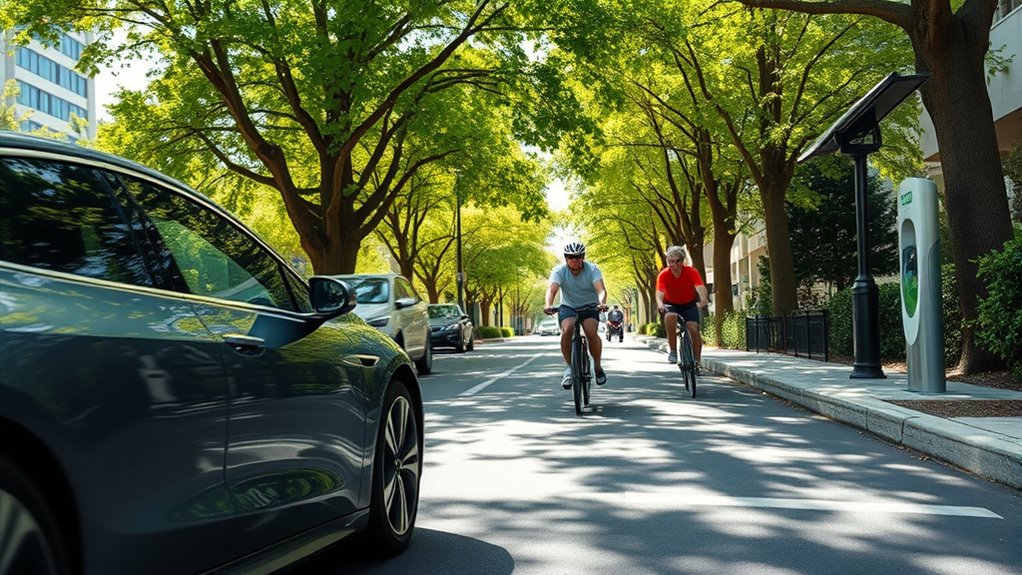
Switching to eco-friendly transportation options can substantially reduce your household expenses and carbon footprint. Public transit, biking, and walking cost less than owning and maintaining a car. You’ll save on fuel, insurance, repairs, and parking fees, which can add up to thousands annually. Using transit apps to find affordable routes saves both time and money, making commuting more economical. Carpooling with coworkers spreads costs and reduces emissions. Active transportation not only cuts costs but also boosts your health, saving on medical bills. Even switching to a fuel-efficient or electric vehicle lowers fuel expenses and maintenance costs over time. Incorporating sustainable transportation options is also an effective way to promote a cleaner environment and support community health initiatives. Exploring alternative commuting methods can further enhance your savings and reduce urban congestion. Adopting eco-friendly travel choices supports your financial goals while helping to protect the planet. Making these choices helps you save money while contributing to a healthier environment—an win-win for your wallet and the planet.
Reducing Waste and Reusing to Save Big

Reducing waste and reusing items can lead to substantial savings while benefiting the environment. You can cut costs by making smarter choices about consumption and waste management. Reusing materials extends their life and reduces the need for new purchases, saving money and resources. Small changes, like repairing instead of replacing, quickly add up over time. Incorporating these habits not only lowers your bills but also lessens landfill waste. Additionally, understanding proper raw food preparation techniques can help minimize waste and ensure your food stays fresh longer. For example, using food storage methods such as airtight containers can further reduce spoilage and unnecessary disposal, and exploring innovative solutions like electric bikes can provide cost-effective transportation options that reduce reliance on fuel. Being mindful of recycling practices can also maximize waste diversion and enhance your eco-friendly efforts.
Harnessing Renewable Energy to Lower Bills
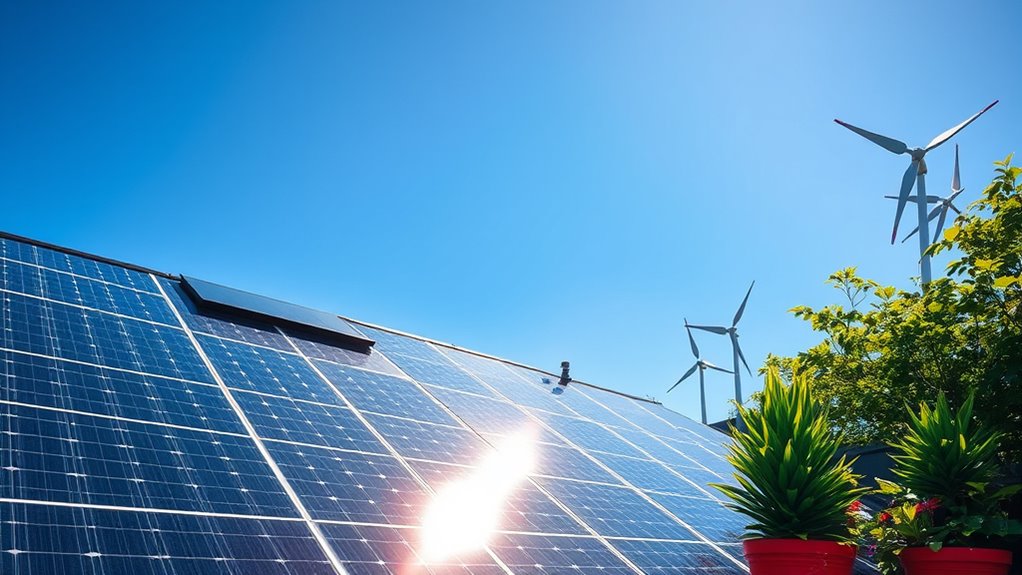
Have you considered how harnessing renewable energy can substantially cut your household bills? Installing solar panels is a smart move that can lower your electricity costs markedly. With costs for solar technology dropping by about 85% in the past decade, it’s more affordable than ever. Solar panels generate free energy from the sun, insulating you from rising utility rates and reducing your reliance on fossil fuels. Many energy providers also offer net metering, allowing you to sell excess power back to the grid for credits. Additionally, choosing wind or small-scale hydro systems, if suitable, can further decrease bills. Investing in renewable energy not only saves money over time but also boosts your home’s value and decreases your carbon footprint. Exploring battery storage options can enhance your energy independence and maximize savings. Incorporating energy efficiency measures in your home can further optimize your energy consumption and reduce costs. Moreover, understanding renewable energy incentives available in your area can help offset initial installation expenses. Staying informed about AI developments in energy management can also help you leverage smart technology to optimize your energy use. It’s a powerful step toward sustainable, cost-effective living. Research-backed insights can help you make informed decisions about integrating renewable sources into your home.
Frequently Asked Questions
How Quickly Can I See Savings After Implementing These Sustainable Practices?
You can start seeing savings almost immediately after implementing sustainable practices. For example, switching to LED bulbs reduces your electric bill right away, and lowering your water heater temperature can cut costs within a month. Small changes like using reusable bags or reducing water use may show savings in just a billing cycle. The more practices you adopt, the faster and more markedly your savings will compound over time.
Are There Tax Incentives or Rebates for Installing Energy-Efficient or Renewable Systems?
Think of tax incentives and rebates as a financial rainstorm that washes over your investment. When you install energy-efficient or renewable systems, you often qualify for federal, state, or local rebates, plus tax credits that slash your costs. These incentives can appear as early as your tax season, making your green upgrades feel like a gift from the sky—shortening your path to savings and making your investment grow faster.
How Do Sustainable Choices Impact My Long-Term Household Budget Stability?
Making sustainable choices helps stabilize your household budget over the long term by reducing ongoing expenses like energy, water, and transportation costs. You’ll save money through lower utility bills, fewer maintenance expenses, and less spending on disposable products. Plus, adopting renewable energy and efficient systems shields you from fluctuating prices. These habits not only save you money now but also guarantee greater financial security and resilience for your household future.
Can Small Lifestyle Changes Make a Noticeable Difference in Utility Bills?
Think back to your grandmother’s era, when saving meant turning off lights and fixing leaky faucets. Small changes today can noticeably cut your utility bills; switching to LED bulbs, lowering water heater temperature, and unplugging devices save energy and water. These simple actions, like a penny saved is a penny earned, add up over time, reducing costs and helping your household stay financially healthy without sacrificing comfort.
What Are the Best Resources to Learn More About Sustainable Living Savings?
You can learn more about sustainable living savings through websites like the EPA’s WaterSense, Energy Star, and Recycle Coach, which offer practical tips and tools. Additionally, explore local government programs, nonprofit organizations, and online sustainability courses to deepen your knowledge. Follow eco-friendly blogs, join community groups, and read books on green living. These resources provide actionable advice to help you maximize savings and reduce your environmental impact effectively.
Conclusion
Think of your home as a garden—you’re the gardener, tending it wisely to reap a bountiful harvest. By embracing green habits, you’re planting seeds that grow into savings, watering them with smart choices, and shielding them from waste. Over time, these small acts bloom into vibrant, thriving benefits—saving money and nurturing the planet. So, keep tending your eco-garden; the more love and care you give, the richer your rewards will be.