Upcycling is a creative way to turn old junk into useful, new items by repurposing materials rather than throwing them away. Start by gathering supplies like jars, pallets, or fabric, and organize them for easy access. Use basic tools such as glue, paint, or scissors, and follow simple techniques like sanding or dyeing. With a little imagination, you can make unique, eco-friendly creations. Keep exploring to discover even more tips for successful upcycling projects.
Key Takeaways
- Understand the definition and benefits of upcycling to convert old items into useful, eco-friendly products.
- Gather and safely prepare supplies like furniture, jars, and tools for your upcycling projects.
- Use simple techniques such as painting, sanding, and repurposing parts to transform items creatively.
- Explore creative ideas like turning jars into vases or pallets into furniture to maximize resourcefulness.
- Follow safety guidelines and maintenance tips to ensure the longevity and sustainability of upcycled items.
Gathering and Sorting Your Upcycling Supplies
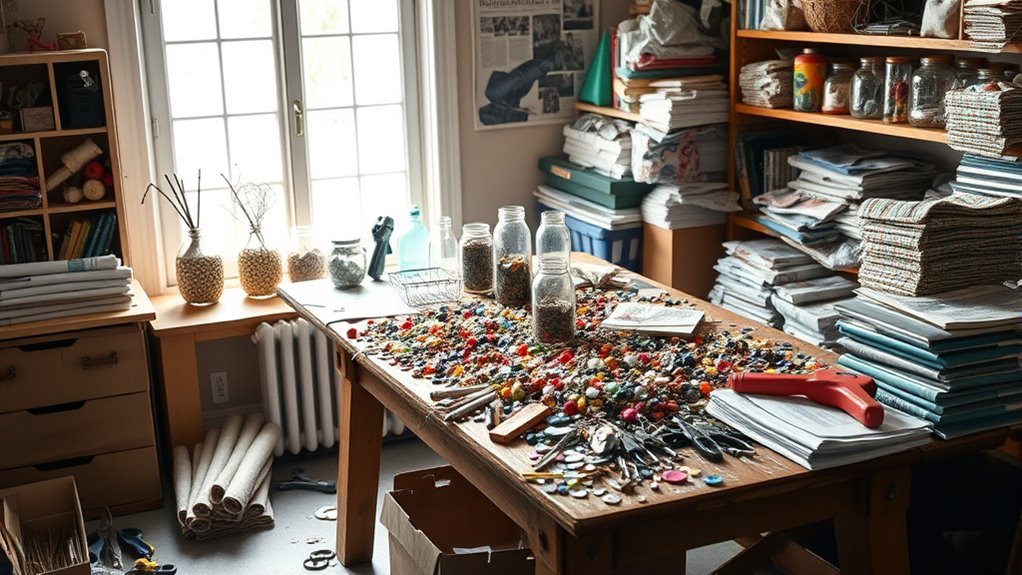
Before you begin upcycling, acquiring and organizing your supplies is essential. Understanding the difference between recycling vs upcycling helps you choose the right materials, focusing on transforming items rather than discarding them. Gather items like old furniture, jars, fabric scraps, or pallets—anything that can be repurposed creatively. Sorting your supplies by type and project will save time later. Keep safety in mind during this process—wear gloves, handle sharp tools carefully, and work in a well-ventilated space. Upcycling safety tips include avoiding hazardous materials and ensuring stability when working on larger projects. Keeping your supplies organized not only streamlines your workflow but also keeps you safe, making your upcycling journey more enjoyable and productive from the start. Proper organization of materials can also help prevent accidents and make your project more efficient. Additionally, understanding market growth projections in related industries can inspire new ideas and motivate your upcycling projects.
Basic Tools and Materials for Upcycling Projects
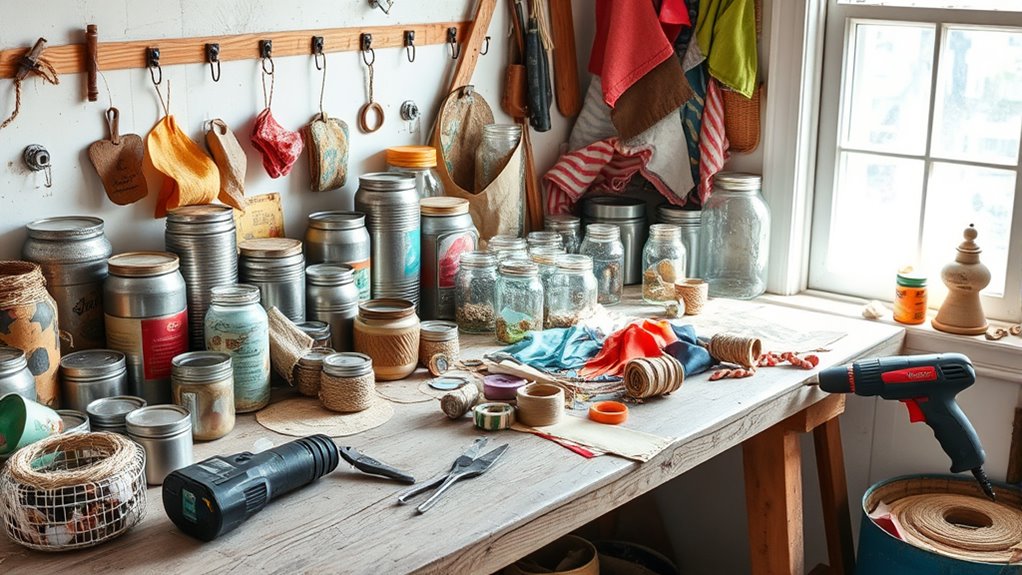
Getting started with upcycling requires having the right tools and materials on hand, as they’re essential for transforming your items safely and efficiently. Basic tools include scissors, paintbrushes, screwdrivers, sandpaper, and a hot glue gun. Materials can range from old fabric and paint to leftover hardware or wood scraps. It’s important to debunk recycling myths—like the idea that old items are useless—so you see potential rather than waste. Upcycling safety is vital; always wear gloves, goggles, and work in well-ventilated areas to avoid injuries or fumes. Proper preparation makes transforming junk into useful items enjoyable and rewarding. Additionally, understanding regional resources can provide access to specialized tools or guidance, enhancing your upcycling experience regional resources. Recognizing the importance of industry trends can also help you choose projects that are both current and appealing. Utilizing best tools for upcycling can streamline your process and improve finished results. Being aware of website privacy and cookies policies can help you navigate online resources securely while researching upcycling ideas. Moreover, incorporating personality insights can inspire more personalized and meaningful creations.
Simple Techniques for Transforming Old Items
Transforming old items into something new doesn’t have to be complicated; simple techniques can make a big difference. For example, recycling electronics is a straightforward way to give old gadgets a second life. You can strip down outdated devices and repurpose parts into jewelry, art, or storage solutions. When it comes to fashion upcycling, try dyeing, adding embellishments, or sewing new accessories from worn-out clothes. These easy methods require minimal tools but produce impressive results. Sanding, painting, and gluing are also effective techniques for transforming furniture or household items. Additionally, understanding the importance of color accuracy can help you select appropriate paints and finishes that enhance your upcycled items’ appearance. Incorporating emotional support can motivate you to persist through challenges and celebrate your creative progress. Remember, the key is to start small—experiment with one or two techniques, and you’ll quickly see how simple adjustments can create something fresh and functional from what you once considered junk. Using visualization techniques can help you better plan and imagine the potential of your upcycled projects. Moreover, staying informed about content creation trends can inspire new ideas and techniques for showcasing your upcycled creations on platforms like TikTok.
Creative Ideas for Repurposing Common Junk
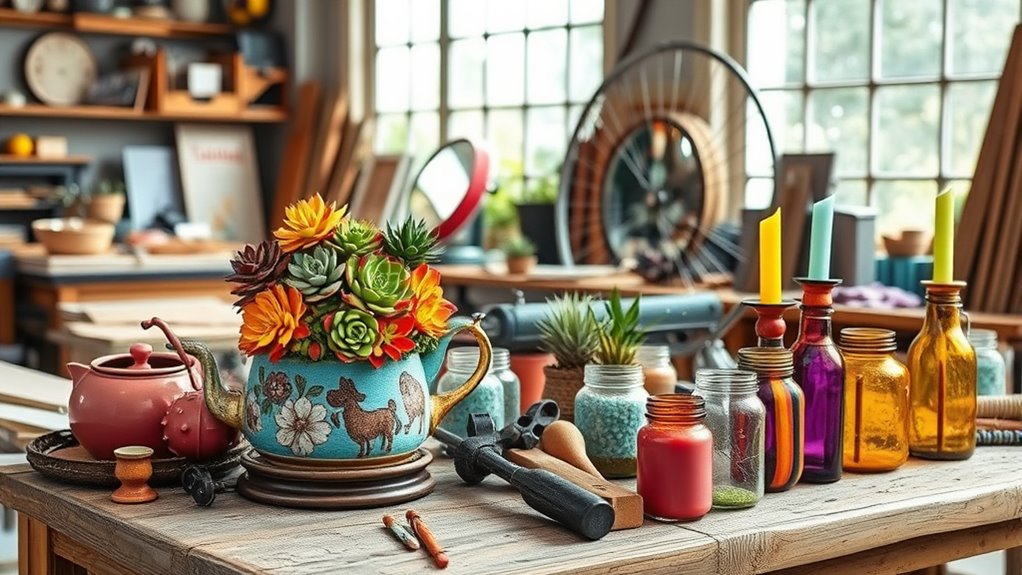
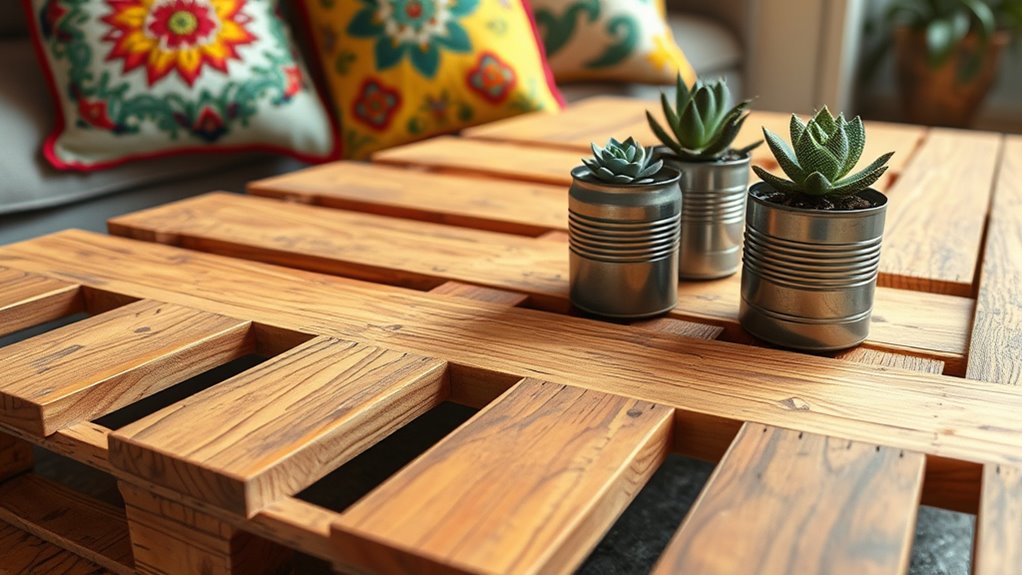
Repurposing common junk offers endless opportunities to turn everyday items into useful or decorative pieces. For example, old jars can become charming decorative accents by painting or adding embellishments, transforming them into vases or candle holders. Tin cans make excellent functional storage containers for pens, tools, or craft supplies; just add a fresh coat of paint or decorative paper to give them a new look. Wooden pallets can be repurposed into stylish shelves or coffee tables, adding both practicality and visual appeal to your space. Vintage suitcases serve as unique storage solutions and eye-catching decor pieces. Old ladders can be transformed into multi-tiered plant stands or towel racks. These ideas breathe new life into junk, combining creativity with functionality for a personalized touch in your home. Incorporating biodiversity principles by using eco-friendly materials and supporting local artisans can further enhance the sustainability of your upcycling projects. Additionally, considering recycling techniques can help maximize the potential of your repurposing efforts and reduce waste. For example, exploring upcycling workshops can provide valuable skills and inspiration for your projects. The rise of celebrity influencers endorsing sustainable living has brought more awareness to wealth transformation strategies, inspiring individuals to adopt eco-conscious and cost-effective methods. Exploring celebrity transformations can also inspire innovative ideas for upcycling, as many stars embrace sustainable and creative lifestyles in their homes and projects.
Tips for Caring for Your Upcycled Creations
To guarantee your upcycled creations stay beautiful and functional over time, proper care and maintenance are essential. Use sustainable practices, like gentle cleaning methods and eco-friendly products, to preserve your items without harming the environment. Regularly inspect your creations for signs of wear or damage and address issues promptly to extend their lifespan. Practice upcycling safety by wearing gloves when handling paints, adhesives, or sharp tools, and work in well-ventilated areas. Avoid exposing your upcycled items to harsh weather unless they’re designed for outdoor use, which helps prevent deterioration. Proper storage also helps maintain their condition. Additionally, meditative mindfulness can help you stay attentive to the needs of your creations and enjoy a more meaningful upcycling experience. Being aware of durable materials can guide you in selecting the best supplies for long-lasting projects. Recognizing material longevity is crucial to choosing items that will withstand time and use. Incorporating proper display techniques can also enhance the longevity of your upcycled items by reducing unnecessary stress on their surfaces. By following these tips, you ensure your upcycled items remain beautiful, functional, and eco-friendly for years to come.
Frequently Asked Questions
How Can I Start Upcycling With No Prior Crafting Experience?
You can start upcycling with no prior crafting experience by seeking out upcycling inspiration online or in magazines, which helps spark ideas. Begin with simple projects like decorating jars or turning old t-shirts into tote bags. Use beginner crafting tips such as gathering basic supplies and watching tutorial videos. Don’t be afraid to experiment—practice makes perfect, and each small success boosts your confidence for more complex upcycling projects.
What Safety Precautions Should I Follow During Upcycling Projects?
You should always wear safety gear like gloves, goggles, and a dust mask to protect yourself during upcycling projects. Be aware of hazards such as sharp edges, toxic paints, or fumes, and handle these carefully. Keep your workspace well-ventilated, and work in a clean, organized area. Always follow safety instructions for tools and materials, and don’t rush—safety comes first to prevent accidents and injuries.
Are There Eco-Friendly Adhesives or Paints for Upcycling?
Yes, you can find eco-friendly paints and natural adhesives perfect for your upcycling projects. Look for paints labeled as non-toxic or low-VOC, which reduce harmful fumes and environmental impact. Natural adhesives, like plant-based glues or beeswax, are also great options that are safe and sustainable. By choosing these eco-friendly options, you protect the environment while creating beautiful, safe upcycled items that last.
How Do I Determine the Value of My Upcycled Items?
To determine the value of your upcycled items, start with a thorough value assessment by researching similar products online or at craft fairs. Consider the cost of materials, your time, and creativity. Use pricing strategies such as comparing market prices or adding a markup for uniqueness. Don’t forget to factor in your skill level and the item’s demand, which can help you set a fair, competitive price.
Can Upcycling Help Reduce Household Waste Effectively?
Ever wonder if upcycling can truly make a difference? Yes, it can markedly reduce household waste by repurposing items instead of discarding them. This practice enhances recycling benefits and minimizes landfill contributions. When you upcycle, you actively participate in waste reduction, helping conserve resources and lower pollution. So, next time you consider throwing something away, ask yourself if upcycling might be a better, more eco-friendly choice.
Conclusion
Now that you know how to upcycle, your old junk won’t just sit around—it’ll become a masterpiece that could save the world from landfill overload! With your newfound skills, you’re not just transforming clutter; you’re releasing a creative revolution that could change everything. So grab that tired old item, put your magic touch on it, and watch as your simple trash turns into treasure—you’re now a true upcycling hero!