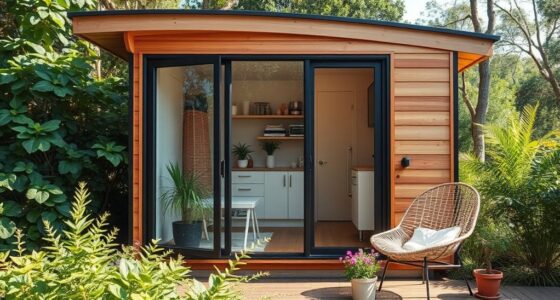
To reach zero energy, start by selecting a site with ideal solar orientation, shading, and wind patterns. Design a highly insulated, airtight building with efficient windows, layout, and advanced HVAC systems. Install ENERGY STAR appliances and plan for future solar integration by adding conduits, space for panels, and energy storage. Test your home’s performance with third-party verifications and obtain certification. Continuing will guide you through each step to make your home sustainable and energy self-sufficient.
Key Takeaways
- Carefully select and design the site for optimal solar orientation, shading, and wind patterns to maximize energy efficiency.
- Incorporate high-performance insulation, airtight envelopes, and advanced windows to reduce thermal losses.
- Install efficient, ENERGY STAR-qualified appliances, HVAC systems, and consider future renewable energy integration.
- Conduct comprehensive testing, including blower door and duct blaster tests, to verify airtightness and system performance.
- Obtain third-party certification by verifying all performance standards and preparing documentation for zero-energy status.
Planning and Designing for High Performance
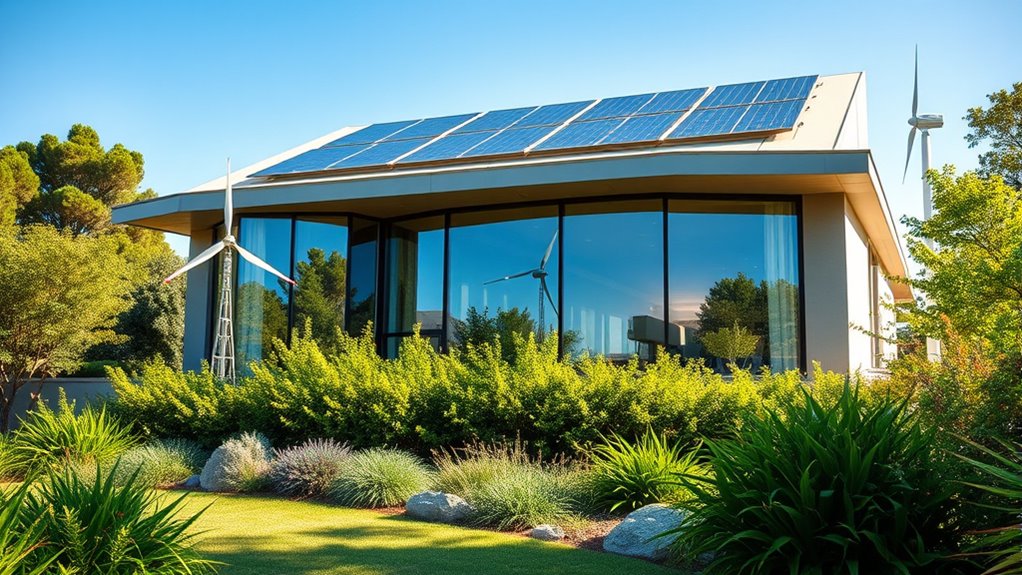
Effective planning and design are essential to achieving a high-performance Zero Energy Ready Home. You need to start by selecting an ideal site, considering solar orientation, shading, and wind patterns to maximize energy efficiency. Focus on creating a well-insulated, airtight building envelope that meets or exceeds current codes. Incorporate advanced window and door systems with high energy performance. Design your home layout to reduce thermal bridging and facilitate efficient HVAC and electrical systems. Plan for future solar PV integration by running conduits and allocating space in the electrical panel. Collaborate early with architects, energy consultants, and third-party verifiers to ensure your design aligns with ZERH standards. Conducting a comprehensive site assessment helps optimize your home’s energy potential from the outset. Additionally, leveraging advanced modeling tools during the design phase can help identify potential energy losses and optimize system efficiencies before construction begins. Incorporating passive solar design strategies can further enhance energy performance by reducing heating and cooling loads. Moreover, considering local climate conditions can inform material choices and system sizing to improve overall efficiency. Staying informed about emerging building performance technologies can also provide valuable insights into innovative solutions for achieving zero energy. Thoughtful planning sets the foundation for a durable, comfortable, and energy-efficient home that can reach zero energy.
Selecting and Installing Efficient Systems and Equipment
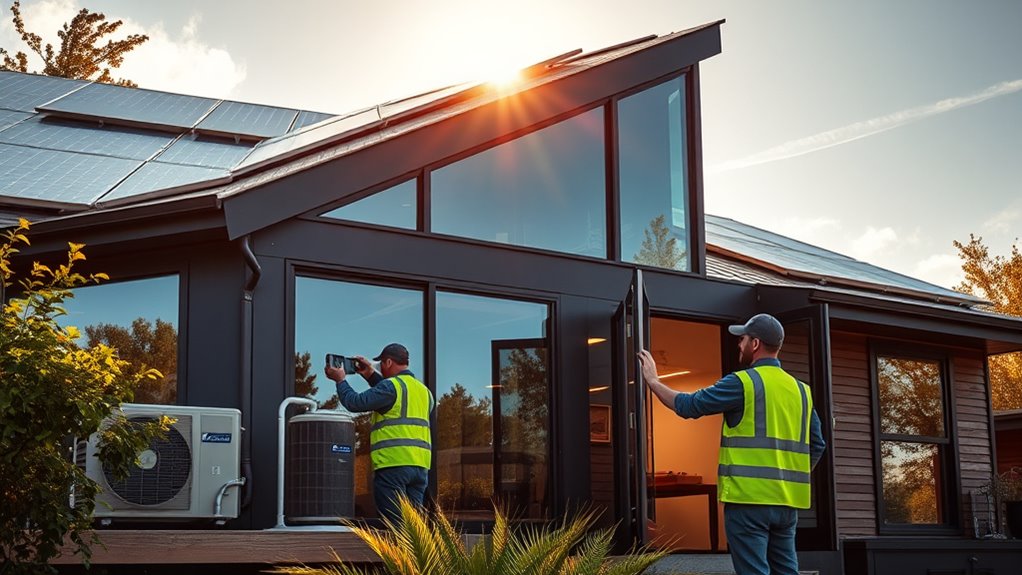
How do you guarantee your home’s systems operate at peak efficiency? Start by carefully selecting ENERGY STAR-qualified appliances, lighting, and ventilation equipment. Choose electric heat pumps for heating, cooling, and water heating, making sure they’re properly sized and installed within the home’s thermal envelope. Install efficient water fixtures and appliances to reduce water and energy use. Make certain your HVAC ductwork and air handlers are located within the building’s insulated and airtight envelope to minimize losses. Run electrical conduits to the roof and leave space in your electrical panel for future solar connections. Proper installation is vital—verify that all systems are correctly configured and tested by a third-party verifier. This approach ensures your systems work together seamlessly, maximizing energy savings and preparing your home for renewable energy integration. Additionally, selecting components with proven performance records, such as Honda Tuning upgrades for vehicle systems, can inspire confidence in achieving optimal operation. Ensuring system compatibility across all components is also essential for a truly efficient home. Incorporating performance monitoring tools can further optimize energy use over time and identify potential issues early. Regular maintenance and smart control systems can help sustain efficiency and adapt to changing conditions.
Preparing for Renewable Energy Integration
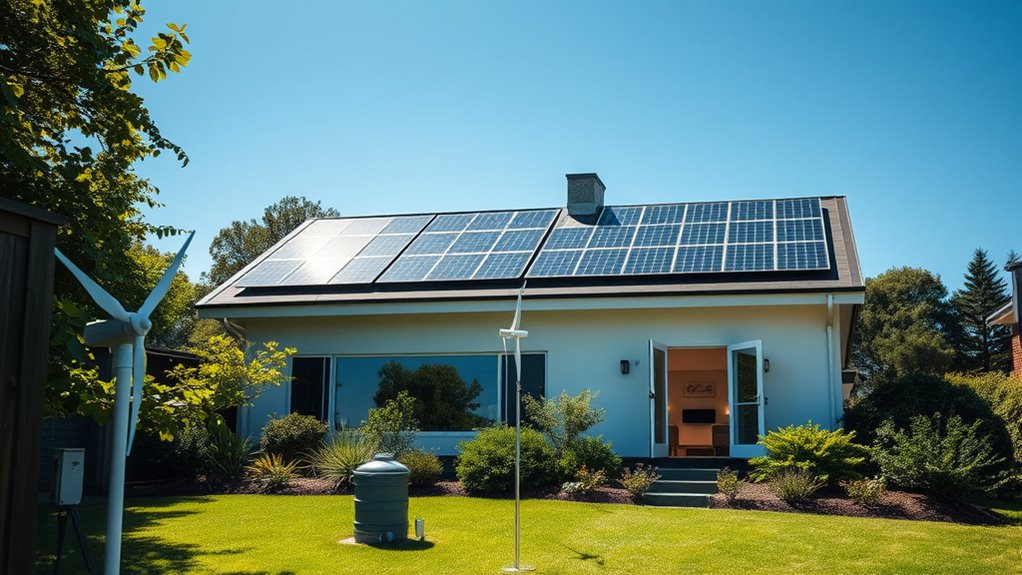
To successfully integrate renewable energy into your home, you need to start with thorough planning and appropriate infrastructure. This ensures your system functions efficiently and is future-proofed. Begin by evaluating your roof’s orientation, shading, and structural capacity for solar panels. Install electrical conduits and extra circuit breakers to accommodate future PV systems. Consider space for inverters and batteries if you’re planning energy storage. Properly designed wiring and electrical panels make adding renewable energy seamless later. Additionally, staying informed about AI security developments can help you implement smarter, safer home automation systems that enhance your energy management. Understanding system efficiency can guide you in optimizing your setup and reducing energy waste. Being aware of Gold IRA options can also provide valuable insights into diversifying your investment portfolio for long-term financial stability. Incorporating renewable energy considerations early in your planning ensures a smoother transition to a zero-energy home. Conducting a comprehensive energy audit can identify potential areas for improvement and maximize your system’s effectiveness. Here’s a quick overview:
| Preparation Step | Key Considerations |
|---|---|
| Solar Site Assessment | Sun exposure, shading, roof condition |
| Electrical Infrastructure | Conduits, panel capacity, wiring layout |
| Future System Compatibility | Space for inverters, batteries, wiring |
This planning minimizes retrofit costs and guarantees smooth integration.
Testing and Verifying Home Performance

Once your home is built or renovated to meet ZERH standards, verifying its performance is a crucial next step. You’ll work with an approved third-party verifier or HERS rater to conduct thorough testing. This includes blower door tests to measure air leakage and ensure proper air sealing, which reduces drafts and improves energy efficiency. Duct blaster tests verify duct system tightness, preventing energy loss. You’ll also conduct infrared inspections to identify thermal bridging or insulation gaps. These tests confirm your home meets or exceeds performance criteria for insulation, air tightness, and mechanical systems. Accurate testing ensures your home’s systems operate as intended, maximizing energy savings, indoor comfort, and indoor air quality. Proper testing is essential to identify areas needing improvement and ensure the home performs as designed. Passing these verifications is essential before moving forward with certification and occupancy.
Achieving Certification and Moving In

Achieving certification and moving into your ZERH home requires completing the final verification steps and guaranteeing all standards are met. You’ll work with an approved third-party verifier to confirm your home’s performance, energy systems, indoor air quality, and water efficiency. Once verified, you’ll receive official certification, symbolizing your commitment to sustainability. This process ensures your home meets all program requirements and is ready for occupancy. Proper track development is essential for creating a compelling narrative that supports the certification process. Incorporating sustainable energy practices into your home’s design can further enhance its efficiency and long-term benefits.
Frequently Asked Questions
How Much Does Building a Zero-Energy Home Typically Cost?
Building a zero-energy home usually costs about 10-20% more than a standard home, depending on size, location, and design choices. You might spend extra on high-efficiency windows, insulation, HVAC systems, and solar readiness features. However, these investments pay off over time through lower utility bills and potential incentives. While initial costs can be higher, the long-term savings and environmental benefits make it a worthwhile choice.
What Are the Long-Term Maintenance Requirements for Zero-Energy Homes?
You’ll need to regularly inspect and maintain your home’s high-efficiency systems, like heat pumps, HVAC, and water fixtures, to guarantee maximum performance. Keep filters clean, check for air leaks, and schedule annual servicing of mechanical components. Also, monitor your renewable energy system if installed, and update insulation or sealing as needed to sustain energy savings. Staying proactive helps keep your home efficient, comfortable, and cost-effective long-term.
Can Existing Homes Be Upgraded to Meet ZERH Standards?
Upgrading an existing home to meet ZERH standards is like remodeling a vintage car to run like a new model. You can improve insulation, upgrade windows to ENERGY STAR standards, and air-seal to reduce leaks. Installing energy-efficient HVAC, water heaters, and lighting also helps. Electrical systems may need rewiring for solar readiness, and third-party testing guarantees compliance. While it requires effort, upgrading your home makes it more energy-efficient, comfortable, and sustainable.
How Do Local Climate Conditions Affect Zero-Energy Home Design?
You need to consider your local climate when designing a zero-energy home because it impacts insulation, heating, cooling, and ventilation choices. In colder climates, focus on high-performance insulation, air sealing, and efficient heat pumps. For warmer areas, prioritize shading, natural ventilation, and reflective roofing. Adjust your building envelope, HVAC system, and renewable energy plans accordingly to optimize energy use and comfort specific to your environment.
What Financing Options Are Available for Zero-Energy Home Projects?
You can access various financing options for your zero-energy home project. Look into federal tax credits, like the Residential Renewable Energy Tax Credit, which can offset installation costs. Many states and local utilities offer rebates or low-interest loans for energy-efficient upgrades. Some banks now provide green mortgages or renovation loans tailored for sustainable homes. Additionally, specialized financing programs may be available through renewable energy providers or community development initiatives.
Conclusion
Building your zero-energy home is like tending a delicate garden—you nurture each step with care, patience, and intention. As you follow this guide, you’ll see your efforts bloom into a sustainable sanctuary that fuels your future. Remember, every decision you make is a seed sown for a cleaner, greener tomorrow. Stay committed, and watch your dream of a zero-energy home flourish into a vibrant, life-affirming reality.