The best educational science board games make a scientific idea part of the play, rather than a fact to memorize between turns. I’d start with Cytosis for its structured cell biology, consider Periodic for chemistry-focused strategy, and choose Guess in 10: NASA Space for an easy, quick entry point. The main tradeoff is between games that teach a focused concept through deeper decisions and lighter games that make science approachable for a wider age range. Group size, reading comfort, and tolerance for competitive play can matter as much as the subject. Read on for how the eight options compare and which one suits your players.

Prime made for students and young adults
- Fast, free delivery for dorm and study essentials
- Prime Video and Amazon Music included
- Member-only deals
Key Takeaways
- Cytosis and Peptide connect biology to resource and sequence decisions, making them stronger choices for players who want the science woven into play.
- Periodic gives chemistry a strategic structure, while Science Trivia Challenge tests recall more directly; choose based on whether your group prefers decisions or questions.
- Guess in 10: NASA Space is the most approachable starting point here, but its question-and-guess format offers less sustained strategy than the board games.
- Coral Reef and Ecosystem both focus on living systems, yet habitat building and biodiversity provide a different learning angle from marine biology.
- Organ Attack brings anatomy into a light card game, but its playful take and competitive attacks may suit casual family play better than focused instruction.
| Genius Games Peptide: A Protein Building Strategy Card Game |  | Best for Learning Protein Synthesis | Brand: Genius Games | Age range: 10+ years | Players: 2–5 | VIEW LATEST PRICE | See Our Full Breakdown |
| Skillmatics Guess in 10: NASA Space Card Game |  | Best for Quick Space-Themed Play | Brand: Skillmatics | Players: 2–6 | Recommended age: 8 years and up | VIEW LATEST PRICE | See Our Full Breakdown |
| Genius Games Ecosystem: Coral Reef – Educational Marine Biology Card Game |  | Best for Food Webs and Marine Biology | Brand: Genius Games | Age range: 10 years and up | Players: 2–6 | VIEW LATEST PRICE | See Our Full Breakdown |
| MindWare Science Trivia Challenge Game for Ages 7 and Up | 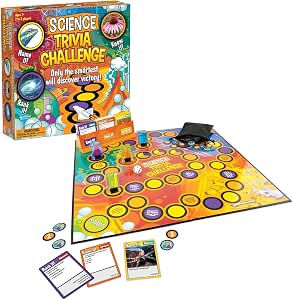 | Best for Mixed-Age Science Quizzes | Brand: MindWare | Age range: Ages 7 and up in title and description; another detail lists 8+ | Players: Solo or up to 4 | VIEW LATEST PRICE | See Our Full Breakdown |
| Periodic: A Game of the Elements |  | Best for Strategic Chemistry Learning | Brand: Genius Games | Genre: Strategy | Players: 2–6 | VIEW LATEST PRICE | See Our Full Breakdown |
| The Awkward Yeti Organ Attack Card Game |  | Best for Learning Anatomy Through Humor | Players: 2–6 | Recommended age: 8 years and up | Playing time: About 30 minutes | VIEW LATEST PRICE | See Our Full Breakdown |
| Cytosis: A Cell Biology Board Game |  | Best for In-Depth Cell Biology | Brand: Genius Games | Players: Listed as 2–4 or 10+ | Playing time: 90 minutes | VIEW LATEST PRICE | See Our Full Breakdown |
| Ecosystem Family Card Game: Build Habitats and Learn About Biodiversity |  | Best for Accessible Ecology | Players: 2–6 | Play time: 15–20 minutes | Card types: 11 | VIEW LATEST PRICE | See Our Full Breakdown |
| educational science board game | Players | Brand | Included components | Material |
|---|---|---|---|---|
| Genius Games Peptide: A Protei | 2–5 | Genius Games | — | — |
| Skillmatics Guess in 10: NASA | 2–6 | Skillmatics | 50 game cards, 6 clue cards, portable box, and instruction manual | Paper |
| Genius Games Ecosystem: Coral | 2–6 | Genius Games | 6 player aids | Cardboard |
| MindWare Science Trivia Challe | Solo or up to 4 | MindWare | 216 cards, die, 50 observation tokens, token bag, and 4 pawns | Paper |
| Periodic: A Game of the Elemen | 2–6 | Genius Games | Game | — |
| The Awkward Yeti Organ Attack | 2–6 | — | Cards | Paper |
| Cytosis: A Cell Biology Board | Listed as 2–4 or 10+ | Genius Games | Cytosis: A Cell Biology Game | — |
| Ecosystem Family Card Game: Bu | 2–6 | — | — | — |
More Details on Our Top Picks
Genius Games Peptide: A Protein Building Strategy Card Game
Peptide turns protein synthesis into a strategy game, asking players to gather amino acids and mRNA nucleotides and assemble protein chains. That focused process gives it a clearer biology lesson than the broad science quiz in MindWare Science Trivia Challenge, though players need some curiosity about biology to enjoy the theme. Organelles such as ribosomes and mitochondria connect resource gathering to cell functions, while the 30–45 minute playtime leaves room for tactical decisions. Its STEM and NGSS alignment may suit classroom use, and the strategy has appeal for older children and adults. The tradeoff is a narrower subject and a higher age threshold than the NASA-themed guessing game. Families seeking varied science topics or very short rounds may prefer another pick.
Pros:- Models protein synthesis with amino acids, mRNA, and organelle cards
- Combines science concepts with meaningful resource and scoring decisions
- Designed for 2–5 players, including classroom and family play
- Listed as aligned with STEM and NGSS standards
Cons:- Its protein-building focus may limit appeal for players uninterested in biology
- At 30–45 minutes, it takes longer than the NASA Space Card Game
- The supplied product information states that the manufacturer provides no warranty
Best for: Families, biology teachers, and strategy-minded players ages 10+ who want a focused introduction to protein synthesis
Not ideal for: Players looking for broad science topics, quick rounds, or a biology-light game
- Brand:Genius Games
- Age range:10+ years
- Players:2–5
- Play time:30–45 minutes
- Model number:GOT1003
- Standards:STEM and NGSS compliant
- Science concepts:mRNA translation, polypeptide chains, amino acids, organelles, and ATP
Our verdict“Choose Peptide for a strategy-led biology lesson on protein synthesis; pick MindWare Science Trivia Challenge for broader science questions.”
Skillmatics Guess in 10: NASA Space Card Game
Guess in 10: NASA Space Card Game makes space learning conversational: players ask up to 10 questions, use clues, and try to identify each card. Its roughly 20-minute rounds and portable box make it easier to bring along than Peptide, which offers a longer, more involved biology strategy game. NASA imagery and bonus questions give children space facts and prompts to discuss, though the guessing format provides less sustained scientific modeling than Ecosystem: Coral Reef’s food-web grid. The paper cards keep the set compact, but they are less substantial than a game built around a board or other physical pieces. This is a good fit for families who want light, repeatable space play; those seeking deeper science mechanics may want a different pick.
Pros:- NASA imagery and space topics give the guessing prompts a clear science theme
- Clue cards and bonus questions add choices beyond simple recall
- Portable box suits travel and on-the-go play
- Short rounds encourage quick discussion and repeat play
Cons:- Requires at least two players
- Paper components may wear with frequent travel or classroom use
- The guessing format offers less sustained science modeling than Ecosystem: Coral Reef
Best for: Families with children ages 8+ who want portable, conversation-driven space play in short rounds
Not ideal for: Solo players or buyers seeking a detailed science simulation with durable, substantial components
- Brand:Skillmatics
- Players:2–6
- Recommended age:8 years and up
- Play time:About 20 minutes per round
- Material:Paper
- Included components:50 game cards, 6 clue cards, portable box, and instruction manual
- Model number:SKILL579GNS
Our verdict“Choose this for portable, social space questions; choose Peptide or Ecosystem: Coral Reef for more involved science mechanics.”
Genius Games Ecosystem: Coral Reef – Educational Marine Biology Card Game
Ecosystem: Coral Reef makes food-web relationships the main puzzle: players arrange producers, prey, and predators into a reef habitat, linking choices to the ecosystem they build. That gives it a stronger focus on ecological connections than Periodic: A Game of the Elements, which centers on chemistry and movement across the periodic table. At about 20 minutes, it also fits a shorter session than Peptide while retaining a strategic grid-building task. The coral reef theme is vivid and specific, but it covers a narrower slice of science than MindWare’s mixed-topic trivia. Its cardboard cards are portable, though they may not hold up as well to heavy classroom handling. I’d choose it for learners interested in habitats and food chains, not those seeking a broad nature survey.
Pros:- Makes producer, prey, and predator relationships part of the central puzzle
- Reef setting gives the marine biology theme a clear focus
- About 20 minutes of play fits short family or classroom sessions
- Portable card format works for travel and group learning
Cons:- Coral reef is a narrower subject than MindWare Science Trivia Challenge’s mixed science topics
- Recommended for ages 10+, which may exclude younger family members
- Cardboard components may be less durable with frequent handling
Best for: Families and educators teaching food chains, marine habitats, and predator-prey relationships to players ages 10+
Not ideal for: Buyers seeking several ecosystem settings, very young-child rules, or robust non-card components
- Brand:Genius Games
- Age range:10 years and up
- Players:2–6
- Playing time:20 minutes
- Material:Cardboard
- Language:English
- Included components:6 player aids
- Manufacturer part number:GOT1014
Our verdict“Pick Ecosystem: Coral Reef for a short, strategic lesson in marine food webs; choose MindWare for broader science coverage.”
MindWare Science Trivia Challenge Game for Ages 7 and Up
MindWare Science Trivia Challenge offers the broadest subject mix here, using beginner and advanced questions so players can choose a level that suits them. That flexibility makes it a more natural fit for mixed-age groups than Peptide, whose protein-synthesis strategy asks players to stay with one biology topic. Solo play is also listed, a useful distinction from the two-player minimum in Guess in 10: NASA Space Card Game. The cards, die, pawns, and observation tokens give answers a simple game structure, but the learning depends on recalling facts rather than modeling how a scientific system works. The supplied age guidance differs between product details, listing both 7+ and 8+, so I’d check the packaging for the intended age. Choose it for varied quiz practice, not a hands-on science simulation.
Pros:- Beginner and advanced questions support different knowledge levels
- Listed for both solo and group play
- Includes cards, a die, pawns, and observation tokens for structured rounds
- Covers a broader range of science knowledge than the single-topic games
Cons:- Trivia recall offers less scientific modeling than Peptide or Ecosystem: Coral Reef
- Listed player count is capped at four
- Age guidance conflicts between product details, which say 7+ and 8+
Best for: Households or educators who want science questions at different difficulty levels, including solo play
Not ideal for: Players who prefer strategic science simulations or groups larger than four
- Brand:MindWare
- Age range:Ages 7 and up in title and description; another detail lists 8+
- Players:Solo or up to 4
- Included components:216 cards, die, 50 observation tokens, token bag, and 4 pawns
- Material:Paper
- Language:English
- Game type:Educational trivia board game
Our verdict“Choose MindWare for flexible science quizzes across difficulty levels; pick Peptide for a deeper, focused biology game.”
Periodic: A Game of the Elements
Periodic: A Game of the Elements puts chemistry vocabulary into tactical movement: players move across the periodic table, discover elements, and score through set collection. Compared with Peptide, which follows a biological process step by step, Periodic makes the table itself the play space and asks players to use periodic trends to plan routes. That can suit strategy fans who want chemistry concepts woven into their decisions, but it also means the subject is harder to sidestep than in MindWare Science Trivia Challenge, where players answer questions across multiple science areas. The 2–6 player range supports family or classroom groups, while the age 10+ recommendation sets a higher entry point than the NASA space game. The supplied component details are sparse, so buyers have less information about what comes in the box.
Pros:- Uses real elements and periodic trends as part of tactical play
- Combines movement, action economy, and set collection
- Supports 2–6 players for family or classroom sessions
- Listed as compliant with STEM and NGSS standards
Cons:- The chemistry focus may not suit players who prefer broad science coverage
- Recommended for ages 10 and up
- Product data lists only a general game component, providing little detail about box contents
Best for: Chemistry-curious families, teachers, and strategy players ages 10+ who want to explore elements and periodic trends
Not ideal for: Younger players or groups who want general science topics and detailed component information before choosing
- Brand:Genius Games
- Genre:Strategy
- Players:2–6
- Minimum age:10 years
- Edition:Standard Edition
- Included components:Game
- Standards:STEM and NGSS compliant
Our verdict“Choose Periodic for tactical play built around chemistry; choose MindWare for a broader, question-based science game.”
The Awkward Yeti Organ Attack Card Game
Organ Attack makes anatomy the subject of a playful contest: players target opponents’ organs with afflictions and use immunity cards to defend them. That focus on individual organs gives it a more direct human-body lesson than Ecosystem Family Card Game, which teaches relationships among animals and habitats. Its humorous attack-and-defense format may help keep younger players engaged, though the learning comes through card effects rather than a detailed science system. A roughly 30-minute playtime and support for up to six players make it a flexible family option. The tradeoff is that the anatomy scope is relatively focused, and its indoor card play offers less variety for children seeking a broader science curriculum or a longer strategic challenge.
Pros:- Connects organ-specific afflictions and immunity cards to anatomy and health concepts.
- Humorous attack-and-defense play gives the science lesson an accessible family format.
- Supports 2–6 players, accommodating a range of group sizes.
- Book-style case is portable for travel and compact storage.
Cons:- Its anatomy focus is narrower than the cell biology and ecology topics in other games in this roundup.
- The card game is designed for indoor use.
- Expansions are sold separately.
Best for: Families with children ages 8 and up who want a short, humorous introduction to organs and basic health concepts.
Not ideal for: Players looking for in-depth biology lessons or a game that covers several branches of science.
- Players:2–6
- Recommended age:8 years and up
- Playing time:About 30 minutes
- Material:Paper
- Included components:Cards
- Container type:Box
- Educational objective:Learn about human anatomy and health
- Item weight:440 g
- Dimensions:8 × 6 in
Our verdict“Choose Organ Attack for a portable, lighthearted anatomy game for families with children ages 8 and up.”
Cytosis: A Cell Biology Board Game
Cytosis gives cell biology a substantial strategy-game framework: players place workers, gather resources, and build enzymes, hormones, and hormone receptors. That makes it a more detailed science choice than Organ Attack, whose anatomy lesson is delivered through shorter, humorous card battles. A fact-based booklet reviewed by science experts adds context beyond the turns themselves, a useful feature for families or educators who want to discuss the concepts after play. The cost of that depth is time: the listed 90-minute playtime calls for a group willing to settle in, and the player-count information is unclear, listing “2–4 or 10+.” Buyers should check the intended group format before choosing it for a specific class or gathering.
Pros:- Worker placement and resource collection connect play to cell processes.
- Covers enzymes, hormones, and hormone receptors rather than only broad biology themes.
- Includes a fact-based booklet reviewed by science experts.
- Designed for family, classroom, and group play.
Cons:- The listed 90-minute playing time may be too long for a short activity or younger players.
- Player-count information is ambiguous, listing 2–4 or 10+.
- Its strategy and science detail may be a heavier fit for casual players than Ecosystem Family Card Game.
Best for: Families with older children, science-minded teens, and educators seeking a longer game built around cell biology concepts.
Not ideal for: Groups wanting a quick, simple activity or needing clearly specified player capacity for a classroom session.
- Brand:Genius Games
- Players:Listed as 2–4 or 10+
- Playing time:90 minutes
- Minimum age:10 years
- Included components:Cytosis: A Cell Biology Game
- Edition:Cytosis Game
- Genre:Educational, Family
- Model number:GOT1006
Our verdict“Pick Cytosis when your group wants a long, strategy-led cell biology lesson and can accommodate its unclear player-count listing.”
Ecosystem Family Card Game: Build Habitats and Learn About Biodiversity
Ecosystem Family Card Game turns ecology into a drafting and arrangement puzzle: players pair animals with habitats such as forests, streams, and meadows. Its 15–20-minute playtime makes it an easier fit for a quick family or classroom session than Cytosis, which lists a 90-minute game. Compared with Organ Attack, it shifts the science focus from human anatomy to biodiversity and habitat relationships, giving groups interested in the natural world a different kind of lesson. The rules are described as accessible, while the game is also noted as difficult to master; that combination may reward repeat play, but can make strategic choices less obvious at first. Its ecology focus also limits its appeal for buyers seeking biology beyond habitats and ecosystems.
Pros:- Card drafting links animal choices to habitats and biodiversity.
- Covers ecology and sustainability alongside habitat-building.
- Short 15–20-minute sessions suit family play or classroom activities.
- Supports 2–6 players and is described for use at home or in classrooms.
Cons:- Its ecology and habitat focus may not suit players interested in other science subjects.
- The game is described as difficult to master despite its accessible rules.
- Its card-drafting approach offers a different learning experience from Cytosis’s worker placement and cell biology.
Best for: Families and educators who want a short, screen-free ecology activity for children, teens, or mixed-age groups.
Not ideal for: Players focused on human anatomy, cell biology, or a science game with a simple strategy ceiling.
- Players:2–6
- Play time:15–20 minutes
- Card types:11
- Game type:Card drafting
- Suitable for:Families, classrooms, teens, and adults
- Educational topics:Ecology, sustainability, and biodiversity
- Activity:Build ecosystems by pairing animals with habitats
Our verdict“Choose Ecosystem Family Card Game for a short, repeatable ecology lesson centered on habitats and biodiversity.”
How We Picked
I compared the eight games by how directly their rules connect to a science concept, how easy it is for the intended players to join in, and what kind of play sustains attention: strategy, trivia, set collection, or card interaction. I also weighed subject range, likely replay appeal, and whether the game’s learning demands—such as reading, terminology, or multi-step decisions—fit its stated audience. A science theme alone did not earn a high position; the strongest picks make players use or revisit ideas as they play.
Cytosis leads for its clear link between cell biology and strategic actions, while Periodic and Peptide offer distinct chemistry and protein-building routes for groups ready for more focused concepts. Lighter and more accessible formats rank well for specific audiences, but sit lower as all-purpose learning games when they rely more on questions or broad theme. The order reflects this balance of learning connection, playability, and audience fit, rather than treating every game as interchangeable.
| educational science board game | Brand | Material |
|---|---|---|
| Genius Games Peptide: A Protei | Genius Games | — |
| Skillmatics Guess in 10: NASA | Skillmatics | Paper |
| Genius Games Ecosystem: Coral | Genius Games | Cardboard |
| MindWare Science Trivia Challe | MindWare | Paper |
| Periodic: A Game of the Elemen | Genius Games | — |
| The Awkward Yeti Organ Attack | — | Paper |
| Cytosis: A Cell Biology Board | Genius Games | — |
| Ecosystem Family Card Game: Bu | — | — |
Factors to Consider When Choosing Educational Science Board Games
Before choosing, match the game’s learning style to the people around your table. A subject your child already likes can help, but the rules should also fit their reading level, attention span, and appetite for competition.
Choose a Learning Style, Not Just a Science Topic
Science games teach in different ways: some ask players to recall facts, while others make them build systems, sequence steps, or manage resources. Trivia can reveal what players know and prompt discussion, but it may not help them reason through a process. A strategy game can make concepts feel relevant through repeated choices, though it may take longer to learn. Look at what players actually do on a turn, not just the subject printed on the box. If the group includes mixed ages or prior knowledge, a game with several ways to participate can keep beginners involved without making experienced players feel held back.
Check the Reading and Concept Load
Age guidance is a starting point, not a guarantee that a child can play independently. Science terminology, card text, and multi-step turns can create more friction than the game’s age label suggests. For younger players, consider whether an adult will need to explain terms or help read cards each round. For a classroom or family with varied reading skills, rules that can be demonstrated with a sample turn often help more than a long glossary. A game that is technically age-appropriate can still be a poor fit if most players spend their attention decoding instead of playing.
Match Game Length and Complexity to the Occasion
A focused strategy game can be rewarding during a planned game night, but it may be difficult to bring out for a short after-school break. Short card formats can make it easier to start and stop, while longer games give concepts more room to develop. Think about setup and cleanup too, especially if the game will be used in a classroom or shared space. A common mistake is buying for the most enthusiastic player rather than the group that will play most often. Choose a level of complexity that keeps the table moving even when players are learning the rules.
Think About the Group’s Competitive Comfort
Some players enjoy direct attacks and blocking; others prefer building their own plan without being disrupted. Competitive interaction can make a game lively, but it may distract from learning or frustrate younger players who are still figuring out the rules. Cooperative or low-conflict play can work better when the goal is discussion, tutoring, or a relaxed family activity. If the game is meant for a group with a wide range of confidence, consider how much one player can set back another. The right level of competition depends on whether your group sees setbacks as part of the fun.
Decide What Replay Value Means for Your Household
Replay value can come from changing strategy, new combinations, fresh questions, or simply an easy format that gets played often. A narrow subject game may be a strong choice for a budding biology enthusiast even if it sees less table time overall. A broader habitat or ecosystem theme may invite more kinds of discussion, but breadth does not automatically mean deeper instruction. Consider whether players enjoy revisiting the same ideas or want new material each session. The best fit is the game whose play pattern your group will return to, not necessarily the one with the widest topic list.
Frequently Asked Questions
Which game is the best choice if I want science concepts built into strategy?
Cytosis is the clearest starting point in this lineup for players who want biology connected to decisions across a game. Periodic and Peptide also make scientific subject matter part of strategic play, with chemistry and protein building as their focus. These are better suited to groups willing to learn more involved rules than a quick trivia card game requires. If players mainly want short bursts of questions, Guess in 10: NASA Space may fit better, though it offers a different kind of learning experience.
Are these games suitable for children who are new to science games?
Yes, but the most approachable choice depends on reading comfort and patience with rules. Guess in 10: NASA Space offers a simple question-and-guess structure, while Science Trivia Challenge centers on answering prompts. A child who likes building plans may be more engaged by a strategy game, but could need an adult to introduce the rules and explain unfamiliar terms. Consider playing the first round together before expecting independent play.
Should I choose a trivia game or a strategy game for learning?
Choose trivia when quick recall, friendly competition, and short turns are the priority. Choose strategy when you want players to connect actions with a system or process over several turns. Neither format is automatically more educational: trivia can prompt useful questions, and strategy can become mostly rule management if players do not understand the science behind their actions. Think about how your group likes to learn and whether an adult can support discussion during play.
Which option works best for a family with different ages and science backgrounds?
A lighter format such as Guess in 10: NASA Space can be easier to share across experience levels because players can contribute guesses without mastering a complex strategy. Ecosystem may appeal to a family interested in habitats and biodiversity, though the group should still check the rules and reading load against younger players’ abilities. Focused titles such as Cytosis or Peptide may suit a table where players are ready to engage with more specialized concepts. An adult can help balance the knowledge gap by treating unfamiliar answers as chances to explain rather than as tests.
How can I tell whether a game teaches science or only uses a science theme?
Look at whether players need to apply a scientific idea to make progress, or whether science appears mainly in illustrations and card names. A game with a strong learning connection asks players to build, sequence, classify, or reason using the subject’s concepts. Trivia titles can still support learning, but their main activity is recalling or guessing answers. Read the rules and sample components when available, then ask whether the learning happens during the decisions or mainly in explanations around the game.
Conclusion
For the strongest mix of scientific connection and strategic play, I recommend Cytosis as best overall. Best value for focused learning goes to Periodic, particularly for groups drawn to chemistry and tactical choices. For a more specialized biology challenge, choose Peptide; for beginners who want an easy start, pick Guess in 10: NASA Space. Choose Coral Reef for marine biology, Ecosystem for habitats and biodiversity, Science Trivia Challenge for question-led play, or Organ Attack for a playful anatomy theme. Match the subject and play style to the people who will actually gather at your table, and the choice becomes much clearer.