
The Global Biodiversity Framework shows a strong global commitment from nearly 200 countries to protect nature by 2030 and achieve harmony by 2050. It sets clear goals to save 30% of land and ocean, reduce pollution, and boost funding. While progress is promising, challenges like funding gaps and enforcement remain. Still, through international cooperation and shared strategies, the world is on a path toward uniting for nature’s future. Continue to explore how together, we can turn these goals into reality.
Key Takeaways
- The framework’s ambitious goals, including protecting 30% of land and ocean by 2030, demonstrate global commitment to biodiversity.
- Progress has been made through regional centers, marine protection targets, and enhanced data collection efforts.
- Significant funding gaps remain, requiring innovative financial strategies and international cooperation to mobilize $200 billion annually.
- Indigenous peoples’ knowledge and land rights are recognized as vital, promoting inclusivity and sustainable conservation efforts.
- Strong monitoring, accountability, and international collaboration are essential to ensure the framework’s success in uniting the world to save nature.

Biodiversity Conservation and Phylogenetic Systematics: Preserving our evolutionary heritage in an extinction crisis (Topics in Biodiversity and Conservation Book 14)
As an affiliate, we earn on qualifying purchases.
As an affiliate, we earn on qualifying purchases.
The Origins and Ambitions of the Framework
The origins of the Global Biodiversity Framework trace back to nearly four years of intensive consultation and negotiation, culminating in its adoption at COP 15 in December 2022. During this time, governments, scientists, and stakeholders worked together to develop a thorough plan to halt and reverse nature loss worldwide. The framework’s ambition is clear: achieve a world where humans live in harmony with nature by 2050. It sets out four overarching goals for 2050 and 23 specific targets for 2030, guiding global efforts to protect ecosystems, species, and genetic diversity. This ambitious framework builds on previous international agreements and reflects a shared commitment from 196 countries to prioritize biodiversity, recognizing its critical role in sustainable development and planetary health.
Key Goals and Targets for 2030 and 2050
What are the main aspirations guiding global efforts to protect biodiversity by 2030 and 2050? You aim to halt and reverse nature loss, ensuring a harmonious world with thriving ecosystems. The framework sets ambitious targets to protect 30% of land and oceans, restore degraded habitats, and reduce harmful subsidies. By 2050, the goal is a sustainable relationship with nature, supporting human well-being. The table below summarizes key targets:
| Goal/Target | Focus Area |
|---|---|
| 2030 | Protect 30% of land and sea |
| 2030 | Reduce pollution and habitat destruction |
| 2050 | Achieve global harmony with nature |
Additionally, fostering sustainable practices is essential for long-term success in conserving biodiversity. Implementing encryption solutions can also play a role in safeguarding data related to conservation efforts and biodiversity data sharing. Promoting native species planting can greatly enhance local ecosystems and support endemic wildlife, contributing to these overarching goals.
Financial Strategies and Resource Mobilization
You need to understand how mobilizing at least 200 billion dollars annually by 2030 is vital to closing the biodiversity finance gap. Expanding funding mechanisms and increasing international finance flows are essential steps toward meeting these targets. Strengthening resource mobilization strategies will determine the success of implementing the framework’s goals worldwide. Additionally, diversifying funding sources, such as leveraging local legal resources to promote community engagement, can enhance the effectiveness of conservation efforts. Developing innovative financing approaches, including public-private partnerships, will also be crucial in bridging the gap and ensuring sustainable resource flow. Incorporating holistic health benefits of biodiversity conservation can further motivate diverse stakeholders to invest in preservation initiatives.
Global Funding Goals
Achieving the ambitious goals of the Global Biodiversity Framework depends heavily on mobilizing sufficient financial resources. You need to understand that global funding targets are set to bridge the biodiversity finance gap. The framework commits to mobilizing at least $200 billion annually by 2030, with international flows increasing from $20 billion in 2025 to $30 billion by 2030. To visualize, consider this table:
| Funding Source | Current Year Target | 2030 Goal |
|---|---|---|
| Domestic Funding | Varies by country | Increase considerably |
| International Flows | $20 billion (2025) | $30 billion (2030) |
| Private Investment | Growing trend | Accelerate growth |
| Public-Private Partnerships | Emerging | Expand across sectors |
| Global Biodiversity Fund | Initiated | Continuous support |
This plan ensures resources align with the framework’s critical targets. Additionally, employing efficient financial strategies can significantly enhance resource mobilization efforts. Developing innovative funding mechanisms, such as green bonds or biodiversity offsets, can further help meet the financing needs. Furthermore, collaborative international efforts are essential for consolidating resources and expertise across nations to achieve these financial goals. Recognizing the importance of financial oversight can help ensure transparency and accountability in resource allocation, thereby increasing stakeholder confidence. Building on existing funding structures can optimize resource allocation and ensure the sustainability of conservation initiatives.
Biodiversity Finance Gap
Despite the progress made toward meeting global funding goals, a significant biodiversity finance gap remains that hampers full implementation of the Framework. You need to understand that current financial flows fall short of the estimated $200 billion annually required by 2030 to effectively protect and restore ecosystems. International commitments, like the $20 billion target for 2025, are ambitious but insufficient without stronger domestic investments. Mobilizing resources is complicated by competing priorities and limited capacities in many countries. To bridge this gap, you must focus on leveraging innovative financing tools, aligning private sector investments, and improving resource efficiency. Strengthening financial strategies is vital to guarantee adequate, predictable, and sustained funding that can close the gap and enable countries to meet their biodiversity commitments effectively. Additionally, enhancing financial strategies can help address the challenges posed by limited capacities and competing priorities in many nations, especially when considering merchant services that facilitate resource mobilization. Recognizing the importance of biodiversity finance in closing this gap can further support the development of sustainable funding mechanisms. Incorporating diverse sources of financial resources, including climate funds and green bonds, can diversify and stabilize funding streams for biodiversity. Furthermore, employing wall organization systems can optimize the allocation and tracking of these funds to ensure transparency and accountability.
Funding Mechanisms Expansion
How can we expand funding mechanisms to effectively mobilize the resources needed for biodiversity conservation? First, you should support the implementation of the Global Biodiversity Framework Fund, which aims to channel financial support for conservation efforts. You can also advocate for increasing international finance flows, targeting at least 20 billion USD annually by 2025 and 30 billion USD by 2030. Promoting innovative financial instruments, such as green bonds or biodiversity offsets, can diversify funding sources. Additionally, engaging private sector investments and encouraging public-private partnerships will boost resource mobilization. Strengthening national and regional financial strategies ensures funds are effectively allocated and monitored. Incorporating solar panels and other renewable energy solutions into conservation projects can further promote sustainability and attract additional funding. Recognizing the importance of financial strategies in resource mobilization, it is essential to develop comprehensive approaches that align with global conservation goals. For example, leveraging private sector investment opportunities can significantly enhance funding pools and foster innovative conservation solutions. By expanding and diversifying funding mechanisms, we can close the biodiversity finance gap and accelerate progress toward global conservation targets. Moreover, understanding the role of financial mechanisms in supporting biodiversity initiatives is crucial for designing effective mobilization strategies. Incorporating capacity building initiatives can also strengthen local implementation and ensure sustainable use of resources.
Monitoring, Reporting, and Accountability Measures

Effective monitoring, reporting, and accountability are essential for tracking progress toward the Global Biodiversity Framework’s goals and targets. You’ll find that an improved monitoring framework provides common metrics to measure progress against the 23 targets and 4 overarching goals. Indicators, agreed upon at COP16, ensure consistent measurement across all countries. You’ll also see mechanisms in place for planning, monitoring, reporting, and reviewing implementation efforts. National targets form the basis for reports due in February 2026, which contribute to a global review at COP17. Data is aggregated at the international level, offering a thorough picture of worldwide progress. This structured approach ensures transparency and accountability, helping you identify gaps and adjust strategies to stay on track with biodiversity conservation commitments. Incorporating real-time data access can significantly enhance the effectiveness of monitoring efforts. Online shopping availability ensures that stakeholders can access resources and tools for effective participation regardless of location. Additionally, establishing standardized monitoring indicators promotes uniformity and comparability of data across nations.
Empowering Indigenous Peoples and Local Communities

You play a crucial role in recognizing Indigenous rights and integrating their voices into biodiversity efforts. Strengthening community participation guarantees traditional knowledge contributes to conservation goals. Supporting these communities helps preserve cultural practices while advancing global biodiversity objectives.
Recognizing Indigenous Rights
Have you considered the critical role Indigenous Peoples and Local Communities (IPLCs) play in biodiversity conservation? Recognizing their rights is essential for effective action. The framework acknowledges IPLCs as stewards of vast ecosystems, with traditional knowledge crucial for protecting biodiversity. It emphasizes respecting land rights, cultural practices, and self-determination to empower these communities. By formalizing their role in decision-making, the framework ensures their voices influence conservation policies. This recognition helps prevent land grabbing and marginalization, fostering genuine collaboration. Supporting IPLCs’ rights also enhances their capacity to sustainably manage natural resources, which benefits global ecosystems. When IPLCs are respected and empowered, their deep-rooted connection to nature becomes a powerful force in reversing biodiversity loss and achieving the framework’s ambitious goals.
Strengthening Community Roles
Strengthening community roles involves actively empowering Indigenous Peoples and Local Communities (IPLCs) to lead conservation efforts. You recognize that these communities manage much of the world’s biological resources and hold valuable traditional knowledge. Their active participation guarantees sustainable use and protection of ecosystems. A new institutional voice supports their role, with a dedicated Subsidiary Body and clear work plans that formalize their contributions. To visualize this, consider the following:
| Community Role | Conservation Impact |
|---|---|
| Traditional land management | Preserves biodiversity through customary practices |
| Local stewardship | Ensures sustainable resource use |
| Cultural practices | Maintains ecosystem balance |
| Indigenous leadership | Drives policy change and advocacy |
Supporting Traditional Knowledge
Supporting traditional knowledge is vital to harness the wisdom of Indigenous Peoples and Local Communities in conserving biodiversity. Your communities possess centuries of experience managing ecosystems sustainably, offering valuable insights for modern conservation. Recognizing this, the Framework creates a stronger institutional voice for IPLCs and formalizes their role in biodiversity efforts. A dedicated work plan guarantees their meaningful participation, respecting cultural practices and traditional management methods. The historical decision acknowledging Afro-descendant communities’ contributions highlights the importance of diverse knowledge systems. By empowering IPLCs, you help preserve unique ecosystems and promote equitable sharing of benefits derived from biological resources. Your involvement is essential for achieving global targets, ensuring that traditional practices complement scientific approaches and foster resilient, sustainable solutions for biodiversity conservation worldwide.
Enhancing Scientific Cooperation and Knowledge Sharing

How can scientific cooperation and knowledge sharing accelerate the implementation of the Global Biodiversity Framework? By fostering collaboration across regions, you can pool expertise, data, and innovative solutions to address complex biodiversity challenges. The network of regional Centers for Scientific and Technical Cooperation facilitates capacity building, enabling countries to adopt best practices and develop tailored strategies. Sharing digital sequence information on genetic resources speeds up research and conservation efforts globally. Establishing platforms for knowledge exchange helps align scientific efforts with policy actions, ensuring evidence-based decisions. As a result, you’ll support more effective interventions, monitor progress with standardized metrics, and adapt strategies in real-time. Ultimately, enhanced cooperation and open knowledge flows are essential for turning ambitious targets into tangible conservation outcomes.
Progress Achievements and Ongoing Challenges
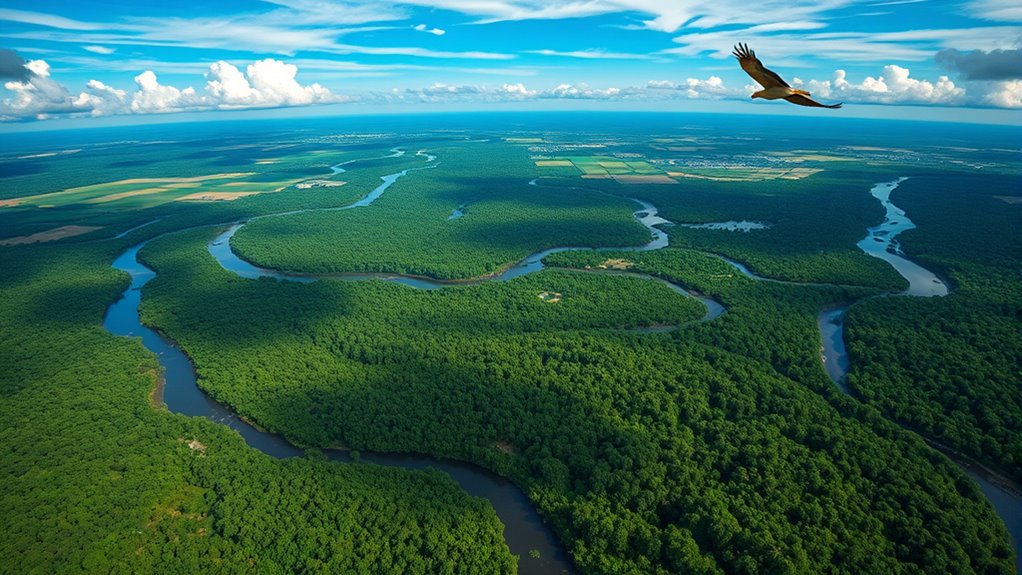
You’ve seen some progress, like establishing regional centers and setting marine protection targets, but significant challenges remain. Achieving the ambitious goals requires overcoming gaps in resource mobilization and enforcement. As implementation advances, staying focused on these hurdles will be vital to guarantee real progress by 2026 and beyond.
Progress in Implementation
Since the adoption of the Kunming-Montreal Global Biodiversity Framework, significant progress has been made in advancing its objectives, with countries establishing regional centers and adopting biodiversity-health action plans. These efforts have improved coordination, capacity building, and technical support for implementation. You can see increased commitments to protect ecologically and biologically significant marine areas, with procedures to safeguard 30% of ocean regions by 2030. Countries are integrating climate and biodiversity strategies, fostering coherence across sectors. Monitoring mechanisms and standardized indicators now track progress more effectively, and data collection is improving. However, challenges remain, including ensuring adequate financial resources, mobilizing at least $200 billion annually, and translating national targets into concrete actions. Continued effort is essential to stay on course for global biodiversity goals.
Challenges Ahead
Despite notable progress in implementing the Global Biodiversity Framework, significant challenges remain that could hinder achieving its ambitious goals. Funding gaps continue to pose a major obstacle, with many countries struggling to mobilize the necessary resources to meet the $200 billion annual target by 2030. Monitoring progress also proves complex, as data collection and reporting vary across nations, risking inconsistent assessments. Engaging Indigenous Peoples and Local Communities remains essential, yet institutional support and recognition still need strengthening. Additionally, integrating biodiversity efforts with climate action demands greater coordination at global and national levels. Urgent action is required to address these hurdles, or else the framework’s targets risk falling short, undermining global efforts to halt and reverse nature loss and secure a sustainable future for all.
Integrating Climate Action and Biodiversity Conservation

How can we effectively integrate climate action and biodiversity conservation to address the interconnected crises facing our planet? You can do this by aligning policies, investing in nature-based solutions, and fostering collaboration across sectors. Recognizing that climate change and biodiversity loss are deeply linked, efforts should focus on restoring ecosystems that sequester carbon while supporting species survival. To illustrate, consider the following key approaches:
| Approach | Focus Area | Outcome |
|---|---|---|
| Policy Alignment | Climate and biodiversity | Coherent strategies |
| Nature-Based Solutions | Ecosystem restoration | Carbon sequestration, resilience |
| Cross-Sector Collaboration | Governments, communities | Shared resources and knowledge |
| Funding Incentives | Green finance | Accelerated implementation |
Building Global Partnerships for Biodiversity Protection
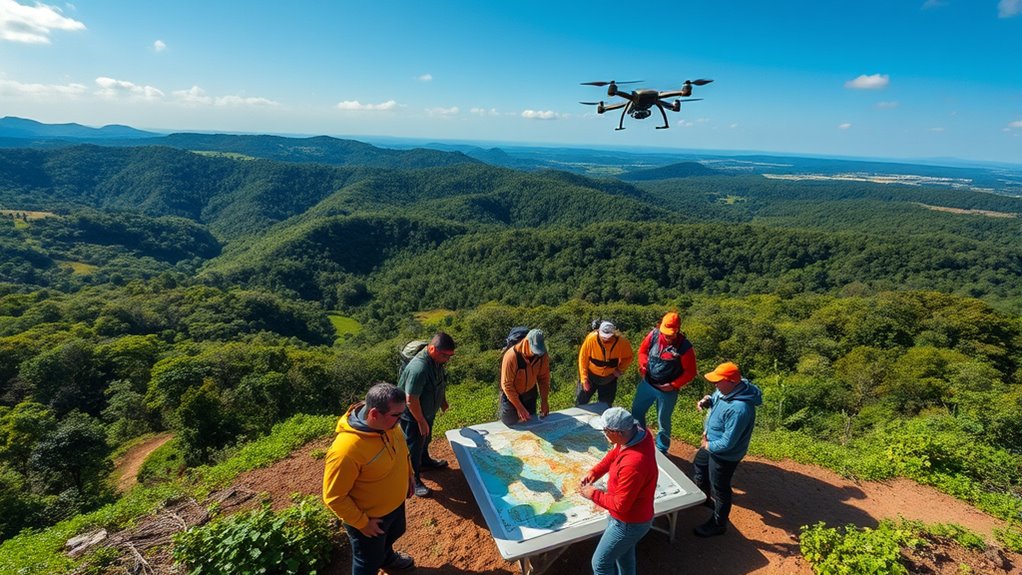
Building strong global partnerships is essential for advancing biodiversity protection worldwide. When countries, organizations, and communities unite, they can share knowledge, resources, and strategies more effectively. These collaborations foster innovative solutions and ensure that efforts are coordinated and impactful. To deepen your understanding, consider these key elements:
Strong global partnerships are vital for impactful biodiversity conservation and innovative solutions worldwide.
- Establishing regional centers for scientific and technical cooperation
- Creating inclusive platforms for Indigenous Peoples and Local Communities (IPLCs)
- Mobilizing financial resources through dedicated funds and international aid
- Setting common metrics for monitoring progress and accountability
- Promoting knowledge sharing and capacity development across borders
The Path Forward: Opportunities and Obstacles

The path forward for global biodiversity conservation presents both significant opportunities and notable obstacles. You have the chance to leverage the ambitious goals and targets set by the GBF, mobilize substantial financial resources, and strengthen international cooperation. Advances in monitoring frameworks and the inclusion of Indigenous and local communities can foster more effective, inclusive actions. However, obstacles remain, including the persistent funding gap, political will, and competing economic interests. Implementing national targets and ensuring transparency require sustained commitment and coordination. Addressing threats like climate change and habitat loss demands urgent, integrated efforts. Success hinges on global unity, innovative solutions, and overcoming resistance to change. Your role, as part of this collective, is critical to turning these opportunities into tangible progress.
Frequently Asked Questions
How Will Countries Ensure Effective Implementation of the Framework’s Targets?
You’ll guarantee effective implementation by setting clear national targets aligned with the framework’s goals, regularly monitoring progress with standardized metrics, and reporting transparently at designated intervals. Engage local communities and Indigenous Peoples actively, leveraging their traditional knowledge. Mobilize financial resources, including the Global Biodiversity Framework Fund, to support actions. Foster international cooperation and scientific knowledge sharing, while continuously reviewing and adjusting strategies based on data and progress toward the 2030 and 2050 goals.
What Role Do Private Sector Investments Play in Biodiversity Funding?
You play a vital role in biodiversity funding through private sector investments. When you support sustainable businesses, you help channel resources directly into conservation efforts, green technologies, and ecosystem restoration. Your investments can bridge the $200 billion annual gap, making a tangible difference. By choosing eco-friendly options and advocating for responsible corporate practices, you help guarantee that private sector funding aligns with global biodiversity goals, driving real change for nature’s future.
How Are Traditional Knowledge and Cultural Practices Integrated Into Conservation Efforts?
You can see that traditional knowledge and cultural practices are integrated into conservation efforts through formal recognition and active participation. Indigenous Peoples and Local Communities (IPLCs) are empowered via a new subsidiary body and work plans, ensuring their voices contribute meaningfully. These communities’ traditional practices are valued for biodiversity conservation, and their role is expanded in global and national frameworks, fostering respect, inclusion, and effective conservation strategies rooted in cultural context.
What Mechanisms Are in Place to Resolve Conflicts Among Stakeholders?
Imagine a bridge over turbulent waters—that’s how conflict resolution works among stakeholders. You’ll find mechanisms like multi-stakeholder platforms, negotiation processes, and conflict resolution protocols designed to facilitate dialogue, mutual understanding, and compromise. The framework emphasizes inclusive participation and transparency, ensuring all voices—especially indigenous communities—are heard. These tools foster collaboration, turning potential conflicts into opportunities for shared conservation goals, helping everyone work together toward a healthier planet.
How Will Progress Be Measured in Areas With Limited Data Infrastructure?
You’ll find that progress in areas with limited data infrastructure gets measured through standardized indicators and simplified reporting mechanisms established by the framework. These tools enable local monitoring and assessment, even with scarce data. Additionally, regional centers and capacity-building efforts support data collection and sharing, helping you track progress effectively. This approach guarantees that even where infrastructure is weak, biodiversity goals remain measurable, fostering accountability and targeted action.
Conclusion
So, as you consider the global efforts needed to protect our planet’s biodiversity, ask yourself: are you ready to join the movement? The framework offers a promising path, but it depends on collective action and unwavering commitment. With challenges ahead, your involvement can make a difference. Will you step up to guarantee a future where nature thrives for generations to come? The time to act is now—your role truly matters.