

Marine Protected Areas do work when they are well-designed and properly enforced. They help restore fish and shark populations, increase habitat diversity, and boost ecosystem resilience. Larger, older MPAs with no-take zones tend to be most effective. Challenges like limited coverage and monitoring exist, but successful examples show that with strong management and community support, MPAs can markedly improve ocean health. If you want to understand how these protections make a difference, keep exploring.

Prime made for students and young adults
- Fast, free delivery for dorm and study essentials
- Prime Video and Amazon Music included
- Member-only deals
Key Takeaways
- Well-enforced no-take MPAs can double fish biomass and increase large fish and shark populations significantly.
- Older and larger MPAs tend to show greater ecological benefits, including ecosystem complexity and resilience.
- Only a small percentage of the ocean is protected, limiting their overall impact on global marine health.
- Proper management, enforcement, and community support are crucial for MPAs to effectively restore ecosystems.
- Combining strong protection with natural features and strategic design enhances the success of MPAs in conserving ocean life.
marine protected area management books
As an affiliate, we earn on qualifying purchases.
As an affiliate, we earn on qualifying purchases.
The Effectiveness of Protected Areas in Boosting Fish and Shark Populations

Protected areas, especially Marine Protected Areas (MPAs), markedly boost fish and shark populations when effectively managed. If you establish strong enforcement and no-take policies, you’ll see fish biomass double and large fish populations grow fivefold compared to unprotected zones. Sharks benefit even more—biomass can be fourteen times higher in well-managed MPAs. Older MPAs, over ten years, and larger ones, exceeding 100 km², tend to show the greatest ecological gains. These protections allow populations to recover, restore ecosystem complexity, and enhance resilience against disturbances. Well-enforced, no-take zones are particularly effective, especially when isolated by natural features like deep water or sand. By focusing on these key features, you maximize the chances of seeing significant increases in marine life, creating healthier, more balanced ocean ecosystems. Effective management practices are crucial for ensuring these protected areas deliver long-term ecological benefits.
The Global Picture: How Much of the Ocean Is Truly Protected

Despite global efforts to conserve marine life, only a small fraction of the world’s oceans are truly protected from human activities. Currently, marine protected areas cover between 3% and 7% of the ocean, but only about 2.9% are designated as fully or highly protected. International targets aim for 30% protection by 2030, yet progress remains slow. In the US, roughly 26% of waters are protected, mostly in the central Pacific, leaving over 98% of US waters unprotected from intensive fishing and development. Globally, just 4.8% of the ocean has some form of protection, with only 2% classified as highly protected. This limited coverage means many ecosystems still face threats from overfishing, pollution, and habitat destruction, highlighting the urgent need for expanded and effective marine protection worldwide.
Comparing Different Types of Marine Protections and Their Outcomes
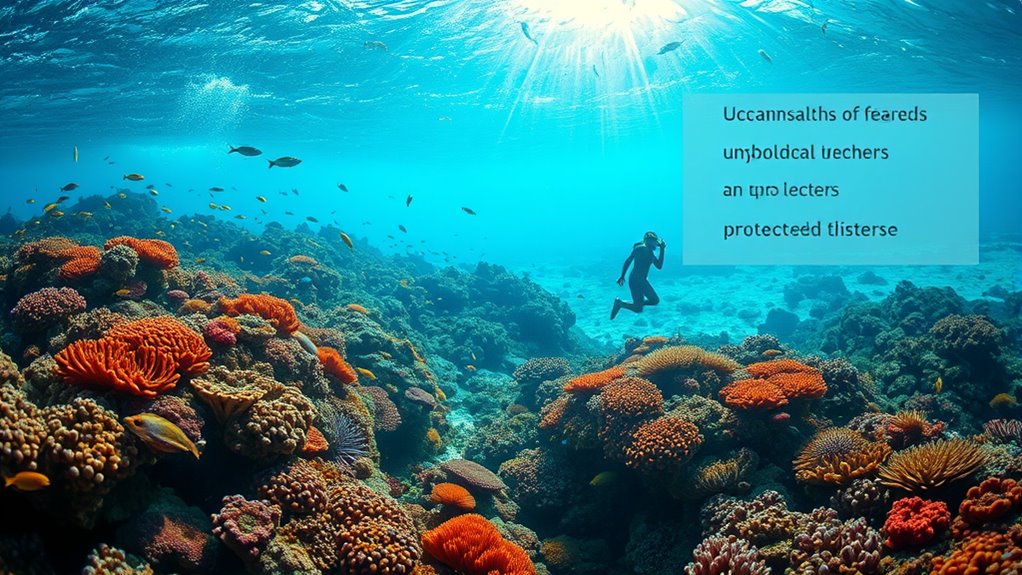
You need to understand that protection levels directly influence an MPA’s success, with no-take zones offering the greatest ecological benefits. These reserves can boost fish biomass by up to 670%, far surpassing partial protections. Stronger protections lead to healthier, more resilient ecosystems, making their design choices vital for conservation outcomes. Additionally, the effectiveness of these measures depends heavily on proper enforcement and compliance, ensuring that regulations are upheld and ecosystems are truly safeguarded. The implementation of effective enforcement strategies can significantly enhance the success of marine protected areas. Moreover, incorporating sustainable management practices can optimize ecological and socioeconomic benefits, fostering long-term ocean health.
Protection Levels Matter
The level of protection offered by marine protected areas directly influences their effectiveness in conserving marine life. Strong protections, like no-take zones, dramatically boost biomass and ecosystem health. These reserves often see fish biomass 670% higher than unprotected areas, supporting larger predators like sharks. In contrast, partially protected MPAs may restrict some activities but typically provide fewer ecological benefits. Their fish biomass increases by only 183%, and they often lack significant ecosystem recovery. Key features that enhance protection include enforcement, size, age, and isolation. Protection effectiveness is maximized when MPAs are well enforced and properly designed. Additionally, emotional support for communities affected by restrictions can improve compliance and overall success. Well-designed MPAs also incorporate natural materials to blend seamlessly with the environment, supporting ecosystem resilience. The presence of enforcement, size, and age are crucial factors, as they directly impact the ecological gains observed in well-managed reserves. No-take zones maximize biomass and predator populations — Larger, older MPAs tend to show greater ecological gains — Strong enforcement ensures protection and ecosystem resilience. Furthermore, enforcement and compliance are essential to prevent illegal activities that can undermine the entire protection effort.
Effectiveness of No-Take Zones
No-take zones stand out as the most effective form of marine protection, delivering markedly higher ecological benefits than partially protected areas. They increase fish biomass 670% compared to unprotected zones and support thriving populations of sharks and apex predators. These reserves restore ecosystem complexity and foster resilience through trophic cascades. In contrast, partially protected MPAs boost fish biomass by only 183%, often with limited impact. The table below compares their outcomes:
| Protection Type | Fish Biomass Increase | Key Features |
|---|---|---|
| No-take zones | 670% | No fishing, strict enforcement, isolation |
| Partial protections | 183% | Restricted activities, variable enforcement |
| Unprotected areas | Baseline | No restrictions |
The Role of Enforcement and Management in MPA Success

Effective enforcement and management are critical drivers of Marine Protected Area (MPA) success, as they determine whether conservation goals are met and ecosystems recover. When rules are enforced consistently, marine life rebounds faster, especially in no-take zones. Proper management ensures resources are allocated efficiently and compliance is maintained. Without strong oversight, MPAs may become ineffective, allowing illegal activities to persist. To maximize impact, focus on:
- Ensuring consistent enforcement to prevent poaching and illegal fishing
- Designing MPAs that are large, well-connected, and older than 10 years
- Incorporating community involvement for local support and compliance
- Understanding the importance of cookie management and transparency in fostering trust and cooperation among stakeholders
These strategies help sustain biodiversity, promote ecosystem resilience, and achieve long-term conservation benefits. Strong enforcement and management are essential for turning protected areas into thriving ocean refuges, as effective management can significantly influence the recovery of marine ecosystems. Additionally, investing in monitoring and evaluation ensures that management strategies adapt to changing conditions and remain effective over time. A focus on stakeholder engagement can also enhance compliance and shared responsibility, further improving conservation outcomes.
Insights From Regional Case Studies: California and Beyond

Regional case studies, such as those from California, provide valuable insights into how Marine Protected Areas (MPAs) function in real-world settings. California’s MPAs, especially the Channel Islands, demonstrate that older and larger MPAs tend to support higher fish biomass and more diverse habitats. Initially, fish populations increased by around 31%, but fluctuations over time highlight the importance of enforcement and habitat complexity. You’ll find that well-enforced MPAs with no-take policies consistently outperform poorly managed areas, showing significant rebounds in key species like sharks and large fish. Additionally, real-time monitoring capabilities can play a critical role in enhancing enforcement and adaptive management practices. Beyond California, regions like Australia and the Mediterranean reveal similar trends: protected zones with strict regulations foster healthier ecosystems. These case studies underscore that age, size, and management quality are vital for MPAs to deliver meaningful ecological benefits. The use of advanced monitoring technology can further enhance management effectiveness and long-term success of these protected areas.
Key Features That Make Marine Protected Areas More Effective

Several key features markedly enhance the success of Marine Protected Areas (MPAs). You’ll find that strong enforcement is vital—without it, protections weaken, and benefits diminish. No-take zones, where fishing is entirely banned, produce the most dramatic ecological gains, like increased fish biomass and healthier ecosystems. Isolation also matters; MPAs separated by deep water or sand barriers tend to be more effective, limiting human impact and preventing illegal activities. Additionally, age and size are important: MPAs older than 10 years and larger than 100 km² see the greatest ecological improvements. To maximize impact, you should look for MPAs with these traits: well-enforced regulations, no-take designation, and sufficient size and age. Effective conservation strategies are essential for ensuring long-term benefits for ocean life. Furthermore, incorporating scientific research can guide adaptive management practices that improve MPA effectiveness over time. Robust monitoring and evaluation systems are also crucial for tracking progress and making data-driven adjustments. When designing MPAs, considering local community involvement can significantly boost compliance and support for conservation efforts.
Challenges in Monitoring and Assessing MPA Performance

Monitoring MPAs remains limited, with only a small fraction of protected areas regularly evaluated, leaving many gaps in understanding their true impact. You’ll find that data transparency is often lacking, making it hard to evaluate success or identify areas needing improvement. Without consistent and open data, assessing how well MPAs perform becomes a significant challenge for conservation efforts. Additionally, implementing effective skincare patches requires careful timing and placement to maximize their benefits and ensure optimal skin health. Enhancing data collection methods can improve monitoring accuracy and support more effective conservation strategies, especially as innovative tools and technologies continue to evolve.
Limited Monitoring Coverage
Why does monitoring marine protected areas remain a significant challenge? Limited coverage hampers your ability to accurately evaluate MPA success. Only 8% of protected waters undergo regular monitoring, and just a small fraction provide all-encompassing ecological and socioeconomic data. Without consistent, transparent data, it’s hard to determine if MPAs achieve their intended goals. This scarcity of information weakens global efforts to improve ocean health and protect marine life.
Key issues include:
- Inconsistent monitoring practices across different regions
- Lack of publicly available or long-term data
- Resource constraints that limit all-inclusive assessments
These gaps make it difficult to assess true ecological improvements, identify ineffective MPAs, and guide future conservation strategies effectively. Without better coverage, your understanding of MPA impacts remains incomplete.
Data Transparency Gaps
Despite the recognized importance of MPAs for marine conservation, a significant challenge remains: a lack of transparency in data collection and reporting. Many MPAs don’t regularly monitor ecological or socioeconomic outcomes, making it difficult to gauge their true impact. Limited access to data hinders accountability and informed decision-making. Without consistent reporting, you can’t compare MPAs or identify best practices. This opacity weakens trust among stakeholders and reduces support for protection efforts. The following table highlights key barriers:
| Barrier | Impact |
|---|---|
| Inconsistent Monitoring | Data gaps prevent accurate assessments |
| Limited Funding | Restricts long-term data collection |
| Lack of Standardization | Difficult to compare MPAs globally |
| Confidential Data | Hinders transparency and stakeholder trust |
| Insufficient Reporting | Undermines adaptive management and policy updates |
Effectiveness Evaluation Challenges
Evaluating how well Marine Protected Areas (MPAs) actually work remains a significant challenge due to difficulties in collecting accurate and extensive data. You face hurdles like limited monitoring resources, inconsistent methods across regions, and insufficient long-term studies. Without reliable data, it’s hard to determine if MPAs achieve their conservation goals.
- Many MPAs lack regular, transparent monitoring, making it difficult to track ecological changes over time.
- Only a small percentage have exhaustive data on both ecological and socioeconomic impacts.
- The absence of standardized evaluation metrics hampers comparisons and overall assessment.
These gaps undermine confidence in MPA effectiveness and hinder adaptive management strategies. To truly gauge success, you need consistent, long-term monitoring that captures ecological, social, and economic outcomes across diverse locations.
The Importance of MPA Age and Size in Conservation Results

The age and size of a Marine Protected Area (MPA) considerably influence its conservation success. Older MPAs, especially those over 10 years, tend to show greater ecological benefits, like increased fish and shark populations. This is because ecosystems need time to recover and rebuild complex food webs. Larger MPAs, over 100 km², also support healthier, more diverse communities by providing ample space for species to thrive without frequent human disturbances. When you combine age and size, you see ideal results—robust fish biomass, healthier shark populations, and improved ecosystem resilience. Smaller or newer MPAs often lack enough time or space to realize their full potential. Consequently, prioritizing both age and size in MPA design helps maximize conservation outcomes and strengthens ocean health over the long term.
Strategies for Expanding and Improving Marine Protection Measures

Expanding and improving marine protection measures requires targeted strategies that enhance both coverage and effectiveness. To do this, focus on establishing larger, well-enforced MPAs with no-take policies, ensuring they are older than 10 years and isolated by natural barriers. Strengthen enforcement through technology like remote monitoring and patrols to reduce illegal activities. Prioritize expanding protections in underrepresented regions, especially outside the central Pacific, to close coverage gaps. Collaborate with local communities and stakeholders to gain support and compliance. Additionally, invest in consistent monitoring and transparent data sharing to assess ecological impacts. Key strategies include:
- Creating larger, well-enforced MPAs with no-take zones
- Enhancing monitoring and enforcement technology
- Expanding protections into underserved regions
Frequently Asked Questions
How Does Enforcement Influence MPA Ecological Outcomes?
Enforcement directly impacts MPA ecological outcomes by ensuring compliance with protection rules, which leads to healthier, more abundant marine life. When enforcement is strong, fish biomass, especially large fish and sharks, increases markedly, sometimes doubling or more compared to poorly enforced areas. You’ll see better ecosystem resilience, trophic cascades, and long-term benefits. Without proper enforcement, protections weaken, and MPAs often fail to deliver their full ecological potential.
Are Partially Protected MPAS Truly Effective for Conservation?
Partially protected MPAs are like a half-open door—they offer some safety but still let in threats. While they boost fish biomass by 183% compared to unprotected areas, they often lack the full strength needed for true conservation. Without no-take policies and strong enforcement, their impact is like a candle flickering in the wind—fragile and limited. For lasting change, stricter protections are essential to truly safeguard ocean life.
What Are the Main Barriers to Increasing Ocean Protection Levels?
You face barriers like limited funding, which restricts establishing and enforcing MPAs. Political resistance and competing economic interests, such as fishing and oil drilling, slow progress. Lack of extensive monitoring and data makes it hard to prove benefits, discouraging further protection efforts. Additionally, many areas lack awareness or support from local communities, making it challenging to expand and effectively manage high-quality MPAs worldwide.
How Does Habitat Diversity Affect MPA Success?
Habitat diversity boosts MPA success by supporting a wide range of species and promoting ecosystem resilience. When your MPA includes various habitats like reefs, sandy bottoms, and kelp forests, it creates a more stable environment that attracts and sustains larger, healthier populations. This diversity enhances ecological interactions, helps ecosystems recover from disturbances, and fosters biodiversity, making your protected area more effective in restoring and maintaining vibrant, resilient ocean life.
Can Smaller MPAS Still Provide Significant Ecological Benefits?
Smaller MPAs can still offer ecological benefits, especially if they’re well-enforced and strategically located. They boost fish biomass and protect key species like sharks, but their impact might be limited compared to larger reserves. To maximize benefits, focus on enforcing no-take policies, ensuring good habitat diversity, and connecting them with larger protected areas. Even small MPAs, when managed properly, contribute positively to marine conservation efforts.
Conclusion
You might think MPAs are just paper parks, but when they’re well-managed and enforced, they truly boost ocean life. While some worry about their limited size or coverage, expanding and properly maintaining these areas makes a real difference. So, don’t dismiss MPAs—they’re essential tools in restoring fish and shark populations. With continued effort and smarter strategies, you can help guarantee these protected spaces deliver on their promise for healthier oceans.
Fall Picks
fall essentials
As an affiliate, we earn on qualifying purchases.