Wildlife crossings really do work. They markedly reduce animal-vehicle collisions, sometimes by up to 90%, while helping reconnect fragmented habitats. These crossings attract diverse species, from large mammals to reptiles, encouraging natural movement and supporting biodiversity. They also improve road safety by minimizing hazards and vehicle damage. The success stories from places like Banff and the Netherlands prove their effectiveness. If you’re curious about how these structures benefit ecosystems and communities, there’s more to discover below.
Key Takeaways
- Wildlife crossings significantly reduce animal-vehicle collisions, with some areas reporting decreases of up to 80-90%.
- Research and real-world examples, like Banff and the Netherlands, demonstrate high usage by diverse species.
- Properly placed crossings reconnect fragmented habitats, supporting animal movement and genetic flow.
- They enhance ecosystem health and biodiversity by facilitating safe migration routes.
- Overall, wildlife crossings are proven effective investments for both conservation and road safety.
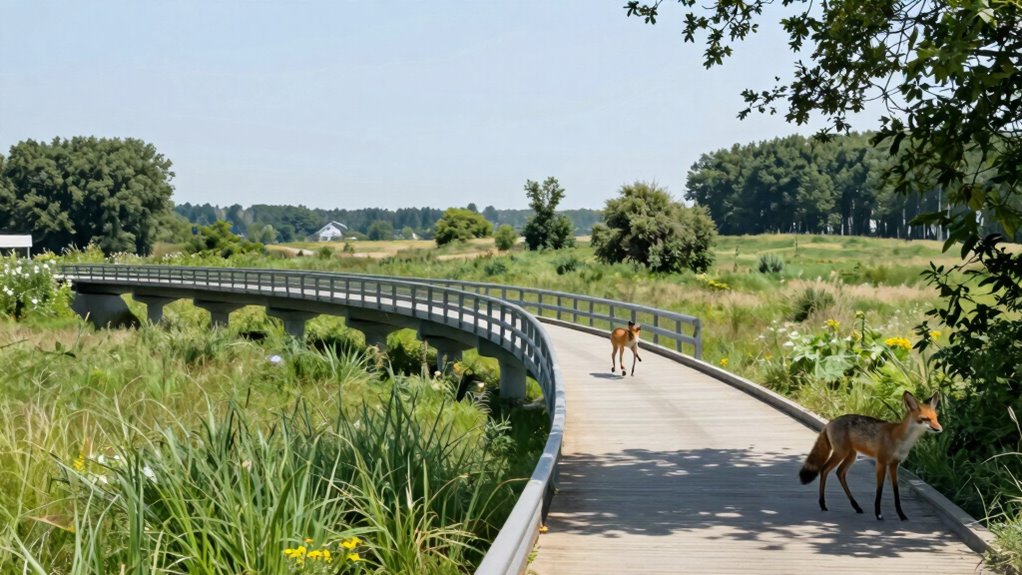
Wildlife crossings have become a essential tool in reducing vehicle collisions with animals and preserving biodiversity. When roads cut through natural habitats, they often create barriers that fragment ecosystems. This habitat fragmentation isolates animal populations, making it harder for them to find mates, forage for food, or migrate seasonally. As a result, many species face declining numbers and increased risk of extinction. Wildlife crossings serve as pivotal links, reconnecting these fragmented habitats and allowing animals to move safely across busy roads without risking their lives.
Wildlife crossings reconnect habitats, reduce vehicle collisions, and help protect endangered species and biodiversity.
By providing dedicated pathways—such as overpasses and underpasses—these crossings markedly improve road safety for drivers and passengers. Collisions with animals can cause serious accidents, injuries, and even fatalities. When animals unexpectedly wander onto roads, they pose a serious hazard, especially at night or in poor visibility conditions. Wildlife crossings mitigate this risk by guiding animals away from traffic zones, reducing the likelihood of crashes, and making roads safer for everyone. This not only protects human lives but also minimizes vehicle damage and associated costs.
The effectiveness of wildlife crossings isn’t just theoretical; it’s backed by a growing body of research and real-world examples. In areas like Banff National Park in Canada and the Netherlands, studies show that crossings can reduce animal-vehicle collisions by up to 80-90%. These crossings attract a wide range of species—from large mammals like elk and deer to smaller creatures such as reptiles and amphibians. The natural behavior of animals is to use these safe passages, especially when they’re well-designed and placed strategically in high-traffic zones or migration corridors. Additionally, the presence of habitat connectivity encourages animals to utilize these crossings naturally, further increasing their effectiveness. This connectivity also supports species conservation efforts by reducing stress and promoting natural movement patterns. Moreover, these crossings contribute to broader biodiversity preservation, ensuring the survival of diverse ecosystems in the face of ongoing environmental pressures. A well-planned design that considers animal behavior can significantly increase the likelihood that species will adopt these routes.
Furthermore, wildlife crossings contribute to the long-term health of ecosystems by facilitating gene flow among populations. When animals can move freely across landscapes, genetic diversity stays robust, reducing inbreeding and helping species adapt to environmental changes. Habitat fragmentation can be mitigated effectively through these structures, supporting biodiversity conservation efforts. These crossings also support conservation efforts, especially for endangered or threatened species, by creating safe routes that enable natural behaviors to continue uninterrupted.
In essence, wildlife crossings work on multiple levels. They enhance road safety for humans, prevent unnecessary animal deaths, and promote healthier, more resilient ecosystems. The evidence clearly shows that investing in these structures is a practical, effective way to address habitat fragmentation, reduce vehicle-animal collisions, and promote coexistence between humans and wildlife. When designed and implemented properly, wildlife crossings become a win-win solution—protecting lives on both sides of the road while preserving the natural world for generations to come.

Wildlife Crossing Sign Slow Down Signs with Stake Watch for Animals Sign Caution Drive Slowly Safety Sign for Street Rustproof Reflective Aluminum Sign for Neighborhoods
- Durable Construction: Rustproof reflective aluminum material
- Clear Warning Messaging: Bold text for wildlife protection
- Eco-Friendly Design: Promotes environmental awareness
As an affiliate, we earn on qualifying purchases.
As an affiliate, we earn on qualifying purchases.
Frequently Asked Questions
How Long Does It Take to See Results After Installing Wildlife Crossings?
You might start seeing positive results within a few months to a couple of years after installing wildlife crossings. It depends on factors like the crossing design and how quickly local animals adapt to it. As migration patterns adjust, you’ll notice more animals safely crossing and fewer vehicle collisions. Regular monitoring helps track progress, but patience is key as wildlife gradually change their movement habits to use the new crossings.
Are Wildlife Crossings Cost-Effective Compared to Other Conservation Methods?
Wildlife crossings are generally cost-effective when you do a thorough benefit assessment and cost comparison. While upfront costs can be high, they reduce vehicle-wildlife collisions, saving lives and property, and minimizing ecological damage. Compared to other conservation methods like habitat restoration, crossings offer a targeted, efficient solution that benefits both animals and drivers. Overall, investing in wildlife crossings often proves more economical and impactful over the long term.
What Species Benefit Most From Wildlife Crossing Structures?
You’ll find that large mammals, like deer and elk, benefit most from wildlife crossing structures because they considerably enhance species migration and crossing effectiveness. These crossings help prevent vehicle collisions and habitat fragmentation, making migration safer and more seamless. Smaller animals and amphibians also gain, but the crossings are especially crucial for species that travel long distances or are prone to road mortality. Overall, these structures support healthier, more connected ecosystems.
How Do Wildlife Crossings Impact Local Human Communities?
Wildlife crossings act like bridges linking nature and neighborhoods, weaving urban integration into the landscape. You’ll notice safer roads and fewer accidents, as these structures calm traffic and give animals a safe passage. For local communities, this means enhanced safety and a stronger bond with nature. You become part of a bigger picture—protecting wildlife while keeping everyone safe, transforming busy roads into harmonious pathways where humans and animals coexist peacefully.
Can Wildlife Crossings Be Adapted for Future Climate Change Challenges?
Yes, wildlife crossings can be adapted for future climate change challenges. You can enhance their structural resilience by using materials resistant to extreme weather, and incorporate climate adaptation strategies like drought-tolerant vegetation or water management features. This guarantees crossings remain functional despite changing conditions, protecting wildlife corridors and maintaining ecological connectivity. By proactively designing for climate resilience, you help secure the crossings’ effectiveness in a rapidly evolving environment.
Conclusion
You can see that wildlife crossings really do work. For example, a study in Banff National Park showed a 80% reduction in animal-vehicle collisions after installing crossings. Imagine you’re driving and spot a safe passage over busy roads, knowing it helps keep animals like elk and bears safe. These crossings aren’t just bridges; they’re lifelines that connect ecosystems and save lives—both human and animal. So yes, wildlife crossings truly make a difference.