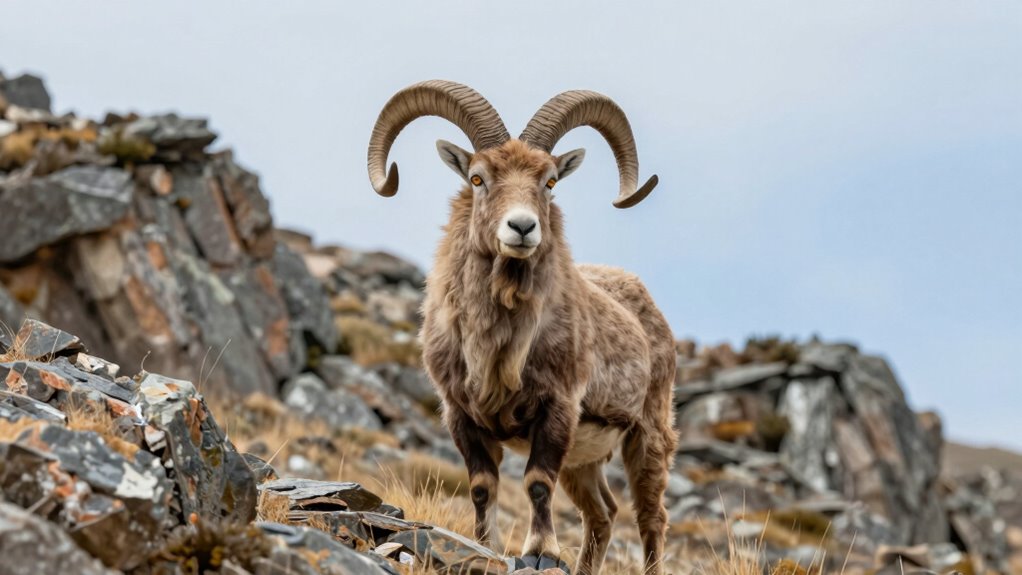

The markhor is a stunning wild goat with twisted, spiraled horns, known for its agility in rugged mountain terrains across Central Asia and the Middle East. It once faced decline due to habitat loss and overhunting, but conservation efforts like protected areas and sustainable hunting have helped its population recover. Local communities now play an essential role in safeguarding this species, proving that collaboration benefits both wildlife and people. If you want to discover more about this incredible comeback story, keep exploring.

Prime made for students and young adults
- Fast, free delivery for dorm and study essentials
- Prime Video and Amazon Music included
- Member-only deals
Key Takeaways
- The markhor is a wild goat known for its distinctive twisted, spiral horns and resilience in rugged mountain habitats.
- Historically threatened by overhunting and habitat loss, leading to population declines.
- Conservation efforts, including protected areas and regulated hunting, have helped boost markhor populations.
- Local community involvement and sustainable practices are crucial for the species’ ongoing recovery.
- The markhor’s comeback exemplifies successful collaborative conservation balancing wildlife needs and human livelihoods.

The markhor, a striking wild goat with twisted horns, roams the rugged mountains of Central Asia and the Middle East. Its impressive spiraled horns and agile movements make it a symbol of wilderness resilience. You might wonder how such a remarkable animal has survived in harsh, rocky terrains. The answer lies partly in habitat conservation efforts, which have become essential for its survival. Over the years, human activity threatened the markhor’s habitat through deforestation and overgrazing, reducing their living spaces and endangering their populations. Recognizing this, conservationists have worked to protect the mountain ecosystems where the markhor thrives, establishing protected areas that safeguard their natural habitat. These efforts help guarantee that the goat has enough space and resources to survive and reproduce, keeping their populations stable. Additionally, innovative conservation strategies like water management and habitat restoration have played vital roles in supporting the species’ recovery. Promoting awareness about biodiversity has also been crucial in rallying support for the species’ continued protection. Recognizing the importance of ecosystem health, conservationists emphasize maintaining the delicate balance within mountain environments to ensure long-term survival.
Furthermore, engaging local communities in conservation initiatives has proven to be a key factor in fostering sustainable coexistence. However, the story isn’t just about conservation policies. Traditional hunting has also played a complex role in the markhor’s history. Historically, local communities hunted the animal for its meat, hide, and horns, often as part of cultural or subsistence practices. While this hunting was sustainable at times, overhunting in some areas led to sharp declines in population. Today, many conservation programs incorporate regulated hunting licenses, which serve as an indispensable tool for funding ongoing habitat conservation and community engagement. You might see these programs as a way to balance human needs with wildlife preservation. By allowing limited, controlled hunting, local communities gain economic incentives to protect the markhor rather than see it disappear. This approach encourages local people to become stewards of the species, fostering coexistence rather than conflict.
The success of the markhor’s recovery relies heavily on this delicate balance. When habitat conservation is prioritized, and traditional hunting is carefully regulated, the animal’s numbers gradually increase. You can appreciate the significance of this combined effort, as it demonstrates that sustainable practices can help endangered species bounce back. It’s a reminder that conservation isn’t just about protecting animals from humans but working with local communities to create solutions that benefit everyone. The story of the markhor proves that with dedicated habitat conservation, respectful use of traditional hunting, and community involvement, a species on the brink of extinction can find its footing again. As you learn about this remarkable animal, remember that its survival is a demonstration of the power of thoughtful, collaborative conservation efforts.
As an affiliate, we earn on qualifying purchases.
Frequently Asked Questions
What Is the Average Lifespan of a Markhor in the Wild?
You’ll find that the average lifespan of a wild markhor is around 8 to 12 years. Their diet mainly consists of leaves, grasses, and shrubs, which helps them survive in rugged mountainous environments. Social behavior varies, but they often live in small groups or alone. Their adaptability and diet contribute to their resilience, but threats like habitat loss can impact their lifespan and population.
How Do Markhors Communicate With Each Other?
You hear the echoing territorial calls as markhors communicate, their vocalizations piercing the mountain air like a distant thunder. They use scent marking to leave invisible signs on rocks and shrubs, reinforcing social bonds and establishing territory. When they want to connect or warn others, they produce unique vocalizations, blending sounds that carry across rugged cliffs, helping them navigate social bonds and defend their territory amidst the wild, rocky landscape.
Are Markhors Dangerous to Humans?
Markhors aren’t typically dangerous to humans, but they can become aggressive if threatened, especially during mating season or if they feel cornered. If you’re involved in Markhor hunting or encounter them in the wild, it’s essential to maintain a safe distance. Human-wildlife conflict can arise if they feel provoked, so respecting their space helps protect both you and these remarkable animals. Always observe from afar and avoid provoking them.
What Is the Current Conservation Status of the Markhor?
You’ll be thrilled to know the markhor’s conservation status is currently listed as Near Threatened. Despite their impressive spiral horns, they’re not invincible. Their diet mainly includes leaves, grasses, and shrubs, helping them survive in rugged terrains. But watch out for predators like snow leopards and humans, who still threaten their existence. So, while they’re bouncing back, they need ongoing protection to avoid slipping into danger.
How Do Markhors Adapt to Their Mountainous Habitats?
You’ll notice that markhors adapt to their mountainous habitats through specialized mountain survival strategies, like agile climbing and sure-footedness, helping them navigate steep, rocky terrain. They also use predator avoidance tactics, such as remaining vigilant and choosing high, inaccessible spots to escape predators. These adaptations enable them to thrive in rugged environments, ensuring their survival despite challenges like predators and harsh weather conditions in their mountainous homes.
Conclusion
You’ve now glimpsed the markhor’s incredible journey—from the brink of extinction to hope’s resilient symbol. Like a phoenix rising from ashes, this spiral-horned goat reminds us that even in the face of adversity, nature’s spirit can endure and flourish. Keep its story in mind, and remember, sometimes it’s the smallest creatures that teach us the greatest lessons about perseverance and renewal. The markhor’s future, much like ours, depends on hope and action.
Fall Picks
fall essentials
As an affiliate, we earn on qualifying purchases.