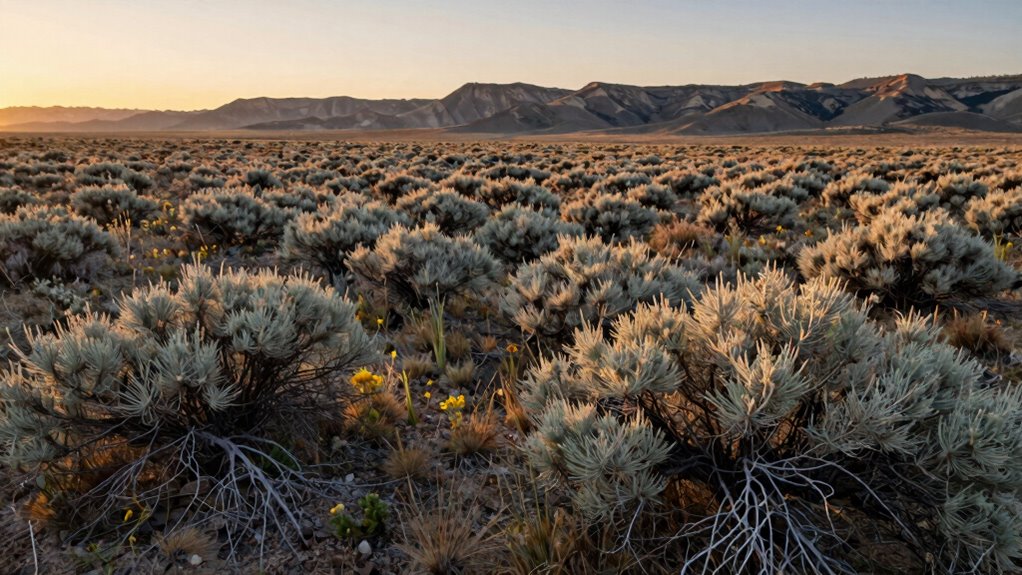

You might think sagebrush country looks barren, but it’s actually rich in ecological, cultural, and environmental value. It provides essential habitat for wildlife like sage grouse and mule deer, supports biodiversity, and helps prevent soil erosion. Indigenous communities also depend on this landscape for traditions and history. Its resilience benefits regional health and stability. Keep exploring, and you’ll discover how much more this seemingly simple landscape truly offers.

Prime made for students and young adults
- Fast, free delivery for dorm and study essentials
- Prime Video and Amazon Music included
- Member-only deals
Key Takeaways
- Sagebrush provides critical habitat and food for native wildlife, supporting biodiversity often overlooked.
- It plays a vital role in maintaining soil stability, preventing erosion, and reducing dust storms.
- Cultural traditions, stories, and spiritual practices are deeply connected to sagebrush landscapes.
- Despite appearing barren, sagebrush ecosystems are rich in life and ecological resilience.
- Protecting sagebrush preserves ecological balance and cultural heritage for future generations.
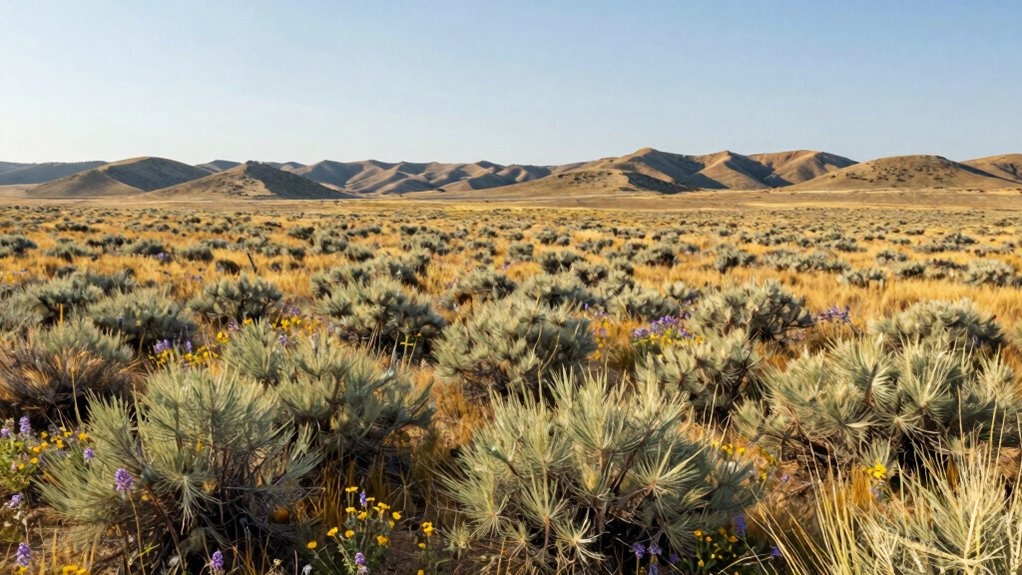
Sagebrush country might seem like an arid, empty landscape, but it holds immense significance that often goes unnoticed. To many, it appears barren and lifeless, but beneath that rugged surface lies a rich tapestry of life, culture, and history. You might not realize it, but this ecosystem serves as a crucial wildlife habitat, supporting numerous species that have adapted to survive in these tough conditions. Birds like sage grouse and mule deer rely heavily on sagebrush for food, cover, and breeding grounds. The plants themselves, though sparse, provide essential nutrients for wildlife, and the interconnected web of life here sustains populations that might otherwise struggle to survive. By protecting this landscape, you’re safeguarding the diverse creatures that depend on it, ensuring the continuation of a delicate ecological balance. Additionally, the resilience of sagebrush ecosystems can be enhanced through habitat restoration efforts, which promote the recovery of native plants and wildlife.
Beyond its ecological significance, sagebrush country also holds profound cultural heritage. Indigenous communities have inhabited these lands for centuries, shaping their traditions, stories, and spiritual practices around the sagebrush landscape. You can trace their history through the artifacts, petroglyphs, and sacred sites scattered across these regions. The plants themselves hold cultural importance—sagebrush has been used for centuries in ceremonies, medicine, and everyday life. Recognizing this deep-rooted connection helps you understand that sagebrush isn’t just a plant or a patch of wilderness; it’s a living reminder of the people who have called this land home long before modern times. Preserving these areas means honoring and maintaining this cultural legacy for future generations.
The landscape’s value extends even further into environmental health. Sagebrush acts as a natural barrier against soil erosion, helping to maintain land stability even during harsh weather. Its roots hold the soil in place, preventing dust storms and land degradation. This, in turn, supports water quality and the overall health of nearby ecosystems. You can think of sagebrush as an unsung guardian of the environment, quietly performing critical functions that benefit the entire region.
sagebrush ecosystem restoration kit
As an affiliate, we earn on qualifying purchases.
As an affiliate, we earn on qualifying purchases.
Frequently Asked Questions
How Does Sagebrush Support Local Wildlife Populations?
You can see that sagebrush supports local wildlife populations by providing essential wildlife habitat. It offers food, shelter, and breeding grounds for many species, including sage grouse and mule deer. This vegetation plays a critical role in biodiversity support, maintaining a healthy ecosystem. As you observe, sagebrush’s resilience and ability to sustain diverse animals highlight its importance beyond its seemingly simple appearance, making it indispensable for regional ecological stability.
What Economic Benefits Does Sagebrush Provide to Nearby Communities?
You benefit economically from sagebrush through its cultural significance and tourism opportunities. The area attracts visitors interested in its unique landscapes and heritage, boosting local businesses like hotels, restaurants, and tour services. Additionally, sagebrush holds cultural value for indigenous communities, fostering cultural tourism and educational programs that generate income. This combination of natural beauty and cultural importance makes sagebrush country a valuable economic resource for nearby communities.
Are There Any Medicinal Uses for Sagebrush?
Yes, sagebrush has traditional medicinal uses and herbal applications. You might find it helpful for remedies like colds, coughs, and skin ailments. Indigenous communities have long used sagebrush in traditional remedies, boiling leaves for teas or applying poultices. Its aromatic properties also make it useful in herbal applications for respiratory relief and anti-inflammatory effects. Keep in mind, always consult a healthcare professional before using sagebrush medicinally.
How Does Sagebrush Contribute to Soil Health?
Sagebrush helps improve soil health by reducing soil erosion, thanks to its extensive root system that stabilizes the ground. It also plays a crucial role in nutrient cycling, breaking down organic matter and returning essential nutrients to the soil. When you see sagebrush thriving, know it’s supporting the land’s resilience, preventing erosion, and enriching the soil, which benefits other plants and ecosystems in the area.
Can Sagebrush Be Used for Renewable Energy Projects?
You might be surprised to learn that sagebrush can play a role in renewable energy projects. While not a direct energy source, sagebrush contributes to sustainable development by supporting ecosystems that benefit bioenergy and alternative energy initiatives. Its resilience makes it valuable for land management in renewable projects. Using sagebrush landscapes responsibly can help promote eco-friendly, sustainable development, balancing energy needs with environmental preservation.
Conclusion
You might see sagebrush as just a quiet, overlooked patch of earth, but it’s really the hidden backbone of a delicate wilderness tapestry. Beneath its unassuming surface, it whispers stories of resilience and life, nurturing countless creatures and shaping the land’s soul. Like a quiet guardian, sagebrush holds a secret energy, reminding you that beauty and worth often hide in the most humble corners—waiting to be appreciated for their true, irreplaceable value.
Fall Picks
fall essentials
As an affiliate, we earn on qualifying purchases.