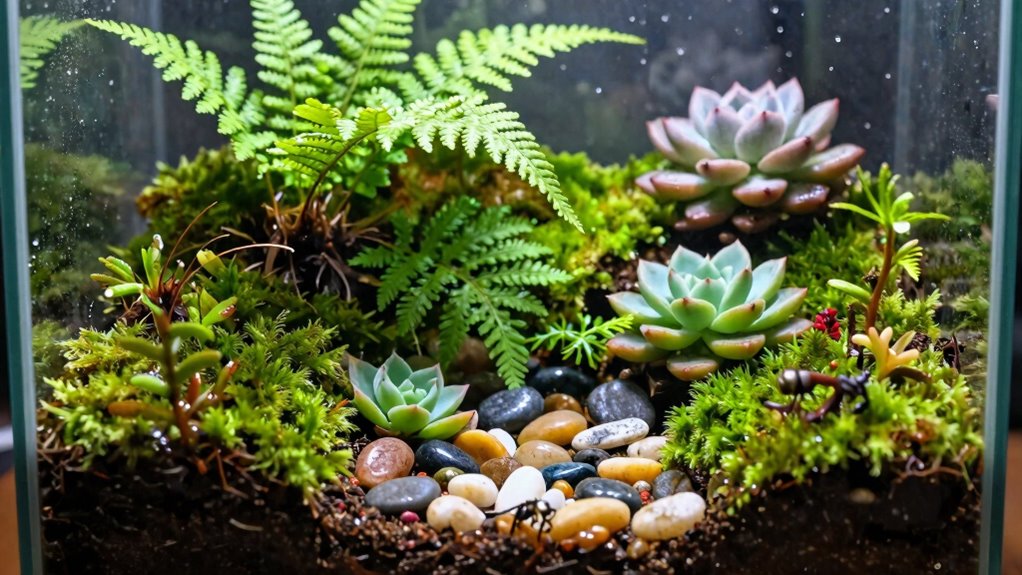

Terrarium kits are a fantastic way to grasp ecosystem thinking. By building your own mini garden, you’ll see how plants, soil, and water interact in a closed environment. You’ll notice how each component plays an essential role in maintaining balance. As you monitor growth and changes, you’ll learn the importance of diversity and cooperation within ecosystems. Plus, the trial-and-error process helps you develop a sustainable mindset. There’s so much more to discover about these tiny worlds.

Prime made for students and young adults
- Fast, free delivery for dorm and study essentials
- Prime Video and Amazon Music included
- Member-only deals
Key Takeaways
- Terrarium kits provide hands-on experience in creating balanced ecosystems, illustrating the interconnectedness of plants, soil, and water.
- Monitoring plant growth in terrariums enhances understanding of biodiversity and the unique adaptations of different species.
- Trial-and-error learning through adjustments in watering and light fosters critical thinking about ecological balance and sustainability.
- The closed environment of a terrarium mirrors natural cycles, emphasizing the importance of organisms and their interactions.
- Crafting a terrarium encourages appreciation for ecological principles, promoting sustainable practices in both mini and larger ecosystems.
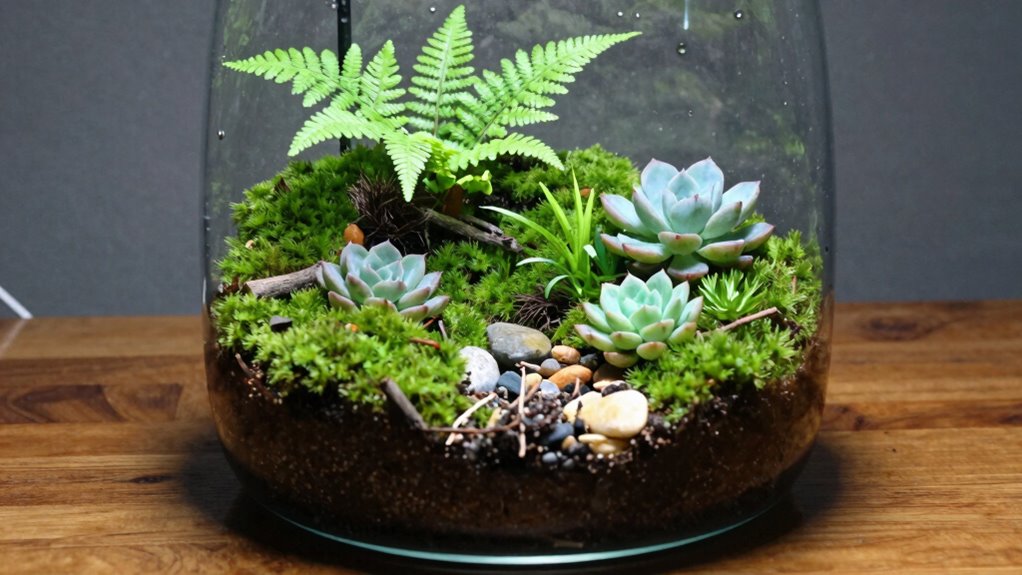
When you immerse yourself in the world of terrarium kits, you’re not just creating a mini garden; you’re exploring the intricate web of ecosystems. Each layer of your terrarium represents a small but essential part of an ecological balance. By choosing different plants, substrates, and decorations, you’re not just making it visually appealing; you’re actively engaging with the principles of sustainability. The closed environment of a terrarium mirrors nature’s cycles, teaching you how various organisms interact with one another and their surroundings.
As you set up your terrarium, you’ll notice how plants rely on soil, water, and light. This interconnectedness helps you appreciate the roles each element plays in sustaining life. For instance, when you add a layer of activated charcoal, you’re ensuring that harmful toxins are filtered out, promoting a healthy habitat for your plants. This small act reflects sustainable practices that are significant in larger ecosystems. You’re learning that sustainability isn’t merely about maintaining a garden; it’s about understanding and respecting the ecological balance.
Building your terrarium also gives you a firsthand look at how ecosystems can thrive or struggle based on the choices you make. If you overwater your plants, you might create a swamp that invites mold, disrupting the delicate balance you’ve worked hard to establish. This trial-and-error process teaches you the importance of moderation and careful observation, skills that are fundamental in ecological thinking. You can’t just throw a bunch of elements together and expect them to flourish; you need to reflect on how each component interacts.
As days turn into weeks, you’ll find yourself monitoring changes in your terrarium. You might notice how certain plants grow faster while others take their time. This observation reflects the diversity found in nature, where different species have unique adaptations. Understanding these differences enriches your knowledge of ecological balance. You’ll start to see how a healthy ecosystem thrives on diversity, resilience, and cooperation among its inhabitants.
In essence, terrarium kits aren’t just a fun project; they’re a gateway to deeper ecological understanding. You’re not only crafting a beautiful piece of art but also cultivating a mindset that values sustainable practices. Each time you look at your terrarium, you’re reminded of the delicate dance of life, the importance of balance, and your role in fostering it, both in your mini garden and the larger world around you.
terrarium kit with plants and soil
As an affiliate, we earn on qualifying purchases.
As an affiliate, we earn on qualifying purchases.
Frequently Asked Questions
What Materials Are Included in a Typical Terrarium Kit?
A typical terrarium kit usually includes several essential terrarium components. You’ll find a glass container, potting soil, small rocks for drainage, and activated charcoal to keep the environment fresh. Some kits feature decorative items like tiny figurines or colored stones. Depending on the kit variations, you might also get live plants or seeds to grow. Each component helps create a balanced environment, letting you design your own miniature ecosystem.
How Long Does It Take to Set up a Terrarium?
Setting up a terrarium usually takes about 30 to 60 minutes, depending on the complexity of your design. You’ll gather your materials, layer the soil, and arrange the plants. After the initial setup, terrarium maintenance is minimal, requiring occasional watering and trimming. Keep an eye on humidity and light, and your terrarium will flourish with little effort. Enjoy watching your tiny ecosystem thrive!
Can Kids Safely Use Terrarium Kits Without Adult Supervision?
Yes, kids can safely use terrarium kits without adult supervision, but it’s essential to make sure they follow safety precautions. You should guide them to handle materials like soil and plants carefully. Encourage child involvement by letting them choose their plants and design their terrarium, fostering creativity. Just remind them not to use sharp tools or chemicals. With a little guidance, they can enjoy a fun, educational experience while staying safe and engaged.
What Types of Plants Are Best for Terrariums?
For your terrarium, consider using succulent varieties like Echeveria or Haworthia, which thrive in small spaces and need minimal watering. Pair them with moss types such as sheet moss or cushion moss to add texture and moisture. These combinations create a balanced environment, allowing you to enjoy a beautiful, low-maintenance setup. Just make sure to provide enough light, and your plants will flourish in their little ecosystem!
How Often Should I Water My Terrarium?
Did you know that overwatering is the most common mistake terrarium owners make? You should water your terrarium about once every two weeks, depending on moisture levels. Check the soil; if it feels dry an inch down, it’s time to water. Maintaining proper moisture is essential for plant health. Remember, it’s better to underwater than overwater—your plants will thrive if you give them just the right amount of humidity!
Conclusion
In a world where nature often feels distant, terrarium kits act like a miniature universe right in your hands. They teach you the delicate balance of ecosystems, showing how every element, from soil to plant, plays an essential role. By nurturing your little garden, you’re not just growing plants; you’re cultivating an understanding of interconnectedness. So, immerse yourself in this hands-on experience and watch your appreciation for nature blossom, one tiny ecosystem at a time.
Columbus Day / Indigenous Peoples' Day Picks
long weekend sales
As an affiliate, we earn on qualifying purchases.