Choosing a science kit for a child is a choice between how much structure the experience should provide. Open-Ended Hands-On Science Kits, such as basic collections of magnets, lenses, measuring tools, and materials for simple investigations, leave room for children to ask their own questions. Guided Project Science Kits organize supplies around particular experiments and provide instructions for completing them. The first tends to suit curious children who enjoy experimenting without a fixed result; the second is a better match for beginners, gift buyers, or families who want an activity they can start right away. The central tradeoff is freedom versus direction, with setup, adult involvement, repeat use, and price shaping which one offers better value.

Prime made for students and young adults
- Fast, free delivery for dorm and study essentials
- Prime Video and Amazon Music included
- Member-only deals
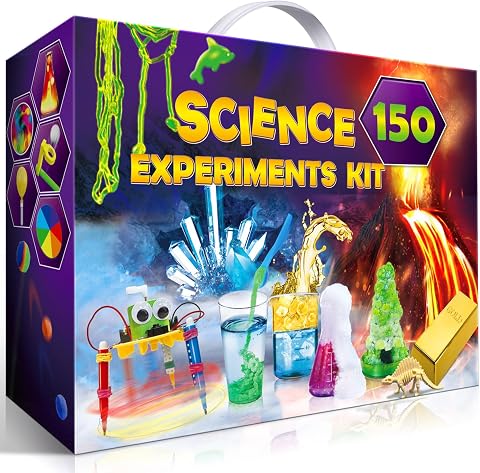
UNGLINGA 150-Experiment Science Kit for Kids
- ✔ Brand: UNGLINGA
- ✔ Experiments: 150
- ✔ Age guidance: 8 years and up
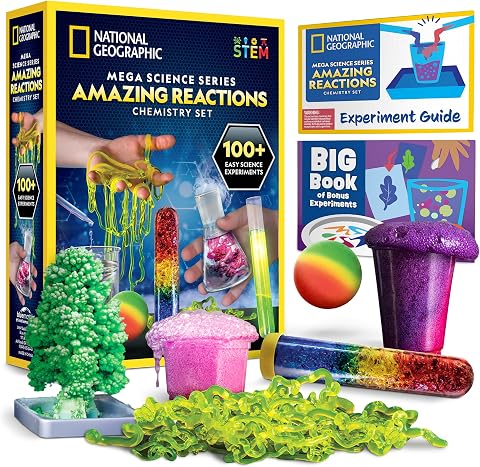
National Geographic Amazing Chemistry Set for Ages 8+
- ✔ Brand: Blue Marble
- ✔ Sub-brand: National Geographic
- ✔ Age guidance: 8 years and up

PW Glow-in-the-Dark Science Experiments Kit for Kids Ages 8–12
- ✔ Brand: PW
- ✔ Age guidance: Description: 8–12 years; recommended-age field: 12 months–3 years
- ✔ Activities: 15+
At a Glance
| Criteria | Open-Ended Hands-On Science Kits | Guided Project Science Kits | Winner |
|---|---|---|---|
| Structure and independence | Open prompts and reusable tools leave the experiment path to the child. | Instructions guide children through named experiments toward expected outcomes. | B |
| Learning and experimentation | Encourages self-directed questions, testing, and adapting ideas. | Makes a concept concrete through a sequence of activities, though some results are prescribed. | A |
| Adult setup and support | Usually requires an adult to suggest activities, explain safe use, or help plan. | Instructions reduce planning, but younger children may still need help with reading and handling materials. | B |
| Age and experience fit | Strong for curious children comfortable with trial and error; younger users may need more guidance. | Often easier for beginners when instructions and activities match the child’s age. | Depends |
| Repeat use and flexibility | Tools can support many investigations, especially when paired with household materials. | Experiments are easy to repeat, but a kit may see less use once its projects are complete. | A |
| Value for money | Often better long-term value if the child keeps using the tools. | Higher cost can be worthwhile for clear instructions, well-matched materials, and reliable engagement. | Depends |
UNGLINGA 150-Experiment Science Kit for Kids
UNGLINGA earns our Best Overall role through breadth. Its 150 listed experiments span chemistry, physics, earth science, and surface tension, giving a curious child more paths to follow than either chemistry-centered alternative. That variety can help a family find a topic that holds attention over time, instead of exhausting a single theme quickly.The illustrated, step-by-step manual and included tools and materials make this a more explicitly equipped option than PW, whose component list only identifies a manual. Goggles are also listed among the child-friendly tools. Still, the 150 count should not be read as 150 fully self-contained activities: some projects use household items. National Geographic makes a similar distinction, but specifies 15 experiments with included materials and 85 additional ideas. UNGLINGA’s range wins for exploration, while National Geographic’s chemistry focus and named glassware-style tools make its setup easier to picture.Choose this kit for variety across science topics and a guide-led sequence of activities. It is less compelling if you want every project’s materials clearly accounted for in advance or prefer a concentrated chemistry set. Families should review each activity before starting to identify any household supplies it calls for.
Pros:
- Lists 150 experiments across several science areas.
- Includes tools and materials, with goggles among the listed child-friendly equipment.
- Illustrated, step-by-step instructions support guided activities.
- Some projects use common household items, potentially extending the kit’s activities.
Cons:
- Some household supplies are not included.
- The broad experiment count does not specify how many activities are ready to do entirely from the box.
Best for: Children aged 8 and up who want to move among chemistry, physics, earth science, and other hands-on topics.
Not ideal for: Families seeking a chemistry-only kit or expecting every listed experiment to use materials supplied in the box.
Bottom line: We recommend UNGLINGA for families who value the widest topic range and can check ahead for household supplies.
“We recommend UNGLINGA for families who value the widest topic range and can check ahead for household supplies.”
National Geographic Amazing Chemistry Set for Ages 8+
National Geographic is the most focused chemistry choice in this lineup. The kit pairs materials for 15 experiments with test tubes, beakers, and pipettes, so its appeal is not just a long activity list: it gives children familiar equipment to use while exploring chemical reactions and crystal growing. Compared with UNGLINGA’s cross-subject scope, that clear chemistry identity may make it easier to choose for a child already fascinated by mixing, observing, and growing materials.Its stated total of 100-plus experiments needs context. Only 15 are described as using included materials; the 85 bonus activities rely on common household items. This makes it more transparent than PW about a core set of supplied experiments, but families should not assume the full catalogue is ready without extra preparation. UNGLINGA lists more experiments overall and a wider range of subjects, while National Geographic offers the more specific chemistry setup.Pick this set when chemistry and hands-on lab tools are the draw. It is not the best match for a child who wants variety across earth science and physics, or for caregivers who want every activity to be self-contained. Its age guidance starts at eight, so younger children may need a different activity or close adult support.
Pros:
- Includes materials for 15 experiments.
- Provides test tubes, beakers, and pipettes for hands-on chemistry activities.
- Adds 85 household-item activities to extend the guide.
- Covers engaging examples such as crystal growing and chemical reactions.
Cons:
- The 85 bonus activities require common household items.
- Its subject range is narrower than UNGLINGA’s multi-topic kit.
- Age guidance begins at 8 years.
Best for: Children aged 8 and up who are especially interested in chemical reactions, crystal growing, and using lab-style tools.
Not ideal for: Families looking for an all-subject science sampler or a kit in which all 100-plus activities have materials included.
Bottom line: We’d choose this set for a chemistry-minded child who will enjoy the supplied tools and whose adult can help source materials for bonus activities.
“We’d choose this set for a chemistry-minded child who will enjoy the supplied tools and whose adult can help source materials for bonus activities.”
PW Glow-in-the-Dark Science Experiments Kit for Kids Ages 8–12
PW gives the roundup its most distinctive visual hook: glowing slime and luminous reactions. For children drawn to experiments they can see change, the glow theme may make chemistry and physics feel more immediate than a general activity collection. Its more than 15 activities and illustrated manual also suggest a guided introduction, with the option to work independently or alongside an adult.That focused appeal comes with less documented breadth and kit detail than the other picks. UNGLINGA offers 150 experiments across several science topics, and National Geographic names both 15 supplied-material chemistry experiments and specific tools. PW’s description also mentions 15-plus activities, but its component list identifies only the instruction manual, leaving the included experiment materials unclear. That uncertainty makes it harder to know how much preparation is needed before beginning.There is a further detail families should resolve before choosing: the product title and description target ages 8–12, while the recommended-age field says 12 months–3 years. We treat that mismatch as a meaningful product-information problem. This kit makes the most sense for families specifically seeking glow-themed activities who can confirm age suitability and kit contents. Those wanting clear material lists or broader subject coverage should consider one of the other two.
Pros:
- More than 15 hands-on chemistry and physics activities.
- Glow-in-the-dark slime and luminous reactions give the kit a distinctive visual theme.
- Illustrated manual offers step-by-step guidance.
- Described for independent use or activities with an adult.
Cons:
- The included-components list names a manual but does not detail experiment materials.
- Age guidance conflicts: the description says 8–12, while the recommended-age field says 12 months–3 years.
- Offers fewer stated activities and narrower topic coverage than UNGLINGA.
Best for: Families seeking glow-themed chemistry and physics activities for a child in the stated 8–12 age range, after confirming the conflicting age information.
Not ideal for: Buyers who need a reliable age listing, a detailed inventory of included experiment materials, or a broad multi-topic kit.
Bottom line: We’d consider PW for its glow-focused appeal only after confirming the appropriate age range and which experiment materials come in the box.
“We’d consider PW for its glow-focused appeal only after confirming the appropriate age range and which experiment materials come in the box.”
As an Amazon Associate we earn from qualifying purchases.
Key Differences
The key difference is what the kit asks the child to do first. With an open-ended collection, a child might test which objects a magnet attracts, compare how far it works through different materials, and change the question along the way. That can make the activity feel personal and support flexible thinking. It also shifts some work to the adult: someone may need to propose a starting point, check that materials are safe, and help turn an observation into another experiment.
A guided project kit provides that starting point in its instructions. Children can follow a sequence and see how materials relate to a result, which is useful when they have little experience or want a self-contained activity. The tradeoff is that a fixed set of projects may leave less room for invention, and the kit may lose appeal after the instructions have been completed. For repeated use, adaptable tools have an advantage; for a dependable first activity, guidance can be worth paying for.
Detailed Comparison
Structure and independence (Guided Project Science Kits wins — moderate)
Guided Project Science Kits win by a moderate margin for children who want a clear next step: the instructions set out what to do and what to observe. Open-Ended Hands-On Science Kits give more choice, but a child who is unsure how to begin may stall unless an adult helps frame a question. The practical difference is whether the kit itself supplies the activity plan.
Learning and experimentation (Open-Ended Hands-On Science Kits wins — moderate)
Open-Ended Hands-On Science Kits have a moderate edge for children ready to test their own ideas. They can change one variable, compare results, and follow an unexpected observation instead of stopping at a prescribed outcome. Guided Project Science Kits can explain a concept clearly through a planned experiment, but children may focus on completing the steps rather than forming their own questions.
Adult setup and support (Guided Project Science Kits wins — moderate)
Guided Project Science Kits win by a moderate margin because their instructions usually reduce the planning an adult needs to do. That does not mean every project is independent: adults may need to help younger children read directions, handle materials, or supervise. Open-Ended Hands-On Science Kits need more adult input at the start, especially when the child lacks ideas or the included tools do not come with activity prompts.
Age and experience fit (moderate difference)
The winner depends on the child and the instructions. A beginner often benefits from the structure of a guided kit, provided the reading level and activities suit their age. An older or more experienced child may prefer open-ended tools that leave room to make choices. Age labels alone offer limited guidance: look at whether the child can follow the instructions, use the materials safely, and stay interested in the type of activity.
Repeat use and flexibility (Open-Ended Hands-On Science Kits wins — moderate)
Open-Ended Hands-On Science Kits win by a moderate margin when they include useful tools that work across many questions. A magnifier or magnet can support new investigations with different household objects, so the kit can stay relevant after the first afternoon. A guided kit is easy to repeat when its experiments are satisfying, though a collection built around a few specific projects can feel finished sooner.
Value for money (moderate difference)
Neither format automatically offers better value. Open-ended kits can provide more use per purchase when children return to the tools and adults can help supply simple materials. Guided kits justify a higher price when their instructions, project variety, and age fit make the child likely to use them without extensive planning. The better buy is the one that removes the barrier your family actually faces: a lack of ideas or a lack of structure.
Open-Ended Hands-On Science Kits: Pros and Cons
Pros:
- Encourages children to ask questions and test their own ideas.
- Reusable tools can support many activities beyond the first set of experiments.
- Can suit children who already enjoy exploring how things work.
Cons:
- May require an adult to suggest activities and explain safe use.
- Can frustrate a child who wants clear, immediate instructions.
- The kit’s usefulness depends on the included tools and the child’s willingness to experiment.
Guided Project Science Kits: Pros and Cons
Pros:
- Instructions provide an immediate starting point for beginners.
- A planned experiment can make a scientific idea easier to observe and discuss.
- Self-contained projects can be convenient for a gift or a scheduled activity.
Cons:
- Some kits offer limited room to change the experiment or invent new ones.
- A child may finish the listed projects and lose interest.
- Adults may still need to supervise, assist with reading, or manage materials.
Who Should Choose What
Choose Open-Ended Hands-On Science Kits if:
- Your child often asks how things work and likes testing possible answers.
- You want tools that can be reused with different household materials.
- You are comfortable helping your child invent questions or find a starting activity.
Choose Guided Project Science Kits if:
- Your child is new to science activities and benefits from clear steps.
- You want a ready-to-start project with less activity planning.
- A child is more likely to stick with a task when the instructions show what comes next.
Skip both if: Skip both if the child is unlikely to use the materials safely or the kit’s age level, reading demands, or project themes do not match their interests.
Value for Money
Pay more for a guided kit when it meaningfully lowers the effort needed to get an experiment underway. For a beginner, clear instructions and thoughtfully chosen materials can turn a box into a usable activity instead of a pile of supplies. The premium makes less sense if the child will quickly outgrow a short list of projects. An open-ended kit is often better value for repeated use, but only when the child enjoys exploration and an adult can occasionally help with ideas. Compare the number and variety of activities with the child’s likely interest, rather than treating a larger box or higher price as proof of better value.
Final Verdict
Choose Guided Project Science Kits for a beginner or for a family that wants a structured activity with a clear starting point. Choose Open-Ended Hands-On Science Kits for a child who likes to test ideas and is likely to return to versatile tools. For most first-time buyers who are unsure how independently a child will use a kit, a well-matched guided set is the safer choice because it supplies the activity plan. Pay more for that structure only when the instructions and projects fit the child’s age and interests; otherwise, a flexible set of tools can offer more lasting value.
Frequently Asked Questions
Which type of science kit is better for a beginner?
A guided project kit is usually easier to start with because its instructions provide a sequence of steps. Check that the reading level, supervision needs, and activities suit the child.
Are open-ended science kits worth buying?
They can be, especially for children who enjoy inventing questions and repeating activities in new ways. Their value is lower if the child needs a fully planned project and no adult can help them get started.
Do guided science kits need adult supervision?
Often, particularly for younger children. Instructions reduce planning, but they do not replace age-appropriate supervision or an adult’s help with reading and handling materials when needed.
Which science kit offers better value?
Open-ended kits can offer more repeat use through reusable tools. Guided kits can be better value when clear directions help a beginner complete and enjoy experiments they might otherwise never start.