To drastically cut trash in your kitchen, start with a waste audit to identify and manage key waste sources. creatively reuse scrapse preserve food through various methods, and organize your fridge for minimal spoilage. Switch to reusable containers and packaging, and adopt energy-efficient habits. Embrace zero-waste cooking techniques and foster a culture of sustainability. Keep exploring ways to improve—more tips lie ahead to help you achieve a truly zero-waste kitchen.
Key Takeaways
- Conduct waste audits to identify main sources and implement targeted reduction strategies.
- Repurpose kitchen scraps creatively into stocks, snacks, or fermented foods to minimize discard.
- Organize refrigerator with clear zones and use reusable containers to extend freshness and reduce packaging waste.
- Practice portion control and proper inventory management to prevent spoilage and over-purchasing.
- Choose minimal, recyclable packaging and bring reusable bags and containers for eco-friendly shopping.
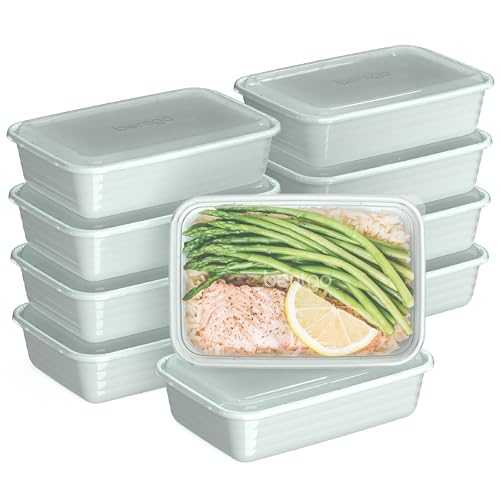
Bentgo Prep – 20-Piece 1-Compartment Reusable Meal Prep Containers with Lids, PFAS & BPA Free Materials, Durable, Microwave, Freezer, & Dishwasher Safe To Go Food Storage (Mint)
#1 Brand Pick for Meal Prep Containers: Bentgo is the top pick for meal prep containers!* This lightweight,…
As an affiliate, we earn on qualifying purchases.
As an affiliate, we earn on qualifying purchases.
Conduct a Comprehensive Waste Audit and Track Waste Sources
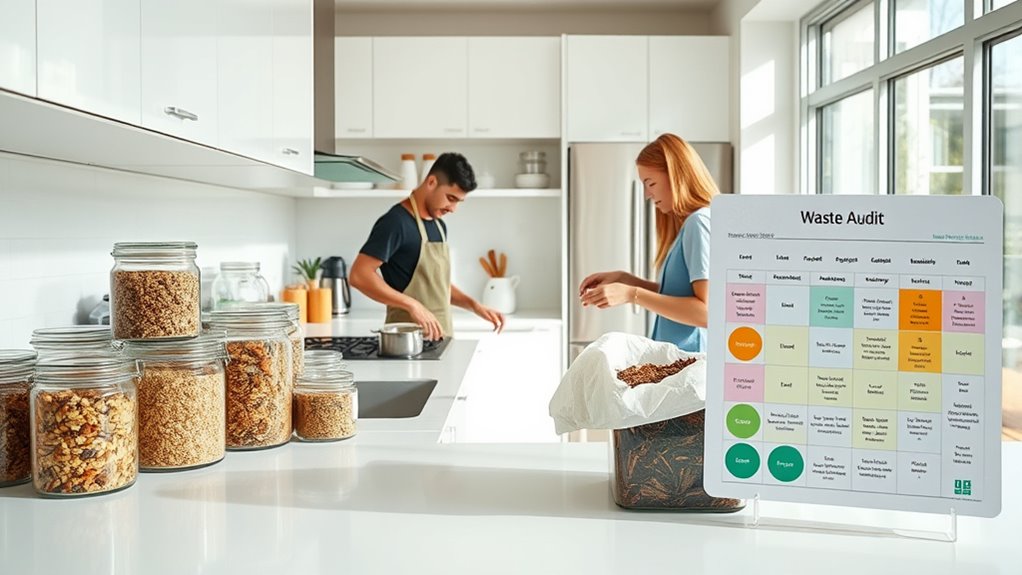
To effectively reduce kitchen waste, you need to start with a thorough waste audit. Begin by collecting all your waste—landfill and recycling—for two weeks. This helps you identify the main types and quantities of waste your kitchen produces. Track what you discard daily, noting reasons like oversized portions or expired ingredients. Analyzing these patterns reveals areas for improvement, such as adjusting shopping habits or meal planning. Conduct targeted audits to spot single-use plastics and replace them with sustainable options like glass jars. Use the data to modify portion sizes and inventory management, cutting down on unnecessary waste. A detailed waste audit lays the foundation for smarter, more sustainable kitchen practices, ultimately reducing your environmental footprint. Additionally, understanding the history of waste reduction efforts can motivate ongoing improvements and innovations in your waste management strategies. Incorporating behavioral changes into your routine can further enhance waste reduction success and foster environmentally conscious habits over time. Recognizing the importance of consumer habits can inspire more mindful purchasing and disposal practices that support sustainability. Moreover, integrating nanotechnology solutions can lead to innovative ways to minimize waste and improve recycling processes in the future.

EPICA Countertop Compost Bin Kitchen | 1.3 Gallon | Odorless Composting Bin with Carbon Filters | Indoor Compost Bin with Lid | Stainless Steel Kitchen Composter for Food Scraps & Waste Recycling
FEATURED IN BON APPETIT & FORBES: Recognized by renowned magazines, EPICA’s compost bin is a perfectly sized marvel…
As an affiliate, we earn on qualifying purchases.
As an affiliate, we earn on qualifying purchases.
Optimize Food Use and Repurpose Scraps Creatively
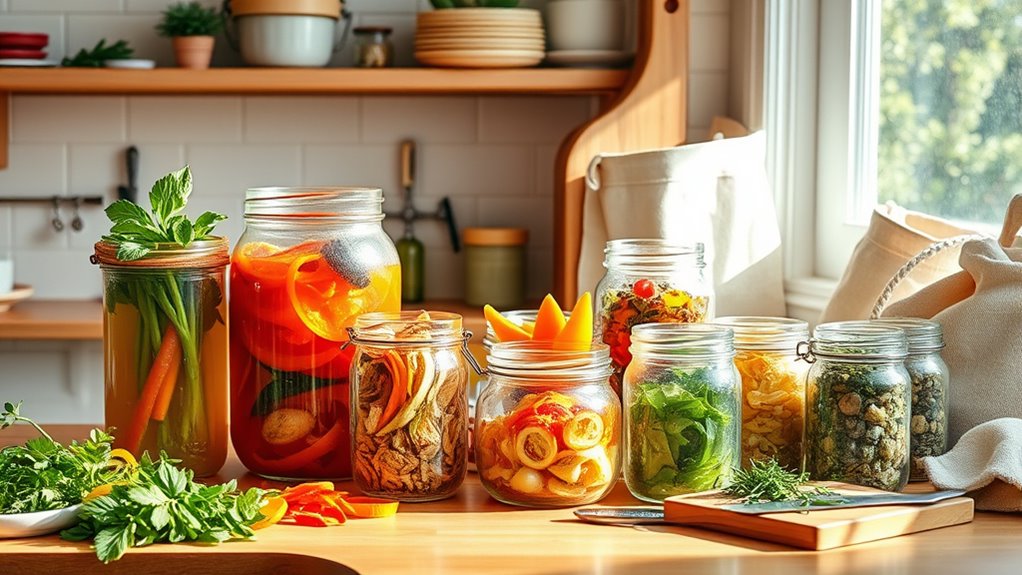
You can reduce waste by learning recipes that use whole foods and scraps creatively. Repurposing vegetable peels, bones, and leftovers into stocks or new dishes helps minimize discarded ingredients. Embracing these techniques not only cuts waste but also enhances your kitchen efficiency. Incorporating food waste reduction strategies like using pimple patches can inspire a mindful approach to resourcefulness in other areas of your life. Additionally, understanding how to utilize natural materials such as linen and reclaimed wood can further support sustainable practices in your home. Recognizing the importance of waste management in household routines ensures responsible disposal and recycling, minimizing environmental impact. Proper management of payment data security measures in your household can also promote overall safety and responsibility.
Utilizing Entire Ingredients
Utilizing entire ingredients not only minimizes food waste but also opens new flavor possibilities and reduces costs. For example, vegetable scraps like carrot tops or broccoli stems can be incorporated into pestos or soups, adding depth and nutrition. Bones and peels can be simmered into broths, saving money and enhancing flavor. Practice creative cooking techniques to use leftover bits—like turning roasted cauliflower leaves into snacks or using leftover rice for fried rice. This approach encourages resourcefulness and adds variety to your meals. Being aware of prophetic dreams can inspire intuitive cooking choices and mindful food management. Additionally, understanding the signs of spoilage in perishable items helps prevent waste by ensuring only safe ingredients are used.
Creative Scrap Repurposing
Repurposing kitchen scraps creatively not only extends the life of your ingredients but also brings new flavors and textures to your meals. You can transform vegetable peels into crispy snacks or flavorful garnishes. Use citrus rinds to add zest to desserts or drinks, and save onion tops or carrot tops to enrich homemade pestos and salads. Bones and vegetable scraps can be simmered into rich stocks, reducing waste and boosting flavor. Leftover rice or pasta can become new dishes like fried rice or pasta frittatas. Ferment vegetable scraps to create tangy kimchi or sauerkraut, adding probiotics and minimizing leftovers. Incorporating creative reuse can also help identify diverse uses for kitchen scraps and suggest innovative recipes, further reducing waste and enhancing creativity in the kitchen.

Vegetable Peeler, Multifunctional Stainless Steel Potato & Fruit Peeler with Bottle Opener, Wooden Handle Kitchen Tool, Zero Snag Design
**MULTIFUNCTIONAL KITCHEN ESSENTIAL** – This versatile vegetable peeler effortlessly peels potatoes, carrots, cucumbers, apples, and more. Built-in bottle…
As an affiliate, we earn on qualifying purchases.
As an affiliate, we earn on qualifying purchases.
Improve Refrigerator Organization and Food Storage Practices
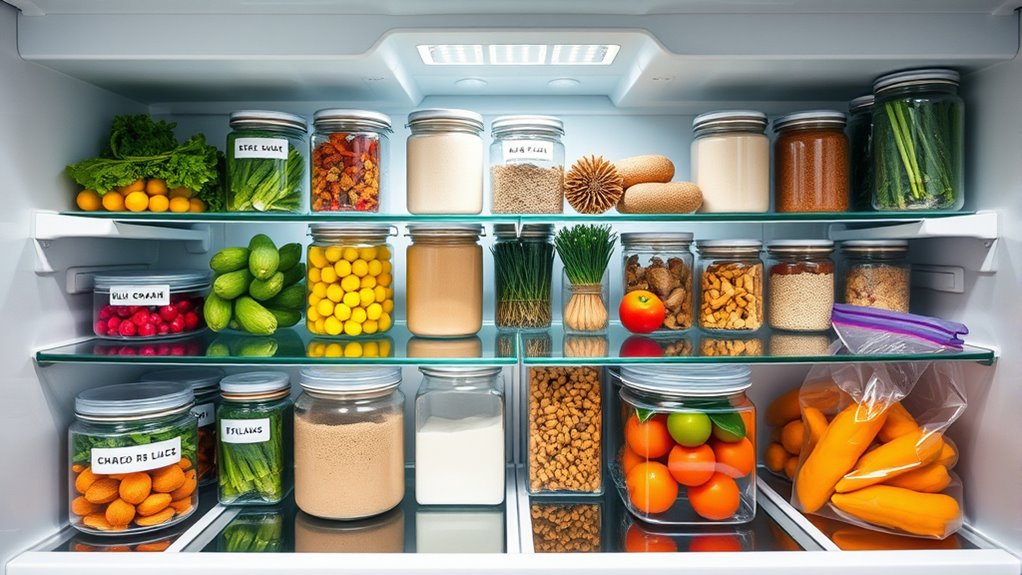
Organizing your refrigerator with clear storage zones helps you see what’s inside and reduces waste. Prioritizing items that are expiring soon guarantees you use them before they spoil. Using airtight containers keeps food fresh longer and minimizes packaging waste. Additionally, implementing effective load management ensures your refrigerator runs efficiently and prevents overpacking, which can lead to spoilage. Incorporating proper temperature control helps maintain optimal freshness and extends the lifespan of stored foods. Regularly checking your refrigerator’s air circulation can help prevent uneven cooling and spoilage of stored items. For breeds like Huskies, choosing the right dog names can reflect their energetic and adventurous nature, adding a fun element to your pet care routine.
Clear Storage Zones
A well-structured refrigerator makes it easier to see and access your food, which helps reduce waste caused by forgotten or spoiled items. Create clear zones to streamline your storage. Dedicate specific areas for different food groups, like vegetables, dairy, and leftovers. Use labeled containers or baskets to keep items sorted and visible. Keep frequently used items at eye level for quick access. Remove expired or spoiled food regularly to prevent cross-contamination. Use transparent containers so you can easily identify contents. Rotate stock so older items are used first. This organization minimizes forgotten ingredients and prolongs freshness. Additionally, implementing automation in business can help streamline inventory management processes, reducing the chance of overlooked items.
Prioritize Expiring Items
To prevent food from spoiling and reduce waste, you should prioritize expiring items in your refrigerator. Designate a “Must Eat Now” shelf or area to keep these items visible and accessible. Regularly check expiration dates and plan meals around ingredients nearing their expiry. Use a first-in, first-out system to ensure older ingredients get used before newer ones. Organize your fridge so that expiring foods aren’t buried behind fresh produce or leftovers. This makes it easier to consume items before they spoil. Being mindful of food storage practices helps you keep track of perishables more effectively, reducing unnecessary discard and maximizing the use of your groceries. Proper refrigerator organization also minimizes the chances of forgetting about items, further decreasing food waste. Developing a routine for inventory management can help you stay aware of what needs to be used soon and prevent overbuying. Maintaining consistent food rotation ensures you utilize older items first and avoid unnecessary waste. Incorporating waste reduction techniques into your routine can further enhance your efforts, making your kitchen more sustainable and efficient. This simple step reduces waste, saves money, and encourages mindful eating habits.
Use Airtight Containers
Using airtight containers is essential for keeping your food fresh longer and reducing waste. They protect leftovers from spoilage, prevent odors from spreading, and help you see what’s inside at a glance. Properly stored food stays edible and minimizes unnecessary disposal. To visualize, imagine:
- Clear, stackable jars neatly organized on your fridge shelves
- Fresh salads in airtight containers, ready for quick lunches
- Fruit and veggie scraps preserved for future stocks
- Leftover sauces sealed tightly to maintain flavor
- Homemade dips and spreads stored securely to last longer
These containers eliminate the need for single-use plastic wrap or foil, cutting packaging waste. They also help you plan meals better, avoid over-purchasing, and keep your fridge tidy and efficient. Investing in good containers makes a tangible difference in reducing food waste and clutter.

Glass Food Storage Jars 37 oz Set of 6,Glass Storage Containers Clear Glass Food Canister with Bamboo Lid Airtight For Serving Tea, Coffee, Flour, Sugar, Candy, Cookie, Spice and More (Square)
AIRTIGHT SEAL FOR FRESH STORAGE:Glass food storage jars with secure lids designed to create an airtight seal that…
As an affiliate, we earn on qualifying purchases.
As an affiliate, we earn on qualifying purchases.
Reduce Packaging and Switch to Reusable Items

Reducing packaging waste starts with making mindful purchasing choices that prioritize minimal or no packaging. Opt for loose produce, bulk items, and products in recyclable or compostable packaging. Bring your own reusable bags, jars, and containers to stores to avoid single-use plastics. Switch to reusable silicone bags or cloth wraps instead of plastic snack bags or wrap. These simple swaps cut down on waste and save money over time.
| Disposable Item | Reusable Alternative |
|---|---|
| Plastic wrap | Beeswax wrap |
| Single-use bags | Silicone storage bags |
| Paper towels | Washable kitchen towels |
| Bottled water | Reusable water bottle |
Embrace Energy and Resource Efficiency in Your Kitchen

Ever wondered how small changes in your kitchen can make a big difference in conserving energy and resources? You can start by using multifunctional appliances, like a blender that also steams or cooks. Unplug gadgets when you’re not using them to save energy. Minimize water use by washing produce efficiently and fixing leaks promptly. Choose durable tools like heat-proof spatulas, so you replace items less often. Also, opt for reusable containers instead of disposable ones to cut down on waste. These simple steps reduce your environmental footprint while optimizing your kitchen’s efficiency. By making these adjustments, you not only save resources but also create a more sustainable, clutter-free space that supports your zero-waste goals. Small actions lead to a significant positive impact.
Implement Portion Control and Adjust Inventory Management
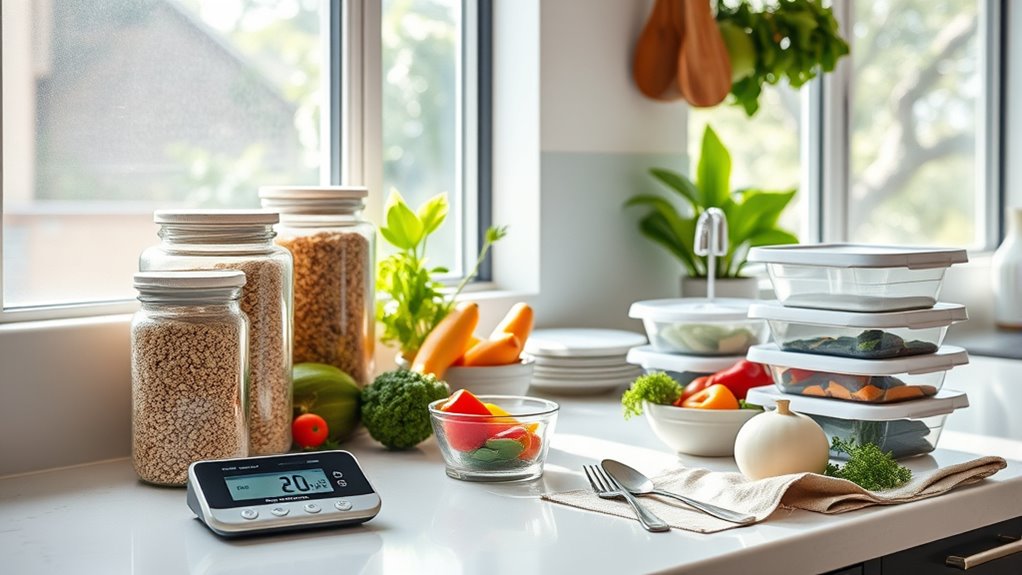
Implementing portion control and adjusting inventory management can substantially cut down on kitchen waste by ensuring you prepare just enough food for each meal. By measuring portions carefully, you prevent leftovers that often spoil. Regularly reviewing your inventory helps identify expired or unused items, reducing unnecessary purchases. To visualize, consider this table:
| Inventory Item | Usage Rate | Waste Potential |
|---|---|---|
| Fresh herbs | Weekly | High |
| Bulk grains | Monthly | Low |
| Perishable dairy | Few days | High |
| Canned vegetables | Yearly | Minimal |
| Frozen meats | Biweekly | Moderate |
Adjust your shopping list based on actual consumption patterns. This approach minimizes excess, saves money, and keeps your kitchen lean and eco-friendly.
Incorporate Zero-Waste Cooking Techniques and Recipes

Start by choosing recipes that use whole ingredients, like vegetables with their skins or stems, to minimize waste. Get creative by repurposing scraps—think turning vegetable peels into broth or leftover bread into croutons. Embracing inventive recipes helps you cut waste and makes the most of every ingredient in your kitchen.
Use Whole Ingredients
Using whole ingredients is a key strategy in zero-waste cooking, as it helps you maximize every part of your food and minimize scraps. When you cook with entire foods, you reduce waste and access new flavors. For example, you can use carrot tops in pesto, potato skins in crispy snacks, or vegetable stems in broths. You might also incorporate leftover fruit peels into jams or vinegar, or craft homemade stock from bones and scraps. Practicing these techniques keeps nothing from going to waste. Imagine:
- Turning beet greens into sautéed side dishes
- Using citrus peels for zest or homemade cleaning solutions
- Incorporating broccoli stems into stir-fries
- Making croutons from stale bread ends
- Blending overripe fruit into smoothies or sauces
Repurpose Food Scraps
Repurposing food scraps is a practical way to extend the life of your ingredients and reduce kitchen waste. You can turn vegetable peels and stems into flavorful stocks or broths, which serve as the base for soups and sauces. Save onion skins, carrot tops, and celery ends in your freezer until enough accumulate for a homemade broth. Use leftover vegetable scraps in roasted dishes or salads to avoid discarding edible parts. Egg whites can become aquafaba, a versatile egg substitute in baking. Additionally, leftover bones can be simmered to make nutrient-rich stock. By incorporating these techniques, you maximize ingredient use, cut down on waste, and save money, all while practicing sustainable cooking habits.
Embrace Creative Recipes
Embracing creative recipes is a key strategy for reducing kitchen waste and making the most of your ingredients. When you think outside the box, you turn scraps and leftovers into delicious meals, cutting down on discard. Imagine transforming veggie stems into pesto, or using overripe bananas for bread. You can repurpose citrus peels into zest or candied treats. Incorporate versatile ingredients like cooked grains into salads or fritters. Think about blending vegetable tops into smoothies or soups. These ideas help you minimize waste while expanding your culinary repertoire.
- Turning vegetable scraps into flavorful stocks
- Using leftover rice for fried rice or sushi bowls
- Incorporating peels into jams or infused waters
- Making snacks from vegetable stems or cores
- Creating smoothies and soups from odds and ends
Educate and Train Staff on Sustainable Practices

Training your kitchen staff on sustainable practices is essential for implementing an effective zero-waste strategy. You need everyone on board to make meaningful change. Start by providing clear instructions and ongoing education on waste reduction, proper storage, and ingredient utilization. Regular workshops reinforce these habits and encourage accountability. Use visual aids and checklists to keep sustainability top of mind. Here’s a quick overview:
| Practice | Responsible Person | Goal |
|---|---|---|
| Proper food storage | Kitchen staff | Prevent spoilage and extend freshness |
| Reusing scraps | Chefs and prep team | Minimize discard and maximize resource use |
| Waste tracking | Managers | Identify waste sources and target reduction |
Consistent training makes sustainability a core part of your kitchen culture.
Use Innovative Preservation Methods to Extend Food Lifespan
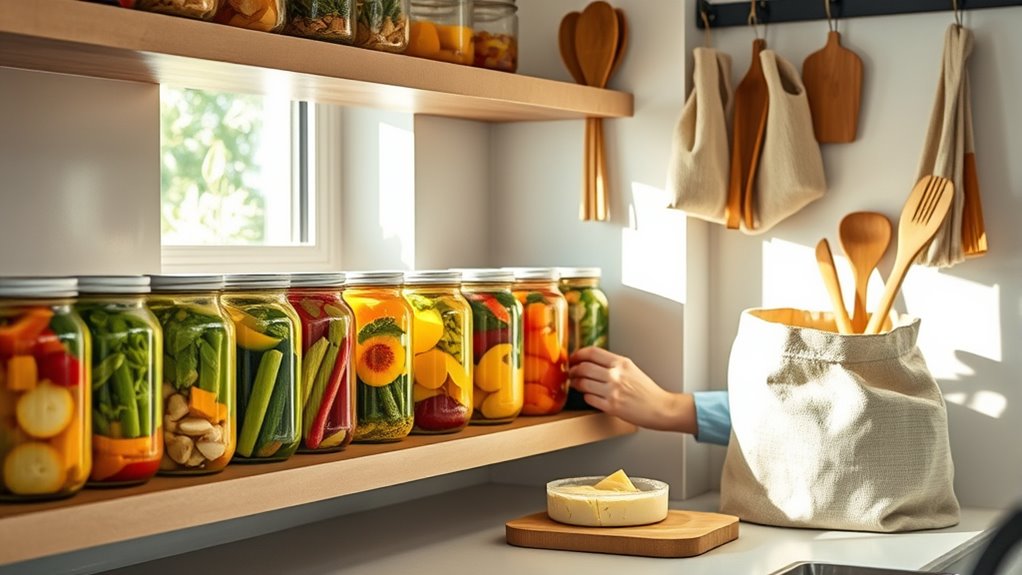
Innovative preservation methods can substantially extend the shelf life of your food, reducing waste and saving money. You can experiment with techniques like vacuum sealing to remove air and slow spoilage, or ferment vegetables for a tangy, long-lasting snack. Drying herbs and fruits preserves their flavor while preventing rot. You might also try pickling vegetables or storing produce in controlled humidity environments to keep them fresh longer. Additionally, using natural preservatives such as salt, sugar, or vinegar can boost shelf life without chemicals. These methods not only minimize waste but also add variety to your kitchen. Imagine vibrant jars of homemade kimchi, dried apple slices, or vacuum-sealed herbs ready for future use—each a step toward a zero-waste lifestyle.
Foster a Culture of Sustainability and Continuous Improvement

Creating a culture of sustainability in your kitchen requires consistent effort and leadership. You need to set clear goals, communicate the importance of waste reduction, and involve everyone in the process. Encourage staff and family members to share ideas and take ownership of sustainable practices. Regularly review your waste audit data and celebrate progress to motivate continuous improvement. Lead by example by adopting eco-friendly habits, like using reusable tools and minimizing energy use. Foster an environment where innovation is welcomed—try new recipes, repurpose leftovers, and explore local, sustainable sources. Educate everyone on the environmental and financial benefits of waste reduction. Over time, this mindset becomes ingrained, making sustainable practices second nature and ensuring your kitchen remains committed to zero waste.
Frequently Asked Questions
How Can I Measure the Effectiveness of My Waste Reduction Efforts?
You can measure your waste reduction efforts by conducting regular waste audits, tracking the types and quantities of waste generated, and comparing data over time. Keep detailed records of food discarded, packaging used, and recycling rates. Set specific goals and monitor progress monthly. Analyzing trends helps you identify areas for improvement and confirms whether your strategies, like better storage or repurposing scraps, are effectively reducing waste.
What Are Some Affordable Tools to Support Zero-Waste Kitchen Practices?
You can support zero-waste practices with affordable tools like reusable silicone bags and beeswax wraps to replace plastic wrap. Get a simple kitchen scale to track food portions and reduce waste. Use glass jars for storage instead of plastic containers. Reusable cloth towels cut paper waste, and compost bins help manage food scraps sustainably. These budget-friendly tools make implementing waste reduction strategies easy and effective in your kitchen.
How Do I Encourage Staff to Adopt Sustainable Habits Consistently?
Think of your team as a garden; nurturing sustainable habits helps it flourish. To encourage staff, lead by example, showing your commitment daily. Provide clear, simple guidelines and celebrate small wins to boost morale. Offer ongoing training and create a culture of accountability where everyone feels responsible. Reinforce the importance of sustainability through regular feedback, making it a shared goal that inspires collective growth and lasting change.
Which Food Preservation Methods Are Most Energy-Efficient and Environmentally Friendly?
You should prioritize methods like pickling, fermenting, and drying, which use minimal energy and avoid added packaging. Freezing leftovers in reusable containers is energy-efficient if done wisely, but avoid continuous fridge operation for small quantities. Canning and preserving surplus produce with natural methods also cut waste while conserving resources. These techniques maximize shelf life without relying heavily on electricity or wasteful packaging, helping your kitchen stay sustainable.
How Can I Track Financial Savings From Implementing Zero-Waste Strategies?
You can track your savings by comparing your grocery bills before and after implementing zero-waste strategies. Keep detailed records of food purchases, waste reduction, and reusable items used. Monitor how much you save on packaging, disposal costs, and reduced food waste. Use a spreadsheet or app to log these changes regularly, and review your data monthly to see how much money you’re saving, motivating you to continue sustainable practices.
Conclusion
So, after all these tips, you might think going zero-waste is impossible. But ironically, by simply wasting less and rethinking your habits, you’ll actually save time, money, and the planet. It’s funny how reducing trash can be the most efficient thing you do in your kitchen. Embrace the challenge—because in the end, the smallest changes make the biggest impact, even if it feels like a waste of effort at first.