Your understanding that no two tigers are alike highlights the importance of genetic diversity. This variation gives each tiger unique traits like strength, agility, and disease resistance, helping populations survive threats and adapt to changing habitats. When genetic diversity shrinks, tigers become more vulnerable to inbreeding, health issues, and environmental shifts. The more you explore, the better you’ll see how conserving this genetic richness is crucial for their long-term survival.
Key Takeaways
- Unique genetic traits enable tigers to adapt to diverse environments and resist diseases.
- High genetic diversity enhances population resilience against environmental changes and threats.
- Genetic differences help identify at-risk populations and guide targeted conservation efforts.
- Diverse genes improve reproductive success and immune responses, ensuring long-term survival.
- No two tigers being alike maintains overall species health and adaptability through genetic variation.
The Significance of Unique Genetic Makeup in Tigers
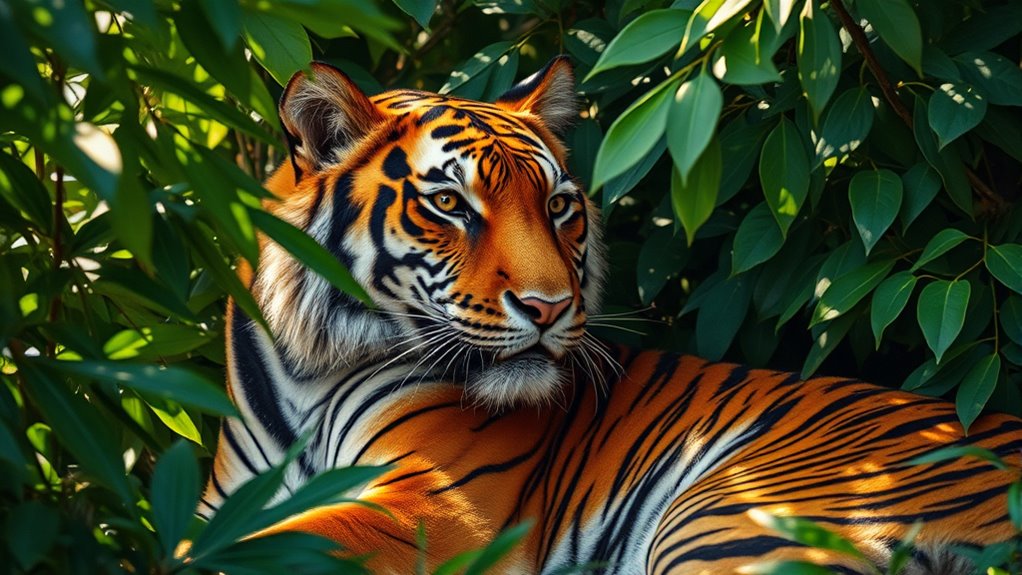
The unique genetic makeup of tigers plays a essential role in their survival and adaptation. Every individual carries a distinct set of genes that influence traits such as strength, agility, and disease resistance. This diversity allows populations to better withstand environmental changes and emerging threats. When genetic variation is high, some tigers possess traits that improve their chances of thriving in different habitats or recovering from health issues. Conversely, low genetic diversity makes populations more vulnerable to diseases and reduces their ability to adapt. Recognizing these genetic differences helps conservationists identify which populations are most at risk and develop targeted strategies. Your understanding of each tiger’s unique genetic profile underscores the importance of preserving the natural variation that sustains their resilience over time.
How Genetic Variation Fuels Survival and Adaptation

Your genetic variation gives tiger populations the tools to resist diseases and adapt to changing environments. When individuals carry diverse genes, they’re better equipped to survive new threats and shifting habitats. This diversity is essential for maintaining the resilience of the entire population over time. Regular monitoring of genetic traits can help conservationists identify genetic diversity levels and develop effective strategies for species preservation. Understanding the role of evolutionary processes can further enhance efforts to conserve these majestic animals and ensure their long-term survival.
Enhances Disease Resistance
Genetic variation plays a crucial role in enhancing disease resistance among tiger populations by providing a broader pool of immune-related genes that can adapt to emerging pathogens. With diverse genetic makeup, tigers are better equipped to fight off illnesses, reducing the risk of disease outbreaks. When genetic diversity is high, some individuals may carry unique immune traits that help them survive specific infections, passing these advantages to future generations. This variability creates a resilient population capable of adapting to environmental challenges. Recognizing the importance of genetic diversity allows conservationists to prioritize efforts that maintain or increase variations in tiger genomes:
| Genetic Diversity Level | Disease Resistance Impact |
|---|---|
| High | Greater adaptability to pathogens |
| Moderate | Some immune variation present |
| Low | Increased vulnerability |
| Bottlenecked | Reduced immune gene pool |
| Isolated populations | Higher disease risk |
Promotes Environmental Adaptability
Genetic variation acts as a vital driver of environmental adaptability in tiger populations by providing a diverse set of traits that support survival under changing conditions. When environments shift—whether due to climate, prey availability, or habitat alterations—populations with high genetic diversity can better adapt because they possess a wider range of genetic traits. This diversity increases the likelihood that some individuals have advantageous characteristics suited to new challenges, such as tolerance to different prey, resistance to pests, or resilience to habitat stress. Additionally, well-being tips like maintaining genetic diversity can enhance the overall health and resilience of tiger populations. Promoting genetic health through conservation efforts ensures that populations retain their ability to respond to environmental pressures. Moreover, genetic diversity also contributes to the robustness of the population by reducing the risks associated with inbreeding depression, which can compromise survival and reproductive success. Consequently, genetically diverse tiger populations can adjust their behaviors, physiology, or reproductive strategies more effectively, increasing their chances of survival amid environmental fluctuations. Without this variation, tigers are less equipped to cope with rapid changes, risking decline or extinction.
Ensures Population Resilience
Diverse genetic traits directly bolster a population’s ability to withstand environmental challenges. When genetic variation exists, some individuals can better adapt to threats like disease, habitat change, or prey scarcity. This Genetic variation increases the likelihood that some members of the population will survive unforeseen threats. Variability allows natural selection to favor traits suited to new conditions, ensuring long-term stability. For example:
| Trait Diversity | Impact on Resilience |
|---|---|
| Disease resistance | Prevents entire population from collapsing |
| Adaptability to habitat | Allows survival amid environmental shifts |
| Reproductive success | Maintains population stability |
| Genetic robustness | Reduces risk of inbreeding depression |
Without genetic diversity, populations become vulnerable to extinction. High variation acts as a safeguard, making your population more resilient and capable of enduring future challenges. Genetic variation also plays a crucial role in adaptive potential, enabling populations to respond effectively to environmental pressures. The presence of diverse traits also helps buffer against rapid environmental changes, increasing the chances of species survival over time. Moreover, maintaining genetic diversity can help prevent inbreeding depression, which can diminish overall population health and resilience.
The Impact of Habitat and Population Size on Genetic Diversity

Habitat quality and the size of tiger populations directly influence their genetic variation. When habitats are vast and connected, tigers can move freely, promoting gene flow and maintaining diversity. Conversely, fragmented habitats restrict movement, leading to isolated populations with reduced genetic variation. Smaller populations are especially vulnerable to genetic drift, which can diminish diversity over time. You should consider how habitat fragmentation causes genetic bottlenecks, decreasing adaptive potential. Natural materials like dense forests and grasslands are crucial for supporting healthy tiger populations. Key points include:
- Large, continuous habitats support higher gene flow and diversity
- Fragmented environments increase inbreeding risk
- Small populations face greater genetic drift impacts
- Habitat loss leads to population isolation
- Connectivity corridors help preserve genetic variation
- Genetic diversity is essential for population resilience and long-term survival. Additionally, maintaining habitat connectivity can mitigate the effects of genetic drift, safeguarding the adaptive capacity of tiger populations. Recognizing the importance of ecological connectivity is vital for conservation strategies aiming to sustain genetic health. Moreover, protecting and restoring natural habitat corridors is fundamental to ensuring ongoing gene flow between fragmented populations.
Consequences of Inbreeding and Population Bottlenecks

When populations become isolated and shrink in size, they often experience inbreeding and genetic bottlenecks that can have serious consequences. Inbreeding increases the likelihood of harmful recessive traits manifesting, reducing individual fitness and survival chances. Small, bottlenecked populations lose genetic variation, making them less adaptable to environmental changes and disease outbreaks. For example, isolated Bengal tiger groups like those in Ranthambore show high inbreeding levels, leading to reduced genetic diversity and increased extinction risk. Similarly, Amur tigers, with limited long runs of homozygosity, still face challenges due to their small populations. These genetic issues compromise reproductive success, weaken immune responses, and diminish resilience, ultimately threatening the long-term survival of these already vulnerable populations. Additionally, understanding the methodologies used to assess genetic diversity can help conservationists develop effective strategies to protect these species.
Comparing Wild and Captive Tiger Populations

You might expect captive tigers to have less genetic diversity than wild populations, but surprisingly, their diversity levels are quite comparable. However, the patterns of population mixing differ, with captive tigers showing thorough genetic blending across subspecies. This contrast highlights how captivity influences genetic variation and structure in tiger populations. Additionally, understanding genetic diversity is crucial for conservation efforts and maintaining healthy tiger populations. Advances in genetic analysis techniques help researchers better assess and preserve this diversity in both wild and captive settings. Moreover, the population structure of captive tigers reflects their breeding histories and management practices, which can impact long-term genetic health. The breeding programs in captivity often aim to maximize genetic variability, influencing the overall population genetics. Incorporating AI-powered genetic modeling can further enhance understanding of these complex genetic patterns.
Genetic Diversity Levels
How does the genetic diversity of captive tiger populations compare to that of their wild counterparts? Generally, captive tigers in the U.S. have a similar level of genetic diversity to wild populations, but there are notable differences. They tend to have fewer private variants and fewer deleterious mutations, which can be advantageous. You should also consider:
- Captive populations show inbreeding coefficients comparable to wild groups
- No individual has ancestry from just one subspecies, indicating thorough mixing
- Genomes are well-mixed with no regional clustering
- Microsatellite analysis reveals lower allele numbers in isolated populations
- Genetic diversity remains relatively stable, but risks of inbreeding persist without proper management
While captive populations maintain a surprising level of diversity, their genetic makeup can differ due to past breeding practices and founder effects.
Population Mixing Patterns
Both wild and captive tiger populations exhibit notable differences in their genetic mixing patterns, shaped by their environments and management histories. In the wild, gene flow varies widely; populations in Russia’s Far East are highly connected, promoting genetic diversity, while Indian populations are fragmented by human activity, leading to inbreeding and reduced variation. Isolated Indian populations like Ranthambore show signs of recent inbreeding, limiting genetic exchange. Additionally, habitat fragmentation further constrains natural gene flow, impacting the genetic health of these populations. Conversely, captive tigers in the U.S. display extensive mixing, with no regional clustering or subspecies boundaries, resulting from deliberate movement and breeding across geographic areas. This thorough genetic blending minimizes regional genetic distinctions but also alters the natural genetic structure. Understanding these patterns helps conservationists determine how to manage wild populations and assess the genetic health of captive groups effectively. Additionally, genetic diversity is crucial for the long-term survival of tiger populations, as it enhances their resilience to diseases and environmental changes. Recognizing the importance of population structure can guide strategies to maintain healthy and viable tiger groups in both wild and captive settings.
Using Genomic Data to Inform Conservation Strategies

Genomic data plays a crucial role in shaping effective conservation strategies for tigers by providing detailed insights into their genetic diversity, population structure, and inbreeding levels. By analyzing genome sequences, you can identify genetically distinct populations, prioritize critical habitats, and detect inbreeding that threatens population viability. This information helps refine translocation and genetic rescue efforts, ensuring genetic diversity is maintained or enhanced. Additionally, genomic data enables you to:
Genomic insights guide tiger conservation by revealing diversity, structure, and inbreeding risks.
- Assess the genetic health of small, isolated populations
- Track lineage and ancestry, improving population management
- Detect recent bottlenecks and founder events
- Inform habitat connectivity initiatives
- Monitor the impact of conservation actions over time
- Applying skincare patches to monitor genetic variations can facilitate non-invasive sampling and data collection.
Using these insights, you can develop targeted strategies that preserve genetic variation, reduce inbreeding, and promote long-term tiger survival.
Protecting the Genetic Richness of Future Tiger Generations

Protecting the genetic richness of future tiger generations requires proactive conservation measures that maintain and enhance genetic diversity. You should focus on preserving large, connected habitats to prevent fragmentation and inbreeding, especially in high-density human areas. Establishing wildlife corridors can facilitate gene flow between isolated populations, reducing the risk of genetic bottlenecks. Supporting genetic rescue initiatives, such as translocating individuals to bolster diversity, can also be effective. Monitoring genetic health through genome sequencing helps identify at-risk populations and guides targeted interventions. Additionally, safeguarding diverse habitats ensures that natural selection continues to shape resilient tiger populations. By prioritizing these strategies, you help secure a genetically robust future for tigers, increasing their chances of survival amid ongoing environmental challenges.
Frequently Asked Questions
How Does Genetic Diversity Influence Tiger Disease Resistance?
You should know that higher genetic diversity in tigers boosts their disease resistance by providing a broader range of immune system genes. This diversity means they’re less likely to all succumb to the same illness. When populations are genetically diverse, it improves adaptability, allowing tigers to fight off new or evolving diseases more effectively. So, maintaining genetic variation is essential for their overall health and long-term survival.
Can Genetic Data Predict Future Tiger Population Trends?
Genetic data can indeed help predict future tiger population trends. For example, Bengal tigers have high genetic diversity, supporting their resilience, but isolated populations like Ranthambore show signs of recent inbreeding. By analyzing genetic markers, you can identify inbreeding or bottlenecks, indicating risks of decline. This information guides conservation efforts, allowing you to implement strategies to preserve genetic health, improve connectivity, and ensure long-term survival of tiger populations.
What Role Do Human Activities Play in Tiger Genetic Erosion?
You can see that human activities considerably accelerate tiger genetic erosion. High human population densities in India fragment habitats, isolating tiger populations and causing inbreeding. Poaching and deforestation reduce numbers, leading to population bottlenecks. These activities limit gene flow, decrease genetic diversity, and increase extinction risks. By destroying habitats and increasing human-wildlife conflict, you undermine tigers’ ability to adapt and survive, pushing their genetic health toward peril.
Are Certain Tiger Habitats More Crucial for Preserving Genetic Diversity?
You should prioritize habitats with high connectivity, diverse environments, and large populations. These areas, like India’s varied habitats and Russia’s expansive landscapes, serve as genetic reservoirs, supporting gene flow and reducing inbreeding. Protecting these critical habitats helps maintain natural migration corridors, sustains genetic diversity, and guarantees resilient tiger populations. By focusing on these key environments, you bolster the overall health and survival prospects of tigers across their range.
How Does Captive Breeding Affect Wild Tiger Genetic Integrity?
Captive breeding can impact wild tiger genetic integrity by mixing genes from different subspecies, which may dilute unique genetic traits. While captive populations often have good diversity, their genomes might not match wild populations’ specific adaptations. This can make them less suitable for reintroduction, risking the loss of local adaptations. To protect wild genetic integrity, you should guarantee breeding programs maintain subspecies boundaries and genetic diversity aligned with natural populations.
Conclusion
Remember, each tiger’s unique genetic pattern is like a crucial thread in the fabric of life. When you protect their diversity, you’re safeguarding the intricate tapestry that allows them to thrive and adapt. By preserving their genetic richness, you’re nurturing the forest’s heartbeat and ensuring future generations can continue to dance across the wilderness. Your actions are the brushstrokes that keep this majestic masterpiece alive for generations to come.