
Electric vehicles can substantially cut transportation emissions, especially when powered by renewable energy, but their true environmental impact depends on how they’re made and where your electricity comes from. Battery production involves high upfront emissions and resource extraction, which can harm the environment, but recycling and cleaner battery tech are helping. If you explore further, you’ll see how regional energy sources and advances in technology shape whether EVs really save the planet.
Key Takeaways
- EVs significantly lower lifetime emissions compared to gasoline vehicles, especially when powered by renewable energy sources.
- Manufacturing, particularly battery production, initially emits substantial greenhouse gases, creating a “carbon debt” offset after 1-2 years of driving.
- Regional energy grid composition heavily influences EVs’ environmental benefits; cleaner grids maximize emission reductions.
- Advancements in battery recycling and sustainable sourcing reduce environmental impacts and resource depletion.
- Transitioning to renewable energy for electricity generation is crucial to fully realizing EVs’ potential to combat climate change.
Understanding the Lifecycle Emissions of Electric Vehicles
Understanding the lifecycle emissions of electric vehicles (EVs) is essential to evaluating their true environmental impact. While EVs produce fewer emissions during use, manufacturing, especially battery production, creates a significant initial carbon debt. This involves mining and processing materials like lithium and cobalt, which are energy-intensive. However, after 1-2 years of driving, EVs typically emit 73-78% less greenhouse gases over their lifetime than gasoline cars. The regional electricity grid also influences emissions—renewable sources greatly reduce overall impact, while coal-heavy grids diminish benefits. EVs are more energy-efficient, converting about 87-91% of stored energy into motion, and features like regenerative braking help conserve energy. Additionally, ongoing advancements in battery technology aim to further reduce manufacturing emissions and improve overall sustainability. Ultimately, understanding these factors helps you see that EVs offer substantial environmental benefits, especially with cleaner energy sources.
The Hidden Impact of Battery Manufacturing and Recycling
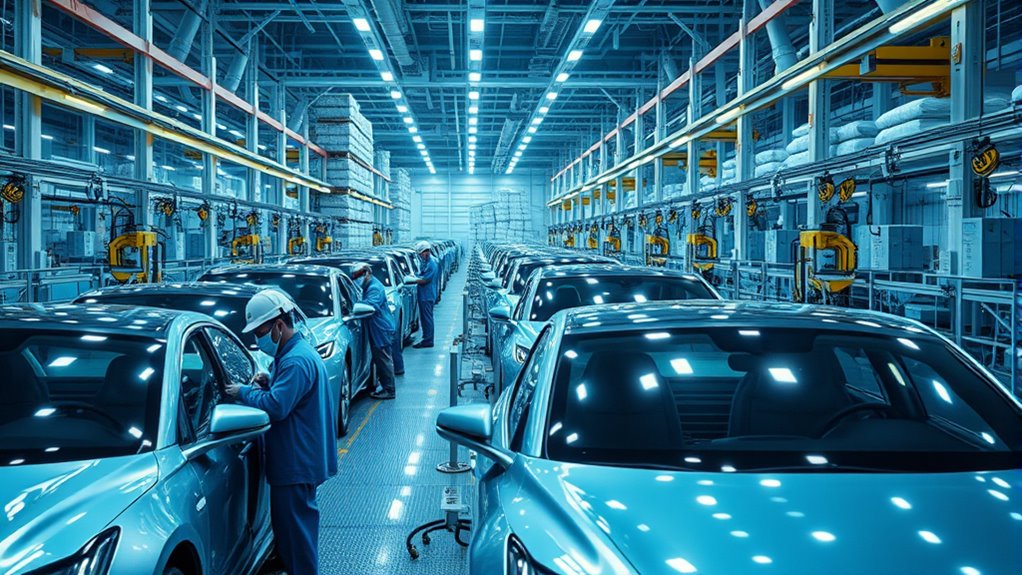
Battery manufacturing is a major contributor to the hidden environmental costs of electric vehicles, often overshadowed by their operational benefits. Producing batteries, especially lithium and cobalt extraction, involves energy-intensive mining and processing that releases significant emissions upfront. For a typical 60 kWh battery, about 3.3 tonnes of CO₂ are emitted during production. This “carbon debt” takes 1-2 years of EV use to offset through lower operational emissions. Recycling and second-life applications can help reduce this impact by reusing materials and decreasing the need for new resource extraction. Additionally, developing recycling infrastructure is crucial for efficiently reclaiming valuable materials and minimizing waste. The integration of recycling processes can significantly lower the environmental footprint of the entire lifecycle. However, the recycling infrastructure is still developing, and environmental concerns related to hazardous materials persist. While battery advances aim to lower emissions, the initial manufacturing footprint remains a critical challenge in making EVs truly sustainable. Material recovery techniques and increased investment in recycling facilities are essential steps toward reducing this environmental impact. Improving supply chain transparency and responsible sourcing practices can further mitigate some of these environmental concerns. Moreover, adopting innovative recycling technologies can enhance recovery rates and reduce waste.
How Electricity Sources Shape EV’s Environmental Benefits
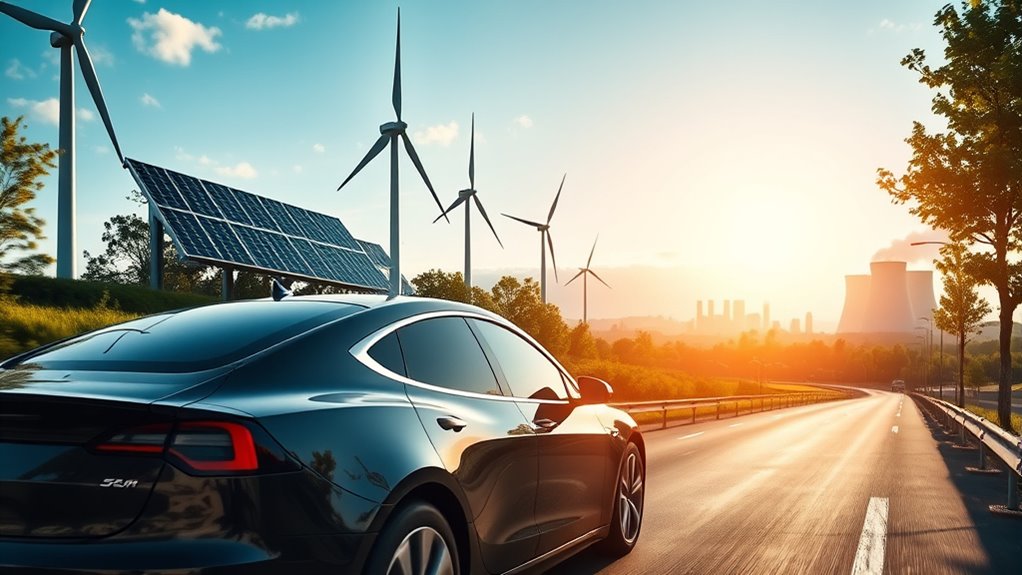
The environmental benefits of your electric vehicle depend heavily on where you charge it. If your grid relies on coal, your EV’s emissions may be higher than you’d expect, but using renewable energy can cut those emissions dramatically. Regional differences in energy sources mean your car’s impact varies, making it important to understand your local electricity mix. Additionally, understanding the energy source composition of your region can help you make more informed decisions about your eco-friendly transportation choices. Factors such as the presence of renewable energy sources in your area significantly influence the overall sustainability of your EV, and staying informed about these energy trends can aid in maximizing environmental benefits. Moreover, advancements in solar and wind energy continue to improve the sustainability of electricity generation, further enhancing the environmental advantages of EVs. Recognizing the importance of regional energy diversity can help consumers choose the most sustainable options for their EV charging needs.
Grid Carbon Intensity
Your electric vehicle’s environmental benefits depend heavily on the energy mix powering it. The more renewable and low-carbon sources in your region’s electricity grid, the greater your EV’s climate advantage. Here are three key points:
- Charging with coal-heavy electricity can reduce EV benefits, but still offers lower emissions than gasoline.
- Regions with abundant wind, solar, or nuclear power enable EVs to approach near-zero lifecycle emissions.
- Tools exist to estimate your EV’s GHG impact based on local grid carbon intensity, helping you make informed choices.
- Utilizing AI security technologies can enhance the cybersecurity of your vehicle’s connected systems, protecting against potential cyber threats.
Additionally, the variability in electricity generation over time can influence the actual emissions during charging, emphasizing the importance of considering temporal factors. The cleaner the grid, the more your EV reduces greenhouse gases. Conversely, high fossil fuel reliance extends the time needed for EVs to offset their initial manufacturing emissions. Your regional energy profile directly shapes your vehicle’s true environmental impact. Moreover, ongoing AI security research aims to address vulnerabilities in connected vehicles, ensuring safer integration of AI systems in the evolving electric vehicle landscape.
Renewable Energy Impact
Electric vehicles’ environmental advantages are considerably influenced by the energy sources used to generate electricity. If your power comes from coal or natural gas, the carbon footprint remains higher, reducing EV benefits. But if your electricity is from wind, solar, or nuclear, EVs nearly eliminate tailpipe emissions and drastically cut overall greenhouse gases. Using renewable energy for charging can lower lifecycle emissions by up to 78%, making EVs a much cleaner option. Regions investing heavily in renewables see the greatest climate impact from EV adoption. You can also use tools to estimate your vehicle’s emissions based on your local grid mix. Additionally, energy grid composition plays a crucial role in determining the true environmental impact of electric vehicles. Ultimately, the cleaner the energy source, the more you maximize EVs’ potential to reduce environmental harm and combat climate change.
Regional Emission Variability
Since the environmental benefits of EVs depend heavily on the electricity sources used for charging, regional differences in energy generation play a crucial role in shaping their overall impact. Your EV’s climate advantage varies based on local grid makeup. Here’s what to consider:
- If your region relies on coal, the emissions reduction is limited, though still better than gasoline.
- Regions with high renewable energy use, like wind or solar, allow EVs to nearly match zero-emission vehicles.
- Nuclear-powered grids also improve EV benefits, as they produce minimal carbon emissions during electricity generation.
- Grid composition directly influences how much your electric vehicle can help reduce overall carbon emissions.
Understanding your local grid mix helps you gauge your EV’s true environmental impact. Using cleaner energy sources amplifies the climate benefits and accelerates progress toward sustainability goals.
Comparing Energy Efficiency: EVs vs. Gasoline Vehicles

You’ll notice that electric vehicles convert a much higher percentage of stored energy into movement compared to gasoline cars, making them more efficient overall. Regenerative braking helps EVs recover energy during deceleration, further boosting their efficiency. This combination means EVs use less energy and produce fewer emissions during operation. Moreover, advances in battery technology continue to improve overall energy retention and driving range. These improvements are supported by innovations in electric motor efficiency, which enhance how effectively EVs convert electrical energy into mechanical power. As automation and innovation in EV manufacturing progress, their environmental benefits are expected to grow even more, especially as energy management systems become more sophisticated and optimize power usage throughout the vehicle. Additionally, ongoing research into thermal management systems helps maintain optimal battery temperatures, further improving efficiency and longevity.
Energy Conversion Efficiency
When comparing energy conversion efficiency, electric vehicles (EVs) outperform gasoline-powered cars by a wide margin. You’ll notice this in several key areas:
- EVs convert about 87-91% of stored electrical energy into motion, making them far more efficient.
- Gasoline vehicles only turn 16-25% of fuel energy into movement, wasting the rest as heat.
- Regenerative braking in EVs recaptures energy, further boosting efficiency and reducing energy loss during deceleration.
This means you use less energy to travel the same distance with an EV. The higher efficiency results in less energy waste, lower operational costs, and a smaller environmental footprint compared to traditional gasoline cars.
Regenerative Braking Benefits
Regenerative braking substantially enhances the energy efficiency of electric vehicles by recapturing kinetic energy that would otherwise be lost as heat during deceleration. Instead of wasting this energy, EVs convert it into electrical power, storing it in the battery for later use. This process extends the driving range and reduces overall energy consumption, making EVs more efficient than traditional gasoline cars. Gasoline vehicles lack this feature, so they rely solely on fuel combustion, which is less efficient and produces more emissions. By recovering energy during braking, EVs minimize energy waste and improve operational efficiency. This advantage not only saves energy but also contributes to lower greenhouse gas emissions, especially when combined with renewable energy sources for charging. Overall, regenerative braking highlights one of EVs’ key benefits in sustainable transportation.
Addressing Environmental and Social Challenges of EV Production
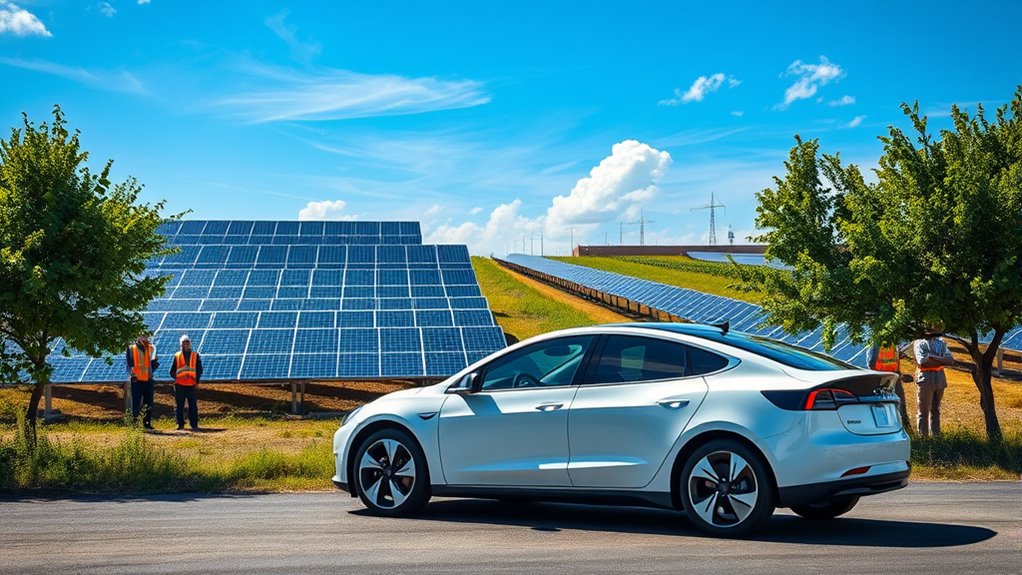
Addressing the environmental and social challenges of EV production requires careful attention to the extraction of critical materials like lithium, cobalt, and nickel, which often involves environmentally destructive mining practices. To mitigate these impacts, you can support efforts such as:
- Advancing sustainable mining techniques that reduce ecological damage and improve safety.
- Promoting battery recycling and second-life applications to reuse materials and lessen the need for new mining.
- Encouraging responsible sourcing by choosing manufacturers committed to ethical labor practices and transparent supply chains.
Innovations in Battery Technology and Recycling Strategies
Innovations in battery technology and recycling strategies are transforming the sustainability landscape for electric vehicles. Advances like solid-state batteries and lithium-sulfur chemistries aim to reduce material use, improve energy density, and enhance safety. These innovations promise longer-lasting batteries with lower environmental footprints. Recycling strategies are also evolving; second-life applications extend battery usability, while improved recycling processes recover critical materials like lithium, cobalt, and nickel more efficiently. This not only decreases waste but also supports the development of circular economy models that promote reuse and recycling, further decreasing lifecycle emissions. Additionally, recycling processes are being optimized to recover more materials with less energy, making the entire lifecycle more sustainable. These developments help mitigate the initial carbon debt from battery manufacturing and support a more sustainable EV industry, ensuring that technological progress continues to lower environmental impacts over the vehicle’s lifespan.
The Future of Electric Vehicles in the Global Climate Fight

The future of electric vehicles (EVs) in the global fight against climate change looks promising, especially as renewable energy deployment accelerates worldwide. Your role in this shift is essential, as EVs’ impact depends on advancements and energy sources. Here are three key developments to watch:
- Increased renewable energy use will considerably lower EV lifecycle emissions, making their climate benefits more pronounced.
- Innovations in battery technology and recycling will reduce manufacturing emissions and extend battery lifespan.
- Policies promoting renewable grids and EV adoption will accelerate emission reductions, especially in regions with cleaner energy sources.
As these trends progress, your choice to support EVs powered by renewables will contribute to cutting global greenhouse gases, moving us closer to a sustainable future.
Frequently Asked Questions
How Do Non-Exhaust Emissions Impact Ev’s Environmental Advantages?
Non-exhaust emissions like tire and brake dust can reduce EVs’ environmental advantages because they contribute to urban air pollution, similar to conventional cars. While EVs eliminate tailpipe emissions, these particulate pollutants remain a concern, affecting air quality and health. You should consider that ongoing research aims to develop cleaner braking systems and tire materials, but these emissions still pose environmental challenges that need addressing to maximize EVs’ overall benefits.
What Are the Social and Ecological Concerns of Battery Mineral Mining?
You should know that mining for battery minerals, like lithium and cobalt, involves extracting millions of tons of earth annually, often disrupting ecosystems and displacing communities. About 70% of cobalt comes from Congo, where mining has raised serious social concerns, including child labor and unsafe working conditions. Ecologically, mining can cause deforestation, water pollution, and habitat destruction, highlighting the urgent need for sustainable practices and responsible sourcing.
Can EVS Operate Effectively on Fully Renewable Electricity Grids?
Yes, EVs operate effectively on fully renewable electricity grids. When your charging comes from wind, solar, or nuclear power, the lifecycle emissions of your vehicle drop to near zero, making it much cleaner than traditional cars. This shift allows your EV to maximize its environmental benefits, reducing greenhouse gases substantially. As renewable energy expands, you’ll see even greater improvements in your EV’s sustainability and contribution to combating climate change.
How Does Vehicle Lifespan Influence Overall EV Environmental Benefits?
Think of an EV’s lifespan as a marathon, not a sprint. The longer your vehicle stays on the road, the more its initial manufacturing emissions are spread out, turning that early “carbon debt” into a small blip in its overall environmental footprint. Over time, continuous use and advancements in battery recycling make EVs more sustainable, so a longer lifespan substantially boosts their climate benefits, making your decision to keep it longer a smart environmental move.
What Policies Are Most Effective in Promoting EV Recycling and Sustainability?
You should support policies that incentivize EV battery recycling and establish a robust circular economy. These include mandating recycling standards, funding research for new recycling technologies, and offering tax credits for second-life battery projects. By promoting responsible disposal and reuse, you help reduce environmental impacts from mining and manufacturing, extend battery life, and improve overall sustainability. Strong regulations and incentives are key to making EVs truly eco-friendly over their entire lifecycle.
Conclusion
Just like Prometheus brought fire to humanity, electric vehicles promise a cleaner future. But, remember, the flame’s power depends on how you harness it—through cleaner energy sources, smarter batteries, and responsible recycling. While EVs aren’t a perfect panacea, they’re an essential step in the climate battle, demanding your awareness and action. Embrace the change, and together, we can turn the tide toward a more sustainable world.