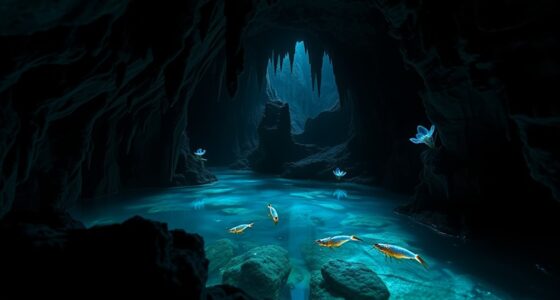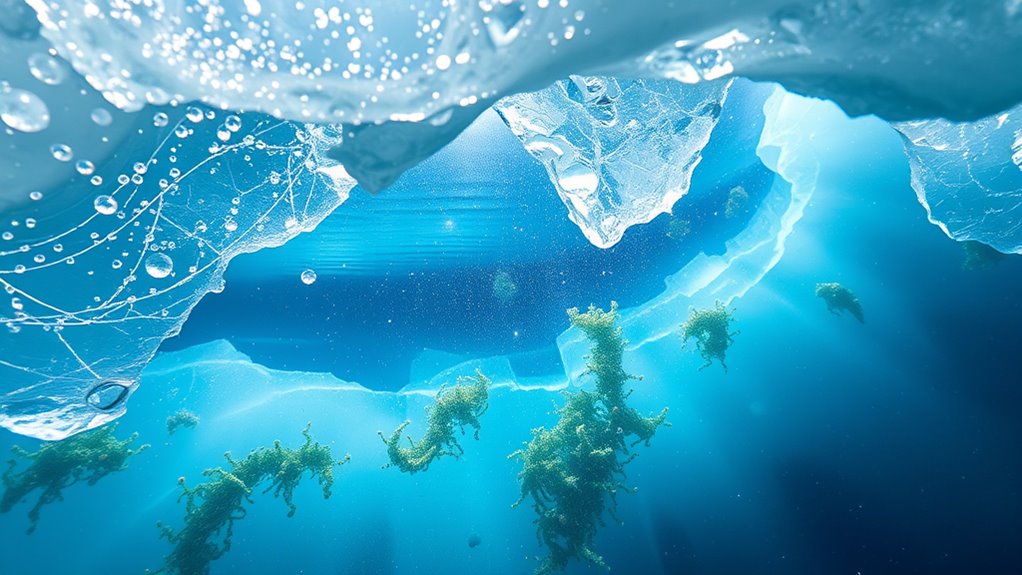
Beneath the Arctic ice, a hidden ecosystem thrives in tiny brine channels and microhabitats, where microbes, algae, and microorganisms play essential roles. These microenvironments support biodiversity, fuel the food web, and influence climate regulation. As ice melts due to climate change, these delicate communities face disruption, threatening the entire Arctic ecosystem. If you continue exploring, you’ll uncover the fascinating secrets of how this unseen world sustains Arctic life.
Key Takeaways
- Microbial communities thrive within brine channels, forming microhabitats that support Arctic biodiversity beneath the ice.
- Algae, such as *Melosira arctica*, proliferate during melt seasons, fueling the Arctic food web from the bottom up.
- Nutrients and minerals trapped in ice influence microbial diversity and ecosystem functions beneath the ice.
- Melting sea ice releases microbes into the ocean, impacting nutrient cycling and marine ecosystems.
- The stability of the ice’s microenvironment is crucial for sustaining the Arctic’s hidden microbial ecosystems.

The Arctic Habitat (Introducing Habitats)
As an affiliate, we earn on qualifying purchases.
As an affiliate, we earn on qualifying purchases.
The Role of Sea Ice in Arctic Climate and Environment
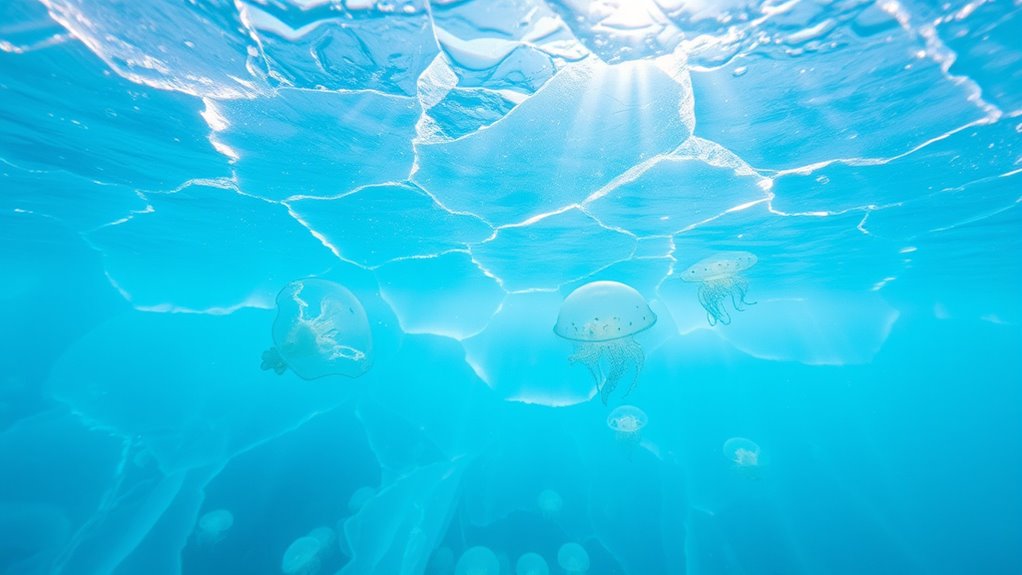
Have you ever wondered how sea ice influences the Arctic climate and environment? Sea ice plays a vital role in regulating temperatures by reflecting sunlight, which helps keep the region cooler. As it melts, darker ocean water absorbs more solar energy, accelerating warming and creating a feedback loop that speeds up ice loss. The extent of sea ice affects regional weather patterns, influencing wind and precipitation. It also acts as a barrier between the ocean and atmosphere, controlling heat exchange and insulating the water below. Without sufficient ice, the Arctic’s delicate climate balance shifts, impacting global climate systems. The loss of sea ice not only intensifies local warming but also contributes to rising sea levels and broader climate change effects worldwide. Recent studies indicate that the melting of sea ice is closely linked to emerging climate shifts and changing ocean currents in the Arctic.

Being the Change: A New Kind of Climate Documentary
As an affiliate, we earn on qualifying purchases.
As an affiliate, we earn on qualifying purchases.
The Formation and Seasonal Changes of Arctic Sea Ice

You observe how Arctic sea ice forms and melts each year, driven by seasonal temperature changes. During winter, colder temperatures promote ice growth, while warmer summer months cause it to thin and retreat. These cyclical processes shape the environment and influence the entire Arctic ecosystem. The rate of ice formation and melting is also affected by climate change, which is accelerating the loss of sea ice in the region. Additionally, polar amplification has intensified warming in the Arctic, further impacting ice dynamics. Changes in atmospheric patterns can also influence the extent and timing of sea ice development and melt cycles. Moreover, sea ice albedo plays a crucial role in regulating the Earth’s energy balance by reflecting sunlight, which is increasingly impacted by melting ice.
Ice Growth Cycles
Arctic sea ice undergoes a predictable annual cycle driven by seasonal temperature changes, with new ice forming during the colder winter months and melting away in the warmer summer season. During winter, temperatures drop, and seawater begins to freeze, creating a solid ice cover that thickens as cold conditions persist. This growth phase is influenced by wind, salinity, and ocean currents, which help distribute the newly formed ice across the Arctic. As spring approaches, sunlight increases, and the ice begins to consolidate, reaching its maximum extent around March. In summer, rising temperatures cause the ice to thin and break apart, leading to melting and degradation of the ice cover. This cyclical process plays a vital role in regulating the Arctic’s climate and ecosystem dynamics. The growth and melt cycles are also affected by climate change, which has led to a reduction in overall ice extent over recent decades. Additionally, sea ice dynamics are crucial for understanding how these natural processes are shifting in response to global warming. The natural variability of this cycle can be disrupted by external factors, such as climate change impacts, which accelerate ice loss and alter the seasonal patterns. Changes in sea ice are further complicated by ocean currents, which influence the distribution and movement of ice across the Arctic region. A better understanding of these seasonal changes is essential for predicting future Arctic conditions.
Seasonal Melting Patterns
Seasonal melting patterns of sea ice are driven by the annual fluctuations in temperature and sunlight that characterize the Arctic climate cycle. During winter, colder temperatures cause sea ice to grow and thicken, reaching its maximum extent around March. As spring arrives, increased sunlight and rising temperatures initiate melting, leading to thinner ice and retreating edges. The process peaks in September, when sea ice reaches its annual minimum, exposing more ocean surface. In summer, meltwater pools develop on the ice surface, supporting microbial life. These pools are crucial for microbial ecosystems that thrive in polar environments. The development of meltwater pools influences local albedo and accelerates melting processes. The presence of albedo effect variations due to melt pools can further amplify melting, impacting the overall ice dynamics. In fall, cooling temperatures slow melting, and refreezing begins. This cycle repeats yearly, but recent decades show a decline in maximum and minimum extents, reflecting ongoing climate change. Ice formation during winter, thickening as temperatures drop. Melting starts in spring with increased sunlight. Summer sees the lowest ice extent and formation of melt pools. Refreezing begins in fall, restoring ice cover. Overall, the cycle shortens and weakens due to warming trends, and the changing climate patterns further impact the seasonal dynamics.

National Audubon Society Guide to Marine Mammals of the World
As an affiliate, we earn on qualifying purchases.
As an affiliate, we earn on qualifying purchases.
Microbial Life Beneath the Ice: Tiny Architects of the Ecosystem

You’ll find that brine channels in the ice create tiny habitats where microorganisms thrive despite extreme conditions. These channels serve as essential spaces for algae and microbes to grow, especially during spring melt when conditions improve. By understanding these microenvironments, you can see how even the smallest organisms shape the entire Arctic ecosystem. Natural materials like ice and minerals also contribute to creating a sustainable environment for microbial life within these channels. Additionally, the automation of environmental monitoring allows scientists to study these microhabitats more effectively and in real time. This technological advancement helps reveal the complex interactions within microbial ecosystems that sustain Arctic biodiversity. Furthermore, the presence of specific nutrients and minerals in the ice can influence microbial diversity and activity, highlighting the importance of nutrient availability in these microhabitats.
Brine Channel Habitats
Beneath the thick layer of sea ice, tiny brine channels form intricate networks that serve as essential habitats for microbial life. These channels are created when salt-rich brine gets trapped as seawater freezes, creating microhabitats with high salinity and low temperatures. You’ll find bacteria, algae, and other microorganisms thriving here, fueling the Arctic’s cold ecosystem. Brine channels act as nutrient highways, allowing microorganisms to exchange gases and nutrients even in extreme conditions. They also provide protection from predators and harsh surface conditions. During the melt season, these channels expand, releasing microbes into the ocean. This dynamic environment plays a crucial role in supporting the base of the Arctic food web and maintaining nutrient cycling within the ice ecosystem.
- Microorganisms thrive in high salinity and cold temperatures
- Channels connect different habitats beneath the ice
- They serve as pathways for nutrient and gas exchange
- Expanding during melt season, releasing microbes into seawater
- Essential for sustaining microbial diversity in harsh conditions
Algae Growth Dynamics
During the spring melt, algae under the Arctic ice experience a surge in growth as conditions become more favorable. As temperatures rise and meltwater pools form, light penetrates the thinning ice, fueling photosynthesis. Brine channels expand, providing microhabitats where algae thrive despite extreme salinity and cold. These microscopic plants, such as Melosira arctica, grow in long chains, increasing biomass just before sinking to the seafloor during melt season. Their rapid proliferation supports the entire food web, from zooplankton to larger predators. As the ice recedes, algae are released into the water column, enhancing nutrient cycling and providing essential energy sources. Their growth dynamics directly influence the structure and productivity of the Arctic ecosystem beneath the ice. Recognizing the vulnerabilities of these microbial communities is crucial for understanding the overall health of the Arctic environment and its response to climate change vulnerabilities of microbial communities. Additionally, these microbial processes are influenced by changes in climate variability, which can alter the timing and extent of algal blooms. Understanding these microbial responses is vital for predicting future shifts in Arctic ecosystems and their global implications.
Guy Harvey Girl's Cationic Performance Hooded Tee, Iced Aqua/Seahorse, XX-Large
Long sleeve sueded jersey hooded t-shirt
As an affiliate, we earn on qualifying purchases.
As an affiliate, we earn on qualifying purchases.
Algae Blooms and Their Significance in the Food Web

Have you ever wondered how tiny algae under Arctic sea ice play such a crucial role in the region’s food web? These algae form the foundation of the ecosystem, fueling a complex chain of life. During spring melt, increased light and brine channels promote massive algal blooms beneath the ice, providing essential nutrients. These blooms support zooplankton, which feed Arctic cod and other fish. The algae also sink and nourish benthic communities on the ocean floor, illustrating their vital contribution to marine nutrient cycling**. Their presence influences the timing and abundance of many species, from tiny microorganisms to top predators. So, these microscopic organisms not only sustain the food web but also help regulate the Arctic’s ecological balance. Biodiversity hotspots** are often found in such unique environments, emphasizing the importance of preserving these delicate ecosystems.
How Melting Ice Impacts Marine Biodiversity

How does melting Arctic sea ice directly threaten marine biodiversity? As the ice diminishes, habitat loss occurs for many species that depend on it for breeding, feeding, and shelter. Algae and microorganisms that thrive under ice are displaced or decline, disrupting the base of the food web. This affects zooplankton, fish like Arctic cod, and predators such as seals and polar bears. Melting ice also exposes darker ocean water, increasing heat absorption and accelerating warming, which further destabilizes ecosystems. The reduction of multi-year ice weakens overall stability and resilience, making species more vulnerable to environmental stress. These changes cascade through the food chain, threatening the survival of numerous marine organisms and shrinking biodiversity in the Arctic ecosystem. Recognizing angel number soulmate patterns can help us understand the importance of protecting these fragile environments for future generations.
The Decline of Multi-Year Ice and Ecosystem Resilience

The decline of multi-year ice markedly undermines the Arctic ecosystem’s resilience by reducing the stability and durability of the sea ice cover. With less old ice, the Arctic becomes more vulnerable to rapid melting, disrupting habitats and biological processes. You’ll notice fewer thick, stable ice sheets that once protected diverse species. This loss weakens the foundation for algae and microorganisms essential for the food web. As multi-year ice diminishes, the Arctic’s capacity to bounce back from seasonal changes declines. The ecosystem becomes more susceptible to extreme weather, further accelerating ice loss.
- Less stable ice reduces habitat for algae and microorganisms
- Decreased ice thickness diminishes protective barriers
- Reduced resilience hampers recovery after melting seasons
- Vulnerability to climate variability increases
- Ecosystem stability weakens, threatening species survival
Interactions Between Sea Ice and the Broader Arctic Ecosystem
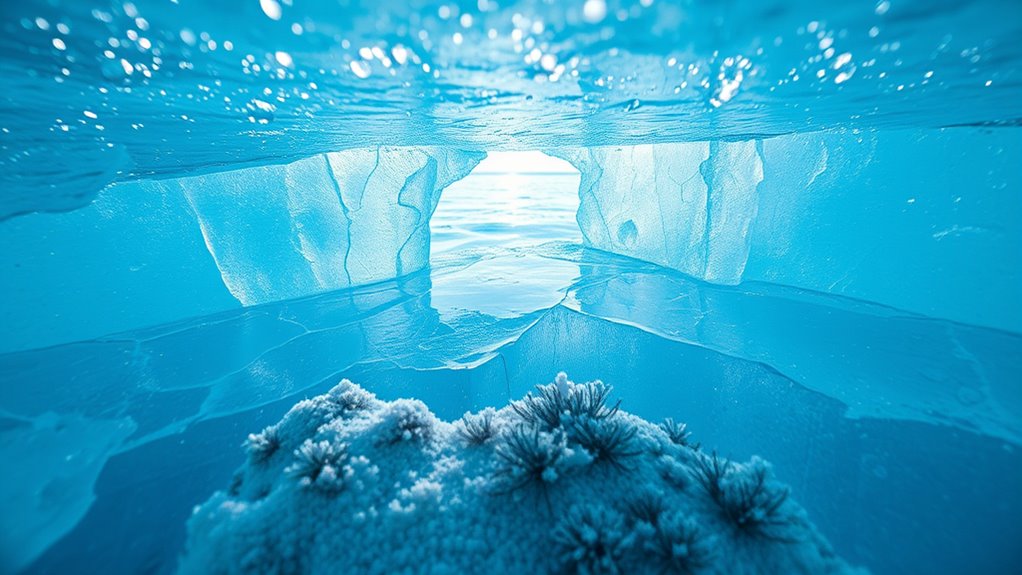
Sea ice actively interacts with the broader Arctic ecosystem by serving as both habitat and regulator of biological processes. It provides a foundation for algae that form the base of the food web, supporting microorganisms and zooplankton. Brine channels within the ice create microhabitats for microscopic algae and bacteria, which thrive during spring melt when salinity decreases. Large algae like Melosira arctica grow under the ice, sinking to nourish benthic communities during melt seasons. Meltwater pools on the surface host microbiological biomass crucial for higher organisms. As climate warming causes ice to thin and retreat, habitats become fragmented, disrupting the timing and availability of food sources. These changes ripple through the ecosystem, affecting everything from microscopic communities to top predators like polar bears.

As Arctic sea ice continues to shrink and thin due to climate change, preserving the fragile ecosystem beneath it becomes increasingly urgent. You can support efforts to reduce greenhouse gas emissions, which directly slow ice loss. Protecting Arctic habitats through policies and conservation initiatives helps maintain biodiversity. Promoting sustainable research practices ensures data collection without further disturbance. Raising awareness about the ecosystem’s importance encourages global action. Investing in innovative technologies can improve monitoring and restoration strategies.
Protect Arctic ecosystems by reducing emissions, supporting conservation, and promoting sustainable research for a resilient future.
- Reduce carbon emissions through clean energy adoption
- Support Arctic conservation policies and protected areas
- Promote sustainable scientific research methods
- Educate others about the ecosystem’s significance
- Invest in climate resilience and adaptation solutions
Frequently Asked Questions
How Do Microorganisms Survive in the Extreme Cold and Salinity of Sea Ice?
You might be surprised, but microorganisms survive in the extreme cold and salinity of sea ice by developing special adaptations. They produce antifreeze proteins that prevent ice crystals from damaging their cells, and their enzymes remain active at low temperatures. Salinity is managed through the production of compatible solutes that balance internal salt levels. These strategies help them thrive in brine channels and microhabitats within the ice, maintaining essential ecosystem functions.
What Role Do Ice Algae Play in Carbon Cycling Within the Arctic Ecosystem?
Ice algae act as the Arctic’s carbon capturers, absorbing CO2 during photosynthesis, fueling the marine food web, and sinking when they die, sequestering carbon in the deep ocean. They form the foundation, support the structure, and sustain the cycle of life beneath the ice. By balancing carbon exchange, they help regulate climate, shape ecosystems, and influence the planet’s overall health, making them essential to Arctic resilience.
How Does Sea Ice Loss Affect Indigenous Arctic Communities’ Livelihood and Culture?
You’ll find your livelihood and culture deeply impacted as sea ice loss disrupts traditional hunting, fishing, and travel routes. With thinner, less predictable ice, safety risks increase, and access to essential resources diminishes. Changes in sea ice also threaten cultural practices tied to the environment, making it harder to maintain traditions and community cohesion. As the ice disappears, your way of life faces unprecedented challenges, requiring adaptation and resilience.
Are There Any Natural Feedback Mechanisms That Could Slow Down or Accelerate Ice Melt?
Think of the Arctic’s feedback mechanisms as a double-edged sword. When ice melts, darker ocean water absorbs more heat, speeding up warming—an accelerant. Conversely, if more multi-year ice forms, it reflects sunlight better, helping slow melt—an ecological brake. These natural feedbacks can either turbocharge ice loss or temporarily curb it, but overall, human influence continues to push the Arctic toward faster, irreversible change.
What Innovative Technologies Are Being Developed to Study Beneath the Arctic Ice in Real-Time?
You’re exploring innovative technologies like autonomous underwater vehicles (AUVs) and remotely operated vehicles (ROVs) that provide real-time data beneath Arctic ice. These robotic explorers navigate through thick ice, capturing high-resolution images and sensor data on temperature, salinity, and biological activity. Additionally, scientists deploy ice-penetrating radar and autonomous buoys equipped with sensors to monitor ice thickness and subsurface conditions continuously, offering invaluable insights into the hidden Arctic ecosystem.
Conclusion
You might think the Arctic’s hidden ecosystem is just a frozen wilderness, but it’s actually a vibrant, delicate world teeming with life. Some scientists believe that microbes and algae beneath the ice could be clues to early life on Earth. If we don’t act now to protect this ecosystem, we risk losing not just Arctic beauty but also essential insights into our planet’s past and future. The ice’s secrets are too important to ignore.