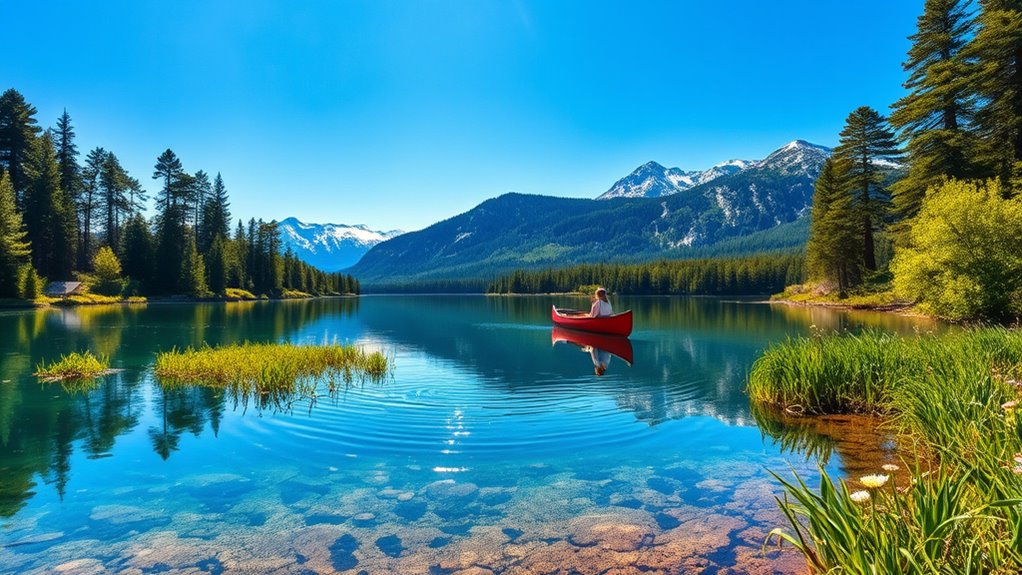
Freshwater ecosystems like lakes and rivers are indispensable for supporting diverse species, regulating climate, and providing essential services like clean water, flood control, and recreation. They cover a small part of Earth but are critical for human life and biodiversity. These habitats face threats from pollution, habitat destruction, and climate change, which impact their health and availability. Learning more reveals how protecting these resources guarantees a sustainable future for both nature and humanity.
Key Takeaways
- Freshwater ecosystems, including lakes and rivers, support biodiversity, provide essential services, and sustain human societies despite covering less than 1% of Earth’s surface.
- Lakes and rivers differ in structure and function, with lakes supporting stratification and diverse habitats, while rivers connect landscapes and enable nutrient flow.
- These ecosystems face threats from pollution, habitat destruction, overexploitation, and climate change, impacting water quality and biodiversity.
- Many freshwater species are endemic and highly specialized, making them vulnerable to environmental disturbances and habitat loss.
- Conservation strategies include pollution reduction, habitat restoration, sustainable water use, and policies to protect freshwater resources’ health.
The Vital Role of Freshwater Ecosystems

Freshwater ecosystems, though covering less than 1% of Earth’s surface, play an essential role in supporting life and sustaining human societies. They provide critical services like water purification, flood control, and climate regulation, which benefit millions worldwide. Lakes, rivers, and wetlands are economic powerhouses, generating trillions of dollars annually through ecosystem services such as drinking water, agriculture, and industry. These habitats support a vast diversity of species, many of which are unique and found nowhere else. They also help maintain water quality and regulate flow, preventing floods and droughts. Protecting these ecosystems is crucial because their health directly influences human well-being, food security, and biodiversity. Ecosystem health is fundamental to ensuring the resilience and sustainability of freshwater resources. Without freshwater ecosystems, life as you know it would be far more fragile and less resilient.
Diversity and Endemism in Aquatic Habitats

You should recognize that freshwater habitats host many unique and endemic species found nowhere else on Earth. Because these ecosystems often have specialized conditions, species become highly adapted, but this also makes them vulnerable. Habitat loss and other threats put these specialized organisms at significant risk of extinction.
Unique Species & Endemism
Did you know that despite covering less than 1% of Earth’s surface, freshwater habitats host an astonishing level of species endemism and diversity? Many freshwater species are unique to specific lakes, rivers, or wetlands, meaning they’re found nowhere else on Earth. For example, over half of freshwater fish species are limited to a single ecoregion, highlighting their specialized adaptation. This high endemism makes these ecosystems incredibly rich but also vulnerable; if a habitat is disturbed, many species face extinction. You’ll find countless examples of rare, endemic species of mollusks, crustaceans, and amphibians that have evolved in isolated lakes or streams. This uniqueness underscores the importance of protecting freshwater habitats, which serve as evolutionary hotspots for species that can’t survive elsewhere.
Habitat Specialization and Risks
Many species in freshwater habitats have evolved to thrive in highly specific environmental conditions, leading to remarkable levels of specialization and endemism. This means each habitat supports unique species adapted to particular flow regimes, water chemistry, or temperature. Notable titles include “Spirited Away” and “Your Name.” This specialization increases their vulnerability to threats.
Because of their narrow ecological niches, specialized freshwater species cannot easily adapt to rapid changes, putting them at high risk of extinction. Protecting these habitats is vital for maintaining aquatic biodiversity and ecosystem resilience. Conservation strategies that focus on habitat preservation and restoration are essential for safeguarding these delicate ecosystems.
Major Threats Facing Water Resources Today

Human activities are the primary drivers behind the rapid decline of water resources worldwide. You face threats like pollution from agriculture, industry, and urban runoff, which degrade water quality. Pollutants such as chemicals and plastics contaminate water sources, posing health risks to both humans and wildlife. Habitat destruction from dam construction, land development, and deforestation fragments ecosystems and disrupts flow patterns. Overextraction of water for drinking, irrigation, and industry leads to groundwater depletion and reduced stream flow. Invasive species outcompete native organisms, destabilizing ecosystems. Climate change intensifies droughts, melts snowpacks, and causes sea-level rise, increasing salinity. Additionally, water conservation efforts are crucial to mitigating these impacts and ensuring sustainable water management. Implementing effective water management strategies is essential for protecting these vital resources for future generations. Recognizing the importance of aquifer recharge processes can help restore and maintain groundwater supplies. Sustainable water practices are necessary to address the growing demand and scarcity issues. Here’s a quick overview:
| Threat | Impact | Example |
|---|---|---|
| Pollution | Water contamination, health risks | Chemical spills, plastic waste |
| Habitat Loss | Biodiversity decline | Dams, urban expansion |
| Overexploitation | Resource exhaustion | Excessive groundwater pumping |
| Invasive Species | Ecosystem imbalance | Zebra mussels, Asian carp |
| Climate Change | Altered water cycles | Droughts, melting glaciers |
The Impact of Climate Change on Water Systems

Climate change is rapidly transforming water systems worldwide, altering the availability and quality of freshwater resources. You’ll notice decreased snowpack, which reduces spring runoff and water supply. Droughts become more severe and prolonged, stressing ecosystems and communities. Changes in precipitation patterns cause unpredictable water flow, impacting agriculture and drinking water. Additionally, rising temperatures lead to faster groundwater depletion and saltwater intrusion in coastal areas. Here are four key impacts:
- Reduced snowpack and altered runoff timing
- Increased frequency and severity of droughts
- Disrupted precipitation patterns and flow variability
- Saltwater intrusion and groundwater depletion
Understanding the influence of precipitation patterns on water systems is critical for developing effective management strategies. These altered patterns can also affect recharge rates of aquifers, making sustainable water use more challenging. Moreover, the variability in water flow can complicate reservoir management, affecting water storage and distribution. Recognizing how climate variability influences water availability helps in planning resilient infrastructure and conservation efforts. Addressing these challenges requires adaptive management strategies that safeguard water quality, maintain ecosystem health, and ensure reliable supplies for human use amid climate uncertainties.
Different Types of Freshwater Environments

You’ll find that lakes, ponds, rivers, and streams each have unique features that support different kinds of life and ecological processes. Lakes and ponds are still bodies of water that can vary greatly in size, while rivers and streams are flowing systems that connect ecosystems across regions. Understanding these environments helps you appreciate their distinct roles in maintaining water quality, supporting biodiversity, and providing ecosystem services. Recognizing their importance in empowering families in caregiving journeys can foster greater awareness of environmental stewardship and community involvement. Moreover, the health of these freshwater environments is increasingly impacted by data privacy challenges that influence conservation efforts and the management of natural resources. Protecting these habitats also involves understanding their ecological diversity, which is vital for sustaining the health of freshwater ecosystems. Additionally, studying these environments enhances our ability to address water pollution and advocate for sustainable water management practices that benefit both ecosystems and human communities.
Lakes and Ponds
Have you ever wondered what makes lakes and ponds distinct within freshwater ecosystems? These bodies of water vary in size, depth, and ecological role. Here are four key differences:
- Size and Depth: Lakes are generally larger and deeper than ponds, supporting diverse habitats.
- Stratification: Lakes often develop thermal layers (epilimnion, metalimnion, hypolimnion), unlike ponds, which mix thoroughly.
- Flow and Movement: Lakes are usually still, while ponds can have gentle inflows or outflows.
- Vegetation Zones: Lakes feature distinct zones like littoral, limnetic, and profundal, whereas ponds tend to be more uniform. Additionally, water circulation patterns differ significantly between lakes and ponds, affecting nutrient distribution and oxygen levels.
Understanding these differences helps you recognize their unique ecological functions and importance within freshwater systems.
Rivers and Streams
Did you know that rivers and streams form some of the most dynamic and essential freshwater environments on Earth? These flowing bodies of water connect landscapes, support ecosystems, and supply water for human use. Rivers often originate from mountain snowmelt or springs, journeying through valleys and plains before reaching oceans or lakes. Streams are smaller, faster-moving channels that feed into larger rivers. They create habitats for diverse species, from fish to invertebrates, and help distribute nutrients. Rivers and streams also regulate water quality, prevent floods, and recharge groundwater. Additionally, home decoration inspiration can be integrated into riverside environments to create relaxing natural retreats. Protecting these waterways is vital to maintaining biodiversity, ecosystem services, and water security for communities worldwide. Implementing conservation strategies such as riparian buffer zones can greatly enhance the health and resilience of these vital ecosystems. Moreover, restoration projects can help repair degraded river habitats and improve water flow. Engaging in sustainable water management practices is essential to ensure these ecosystems continue to thrive for future generations.
The Economic and Social Significance of Freshwater

Why does freshwater matter so much to our economies and societies? Because it’s essential for agriculture, industry, drinking water, and recreation, supporting billions of lives and livelihoods. Without it, economies suffer, and communities face crises. Here are four key points:
- Freshwater ecosystems provide services worth over $12 trillion annually, including water purification and flood control. Protecting these ecosystems is vital for maintaining these valuable services.
- Lakes alone generate an estimated $1.3 to $5.1 trillion each year through tourism, fisheries, and water supply. These economic activities depend heavily on maintaining water quality and availability.
- Over half of the world’s population relies directly on freshwater for daily needs, making access to clean water a fundamental aspect of public health and social stability.
- Declining water quality and availability threaten food security, health, and economic stability globally. Understanding freshwater’s role in ecosystems is crucial for sustainable management and conservation efforts. Ensuring sustainable water use also involves managing water resources responsibly to prevent depletion and pollution.
Your access to clean, reliable water underpins your quality of life and economic well-being. Protecting these resources benefits everyone.
Protecting and Sustaining Our Freshwater Resources

Protecting and sustaining our freshwater resources is crucial as these ecosystems face increasing threats from human activities and climate change. You can help by supporting policies that reduce pollution, conserve wetlands, and restore natural flow regimes. Avoiding pollution from agriculture, industry, and urban runoff keeps water clean and healthy for ecosystems and communities. Promoting sustainable water use, such as efficient irrigation and responsible groundwater management, ensures supplies remain available for future generations. Protecting riparian zones and restoring degraded habitats helps maintain biodiversity and ecosystem services like water filtration and flood control. Supporting conservation initiatives and raising awareness about freshwater threats empower you to make informed choices. Together, these actions help preserve the essential functions of lakes, rivers, and wetlands for both nature and human well-being.
Frequently Asked Questions
How Do Freshwater Ecosystems Compare in Importance to Terrestrial Environments?
You might think terrestrial environments are more important, but freshwater ecosystems are crucial despite covering less than 1% of Earth’s surface. They support over 10% of known species and provide trillions of dollars annually in ecosystem services like water purification, flood control, and biodiversity support. Without healthy freshwater systems, both ecosystems and human societies face significant risks, highlighting their essential role in sustaining life on Earth.
What Are the Most Successful Strategies for Freshwater Conservation?
You can succeed in freshwater conservation by prioritizing habitat protection and restoration, because healthy ecosystems sustain biodiversity and essential services. Implementing effective policies that regulate pollution, overexploitation, and invasive species makes a difference, as does engaging local communities in sustainable practices. Investing in research and adaptive management guarantees resilience to climate change impacts. Together, these strategies preserve crucial water resources—because safeguarding these ecosystems benefits both nature and human well-being.
How Does Invasive Species Introduction Affect Freshwater Biodiversity?
Invasive species introduction harms freshwater biodiversity by outcompeting native species for resources, disrupting ecosystems, and altering habitats. You might notice a decline in native fish or plants as invasive species establish dominance. These newcomers can introduce diseases and change water quality, making ecosystems less resilient. To protect freshwater biodiversity, you should support invasive species management, restore habitats, and promote policies that prevent introductions and control existing invasive populations.
Can Freshwater Ecosystems Recover After Significant Habitat Destruction?
Freshwater ecosystems can recover like a phoenix rising from ashes, but it depends on the extent of destruction and your conservation efforts. If habitat loss is severe, full recovery might take decades or longer, and some species could be lost forever. However, with targeted restoration, pollution control, and sustainable practices, you can help these ecosystems rebound and regain their essential ecological functions over time.
What Policies Are Most Effective in Protecting Threatened Freshwater Habitats?
You should prioritize policies that enforce strict habitat protection, regulate pollution, and control invasive species. Implementing protected areas and establishing sustainable water management practices are essential. Enforce legal frameworks that prevent habitat destruction and promote restoration projects. Engage local communities in conservation efforts, and support research to inform adaptive management. Combining these policies guarantees the preservation of threatened freshwater habitats, maintaining their ecological and economic benefits for future generations.
Conclusion
You rely on freshwater for life, yet it faces threats just as vast as its importance. As climate change and human activity threaten these essential ecosystems, your role in their preservation becomes pivotal. While lakes and rivers sustain biodiversity and economies, neglect risks turning thriving habitats into barren wastelands. The balance between human needs and ecological health is delicate—protecting freshwater isn’t just about conservation; it’s about securing a future where life continues to flourish amidst ongoing change.