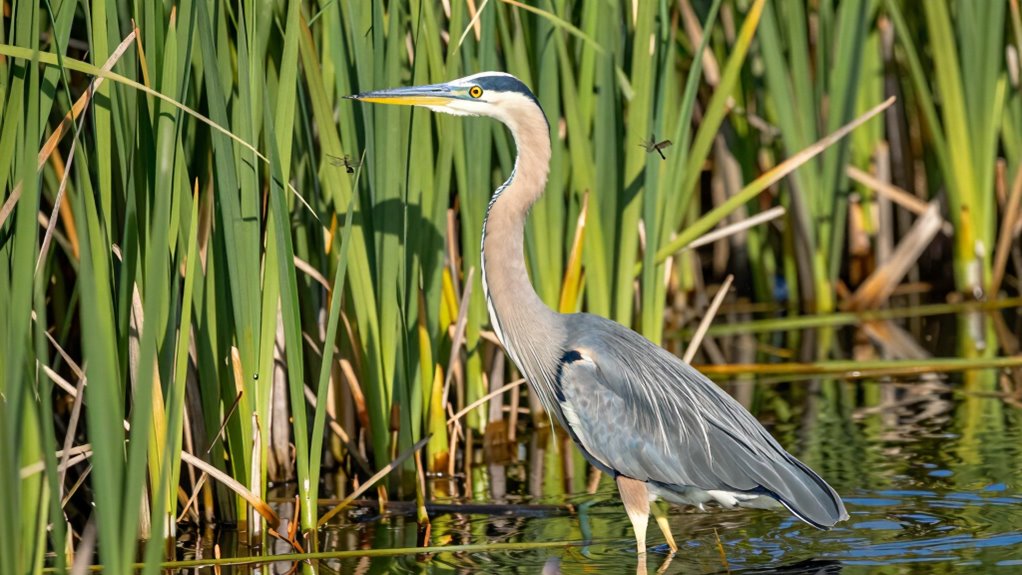

Herons are among the most patient hunters in marshlands, using their striking appearance and deliberate movements to outwait prey. They stand still for long periods, swaying gently to mimic aquatic plants and avoid alarming fish or insects. Their long legs allow them to wade into deeper waters, while their sharp eyes keep a keen watch for movement. This strategic patience and environmental adaptation make herons remarkably effective predators—if you stay tuned, you’ll discover even more surprising hunting secrets.

Prime made for students and young adults
- Fast, free delivery for dorm and study essentials
- Prime Video and Amazon Music included
- Member-only deals
Key Takeaways
- Herons rely on patience, standing still for long periods to patiently wait for prey in shallow waters.
- Their deliberate head tilts and gentle swaying mimic environmental elements, enhancing stealth.
- Adapted to wetlands with abundant vegetation, their habitat provides ideal cover and prey access.
- Long legs enable wading into deeper waters, expanding hunting opportunities and success.
- Their strategic behaviors and habitat choices make herons some of the most efficient marsh predators.
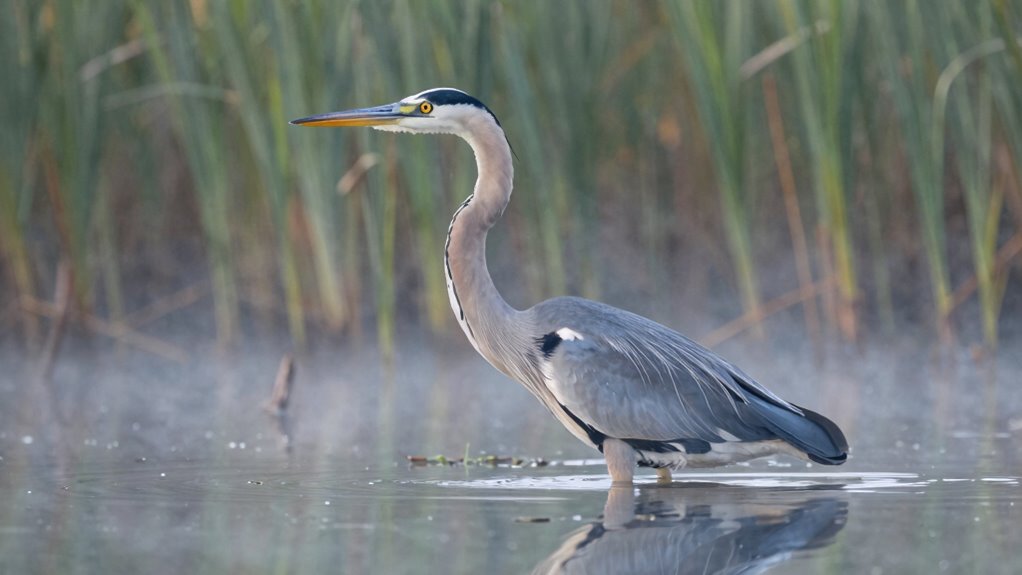
Herons are fascinating birds known for their striking appearance and remarkable hunting skills. When you observe them in the wild, you’ll notice that their behavior patterns are carefully adapted to maximize their success as hunters. They tend to stand still for long periods, patiently waiting for prey to come within striking distance. This stoic patience is a core part of their hunting strategy, allowing them to conserve energy and avoid alarming their prey. Herons often tilt their heads, scan the water with focused eyes, and sway gently, mimicking the movement of aquatic plants or debris to remain unnoticed. Their behavior showcases a deliberate, calculated approach that sets them apart from many other birds.
As you watch these birds, you’ll also see that their habitat preferences are quite specific, reflecting their specialized feeding habits. Herons prefer shallow waters such as marshes, ponds, lakes, and riverbanks—areas where fish, amphibians, and invertebrates abound. They often choose wetlands with abundant vegetation because it offers both cover and abundant prey. You might notice them wading into the shallows, their long legs allowing them to stand comfortably in water that would be too deep for many other birds. These areas provide the ideal environment for herons to hunt effectively, offering both concealment and easy access to their food sources. Their specialized environment plays a crucial role in supporting their hunting techniques and overall survival. This environment also influences their behavioral adaptations, which are essential for thriving in such habitats. Understanding their habitat preferences helps explain how they develop such effective hunting strategies. Their patience and specialized environment make them exceptional hunters, capable of capturing prey with remarkable precision. Whether you’re observing them quietly along the shoreline or studying their feeding techniques, you’ll see how these birds have evolved to master their environment through a combination of deliberate behaviors and habitat choices. In addition, their adaptations to environmental conditions further enhance their hunting success, allowing them to exploit their habitat effectively. Their success as hunters depends on both their innate patience and their ability to select the right habitat—traits that make herons some of the most intriguing and efficient predators in the marsh.
As an affiliate, we earn on qualifying purchases.
Frequently Asked Questions
How Long Can Herons Stay Still While Hunting?
You’ll notice herons can stay completely still for up to 15-20 minutes while hunting, showcasing their remarkable patience. This behavior is a key behavioral adaptation that helps them blend into their habitat preferences, like marshes and wetlands. By remaining motionless, herons increase their chances of surprising prey, making them efficient hunters. Their stillness and patience are essential survival strategies in their watery environments.
Do Herons Hunt at Night or Only During the Day?
Herons mainly hunt during the day, using their keen eyesight to spot fish and insects. However, some heron species, like the Black-crowned Night Heron, hunt at night, especially during migration or when nesting. Their activity patterns can vary based on season and environment. During heron migration, they might adjust hunting times. When herons nest, they often hunt nearby, adapting their schedule to guarantee enough food for their young.
What Is Heron’s Favorite Prey?
Herons’ favorite prey includes fish, frogs, and small aquatic animals. During heron nesting, they become more focused on feeding their chicks, often hunting in shallow waters. Their patience shines during heron migration, as they wait quietly for the right moment to strike. You’ll notice that their hunting success depends on their calm, steady approach, making them expert predators in their marshy habitats.
How Do Herons Communicate With Each Other?
You might think herons are silent, but they communicate through loud calls and visual cues. During heron nesting, you’ll notice their raucous squawks, signaling territory or alerting others. Ironically, during heron migration, they use subtle body language and calls to stay coordinated. These quiet hunters aren’t so silent after all, effectively using vocalizations and gestures to keep their social bonds strong, even across vast wetlands.
Are Herons Endangered or Protected Species?
You’ll find that many heron species are protected, thanks to their specific heron nesting habits and migratory patterns. While some populations face threats, others are thriving due to conservation efforts. Heron migration patterns help guarantee their survival, and protection laws support their nesting habitats. So, depending on the species and region, herons are often safeguarded, allowing their populations to flourish and continue their fascinating behaviors.
Conclusion
Think of the heron as a patient painter, carefully waiting for the perfect brushstroke—the ideal moment to strike. Its stillness and patience turn the marsh into a silent gallery where patience transforms into art. Just as a master artist waits for the right hue, this bird teaches us that sometimes, patience isn’t about rushing but about knowing when to act. In nature’s quiet masterpiece, the heron reminds us to wait for our true moment to shine.
Fall Picks
fall essentials
As an affiliate, we earn on qualifying purchases.