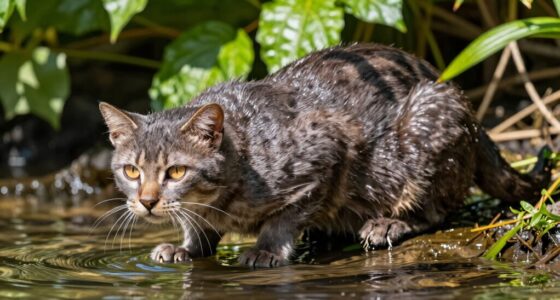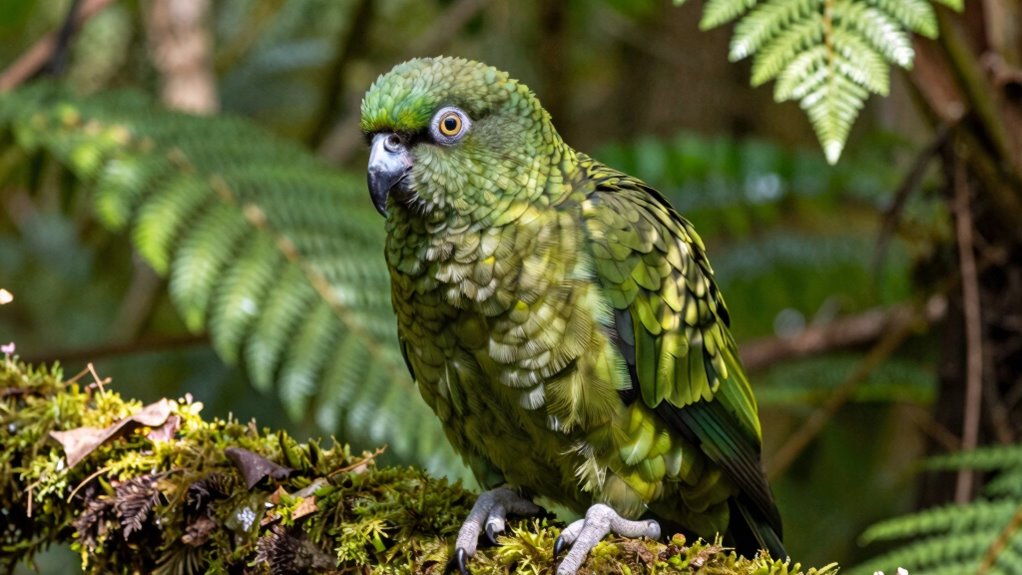

Meet the kakapo, a rare, flightless parrot from New Zealand that’s capturing global attention. This large, sturdy bird can’t fly but uses powerful legs to climb and walk. Its booming call during breeding season helps attract mates, and conservationists work hard to protect its habitat and boost its tiny population. Because of its slow reproduction and unique traits, humans play a crucial role in its survival. Keep exploring to discover more about this extraordinary bird’s journey to recovery.

Prime made for students and young adults
- Fast, free delivery for dorm and study essentials
- Prime Video and Amazon Music included
- Member-only deals
Key Takeaways
- The kakapo is a critically endangered, flightless parrot native to New Zealand, known for its unique adaptations.
- It relies on strong legs for climbing and foraging, and produces a distinctive booming call during breeding season.
- Conservation efforts include habitat protection, predator-free islands, and hand-rearing chicks to ensure survival.
- The kakapo has a slow reproductive cycle, making long-term, dedicated conservation programs essential.
- Human intervention and innovative strategies are vital for the species’ recovery and future preservation.
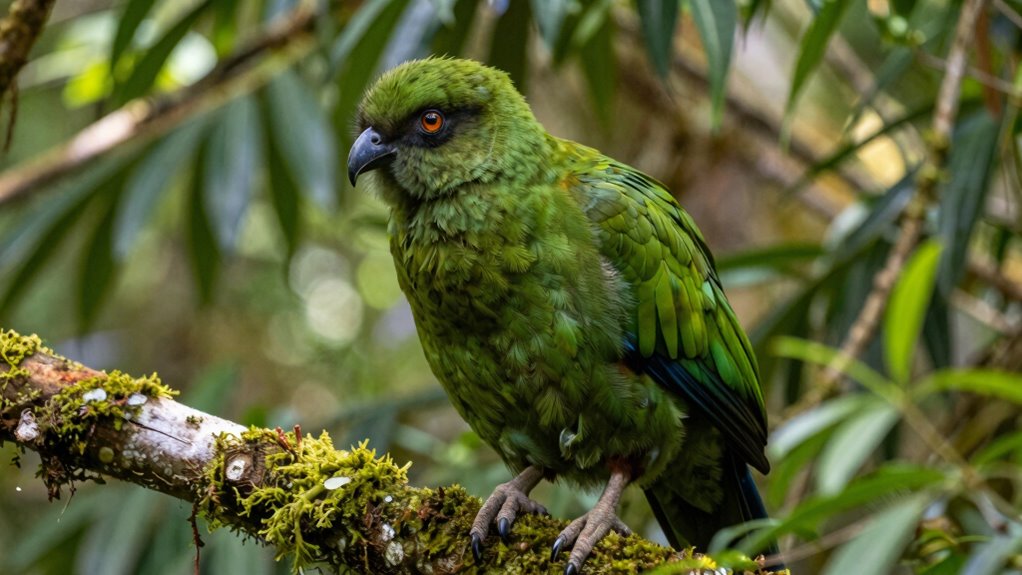
The kakapo is one of the most unique and fascinating birds in the world, and it’s native to New Zealand. This large, flightless parrot has captured the attention of conservationists and bird lovers alike, mainly because of its rarity and extraordinary traits. Over the years, dedicated conservation efforts have become essential to saving this critically endangered species. Without human intervention, the kakapo might have vanished forever, but thanks to targeted programs, its population is slowly recovering. These efforts include intensive monitoring, habitat protection, and even hand-rearing some chicks to guarantee their survival. You can see how committed the teams are to preserving this extraordinary bird, knowing that each individual counts toward the species’ future.
What makes the kakapo so remarkable are its unique adaptations. Unlike most parrots, it can’t fly, a trait that evolved due to its island habitat, where predators are scarce. Instead of flying, it relies on its powerful legs to climb, walk, and even jump across the forest floor. Its large, sturdy body, combined with a keen sense of smell, helps it find food on the ground. Its wings are tiny and non-functional for flight, but they’re still used for balance and communication. The kakapo also has a distinctive, booming call that can carry for miles, especially during the breeding season. This call is a key part of its mating strategy, as males gather in specific areas called leks to compete for female attention. These adaptations demonstrate how the bird has evolved to thrive in its environment, but they also make it vulnerable when new predators arrive. Additionally, conservation strategies have had to adapt to these unique traits, ensuring the species’ survival.
Conservation efforts have had to adapt to these unique traits. For example, kakapo habitats are now carefully protected, and the birds are often relocated to predator-free islands where they can breed safely. Researchers have created detailed breeding programs, encouraging the birds to reproduce and ensuring hatchlings are raised under safe conditions. The kakapo’s slow reproductive rate, with females only laying eggs every few years, makes conservation a long-term commitment. Yet, each successful breeding adds hope for the species. As you learn about their plight, it’s inspiring to see how human ingenuity and compassion can help restore a creature so perfectly adapted to its environment. The kakapo’s story shows that with persistence and careful management, even the most vulnerable species can have a fighting chance.
As an affiliate, we earn on qualifying purchases.
Frequently Asked Questions
How Long Does a Kakapo Typically Live in the Wild?
You’ll find that kakapos typically live around 10 to 20 years in the wild. Thanks to dedicated kakapo breeding and conservation efforts, their lifespan might extend slightly, especially with improved protection and monitoring. These efforts help guarantee kakapos survive threats like predators and habitat loss, giving them a better chance at longevity. The ongoing conservation work is essential for maintaining and increasing their populations, which is fundamental for their future.
What Is the Kakapo’s Primary Diet?
You’ll find that the kakapo’s primary diet consists of a variety of native New Zealand plants, seeds, fruits, and nuts. Its feeding habits focus on foraging during the night, as it’s nocturnal. The kakapo’s nutritional requirements include high-energy foods to sustain its flightless body. It also eats fungi and leaves, ensuring a balanced diet that supports its health and longevity in the wild.
How Do Kakapos Communicate With Each Other?
You’ll find kakapos communicate mainly through melodic, mesmerizing mating calls and vocal communication. During breeding season, males make deep, droning voices to declare their presence and attract mates, while females respond with gentle calls. These clever, curious parrots use a variety of sounds — from booming booms to soft whistles — to stay connected, signal their intentions, and seek safety, ensuring their survival despite their flightless, forest-bound lifestyles.
Are Kakapos Active During the Day or Night?
You’ll find that kakapos are primarily nocturnal, so they’re most active during the night. Their nocturnal habits mean they rest during the daytime, hiding in dense foliage or burrows. While they might occasionally be seen during the day, especially in the early morning or late afternoon, their peak activity occurs after sunset. This nighttime activity helps them avoid predators and stay hidden, making them quite unique among parrots.
What Are the Main Threats to Kakapo Survival?
You should know that habitat destruction and predator introduction are the main threats to kakapo survival. Habitat destruction reduces their living space and food sources, making it harder for them to thrive. Predator introduction, like cats and rats, poses a significant danger, as kakapos have no natural defenses. These threats have caused their population to decline drastically, but conservation efforts are working to protect and restore their numbers.
Conclusion
You’ve met the kakapo—the flightless parrot that’s fighting to survive against all odds. Like a resilient phoenix rising from the ashes, it symbolizes hope and the power of conservation. With your support, this extraordinary bird can continue to thrive and inspire generations to come. Remember, every effort counts in keeping this flightless wonder’s song alive, proving that even the smallest voices can create the loudest echoes in the fight to save our precious wildlife.
Fall Picks
fall essentials
As an affiliate, we earn on qualifying purchases.