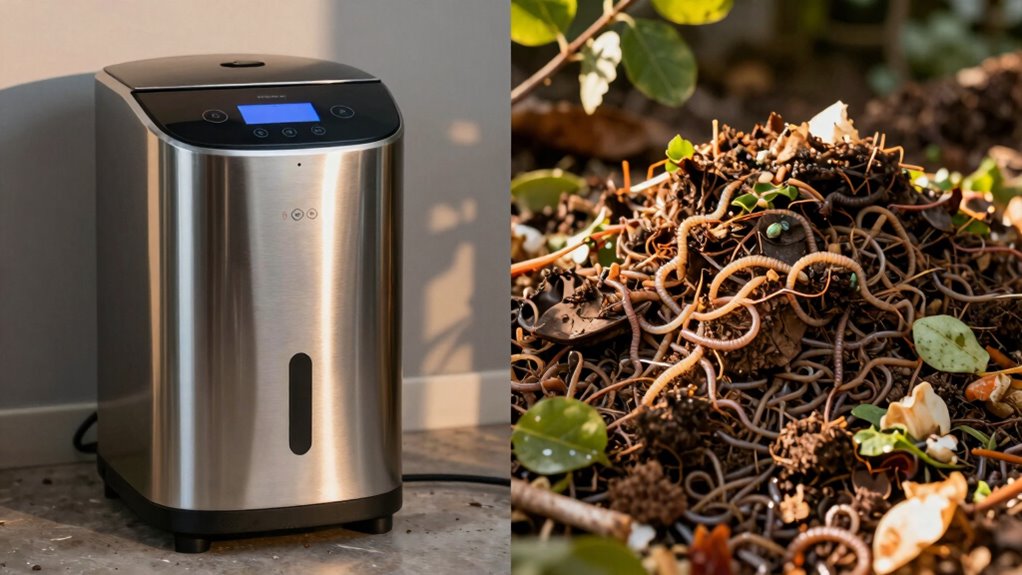

Smart composters streamline your composting by using technology to speed up the waste breakdown process. While traditional composting connects you with nature and offers hands-on rewards, smart composters make it easier with features like sensors and mobile apps for monitoring. You get real-time updates on moisture and temperature, making composting less intimidating. If you’re curious about the benefits of each method and how they can fit your lifestyle, there’s plenty more to explore.

Prime made for students and young adults
- Fast, free delivery for dorm and study essentials
- Prime Video and Amazon Music included
- Member-only deals
Key Takeaways
- Smart composters use technology for faster decomposition, often completing the process within weeks compared to traditional composting’s longer timeline.
- Traditional composting requires regular maintenance and monitoring, while smart composters automate mixing and provide real-time updates via mobile apps.
- Smart composters are ideal for urban settings, allowing efficient composting in limited spaces, while traditional methods foster a tactile connection with nature.
- Beginners may find smart composters less intimidating due to their intuitive interfaces and ease of monitoring, enhancing the user experience.
- Both methods effectively reduce waste and enrich gardens, but the choice depends on individual lifestyle preferences and desired engagement with the composting process.
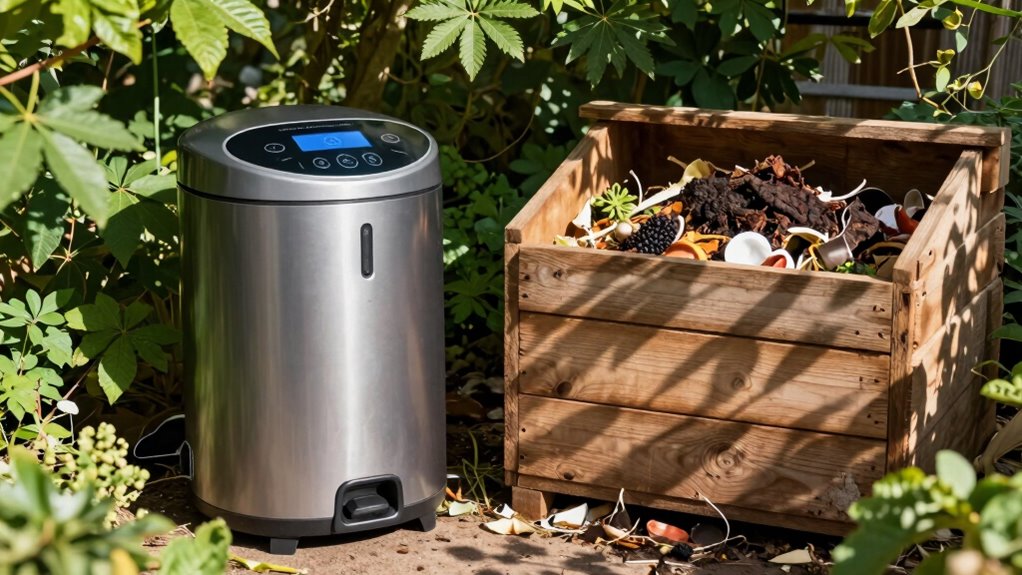
When you think about composting, you might wonder whether to go the traditional route or invest in a smart composter. Both methods have their unique appeal, but understanding the benefits overview can help you decide which one suits your lifestyle better. Traditional composting often involves a simple pile or bin in your backyard. It requires regular maintenance, like turning the pile and monitoring moisture levels. While this method can be rewarding and cost-effective, it demands time and effort, especially if you’re new to composting.
On the other hand, smart composters leverage technology to streamline the process. They often come equipped with sensors, automated mixing systems, and even mobile apps to monitor your compost’s progress. This tech impact notably enhances efficiency compared to traditional methods. Smart composters can break down organic waste faster, often within weeks, while traditional composting might take several months. If you’re busy or simply prefer a more hands-off approach, a smart composter could be a game changer.
When it comes to user experience, smart composters usually offer a more intuitive interface. Many models provide real-time updates on temperature, moisture, and compost readiness. You can easily check your compost’s status from your smartphone, which adds a layer of convenience that traditional composting lacks. This can make the process feel less intimidating, especially if you’re just starting out. You’ll likely find that engaging with technology makes it easier to stick with your composting goals.
Additionally, smart composters often incorporate urban farming principles, allowing you to compost efficiently even in limited outdoor spaces. However, traditional composting does have its perks. It often fosters a deeper connection with nature and can be a fulfilling, tactile experience. You learn about the decomposition process firsthand, which can be incredibly educational, especially for families. There’s a certain satisfaction in knowing you’ve created nutrient-rich soil from your kitchen scraps.
Ultimately, the efficiency comparison between smart composters and traditional methods comes down to your lifestyle and preferences. If you value speed and convenience, smart composters might be the way to go. But if you enjoy the hands-on aspects and have the time to dedicate, traditional composting offers its own set of rewards. Whichever route you choose, both methods contribute positively to reducing waste and enriching your garden, making a difference in your own backyard and the environment as a whole.
As an affiliate, we earn on qualifying purchases.
Frequently Asked Questions
Do Smart Composters Require Electricity to Operate?
Yes, smart composters do require electricity to operate. They use automated monitoring systems to keep track of your compost’s progress, ensuring everything’s breaking down efficiently. With temperature control features, they maintain the ideal conditions for decomposition. This means you won’t have to worry about manual adjustments or temperature fluctuations. While traditional composting relies on natural processes, smart composters make it easier and more efficient for you to manage your composting efforts.
Can I Use a Smart Composter Indoors?
Absolutely, you can use a smart composter indoors! Think of it as your personal waste reduction wizard, turning kitchen scraps into nutrient-rich compost while you sip your morning coffee. Perfect for indoor gardening, it fits snugly in your space, making composting convenient and hassle-free. You’ll not only reduce waste but also nurture your plants with homemade compost. So, embrace the magic of indoor composting and watch your green dreams flourish!
How Long Do Smart Composters Last?
Smart composters can last several years, typically around 5 to 10, depending on durability factors like materials and usage. To maximize their lifespan, you should follow some maintenance tips: keep them clean, guarantee proper ventilation, and monitor moisture levels. Regularly check for any wear and tear, and address issues promptly. By taking good care of your composter, you’ll not only extend its life but also improve compost quality.
Are Smart Composters Suitable for All Types of Waste?
Smart composters are like magic boxes for your kitchen scraps and organic materials. They handle a variety of waste, including fruit and vegetable peels, coffee grounds, and eggshells. However, you should steer clear of meat, dairy, and greasy foods, as they can cause odors and attract pests. So, as long as you stick to the right materials, you’ll be turning your waste into nutrient-rich compost in no time!
What Is the Cost Difference Between Smart and Traditional Composters?
Smart composters typically have a higher initial investment compared to traditional composters, often due to their advanced technology and features. However, you’ll find that they can lead to long-term savings by reducing waste disposal costs and providing nutrient-rich compost faster. While the upfront cost might seem steep, think about how much time and money you could save in the long run, making it a worthwhile consideration for your composting journey.
Conclusion
In the debate between smart composters and traditional methods, it’s clear each has its perks. Smart composters offer speed and convenience, while traditional composting connects you with nature. As the saying goes, “You can’t rush nature.” If you value efficiency and tech, go smart. If you prefer the hands-on approach, stick with tradition. Ultimately, it’s about what fits your lifestyle best, allowing you to turn waste into nourishment, regardless of the method you choose.
Evergreen bestsellers Picks
bestsellers
As an affiliate, we earn on qualifying purchases.