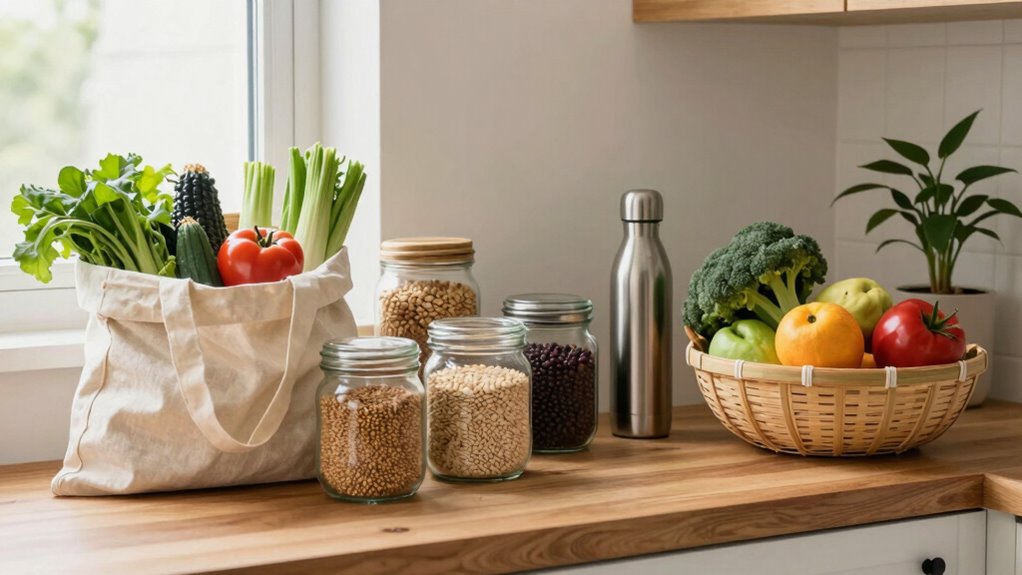

To build a sustainable weekly grocery routine, plan your meals ahead to avoid impulse buys and reduce waste, sticking to a detailed shopping list. Choose eco-friendly packaging, bring reusable bags, and support local markets for fresh, seasonal produce. Establish a routine schedule to prevent last-minute trips and overbuying. Continuously review your habits to improve waste reduction, costs, and environmental impact. Keep exploring how small adjustments can make your routine even more sustainable and efficient.

Prime made for students and young adults
- Fast, free delivery for dorm and study essentials
- Prime Video and Amazon Music included
- Member-only deals
Key Takeaways
- Plan meals weekly and create detailed shopping lists to reduce impulse buys and minimize food waste.
- Choose eco-friendly packaging by bringing reusable bags and filling bulk containers at the store.
- Support local farmers’ markets and CSA programs for fresh, seasonal, and minimally packaged produce.
- Establish a consistent shopping schedule to avoid last-minute trips and unnecessary transportation emissions.
- Continuously monitor and adjust your routine based on consumption patterns to enhance sustainability and reduce waste.
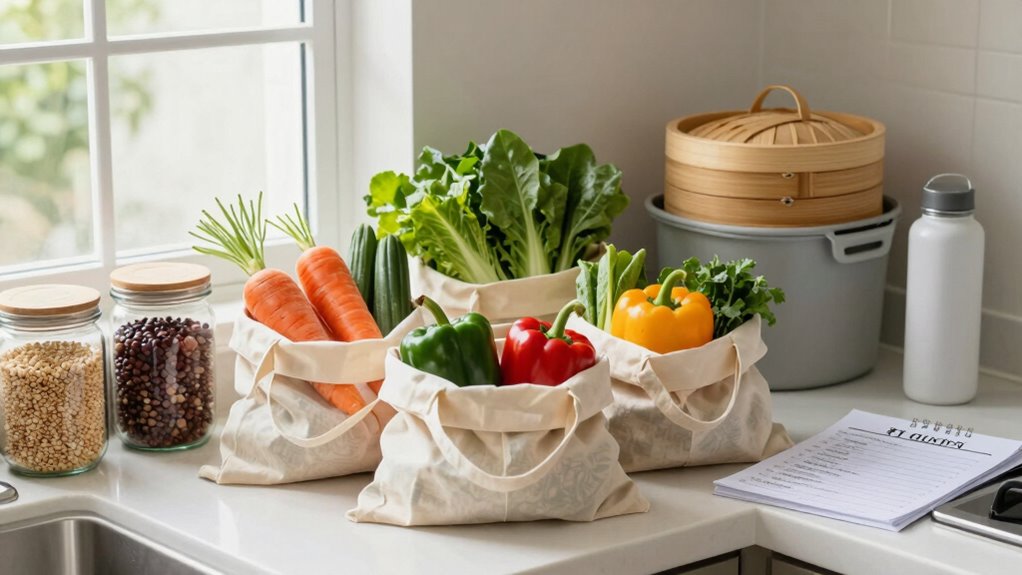
Creating a sustainable weekly grocery routine can make shopping more efficient, affordable, and environmentally friendly. The foundation of this routine starts with meal planning. When you plan your meals in advance, you avoid impulse buys and reduce food waste. Take some time each week to decide what dishes you’ll prepare, then make a detailed shopping list based on those meals. This targeted approach not only saves money but also minimizes the chances of buying unnecessary items. By sticking to your list, you prevent over-purchasing, which often leads to spoilage and waste. Plus, meal planning helps you select ingredients that are in season or on sale, further stretching your budget.
Incorporating eco friendly packaging into your routine is another key step toward sustainability. Instead of relying on single-use plastics and packaging, bring your own reusable bags, containers, and produce bags to the store. Many grocery stores now offer options to fill your own containers with bulk items like grains, nuts, or dried fruits, reducing packaging waste. When shopping for produce, opt for loose items over pre-packaged options. If packaging can’t be avoided, choose products with recyclable or biodegradable materials. This not only cuts down on landfill waste but also encourages stores to adopt more sustainable practices.
Along with planning your meals and choosing eco-friendly packaging, consider shopping at local farmers’ markets or joining community-supported agriculture (CSA) programs. These options often provide fresh, seasonal produce with minimal packaging, and buying locally supports your community’s economy. To further enhance your routine, set a regular shopping schedule to avoid last-minute trips, which tend to lead to more wasteful purchases and unnecessary driving. Also, keep a list of staple items you regularly need; this helps streamline your shopping and prevents overbuying.
Additionally, exploring Natural Pool options like eco-friendly natural pools can inspire more sustainable choices in your backyard and lifestyle. Finally, review your routine periodically. Take note of what foods get used up quickly and which go to waste. Adjust your meal planning accordingly to better match your consumption habits. By continuously refining your approach, you make your grocery routine more sustainable over time. Building this habit not only benefits the environment but also helps you develop a more mindful, budget-conscious approach to food. With consistent effort, your weekly grocery routine becomes a powerful tool in reducing waste, lowering costs, and promoting a healthier planet.
As an affiliate, we earn on qualifying purchases.
Frequently Asked Questions
How Can I Reduce Food Waste While Grocery Shopping?
You can reduce food waste by planning meals ahead, buying only what you need, and practicing food preservation techniques like freezing leftovers or drying herbs. Pay attention to expiration dates and store produce properly to extend freshness. Composting tips, such as composting scraps instead of tossing them, also help reduce waste. This approach minimizes waste, saves money, and supports eco-friendly habits during grocery shopping.
What Are the Best Eco-Friendly Grocery Bag Options?
Looking to cut down waste and choose eco-friendly options? Reusable bags made from eco-friendly materials like cotton, jute, or recycled plastics are your best bet. They’re sturdy, washable, and reduce the need for single-use plastic bags. Have you considered investing in different sizes for produce and bulk items? Switching to these eco-conscious bags will make your grocery routine more sustainable and environmentally friendly.
How Do I Plan Meals for Dietary Restrictions Sustainably?
You should start by identifying your dietary restrictions and creating a meal prep plan that accommodates them. Use dietary planning tools or apps to organize your meals for the week, ensuring you buy only what you need. Focus on sustainable ingredients and batch cook to minimize waste. By prepping meals ahead and sticking to your plan, you reduce impulse buys and food waste, making your routine both eco-friendly and tailored to your dietary needs.
What Affordable Organic Products Are Available Locally?
Surprisingly, affordable organic products are often hiding in plain sight. You can find budget-friendly options at local farmers’ markets and organic markets, where prices tend to be more reasonable than big grocery chains. Supporting local farmers not only saves you money but also guarantees fresher produce. Keep an eye out for seasonal sales and specials, and you’ll discover that eating organic doesn’t have to break the bank.
How Can I Involve My Family in Sustainable Grocery Habits?
You can involve your family in sustainable shopping by making it a fun, collaborative effort. Encourage everyone to share ideas for eco-friendly products and shopping habits. Take family members along on grocery trips, teaching them about reducing waste and choosing local, organic options. Assign simple tasks like recycling or bringing reusable bags. This approach fosters a sense of shared responsibility, making sustainable grocery habits a natural part of your family’s routine.
Conclusion
By planning thoughtfully, shopping consciously, and cooking creatively, you create more than just a routine—you create a sustainable lifestyle. When you respect your resources, reduce waste, and choose quality over quantity, you build habits that benefit both your wallet and the planet. Embrace mindful decisions, cherish simple moments, and stay committed to growth. Because in sustainability, consistency is key, and every small step you take today shapes a healthier tomorrow.
Fall Picks
fall essentials
As an affiliate, we earn on qualifying purchases.