
The Arctic is melting at an unprecedented pace, driven by human activities like greenhouse gas emissions and pollution, which accelerate climate change. This rapid ice loss threatens ecosystems, wildlife, and global climate patterns, causing more extreme storms and rising sea levels. While natural variability causes short-term fluctuations, the overall decline is alarming. Urgent actions, like reducing emissions and protecting ecosystems, are essential. To understand how the world is responding and what’s at stake, explore further.
Key Takeaways
- Arctic sea ice is declining at unprecedented rates due to human-caused climate change, threatening ecosystems and global climate stability.
- Melting ice disrupts habitats for polar species, including polar bears and seals, and impacts Arctic food webs.
- Global efforts focus on reducing emissions, protecting ecosystems, and strengthening international cooperation to slow Arctic melting.
- Immediate action is critical to prevent irreversible tipping points and mitigate severe climate and ecological consequences.
- Scientific research and community involvement are essential to develop effective strategies for Arctic preservation.
The Accelerating Decline of Arctic Sea Ice
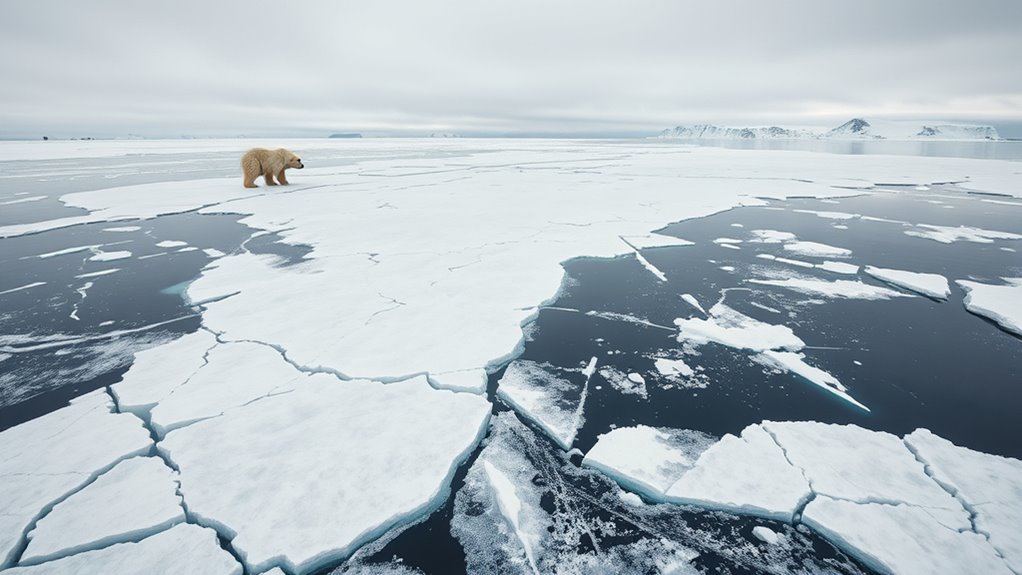
The decline of Arctic sea ice is accelerating, driven by rising global temperatures and changing atmospheric patterns. You’ll notice that each year, the maximum winter extent is lower than before, with recent records showing the lowest in 47 years. Since 2007, all of the ten smallest winter extents have occurred, indicating a long-term downward trend. Summer melt is speeding up much faster than winter, losing about 12.2% of ice per decade compared to 2.5% in March. This rapid decline impacts ecosystems, climate regulation, and sea levels worldwide. Despite short-term fluctuations, the overall pattern is clear: Arctic sea ice is shrinking at an unprecedented rate, highlighting the urgent need for action to mitigate ongoing climate change. Additionally, the contrast ratio of the remaining ice influences how vividly the changes are perceived in satellite imagery, emphasizing the importance of high-quality measurements. Understanding the climate feedback mechanisms involved can help predict future Arctic conditions and inform mitigation strategies.
Unraveling the Causes Behind Melting Trends
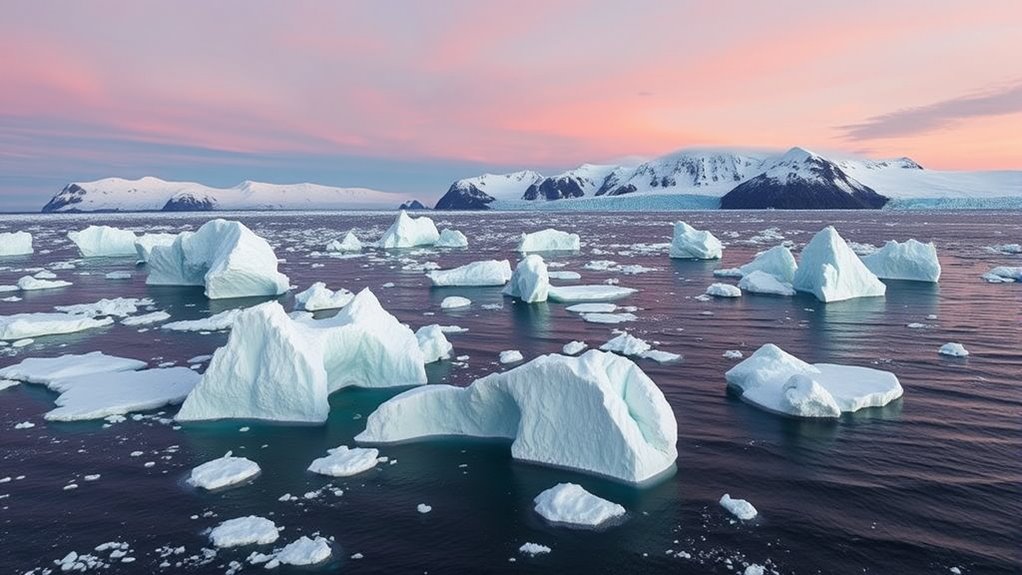
You can see that human activities, especially greenhouse gas emissions, drive Arctic warming and accelerate sea ice melt. But natural climate variability also plays a role, causing short-term fluctuations that can temporarily slow or speed up melting. Understanding how these factors interact helps explain recent trends and future projections. Additionally, climate variability can sometimes mask the long-term impacts of greenhouse gases, complicating efforts to predict future conditions. Recognizing the differences between natural and human influences is essential for accurate climate modeling and forecasting. Moreover, regional climate patterns can significantly influence localized melting rates, adding another layer of complexity to the overall climate system. Advances in AI-generated insights are increasingly used to analyze complex climate data, improving our understanding of these interactions. Incorporating advanced sound design techniques can aid in creating immersive educational content to raise awareness about these environmental changes.
Human-Induced Warming
Human activities have markedly accelerated Arctic warming, driving the rapid decline in sea ice extent. Your carbon emissions from burning fossil fuels trap heat in the atmosphere, intensifying global temperatures. Deforestation and land use changes release more greenhouse gases, fueling the crisis. Industrial pollution, including black carbon, settles on ice, reducing its reflectivity and speeding melting. Here are some key impacts:
- Greenhouse gases like CO₂ and methane trap heat, raising Arctic temperatures nearly four times faster than the global average.
- Human-driven pollution accelerates ice melt through black carbon deposits on ice surfaces.
- Fossil fuel consumption fuels climate change, pushing the Greenland Ice Sheet closer to irreversible disintegration.
- The cumulative effect amplifies Arctic warming, threatening ecosystems, sea levels, and global climate stability.
Natural Climate Variability
What role does natural climate variability play in shaping Arctic sea ice trends? You need to recognize that natural fluctuations, like ocean currents, atmospheric patterns, and seasonal weather changes, influence sea ice extent year to year. These internal climate variations can cause temporary increases or decreases in ice cover, even amid long-term warming trends. For example, unusual weather events or shifts in jet streams can slow or accelerate melting temporarily. While natural variability explains some short-term changes, it doesn’t override the overarching impact of human-induced warming. Recent slowdowns in ice decline, for instance, are linked to these internal factors, but they don’t halt the overall downward trend. Understanding these natural factors helps clarify why Arctic sea ice can fluctuate considerably in the face of persistent climate change. Additionally, the horsepower of electric dirt bikes illustrates how external energy inputs can be substantial, highlighting the importance of understanding both natural and human-made influences on environmental systems. Recognizing the role of ocean currents is especially crucial, as they can redistribute heat within the Arctic region, further influencing ice melt patterns. Moreover, ongoing research indicates that ocean current variability plays a significant role in modulating regional climate effects and ice dynamics.
Ecological Impacts and Consequences for Wildlife
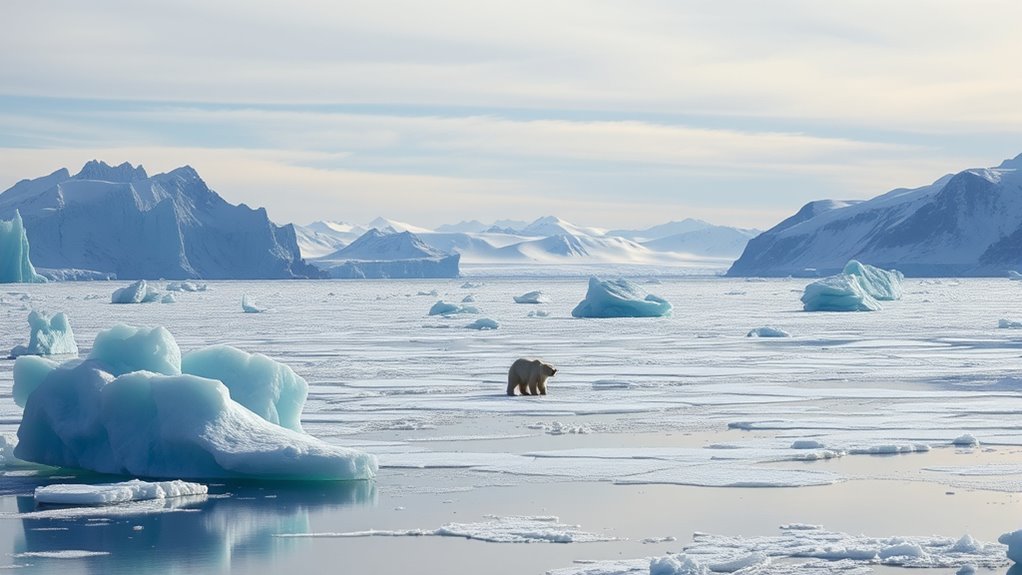
The melting of Arctic sea ice profoundly disrupts the region’s ecosystems, threatening the survival of many species that rely on stable ice habitats. As ice disappears, polar bears struggle to find food, seals lose breeding grounds, and ice algae—fundamental to the food chain—decline sharply. You should be concerned about:
- The near-extinction risk for polar bears as hunting platforms vanish.
- The decline of seal populations, vital prey for Arctic predators.
- The collapse of ice-dependent algae, destabilizing entire food webs.
- The accelerated thaw of permafrost, releasing greenhouse gases and fueling climate change.
These changes threaten not only Arctic wildlife but also global climate stability, demanding urgent action to protect this fragile environment before it’s too late.
The Role of Climate Variability and Temporary Slowdowns
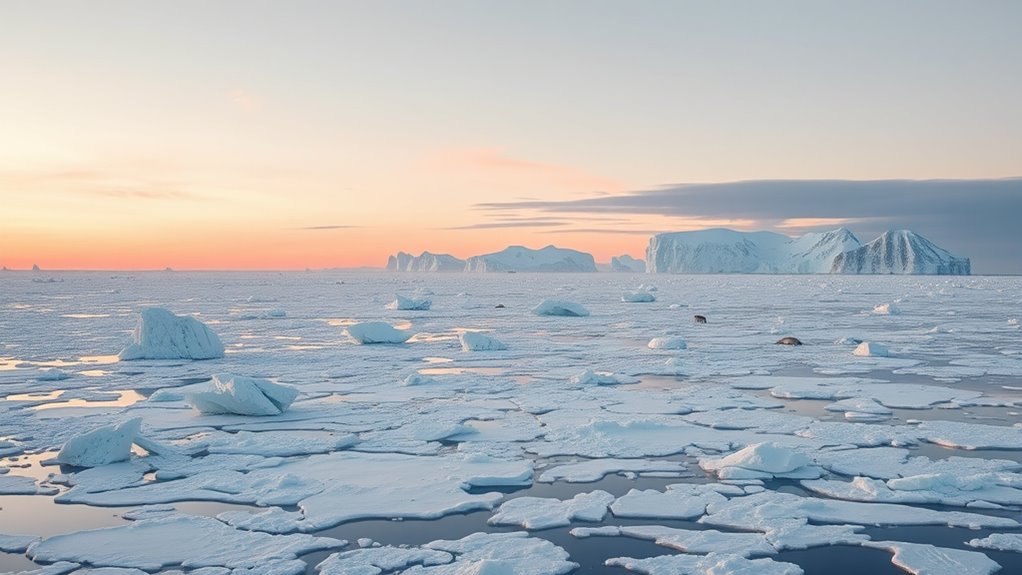
Despite the overall downward trend in Arctic sea ice, climate variability can cause temporary slowdowns in melting rates, offering brief periods of stabilization. These fluctuations often result from natural factors like shifts in weather patterns, ocean currents, or atmospheric conditions that temporarily reduce melt or promote ice growth. Between 2005 and 2024, data shows a slowdown in September sea ice decline by over 55%, with ice volume losses also decreasing markedly during this period. Such pauses are not signs of reversal but are linked to internal climate variability. They may last for 5 to 10 years, providing short-term relief. Understanding climate variability helps explain these irregular patterns and their implications. Additionally, ongoing research emphasizes the importance of climate models in predicting future Arctic conditions. These models incorporate long-term climate trends that project future changes with greater accuracy. Recognizing the influence of natural climate fluctuations is crucial for understanding these temporary slowdowns. However, models predict that after these periods, ice loss will accelerate again, often surpassing previous rates, driven by ongoing global warming.
Global Implications of Arctic Ice Loss

Arctic ice loss doesn’t just stay confined to the polar region; it has far-reaching effects that ripple across the globe. You’ll see rising sea levels, threatening coastal cities worldwide. The diminishing ice alters global weather patterns, causing more intense storms and unpredictable droughts. Melting ice releases greenhouse gases like methane, fueling further warming. Additionally, the loss disrupts ocean currents, impacting climate systems far from the Arctic. These changes are compounded by the fact that ocean circulation plays a crucial role in regulating global temperatures and weather patterns. The disruption of marine ecosystems due to melting ice also threatens biodiversity and fisheries vital for many communities. The decline in Arctic ice also accelerates climate change by reducing the Earth’s albedo, which reflects sunlight back into space. Consider these impacts: 1. Rising sea levels endanger millions in vulnerable coastal areas. 2. Extreme weather events become more frequent and severe. 3. Accelerated climate change threatens global ecosystems and agriculture. 4. Disrupted ocean circulation affects weather patterns worldwide. The loss of polar ice further exacerbates the acceleration of global warming, creating a feedback loop that intensifies these effects. Your awareness of these consequences highlights the urgent need to address Arctic melting now.
Strategies and Urgency in Protecting the Arctic Future
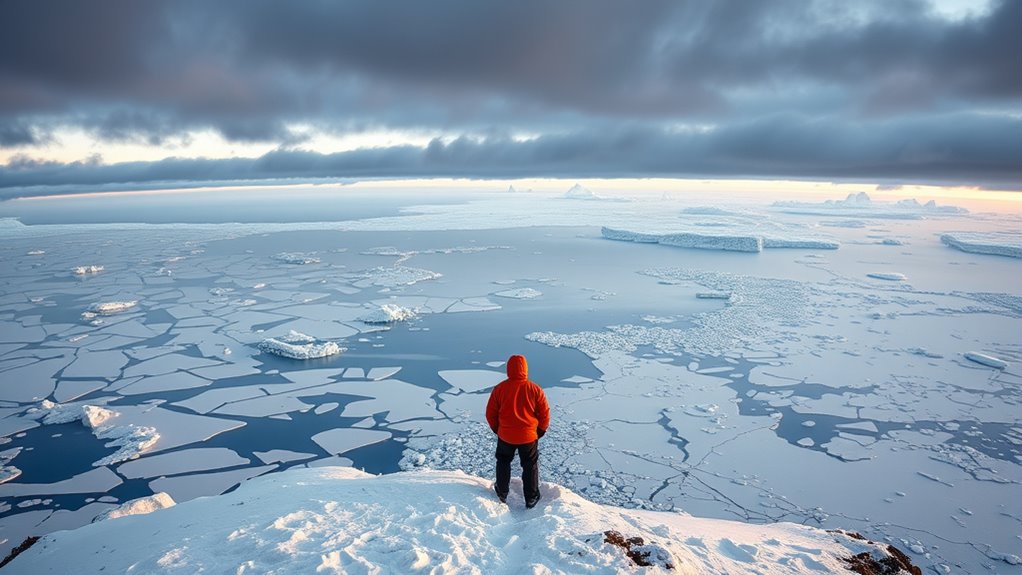
Given the rapid pace of Arctic ice loss and its global impacts, immediate and coordinated action is essential to protect its future. You need to prioritize reducing greenhouse gas emissions by supporting clean energy, enforcing stricter regulations, and holding nations accountable. International cooperation is crucial; agreements like the Paris Accord must be strengthened and expanded to include Arctic-specific commitments. Investing in scientific research helps improve predictions and understand regional vulnerabilities. You should also advocate for protecting Arctic ecosystems through sustainable practices and creating marine protected areas. Urgency cannot be overstated—delaying action risks crossing irreversible tipping points, accelerating ice melt, and worsening climate impacts worldwide. Together, swift and decisive measures can slow the decline and preserve the Arctic’s essential role in global climate stability. Emphasizing the importance of community engagement] and global responsibility is key to ensuring effective action.
Frequently Asked Questions
How Might Arctic Ice Loss Influence Global Sea Levels Long-Term?
You should know that Arctic ice loss contributes to global sea level rise because melting sea ice adds water to the oceans, raising levels gradually. Over the long term, the more ice melts from Greenland and nearby land-based glaciers, the more water enters the ocean, accelerating sea level rise. This threatens coastal communities worldwide, increasing flooding risks and causing irreversible environmental changes if the melting continues unchecked.
What Specific Feedback Loops Accelerate Arctic Melting?
You might be surprised to learn that Arctic sea ice loss creates powerful feedback loops that speed up melting. For instance, as ice diminishes, the Earth’s surface becomes darker, absorbing more sunlight—this is called the albedo effect. This additional heat accelerates ice melt further, reinforcing the cycle. These feedbacks make the Arctic’s decline even more rapid, contributing markedly to global warming and climate instability.
Are There Regional Differences in Ice Decline Within the Arctic?
You’ll notice regional differences in ice decline within the Arctic. Some areas, like the Gulf of St. Lawrence and Sea of Okhotsk, experience significant reductions, while others, such as East Greenland Sea, retain near-average ice extent. These variations result from local weather patterns, ocean currents, and seasonal conditions, which influence how much ice melts or persists in different parts of the Arctic region, making the decline uneven across the landscape.
Can Arctic Ice Recover During Natural Climate Variability Periods?
You might wonder if Arctic ice can recover during natural climate variability. For example, a colder winter or unusual weather patterns could temporarily slow melt or even slightly increase ice extent. However, these recoveries are short-lived and don’t negate the overall long-term decline driven by global warming. So, while natural variability may cause brief pauses, the relentless trend toward ice loss is unlikely to reverse without significant reduction in greenhouse gas emissions.
What Are the Most Effective International Policies to Mitigate Arctic Melting?
You can support international policies like the Paris Agreement, which aims to limit global warming, and advocate for stronger commitments from nations to reduce greenhouse gas emissions. Promoting collaborative efforts, such as Arctic-specific treaties, encourages sustainable resource management and conservation. Engaging in global climate action, pressuring policymakers, and investing in renewable energy also help mitigate Arctic melting by addressing its root causes directly.
Conclusion
As you witness the Arctic’s rapid decline, remember it’s not just a distant icy wilderness—it’s a mirror to our choices. The melting ice, once a symbol of stability, now reveals the fragile balance of our planet. While some see temporary slowdowns, the urgency remains clear: your actions can either accelerate destruction or foster hope. The Arctic’s future hinges on your willingness to act now, before it’s irreversibly lost, turning a fragile wonder into a warning.