
Imagine stepping into an “oasis in the sky,” where dense cloud forests thrive amid mountain peaks bathed in persistent fog. These ecosystems support incredible biodiversity, with plants like orchids, bromeliads, and mosses thriving thanks to constant moisture from mist and fog. They also play a vital role in regional water cycles and climate regulation. If you want to discover how these lush, mysterious environments sustain so much life, there’s much more to explore.
Key Takeaways
- Cloud forests are lush, high-altitude ecosystems characterized by persistent fog, creating unique microhabitats that support diverse endemic species.
- The constant moisture from fog drip sustains rich plant life, including epiphytes like orchids and bromeliads.
- Specialized flora and fauna adapt to thrive in humid, nutrient-poor soils, forming intricate ecological niches.
- These forests serve as vital water sources and carbon sinks, regulating regional climates and supporting biodiversity.
- Conservation efforts are crucial to protect these fragile ecosystems from climate change, deforestation, and habitat fragmentation.

The Cloud Forest: A Chronicle of the South American Wilderness (Classic, Nature, Penguin)
As an affiliate, we earn on qualifying purchases.
As an affiliate, we earn on qualifying purchases.
The Formation and Unique Climate of Cloud Forests
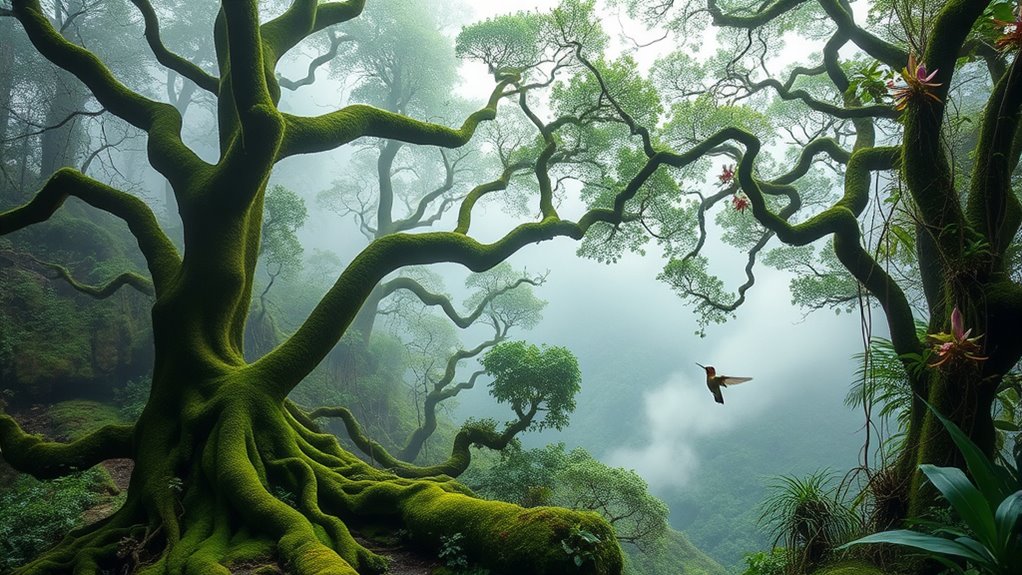
Cloud forests form when moist, warm air is forced upward along mountain slopes, cooling as it rises and creating persistent low-level clouds and mist. As the air ascends, it reaches cooler temperatures, causing water vapor to condense into fog and clouds that cling to the vegetation. This process, known as orographic uplift, traps moisture in the environment, producing a constant wet atmosphere. You’ll notice that this persistent mist keeps the forest humid and cool, often maintaining temperatures between 8°C and 20°C. The clouds act like a natural water filter, continuously depositing moisture on the plants and soils through fog drip. This unique climate sustains the lush, dense vegetation characteristic of cloud forests and influences their ecological makeup. orographic uplift plays a crucial role in shaping these ecosystems and supporting their rich biodiversity. Additionally, the microclimates created within cloud forests contribute to the high levels of endemism found in these environments.

Miracle-Gro Indoor Potting Mix for Orchids (8 qt.) and Indoor Plant Food Mist (8 fl. oz.) – Bundle for Growing and Fertilizing Orchids
ORCHID CARE BUNDLE: Care for your indoor orchids with bundle that includes indoor potting mix and indoor plant…
As an affiliate, we earn on qualifying purchases.
As an affiliate, we earn on qualifying purchases.
Adaptations of Flora and Fauna to Persistent Moisture
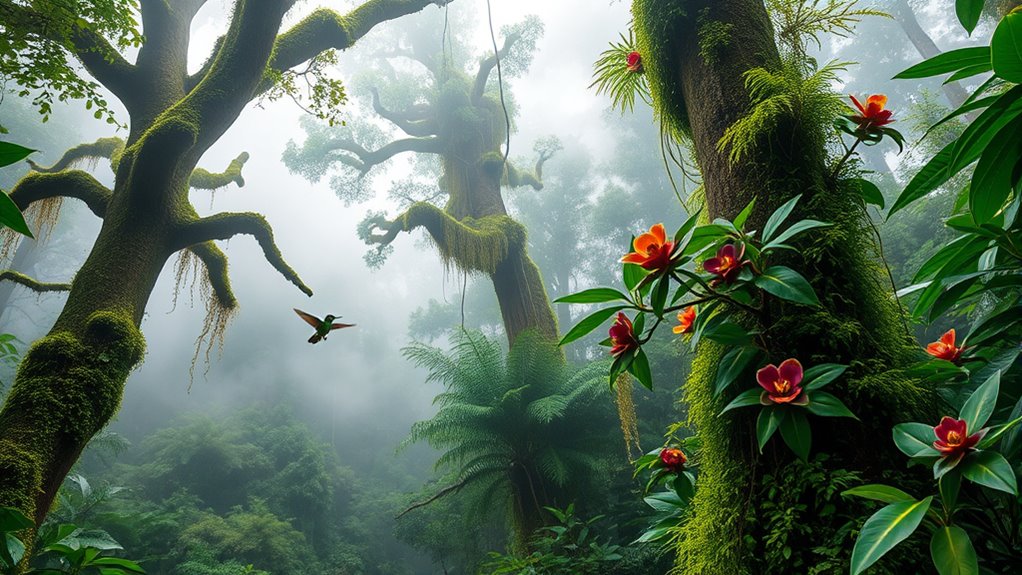
You’ll notice that many plants, like epiphytes, develop special structures to absorb moisture directly from the mist and clouds around them. Some trees have water-resistant leaves that minimize water loss while handling constant wetness. Animals also adapt by finding breeding sites in tree cavities and water pockets that stay filled due to the persistent moisture. Additionally, certain species have evolved unique adaptations to thrive in the humid, moisture-rich environment of cloud forests. The operating hours of nearby ecosystems can influence the daily activities and behaviors of these species, ensuring their survival in such a delicate environment. The color temperature of the environment influences these ecosystems by maintaining high humidity levels and supporting diverse marine and terrestrial life.
Epiphyte Specializations
The persistent moisture in cloud forests creates an ideal environment for epiphytes—plants that grow on other plants without soil. To thrive here, they’ve developed unique adaptations. Many epiphytes, like orchids and bromeliads, have specialized roots that absorb moisture directly from the air and fog. Thick, waxy coatings on their leaves help reduce water loss while absorbing nutrients from the constant mist. Some, like mosses and lichens, form dense mats that trap moisture, creating microhabitats.
| Adaptation | Function |
|---|---|
| Aerial roots | Absorb water and nutrients from humidity and fog |
| Waxy leaf coating | Minimize water loss in persistent moisture |
| Trapping structures | Collect and hold fog drip for nourishment |
| Compact growth | Maximize moisture retention and support |
These features enable epiphytes to flourish amidst the cloud forest’s moist conditions.
Water-Resilient Leaves
Plants and animals in cloud forests have developed water-resilient leaves to survive the persistently damp environment. These leaves are typically small, thick, and wax-coated, which helps reduce water absorption and prevent rot. The waxy surface acts like a shield, repelling excess moisture, while the smaller size minimizes surface area exposed to constant humidity. Many plants, like orchids and bromeliads, grow epiphytically, catching fog and mist on their leaves without suffering damage. Some leaves have specialized structures, such as trichomes or hairs, that channel water away from their surfaces, avoiding fungal growth. These adaptations enable flora to thrive in high humidity, ensuring proper gas exchange and conserving water, even when moisture levels remain constantly elevated. Additionally, these structural features contribute to the overall safety of water-resilient leaves by preventing issues like mold and rot in such a moist habitat.
Animal Breeding Habitats
In cloud forests, animals have evolved specialized breeding habitats to thrive amid constant moisture and high humidity. You’ll find many species nesting in tree cavities, where moisture levels remain stable and predators are fewer. Frogs and amphibians lay their eggs in water pockets hidden among epiphytes or beneath moss-covered roots, benefiting from the persistent dampness. Some birds build nests in dense foliage or on branches that stay moist year-round, which helps keep eggs cool and protected from desiccation. Many insects and invertebrates breed in fog-fed water sources or within moist leaf litter. These habitats prevent desiccation, support rapid development, and shield young from harsh conditions. Adaptations like water-retentive nests and cavity use enable animals to reproduce successfully in this perpetually moist environment. Understanding skin hydration is essential, as it plays a critical role in the health and reproductive success of many species in these humid ecosystems.

Costa Farms Bromeliad Live Plant in Decorative Pot, Flowering Indoor Houseplant, Perfect for Home, Room, or Office Decor, Great House Warming or Birthday Gift, 16-20 Inches Tall
COLORFUL ROOM DÉCOR UPGRADE: The striking live bromeliad houseplant features a long-lasting, colorful flower bract that adds a…
As an affiliate, we earn on qualifying purchases.
As an affiliate, we earn on qualifying purchases.
The Rich Biodiversity and Endemic Species of Cloud Ecosystems
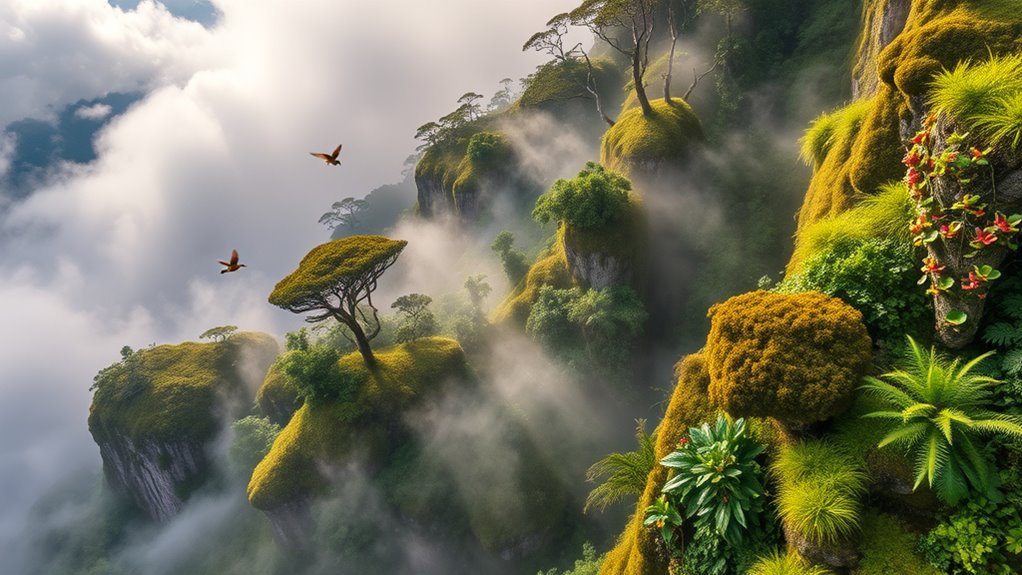
You’ll find that cloud forests host many unique endemic species, adapted specifically to these moist, isolated environments. Epiphytes create microhabitats that support a diverse range of plants and animals, adding to the forest’s rich biodiversity. Protecting these ecosystems is crucial to preserving their irreplaceable species and the vital ecological functions they perform.
Unique Endemic Species
Cloud ecosystems harbor a remarkable array of endemic species found nowhere else on Earth, making them essential hotspots of biodiversity. You’ll find plants, animals, and insects uniquely adapted to the high humidity and persistent mist. Many orchids, bromeliads, and mosses grow exclusively here, thriving on the constant moisture and limited competition. You might encounter rare frogs or colorful hummingbirds that rely on the specific microhabitats created by these environments. Some mammals, like certain species of spectacled bears or small primates, are endemic to these forests, dependent on the specialized niches. Endemics often evolve in isolation, developing traits suited to constant moisture and foggy conditions. Protecting these species means preserving the delicate balance of cloud ecosystems, crucial for maintaining Earth’s overall biodiversity.
Epiphytes’ Microhabitats
Epiphytes thrive in cloud forests because the constant moisture from fog and mist creates ideal conditions for their growth. This persistent humidity allows plants like orchids, bromeliads, and ferns to attach to tree trunks and branches, forming dense microhabitats. These microhabitats support countless species, providing shelter, breeding sites, and food sources. The table below highlights key epiphyte types and their roles:
| Epiphyte Type | Ecological Role |
|---|---|
| Orchids | Attract pollinators, aid in reproduction |
| Bromeliads | Water reservoirs for insects and amphibians |
| Ferns | Cover surfaces, stabilize microclimate |
You benefit from these lush, layered ecosystems, where every epiphyte contributes to the vibrant biodiversity that makes cloud forests unique.
Biodiversity Conservation
The remarkable biodiversity of cloud forests makes them one of the world’s most vital ecosystems, harboring numerous endemic and rare species that cannot be found elsewhere. To conserve this rich biodiversity, you need to understand the delicate balance maintained by these ecosystems. Protecting habitats from deforestation and fragmentation is essential, as many species rely on specific microhabitats. Preserving the unique climatic conditions that sustain cloud cover helps maintain species’ survival. Additionally, engaging local communities in conservation efforts ensures sustainable use and protection of resources. Promoting awareness about biodiversity hotspots can help garner support for conservation initiatives. Understanding soaring and gliding techniques can also foster appreciation for these ecosystems by enabling aerial observation and study without disturbing wildlife.
- Implementing protected areas and conservation zones focused on endemic species
- Restoring degraded forests to reconnect fragmented habitats
- Promoting sustainable practices that balance human needs with ecological preservation

Tialero Orchid Pot, 12 Pack Orchid Pots with Holes, 4 Each of 4.5", 5.5", 6.3", Clear Orchid Pots for Repotting, Breathable Slotted Orchids Planter
【12 Packs of Orchid Pot】You will get 12 pcs of clear orchid pots (4 packs of 6.3 inches,…
As an affiliate, we earn on qualifying purchases.
As an affiliate, we earn on qualifying purchases.
The Role of Cloud Forests in Regional Water Cycles
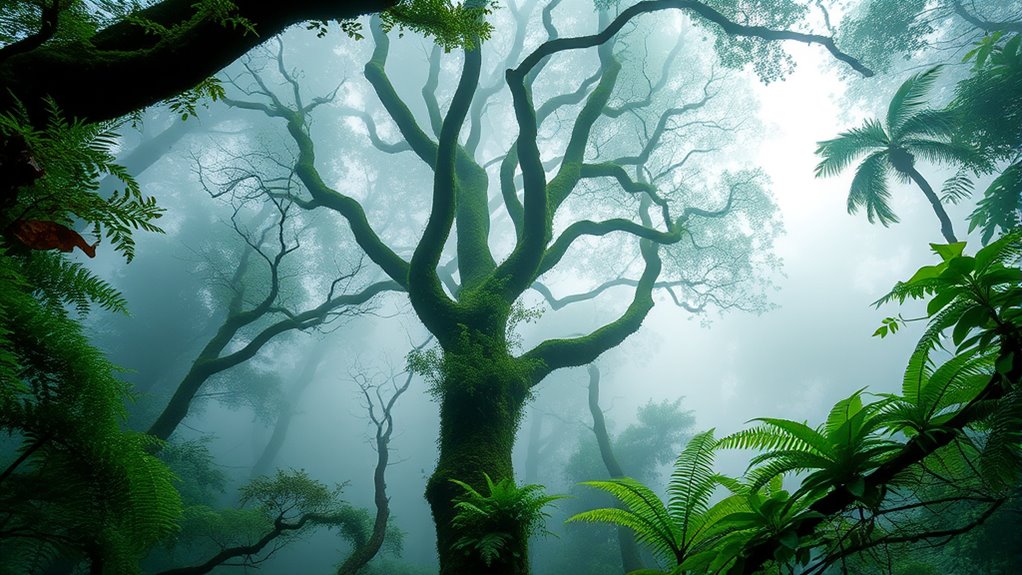
Cloud forests play a vital role in shaping regional water cycles by capturing and redistributing moisture through a process known as fog drip. As fog forms and lingers around the canopy, your forest acts like a sponge, soaking up water from clouds. When the fog condenses on leaves and branches, it drips down, providing a steady source of moisture. This process supplements rainfall, especially during dry seasons, helping maintain stream flows and groundwater levels. Your forest’s dense vegetation intercepts wind-driven moisture, preventing it from evaporating quickly. As a result, water is stored and slowly released, supporting downstream ecosystems and human communities. Narcissistic traits can sometimes influence how humans interact with natural environments, impacting conservation efforts. Without this continuous cycle of moisture capture and release, regional water supplies would become more vulnerable to drought and climate fluctuations.
Soil Characteristics and Nutrient Dynamics in Misty Heights
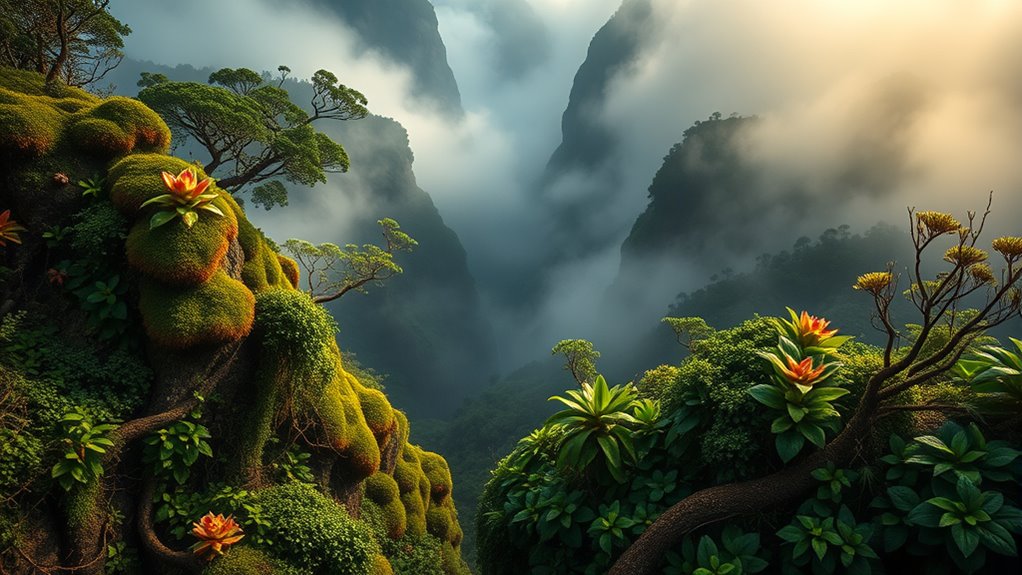
Misty mountain soils are typically acidic and nutrient-poor, shaped by the constant moisture and slow decomposition rates characteristic of cloud forests. The persistent damp environment causes organic matter to decompose slowly, leading to thick layers of humus or peat that retain water but limit nutrient availability. Leaching from heavy rainfall washes away minerals, further reducing soil fertility. These conditions favor plants adapted to nutrient scarcity and acidity. Additionally, the unique Kia Tuning features tailored for performance can influence how plants adapt to soil conditions through modifications in surrounding environments. The soil acidity further influences the types of microorganisms present, which play a vital role in nutrient cycling within these ecosystems. Organic matter accumulates as slow-decomposing leaf litter, forming a sponge-like layer that controls erosion. Soil nutrients cycle slowly, requiring specialized plants with adaptations to survive in low-fertility conditions. The high water content creates saturated, sometimes peat-like, substrates that influence plant community composition and biodiversity.
Threats Facing Cloud Forests and Conservation Strategies
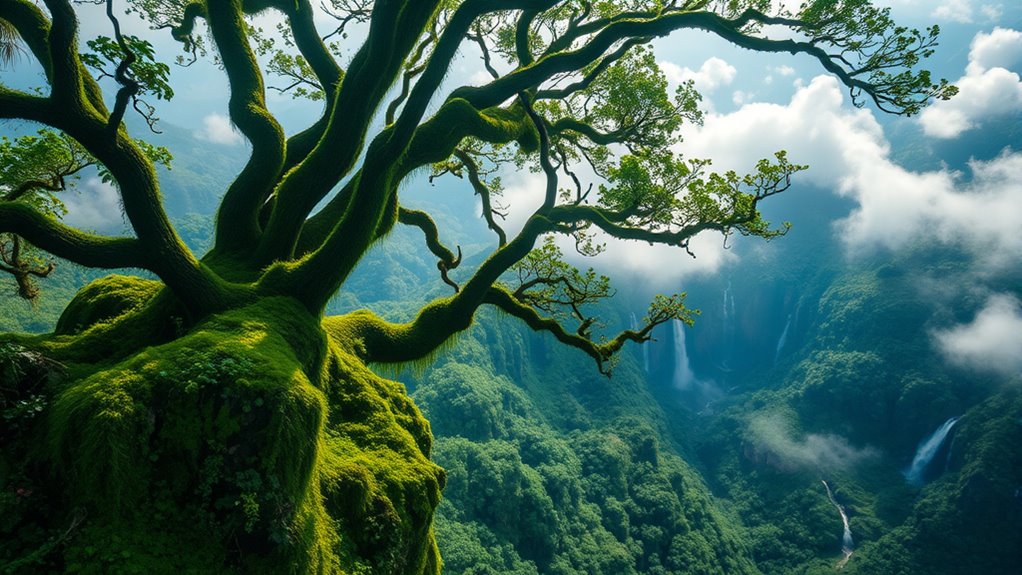
Rising temperatures and changing precipitation patterns threaten the delicate balance of cloud forests, disrupting their persistent cloud cover and moisture cycles. This can lead to reduced fog formation, drying soils, and habitat loss. Deforestation, driven by agriculture, logging, and urban expansion, fragments ecosystems and diminishes biodiversity. Climate change accelerates these threats by increasing drought frequency and warming temperatures, which threaten endemic species and cloud formation itself. Conservation strategies include establishing protected areas, restoring degraded habitats, and promoting sustainable land use. You can support these efforts by raising awareness, reducing deforestation, and advocating for policies that prioritize ecosystem resilience.
| Threats | Conservation Strategies |
|---|---|
| Climate change | Protected areas |
| Deforestation | Habitat restoration |
| Land use change | Sustainable practices |
| Habitat fragmentation | Connectivity corridors |
| Water cycle disruption | Integrated watershed management |
The Significance of Cloud Forests for Global Environmental Health
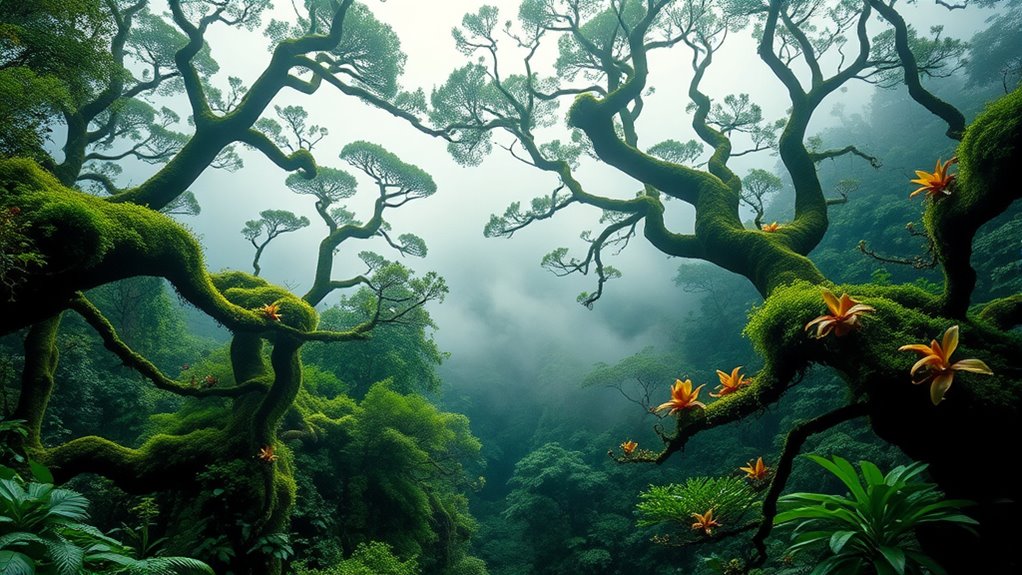
Cloud forests play a critical role in maintaining the health of our planet’s environment by acting as essential water sources and climate regulators. They help stabilize regional climates through their capacity to trap moisture, which supports ecosystems and agriculture downstream. Their dense vegetation acts as natural water filters, improving water quality and preventing erosion. Additionally, cloud forests serve as carbon sinks, absorbing greenhouse gases and mitigating climate change. Their unique biodiversity maintains ecological resilience and supports global species diversity, making them vital for biodiversity conservation. The presence of diverse plant and animal species in cloud forests also supports ecosystem stability, which is crucial for overall environmental health.
Frequently Asked Questions
How Do Cloud Forests Maintain Stable Microclimates Despite Climate Variability?
You can see that cloud forests maintain stable microclimates through their dense vegetation, which intercepts wind-driven moisture and creates a humid environment. The constant fog drip from clouds supplies water even during dry periods, while the thick canopy reduces temperature fluctuations. Their high humidity, slow decomposition, and water retention capacity act as natural buffers, ensuring consistent conditions that help species survive despite climate variability.
What Are the Specific Reproductive Strategies of Plants Thriving in Cloud Forests?
You’ll find plants in cloud forests use unique reproductive strategies to thrive. Many produce large, showy flowers and abundant nectar to attract pollinators like hummingbirds, bats, and insects. Some rely on wind for seed dispersal, while others depend on animal carriers. Epiphytes often produce lightweight, buoyant seeds that travel on the breeze, ensuring they reach suitable host trees. These strategies help plants reproduce successfully in the dense, moist environment.
How Do Animal Species in Cloud Forests Adapt to Limited Nutrient Availability?
In cloud forests, animals adapt to limited nutrients through resourcefulness and resilience. You’ll see creatures that cleverly capitalize on available resources, like amphibians breeding in water pockets and insects thriving on tiny, nutrient-poor plants. Many species develop specialized skills, such as selective foraging and efficient energy use, to survive in nutrient-starved niches. These adaptations allow them to flourish despite the forest’s fragile, fleeting food and nutrient supplies.
In What Ways Do Cloud Forests Influence Local Weather Patterns Beyond Water Supply?
You see, cloud forests impact local weather by creating a stabilizing microclimate with cooler temperatures and high humidity. Their dense vegetation traps moisture, reducing wind speeds and moderating temperature fluctuations. This consistent moisture and cooled air influence regional rainfall patterns, often increasing local precipitation. Additionally, they act as climate buffers, helping surrounding areas resist extreme weather events and maintaining a balanced local climate that benefits both ecosystems and human communities.
What Are the Most Successful Conservation Models for Protecting Cloud Forest Biodiversity?
You should focus on integrated conservation models combining protected areas, community engagement, and sustainable land use. Successful efforts involve establishing national parks, promoting eco-tourism, and involving local communities in forest management. Education programs also raise awareness about biodiversity importance. These approaches help preserve cloud forest ecosystems, maintain their crucial water and climate roles, and support endemic species, ensuring the long-term resilience of these unique environments.
Conclusion
As you explore the lush cloud forests, remember they’re more than just breathtaking landscapes—they’re essential lungs for our planet, teeming with life and wonder. Their fragile beauty is a mirror to nature’s resilience, yet it’s also a stark reminder of what we stand to lose. Protecting these sky-high havens isn’t just an act of conservation; it’s a pledge to preserve the enchanting symphony of life that plays out among the clouds.